

When to See a Dermatologist vs DIY for Safer Skincare
DIY skincare may suit simple, mild concerns, but persistent, changing, or severe symptoms call for a dermatologist. Knowing when to see a dermatologist vs DIY care helps you choose a safer next step.
Learn how to approach peels and exfoliation, and which sunburn symptoms need professional attention.
Key Takeaways
- Notice when a skin concern needs more than a home routine, especially if it persists or changes.
- Learn why repeated exfoliation and strong at-home peels can irritate skin, and how to take a gentler approach.
- Recognize the sunburn symptoms that call for a dermatologist’s assessment.
- Understand why kitchen ingredients such as apple cider vinegar may not be as skin-friendly as they seem.
- See where professional skincare products can support your routine without replacing medical care.
Skin Care Solutions: Should You Visit Your Dermatologist or DIY?
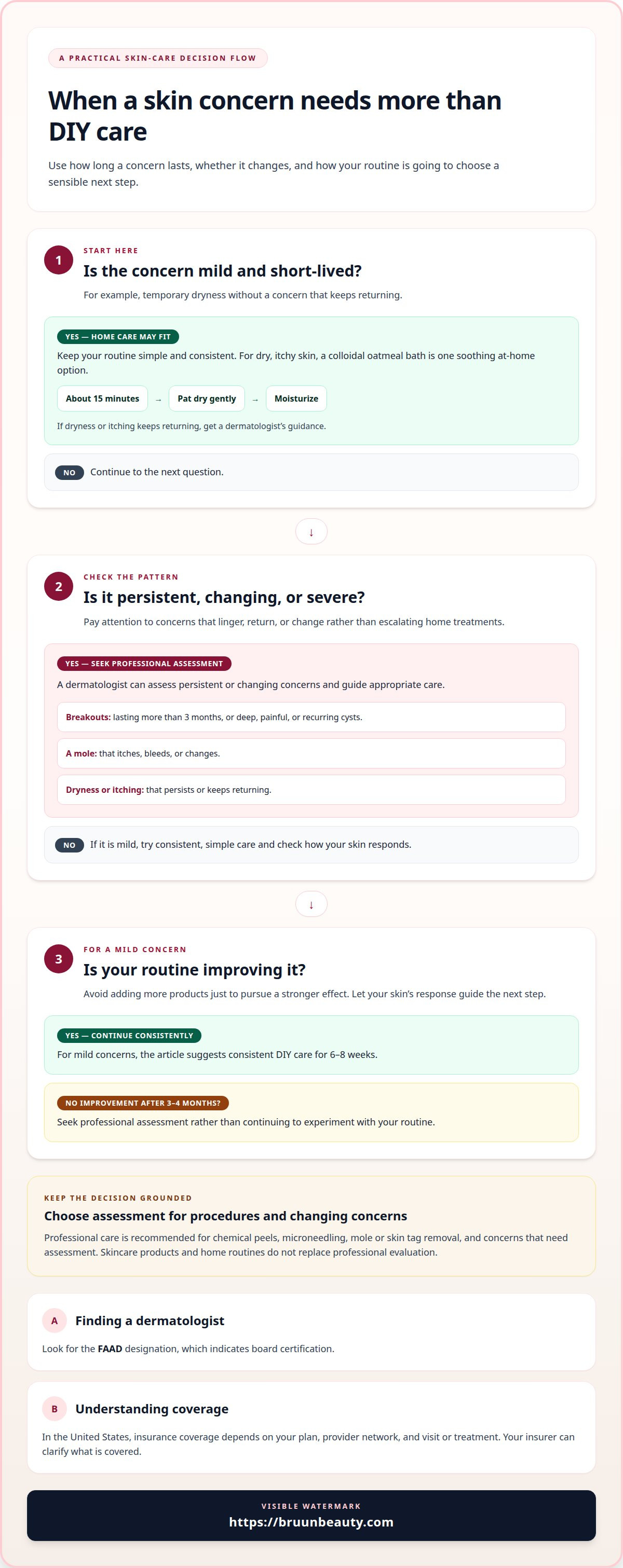
DIY care may suit mild, short-lived concerns, while persistent or changing symptoms call for professional assessment. Deciding when to see a dermatologist vs DIY care depends on the concern, its severity, and whether your routine is helping.
Dermatologist Treatment for Cystic Acne and Skin Conditions
A dermatologist can diagnose and treat cystic acne, eczema, psoriasis, and rosacea. Unlike a home routine, professional assessment can identify an underlying condition and guide targeted care. Deep, painful cysts and recurring symptoms deserve assessment, not squeezing or repeated product experiments.
DIY Care for Dry, Eczematous Skin
For dry, itchy skin, a colloidal oatmeal bath can provide a soothing at-home step. Soak for about 15 minutes, then gently pat your skin dry and moisturize. This focuses on comfort; recurring eczema may need a dermatologist’s guidance. Contact one if itching or dryness persists or keeps returning.
Finding and Paying for Dermatologist Care
Contact a dermatologist for breakouts lasting more than three months, or a mole that itches, bleeds, or changes. For mild concerns, try consistent DIY care for 6-8 weeks; seek professional assessment if there’s no improvement after 3-4 months. To find board-certified care, look for a dermatologist with the FAAD designation, which indicates board certification. Let your symptoms, not guesswork, guide your next step.
DIY basics may cost less upfront, while a dermatologist can identify conditions and tailor treatment. In the United States, insurance coverage depends on your plan, provider network, and the visit or treatment. Your insurer can clarify what’s covered.
| Option | Best fit | What it offers |
|---|---|---|
| DIY skin care | Mild, temporary dryness | Basic, consistent home care |
| Dermatologist | Persistent, changing, or severe concerns | Assessment and tailored treatment options |
Choose home care for mild concerns; seek assessment when symptoms persist, change, or suggest a skin condition.
Some kitchen ingredients can irritate rather than help. Lemon juice and other citrus can trigger phytophotodermatitis when skin is exposed to sunlight. Baking soda’s high alkalinity can disrupt the skin’s slightly acidic barrier and strip natural oils, so keep both out of your facial routine.
Professional care is recommended for mole or skin tag removal, chemical peels, facial injectables, microneedling, and treatment of cystic acne or skin conditions. A dermatologist can identify possible causes of acne and recommend targeted treatment. Regular visits can also support early identification of serious disease and proactive management of skin concerns, making professional input relevant beyond a single persistent breakout.
A skincare professional can identify a person’s skin type and recommend products suited to its needs. This provides a basis for choosing products rather than relying only on trial and error. For at-home soothing, colloidal oatmeal contains anti-inflammatory components that can help reduce itchiness and redness. It may support comfort, but persistent or recurring symptoms still warrant professional input.
Topical lemon juice can cause phytophotodermatitis if skin is exposed to sunlight. Avoiding it as a home remedy is especially important when a skin concern needs assessment: a dermatologist can help identify possible causes and guide care instead of leaving the concern to improvised treatments. Professional assessment is also appropriate when a planned procedure involves changing the skin.
Risks of DIY skincare and over-exfoliation
DIY skincare can irritate skin when you combine strong ingredients, use tools incorrectly, or exfoliate too often. Deciding when to see a dermatologist vs DIY care depends on your symptoms and whether your routine is making them worse. Watch for persistent redness, tenderness, or increasing discomfort.
Risks of At-Home Skincare Treatments
At-home treatments can be difficult to apply evenly or use for the right amount of time. A chemical peel at the wrong strength or left on too long can cause burns, lasting redness, or hyperpigmentation. Uneven application may leave patchy discoloration. Read the directions carefully, and don’t leave a product on longer to try for a stronger effect.
Potential Risks of Home Remedies
Natural ingredients can still irritate skin or cause contact dermatitis. Cinnamon and nutmeg, especially in concentrated form or left on the skin, can cause chemical burns. A homemade scrub with jagged particles can abrade the skin’s surface. Treat a kitchen remedy like any unfamiliar ingredient: don’t apply it broadly just because it’s labeled natural.
Popping Pimples at Home
Squeezing blackheads, whiteheads, or deep cysts can cause pain or scarring. Deep cysts sit below the skin’s surface, so pressure may not clear them and can make the area more irritated. Avoid repeated picking, especially when a blemish is painful or recurring. A dermatologist can assess persistent breakouts and determine an appropriate next step.
Over-Exfoliation and Other DIY Risks
Frequent use of exfoliating acids can damage the skin barrier, increase irritation, and heighten sun sensitivity. Harsh scrubs and repeated exfoliation can leave skin uncomfortable, while a derma roller reused without cleaning can introduce bacteria. At-home mole removal may prevent a suspicious spot from being examined. Stop experimenting if symptoms worsen or a spot changes.
To simplify a strained routine, pause exfoliating products and other active treatments. Use gentle cleansing, moisturizer, and sun protection while your skin settles. Reintroduce products gradually, one at a time, to see how your skin responds. If discomfort persists or a concern keeps returning, seek professional assessment instead of escalating home treatments.
When deciding when to see a dermatologist vs DIY skincare, keep cosmetic goals separate from concerns that need medical assessment. For licensed professionals planning microneedling services, explore professional microneedling products; product supplies don’t replace evaluation of a skin concern.
At-home chemical peels and exfoliation
At-home peels and exfoliants work best as occasional steps in a simple routine. Choose gentle methods, follow product directions, and avoid adding several new ingredients at once.
A chemical peel at the wrong strength or left on too long can cause burns, permanent redness, or hyperpigmentation. Uneven application can also leave patchy discoloration. If you’re new to exfoliation, start with a gentle product once weekly rather than combining a peel with scrubs or exfoliating acids. Stop if your skin becomes irritated.
Keep each use controlled: read the label, apply the product evenly as directed, and remove it at the stated time. Don’t extend the application because your skin doesn’t feel a strong sensation. More intensity doesn’t mean better results. Between exfoliation sessions, use a basic cleanser and moisturizer, and wear broad-spectrum sunscreen with SPF 30 or higher daily.
For beginners, keep DIY skincare predictable for 4-6 weeks before adding more products. That gives you time to notice whether a new exfoliant causes dryness, redness, or sensitivity. Introduce one product at a time, and take note of the ingredients in your other products. Using multiple acids together can make it harder to identify what is irritating your skin.
At-home care for signs of aging can start with consistent cleansing, moisturizing, and daily sun protection. Sunscreen helps limit sun-related skin damage, while gentle exfoliation may make skin feel smoother. Avoid chasing quick changes with frequent peels. If texture or pigmentation concerns persist, a dermatologist can assess your skin and discuss suitable options.
For mild acne, keep the routine simple: cleanse gently, moisturize, and introduce only one acne-focused product at a time. Give a consistent routine 6-8 weeks for mild concerns, and avoid picking blemishes or layering harsh treatments. If breakouts persist or become deep and painful, seek professional guidance instead of escalating home methods.
For a mild sunburn, pause exfoliating acids, scrubs, and peels while your skin is tender. Use a gentle cleanser, apply moisturizer, and protect the area from further sun exposure with clothing and sunscreen. Don’t apply exfoliants to peeling or irritated skin. Large blisters, nausea, or a high fever call for a dermatologist’s assessment.
Before trying a new natural skincare ingredient, test it on the inner arm and wait 24 hours before using it on your face. A patch test can help you notice irritation before applying an ingredient more broadly. If skin concerns worsen despite gentle care, stop experimenting and seek professional guidance rather than adding another treatment.
When sunburn symptoms warrant a dermatologist visit
Large blisters, nausea, or a high fever after sun exposure are reasons to see a dermatologist. These symptoms need more than a change to your usual skincare routine. Note what you’re experiencing and when it began, so you can clearly describe the change when arranging care.
A mild sunburn without those symptoms can often be managed with gentle skincare while you monitor your skin’s response. Avoid exfoliation and other irritating products on tender areas. If your skin becomes increasingly uncomfortable or symptoms appear beyond the sunburned area, contact a dermatologist for guidance instead of adding more products.
Use this symptom check to decide your next step:
- Large blisters: Contact a dermatologist instead of popping or removing blistered skin yourself.
- Nausea: Arrange professional assessment rather than relying only on topical skincare.
- High fever: Seek a dermatologist’s assessment and describe the fever with your sunburn symptoms.
- Changing skin: Mention new or changing pigmentation, especially if a mole also itches or bleeds.
Your skin type can affect how sensitive your skin feels, but it doesn’t make large blisters, nausea, or a high fever less important. Avoid scrubs, chemical peels, and exfoliating acids on sunburned skin. They can further irritate an already tender area. Keep your routine simple while arranging professional advice for these symptoms.
Sun exposure can also draw attention to a mole or spot you hadn’t noticed before. Don’t try at-home removal if a mole itches, bleeds, or changes; a dermatologist can examine it using professional techniques. Make a note of the spot’s location and what changed, then include those details when you schedule an appointment.
After the immediate discomfort settles, return to daily sun protection and watch for recurring sensitivity or pigmentation concerns. A dermatologist can assess persistent changes and recommend care suited to your skin and concern. Don’t restart exfoliating products while your skin remains tender; resume a gentle routine first, then observe how your skin responds.
For a visit, be ready to describe the sun exposure, symptoms you noticed, and any products applied afterward. Mention whether blisters are large and whether nausea or a high fever occurred. These details help distinguish a sunburn that can be monitored at home from symptoms that warrant a dermatologist’s assessment.
Caution with natural acids such as apple cider vinegar
Apple cider vinegar may seem like a simple beauty shortcut, but it can disrupt your skin’s pH. This can irritate the skin barrier, especially if you apply vinegar directly or use it repeatedly. Heavily dilute it and use extreme caution, or avoid it. A familiar kitchen ingredient isn’t automatically suitable for skincare.
Before trying a DIY acid, consider why you want to use it. If you’re targeting a dark spot, acne, or uneven texture, vinegar doesn’t provide a personalized treatment plan. A dermatologist can assess the concern and recommend options based on your skin and its sensitivity. Avoid using vinegar on irritated skin or alongside exfoliating products.
Keep your routine straightforward when testing new skincare. Introduce one product at a time, and patch-test a new natural ingredient on your inner arm for 24 hours before facial use. That step can help you notice irritation before applying it more broadly. If redness or discomfort appears, rinse the area and stop using the ingredient.
DIY remedies can also make it harder to identify which ingredient caused a reaction. If you introduce vinegar and an exfoliant together, for example, you may not know which triggered sensitivity. Write down product names and when you used them. Bring the list to a dermatologist if irritation continues or the concern becomes more serious.
Skip home experiments for a changing mole, persistent acne, or a recurring skin condition. A dermatologist can examine the concern and discuss suitable treatment or procedures. A cosmetic appointment and a medical assessment serve different purposes; an at-home acid isn’t a substitute for evaluating a serious or changing skin concern.
For daily care, choose products designed for skin rather than improvising with pantry ingredients. Cleanse gently, moisturize, and use sun protection as part of your regular routine. If you’re unsure whether an ingredient suits your skin type, pause before applying it to your face. A professional consultation can help you assess ingredients and choose a practical next step.
For licensed skincare professionals, keep treatment choices distinct from at-home acid experiments. Explore professional microneedling skincare products for use within an appropriate professional skincare approach.
The main caution is simple: apple cider vinegar can disrupt the skin’s pH, so it should be heavily diluted and used with extreme caution or avoided. Treat that as a reason to pause, not as a recipe to refine. Dilution doesn’t make vinegar a personalized skincare plan, and avoiding it is a reasonable choice. The goal isn’t to make vinegar fit every routine, but to approach a skin concern cautiously and thoughtfully.
When weighing whether to try vinegar, don’t assume a familiar ingredient will help. A cautious routine doesn’t need every possible remedy. If you have doubts, leave it out and focus on straightforward care suited to your routine. That avoids turning uncertainty into another experiment, while leaving room for professional guidance if the concern calls for it.
Bruun Beauty: Advanced Microneedling Serum SD - Control Salmon DNA Ampoule Serum
Advanced Microneedling Serum SD - Control Salmon DNA Ampoule Serum is an option for skincare routines that include microneedling. Consider it when you’re choosing a serum to complement a planned professional or advanced skincare regimen, rather than as a substitute for a dermatologist’s assessment of persistent skin concerns.
Keep the distinction clear: a skincare product supports your routine, while a dermatologist evaluates skin conditions and changing concerns. Explore the Salmon DNA ampoule serum for product details. Visit Bruun Beauty online to explore the serum.
Choose Your Next Skincare Step With Confidence
Your routine doesn’t need to become more complicated to become more thoughtful. Before adding another product or procedure, note what you want to change, what you’ve tried, and how your skin responded. Those details can help you make a focused choice instead of reacting to every new trend.
Use that record to decide when to see a dermatologist vs DIY skincare. If you’re planning a cosmetic skincare routine, keep product choices separate from medical concerns, and seek professional guidance for symptoms that need assessment. A clear next step is more useful than a shelf full of trial-and-error products.
Explore skincare options that fit your routine and goals, and keep your approach gentle, consistent, and informed.
Small, considered choices can help you build a manageable routine that supports your skincare goals.
Frequently Asked Questions
What skin concerns can be safely treated at home with over-the-counter products?
Mild, temporary dryness or an occasional minor blemish may suit gentle over-the-counter care. Choose a product labeled for your concern, follow its directions, and introduce it without changing several other parts of your routine. If the concern persists, worsens, or becomes painful, stop experimenting and arrange a professional assessment.
What skin symptoms or conditions should be evaluated by a dermatologist?
A dermatologist can assess recurring or unexplained symptoms, including acne, eczema, rosacea, and psoriasis. Make an appointment if a rash keeps returning, a spot changes, or symptoms disrupt daily activities. Bring product names and notes on when symptoms began; these details help the dermatologist understand what you’ve tried and how your skin responded.
What warning signs of skin cancer require a dermatologist visit?
Ask a dermatologist to examine a mole or spot that changes, itches, or bleeds. Note its location and when you first noticed a difference, then share those details when scheduling. Don’t try to remove it at home, because the spot needs examination. A dermatologist can assess its appearance and discuss appropriate next steps.
When should a rash, acne, or skin infection receive medical attention?
Seek medical attention for a spreading or recurring rash, deep painful acne, or a suspected skin infection. Don’t squeeze painful blemishes or rely on home remedies for a worsening concern. Track when symptoms began and what has changed, then share that timeline with a clinician. Prompt assessment can clarify what care is needed.
What are the risks of DIY skin treatments and home remedies?
DIY treatments can irritate skin, trigger allergic reactions, or delay assessment of a skin condition. Concentrated cinnamon or nutmeg, for example, may cause contact dermatitis, while harsh or frequent exfoliation can leave skin sensitive. Avoid combining unfamiliar ingredients or applying remedies to irritated skin; stop if discomfort develops.
When should you see a dermatologist urgently versus schedule a routine appointment?
Contact a dermatologist promptly for sunburn with large blisters, nausea, or a high fever, or for a mole that changes, itches, or bleeds. Recurring acne or eczema generally calls for a routine appointment. Describe your symptoms clearly when scheduling, including when they began and whether they’re changing.
How Microneedling Around the Mouth Relates to Needle Depth and Safety
How Microneedling Around the Mouth Relates to Needle Depth and Safety
Related Posts

PDRN Benefits for Skin: Regeneration, Results and Safety

How to Dispose of Used Microneedle Cartridges Safely

Self-care rituals for better skin through mindful daily habits

How to Explain Microneedling Benefits for Skin and Scars

How to use a Korean 10-step skincare routine for hydration

Microneedling for atrophic scars: clinic or at-home results

V-Line Lifting Masks and Their Claimed Face-Shaping Effects
