

Self-care rituals for better skin through mindful daily habits
The best self-care rituals for better skin are simple habits you can repeat and adapt to your skin’s needs, such as mindful cleansing, consistent daily care, and choosing a mask that suits how your skin feels. You don’t need more products to make skincare meaningful; a thoughtful routine gives you time to notice your skin and enjoy caring for it. Learn how to cleanse with intention, adjust your routine, consider professional treatments, support your wellbeing with everyday habits, and choose a mask that suits your skin.
Key Takeaways
- Keep your skincare ritual simple and repeatable, using each step as a chance to slow down and tune in to your skin.
- Make cleansing more mindful with gentle movements and attention to how your skin feels afterward.
- Adjust your routine thoughtfully, and consider professional treatments as one part of a consistent skincare plan.
- Support your daily routine with habits that make space for rest, movement, nourishing food, and stress relief.
- Choose a mask according to your skin’s needs that day, such as hydration, a calming feel, or a purifying step.
1. WHAT ARE SELF-CARE SKINCARE RITUALS?
Self-care rituals for better skin pair simple skincare steps with mindful attention. A familiar morning or evening routine can make cleansing, moisturizing, and applying sunscreen feel less rushed. Focus on steps you can repeat comfortably, rather than adding products just to make your routine longer. Consistency gives each step a clear place in your day.
Make the experience sensory and calming. Before applying an aromatic product, take 2–3 slow, deep inhalations, then notice its texture as you smooth it onto your skin. While it absorbs, spend 1-2 minutes breathing mindfully. Soothing music, dimmed lights, or a candle can also mark the transition from a busy day to your skincare routine.
Mindfulness means paying attention to the step in front of you. As you cleanse, notice the feel of the water and use gentle, small circles. As you moisturize, pause to notice how the product spreads and how your skin feels. Repeating these actions can turn skincare into a steady personal ritual, rather than another task to rush through.
Plant-derived ingredients can add a pleasant sensory element, but “natural” doesn’t automatically mean suitable for every skin type. Aloe, oat, green tea, and botanical oils are examples found in skincare formulas. Choose based on your skin’s needs and the full formula, not the natural label alone. Introduce new products thoughtfully and keep the rest of your routine familiar.
Keep the purpose of a ritual clear: it supports everyday care and offers a moment of calm, but it doesn’t diagnose or replace medical care. If you have a persistent concern or a skin change that needs medical attention, consult a qualified healthcare professional. For an in-clinic treatment, discuss your goals and routine with a licensed skincare professional.
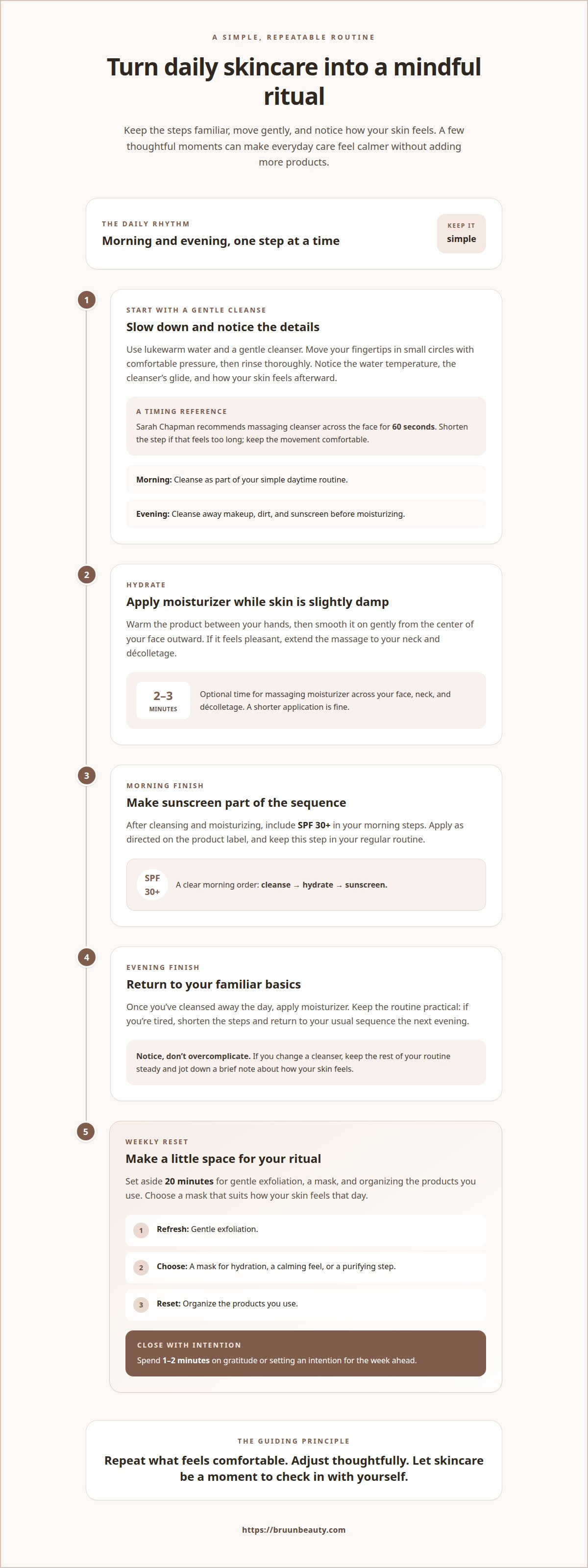
Include sunscreen in your morning steps. The suggested routine includes SPF 30+, applied as directed on the product label. Give this step the same attention as cleansing or moisturizing, even when the rest of your routine is brief. A reliable sequence makes the morning easier to repeat and helps sunscreen stay part of your regular skincare habits.
For a weekly reset, set aside 20 minutes for gentle exfoliation, a mask, and organizing the products you use. End with 1-2 minutes of gratitude or intention-setting. You might reflect on a habit that felt calming or choose one simple step to carry into the next week. This small pause makes the ritual personal without turning it into a complicated schedule.
2. Mindful cleansing
A mindful cleanse turns an everyday step into a chance to slow down. Use lukewarm water and a gentle cleanser, then massage it over your face with small circular motions. Sarah Chapman recommends massaging cleanser across the face for 60 seconds. If that feels too long, keep the movement comfortable and focus on covering your forehead, cheeks, nose, and chin.
Choose a cleanser and moisturizer based on how your skin feels and what it needs. If cleansing leaves your skin feeling tight, try a gentler cleanser and a moisturizer that supports hydration. If your skin feels oily, choose lightweight textures that feel comfortable. Notice how your skin feels after use, and adjust one product at a time.
Keep your daily routine practical: cleanse, hydrate, then apply sunscreen in the morning. At night, cleanse away makeup, dirt, and sunscreen before moisturizing. A brief morning routine can cover cleansing, moisturizing, and sunscreen, while your evening routine can allow time for cleansing, a suitable treatment step, and moisturizer.
While cleansing, notice the water temperature, the glide of your fingers, and the feel of the cleanser. These sensory details can make the moment grounding without adding products. Use gentle pressure and small motions; avoid scrubbing your face. Rinse thoroughly, then pause to notice whether your skin feels comfortable.
After rinsing, apply moisturizer while your skin is slightly damp to help hold hydration. Warm the product between your hands, then smooth it on with gentle upward strokes from the center of your face outward. Spend 2-3 minutes massaging moisturizer across your face, neck, and décolletage if that feels pleasant. You can also take a few quiet breaths while the product absorbs.
For a simple cleanse, set aside 1-2 minutes with lukewarm water and a fragrance-free cleanser. Use a warm, damp cloth to remove cleanser if you prefer that texture. The goal is a repeatable routine, not a long facial massage; shorten the steps when you’re tired and return to your usual sequence the next evening.
After cleansing, notice whether your skin feels comfortable, tight, or coated with product. If you’re changing cleansers, jot down a brief observation and keep the rest of your routine steady. This gives you a clearer sense of how the cleansing step suits your skin, without making your daily ritual more complicated.
Keep the routine simple rather than adding products; after cleansing, apply a few drops of hydrating oil and massage it in for two minutes, letting go of daily stress.
3. Professional treatments and routine adjustments
A professional treatment can complement everyday skincare, while routine adjustments keep home care aligned with your changing needs. A facial or skin check-in can give you time to review how your routine feels and adjust product steps. If you’re considering a peel, a consultation can help match the approach to your goals and current skincare habits.
Make the process feel like a ritual by adding one mindful detail before or after an appointment. Set aside a quiet moment to note what you want from the session, then record how your skin feels afterward. This simple practice helps you notice patterns over time without turning each day into a test of your skin.
Let your routine work across two time scales: repeat basic care each morning and evening, then review the full plan periodically. Daily consistency helps make cleansing, hydration, and sun protection easier to remember. A monthly check-in can help identify whether products still suit your needs or whether a professional treatment fits your current goals.
Your body follows daily rhythms, so morning and evening can serve as practical anchors for skincare. Keep the morning sequence simple, and use the evening to remove makeup or sunscreen before applying your next products. A predictable order reduces decisions at the end of the day and makes the routine easier to repeat when you’re tired.
For an evening routine, remove makeup or sunscreen, cleanse again, apply a treatment serum if it suits your plan, then finish with nourishing moisturizer. If Vitamin A serum is part of your routine, applying it at the same time each evening can support consistency. Follow each product’s directions and introduce routine changes deliberately.
Exfoliation is a routine adjustment, not a step that needs to happen every night. Weekly gentle exfoliation can be part of a deeper reset; choose a formula and texture that feel comfortable for your skin type. Keep the rest of your routine simple, and avoid combining multiple strong exfoliating steps just to make the ritual feel more intensive.
Professional guidance can also help you simplify. A licensed skincare professional can consider your current products, skin goals, and treatment history when discussing routine changes. Bring a short list of what you use morning and evening, including any exfoliant or Vitamin A product. This concrete overview makes the conversation more useful than adding new steps without a clear reason.
Keep your skincare ritual gentle and repeatable: prepare your products, follow the same sequence, and pause between steps. If a treatment or product changes your routine, adjust the surrounding steps rather than layering several new active ingredients at once. A steady practice leaves room for professional care while keeping daily skincare manageable.
4. Sleep, movement, nutrition, and stress relief
Skincare can be one small part of a wider wellness routine. Regular movement, nourishing meals, adequate sleep, and relaxation practices all support everyday self-care. These habits need not be complicated: take a short walk, prepare a balanced meal, or set aside a screen-free pause. A steady pattern matters more than treating beauty routines as a substitute for rest or other forms of care.
Stress can affect how your skin looks and feels, but a change in appearance alone doesn’t explain its cause. Instead of adding several new products in response, keep your routine familiar and note what else has changed. For example, record whether you’ve also had disrupted sleep, a schedule shift, or a new product. This context helps you make thoughtful adjustments without assuming one factor explains everything.
A calming skincare practice can give your day a clear pause. Try a breathing exercise: inhale, hold, and exhale for a count of four, repeating the sequence 5-10 times. During a weekly reset, begin with 5 minutes of breathing or meditation. These steps offer a quiet moment to settle your attention; they don’t promise a particular skin result or change to cortisol levels.
Gentle, repetitive skincare can help you slow down. While applying moisturizer, notice its texture and use unhurried movements rather than rushing to the next task. Caring for your skin may encourage the parasympathetic nervous system’s “rest and digest” mode and support relaxation. Pair your routine with soothing music or dimmed lights to create a consistent transition into evening.
Protect time for sleep by making your nighttime routine predictable. Put products in the same place, follow the same order, and keep the final steps simple. A repeatable beauty ritual can reduce decisions when you feel tired. If journaling helps you unwind, write a few lines after skincare, such as one thing that went well or a small intention for tomorrow.
Movement can be a practical stress-relief habit, whether you choose a walk, stretching, or another activity you enjoy. Attach it to an existing cue, such as taking a walk after lunch. Choose nourishing meals that fit your everyday routine, rather than turning food into another source of pressure. These habits support overall self-care without promising specific changes to your skin.
Start with one manageable habit and repeat it before adding another. You might begin with 5 minutes of screen-free time in the morning, then build a calm evening sequence. Notice how your energy, sleep, and skin feel over time, but don’t use visible skin changes to diagnose stress or cortisol levels. A balanced approach leaves room for rest, movement, and simple skincare.
5. Choosing masks based on skin needs
A face mask, including jelly mask options, works best as a targeted step, not a default for every concern. First, notice what your skin seems to need today: hydration, a comfortable calming feel, or a purifying step. That simple check gives your choice intention and keeps your routine balanced. The same person may prefer different mask types on different days.
If your skin feels dry or tight, choose a hydrating mask. If it feels unsettled after a long day, a calming option may feel more comfortable. A purifying mask can suit a day when you want a fresh-feeling finish. Match the mask to your skin’s current condition rather than choosing by trend or packaging.
When you’re unsure, start with hydration. A hydrating mask is a practical choice when you want a nourishing-feeling pause without guessing at a more specific need. Choose a formula suited to your skin type and follow its directions. If you already use serums, keep the rest of your routine familiar so you can tell how the mask feels on its own.
Consider your whole face before applying a mask. If your cheeks feel dry but your forehead feels comfortable, use a mask that supports hydration without adding unnecessary steps elsewhere. Don’t treat one oily or dry area as a description of your entire complexion. The goal is a comfortable balance, not a complicated mix of products.
Make application part of a mindful reset. Set out the mask, a towel, and your usual moisturizer before starting. Apply the mask as directed, then use the pause to breathe or listen to a calming song. This small ritual can create a mental break while keeping skincare practical and easy to repeat.
Choose a time that fits your routine. A mask can be a quiet evening step when you have time to unwind, or part of your morning routine when its directions and your schedule allow. Don’t add several masks simply because your skin feels different. One well-chosen mask makes it easier to notice how your skin responds.
Some people use one or two masks depending on how their skin feels, but more layers don’t automatically mean better care. If you try two, consider whether each serves a distinct purpose, such as hydration followed by a comfortable finish. Stop when you’ve completed the useful steps, then return to your familiar moisturizer and daytime sunscreen as appropriate.
After using a mask, note its type, how your skin felt beforehand, and how it felt afterward. For example, record “hydrating mask, dry-feeling cheeks, comfortable finish.” This simple observation can guide your next choice without turning skincare into a test. A mask becomes a more thoughtful self-care ritual when it responds to your needs.
Bruun Beauty
Bruun Beauty offers skincare products that can complement mindful routines, from mask-focused self-care to professional treatment supplies. If a mask is the step you’re adding, Jelly Mask Kits give you an option to explore. For professional routines, the Advanced Microneedling Serum SD - Control Salmon DNA Serum and BB Glow Treatment Supplies support different treatment approaches.
Choose products that fit your goals and the way you care for your skin, whether you’re building a home routine or stocking a professional space. For product questions, contact Bruun Beauty.
Build a routine you can return to
Choose one habit or product that fits your current needs, then make room for it in your existing routine. A consistent approach helps you notice what feels comfortable and enjoyable without turning skincare into another demanding task. These self-care rituals for better skin work best as personal practices you can sustain, not a checklist you need to perfect.
If you’re exploring professional-style options, match them to your goals and follow each product’s directions. Bruun Beauty offers DR. PEN Microneedling Devices for professional and advanced at-home skincare routines. Take time to understand how a treatment approach fits with your broader skincare habits before adding new steps.
Keep your approach thoughtful and manageable. Small choices can make skincare a more grounded part of everyday life, and a routine that feels right is one you can return to.
Frequently Asked Questions
WHAT ARE SELF-CARE SKINCARE RITUALS?
Self-care skincare rituals are familiar skincare steps done with attention rather than rushed automatically. For example, set out your cleanser and moisturizer before bed, then take a breath before each step. The products remain ordinary; intention and a steady pace make the routine feel like a personal pause. Keep the ritual flexible so it still works on busy or low-energy days.
What daily skincare routine helps improve skin health?
A simple daily routine can include cleansing, hydration, and morning sunscreen, with a moisturizer suited to your skin’s needs. Keep the order consistent and avoid adding several new products at once. For example, if you want to try a new serum, introduce it without changing your cleanser and moisturizer at the same time. This makes it easier to notice how each step feels in your routine.
What are the correct steps for a morning skincare routine?
Start your morning with a gentle cleanse or rinse, then apply moisturizer and finish with sunscreen. Follow each product’s directions, including the sunscreen guidance on its label. If your morning is short, keep these steps together near your sink so you can follow the same sequence. A hydrating serum can fit between cleansing and moisturizer when it suits your routine.
Which self-care habits, including sleep, hydration, diet, and stress management, can affect skin?
Sleep, regular movement, nourishing meals, hydration, and stress-relief practices all contribute to overall wellness, though they don’t guarantee a particular skin appearance. Choose one habit to make more consistent, such as a screen-free pause before bed or a walk after lunch. Notice patterns in your energy and skin without assuming a single habit explains every change.
How can you choose facial products and introduce routine changes thoughtfully?
Choose products designed for facial use that suit your skin’s needs and fit the routine you can maintain. Follow each product’s directions, and introduce one new product at a time while keeping your other steps consistent. This gives you a clearer sense of how the product feels as part of your routine. If you have questions about what may suit your skin, seek guidance from a qualified skincare professional.
How often should you exfoliate your face, and which exfoliants are suitable for different skin types?
Gentle exfoliation can be part of a weekly reset, rather than a nightly step. Choose a formula and texture that feel comfortable for your skin type.
How to Explain Microneedling Benefits for Skin and Scars
How to Dispose of Used Microneedle Cartridges Safely
Related Posts

PDRN Benefits for Skin: Regeneration, Results and Safety

How to Dispose of Used Microneedle Cartridges Safely

How to Explain Microneedling Benefits for Skin and Scars

How to use a Korean 10-step skincare routine for hydration

Microneedling for atrophic scars: clinic or at-home results

V-Line Lifting Masks and Their Claimed Face-Shaping Effects
