

How to Explain Microneedling Benefits for Skin and Scars
Microneedling’s appeal isn’t just about smoother-looking skin. It uses fine needles to stimulate the skin’s natural collagen response, which may gradually improve the look of texture, uneven tone, acne scars, and fine lines. If you’re wondering how to explain microneedling benefits to a friend, the key is to describe it as a gradual skin-refreshing approach, not an instant fix.
It’s natural to wonder how professional microneedling compares with using a roller at home. The difference is more than the device: a trained professional can tailor the treatment to your skin and goals, while a home roller is a simpler tool with different capabilities.
This guide explains how microneedling works and what it may do for the appearance of tone, texture, scars, and wrinkles. You’ll also learn how it differs from options such as lasers and PRP, why changes can take time, and what distinguishes professional microneedling from home rolling, so you can explain the benefits clearly and realistically.
Key Takeaways
- Explain microneedling as a gradual way to support smoother-looking texture and more even-looking skin, rather than an instant transformation.
- Set realistic expectations: the areas treated and the treatment approach influence what changes you may notice.
- Compare microneedling with PRP and laser treatments by considering how each approach works and what kind of recovery it involves.
- Understand why professional microneedling differs from a home roller in technique, customization, and the level of care involved.
- Explore skincare products that complement a microneedling-focused routine, including serums and jelly masks.
Skin tone and texture
Microneedling may gradually improve uneven-looking tone and rough texture by encouraging skin renewal. The concern and treatment area help shape the plan.
Potential Benefits and Treatment Areas
Microneedling uses fine needles to prompt a skin-renewal response, which may soften the appearance of rough texture, uneven tone, and fine lines. Depending on your goals, a professional may treat areas such as the face or neck. For example, a plan could focus on visible acne marks on the cheeks while taking nearby discoloration and texture into account.
Suitability Across Skin Types
Suitability depends on your skin’s needs, tone, and current condition; there is no single approach for everyone. Radiofrequency microneedling is generally considered suitable for many skin types and tones when performed by a trained professional. Treatment choices should account for both the area and the concern. A professional can tailor the approach and assess your skin’s response.
Microneedling may improve the appearance of sun damage and hyperpigmentation. As the skin renews, its surface may look more even in color and texture, making some dark spots or marks less noticeable. One example reported moderate improvement in skin texture and good enhancement in scar appearance after six sessions. This offers context, not a promise of a particular result.
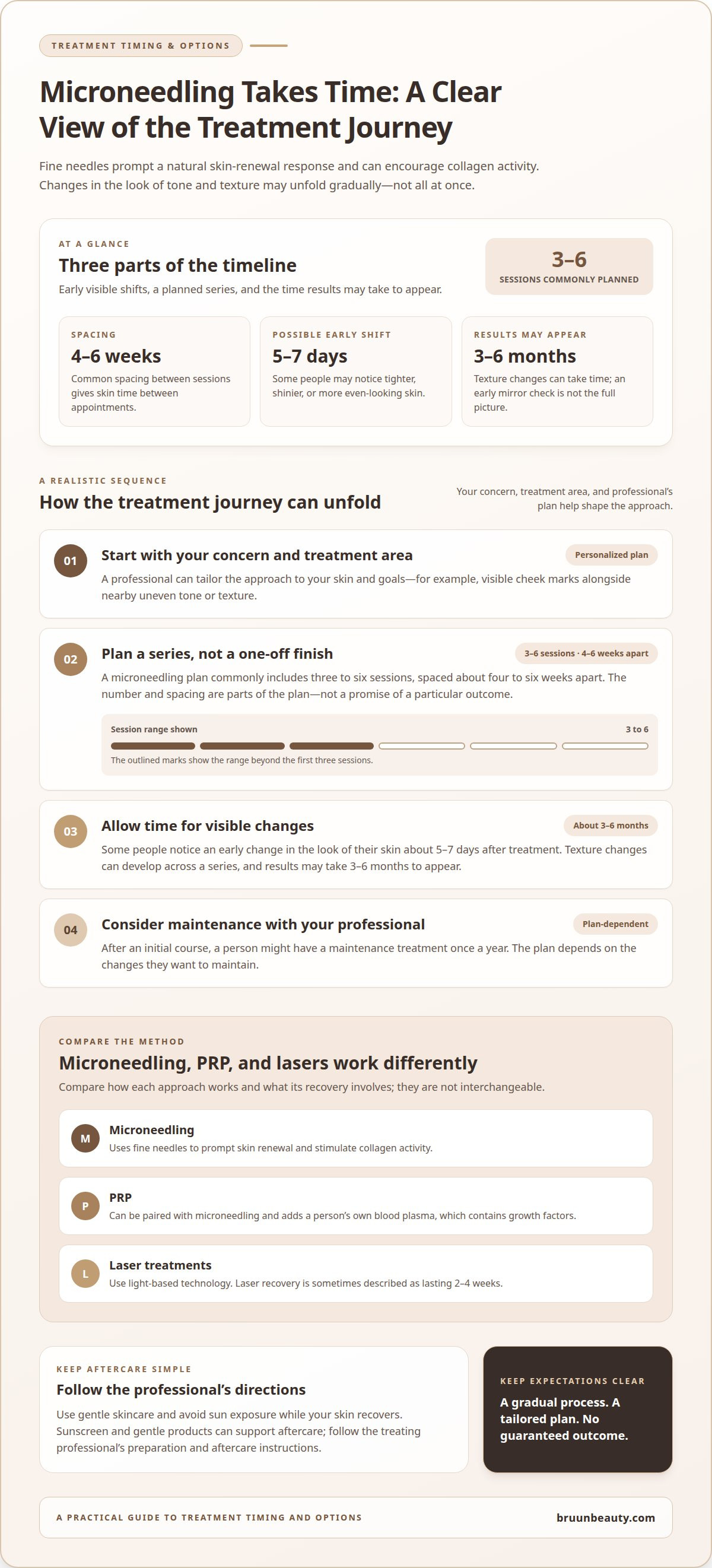
Timing can shape expectations. Some people may notice tighter, shinier, or more even-looking skin about 5 to 7 days after treatment. Changes in texture can develop across a series of treatments, so the first visible shift doesn’t necessarily reflect the full outcome.
Before treatment, discuss your goals and the areas you’d like to focus on with a professional. They can tailor the approach to your skin’s needs and help set expectations for changes in tone and texture. The plan may account for concerns such as uneven cheek tone or rough texture on the face.
To explain the treatment simply, connect the concern to the area and goal, such as uneven cheek tone or rough texture on the face. Microneedling products relate to this treatment approach. Professional care and home rollers aren’t interchangeable, so keep the distinction clear when discussing expectations for tone or texture.
Microneedling may be considered for visible discoloration and uneven pigmentation because it prompts skin renewal. This describes a possible focus on the appearance of variation, not a promise that every mark will change. The renewed surface may look more uniform in color and texture, which could make some dark spots less noticeable. Results vary, and no particular outcome is guaranteed.
Comparisons with PRP, lasers, and other treatments
Microneedling, platelet-rich plasma (PRP), and laser procedures work in different ways. Compare their methods and recovery rather than treating them as interchangeable. Your main concern, such as uneven texture or visible discoloration, can help you decide which differences are most relevant.
How the approaches differ
Microneedling uses fine needles to stimulate collagen activity as the skin renews. PRP can be paired with microneedling and uses a person’s own blood plasma, which contains growth factors. This adds a distinct element to the procedure; it is not simply another name for microneedling.
Laser treatments use light-based technology, while microneedling relies on a device with needles. The recovery period can differ: laser recovery is sometimes described as lasting 2 to 4 weeks. “Less invasive” alone doesn’t tell you which approach suits your concerns. Ask what each method targets, how its sessions are planned, and what the recovery involves.
Session timing and results
A microneedling plan commonly includes three to six sessions, spaced about four to six weeks apart. This spacing gives the skin time between appointments and allows collagen production to continue. Results can take 3 to 6 months to appear, so an early mirror check won’t show the full course.
Maintenance depends on the treatment plan and the changes you want to maintain. After an initial course, a person might have a maintenance treatment once a year. Explain that the number of sessions, the spacing between them, and the timing of visible changes are separate parts of the process, not one appointment with an instant finish.
Preparation and aftercare
Before treatment, follow the treating professional’s preparation instructions, which should reflect the method and your skin. After microneedling, keep your skincare gentle and avoid sun exposure while your skin recovers. Sunscreen and gentle products can support aftercare; irritating products may not suit freshly treated skin.
If your skin feels sensitive after a session, for example, pause harsh skincare and stick to gentle care and sun protection. Follow the professional’s aftercare directions rather than adding exfoliation or strong products. Keeping your routine simple helps you focus on recovery instead of layering treatments.
To compare options clearly, summarize the distinction: microneedling stimulates renewal with needles, PRP adds plasma, and lasers use light. Then discuss the treatment schedule and aftercare as part of the decision. Microneedling skincare and tools can help you explore products related to this approach.
How microneedling stimulates collagen and elastin
Microneedling uses fine needles to prompt the skin’s natural renewal response. This process can encourage collagen and elastin activity, which contribute to the skin’s structure and appearance.
Collagen Production
Microneedling stimulates collagen production by creating a controlled signal that prompts the skin to renew itself. Collagen supports the structure of skin tissue, which matters when your focus is firmness, texture, or fine lines. Changes develop gradually rather than appearing immediately after one appointment.
Elastin Stimulation
Elastin helps skin stretch and return toward its usual shape, while collagen provides structural support. Microneedling encourages a renewal response involving both proteins, which is why they are often discussed together. They play different roles, but both can influence how smooth and resilient skin looks over time.
Collagen and elastin production naturally decline with age. Microneedling aims to stimulate the skin’s own response rather than supply these proteins directly. Someone concerned about fine lines, for example, might discuss texture and firmness as related goals rather than expect one concern to have a separate, instant solution.
Collagen activity can remain elevated for 3 to 6 months after microneedling. That longer timeline helps explain why visible changes may continue after a session instead of appearing all at once. It also separates the skin’s internal renewal process from the day-to-day appearance of the surface.
Think of the process in three stages: fine needles create a controlled stimulus, the skin responds with renewal activity, and collagen production can continue afterward. Each stage follows its own timeline. Surface changes may be visible first, while deeper structural changes take longer to appear.
That distinction helps set practical expectations for skincare. Gentle care supports the skin’s surface, while microneedling works through a renewal response beneath it. For instance, don’t judge the process only by how skin looks immediately after a treatment; collagen activity may continue for months, including the 3 to 6 months following treatment.
When explaining the benefits, describe collagen as structural support and elastin as flexibility. Then connect both to a goal, such as smoother-looking skin or softer-looking fine lines. This clear explanation avoids promising a specific result and helps a friend understand why microneedling’s effects develop gradually.
Potential benefits for scars and wrinkles
Microneedling may soften the appearance of some acne scars and wrinkles through gradual skin renewal. The type of concern and the treatment plan influence what changes may become visible.
Potential Benefits for Scars
Microneedling may improve the appearance of acne scars by encouraging collagen production and scar-tissue remodeling. Research has reported mild improvement in post-acne scarring after two sessions. This gives you a concrete way to explain the potential benefit: changes may start subtly, and the goal is a softer-looking scar, not erased skin.
Scar type matters. Raised acne scars have been reported to respond better to microneedling than indented or depressed scars, so the term “acne scar” alone does not predict the response. A professional considers the scar’s shape and location when planning treatment. Shallow marks across the cheeks, for example, differ from raised scars along the jawline.
A series of treatments may improve scar-tissue hydration and elasticity, making scars less noticeable overall. Set a realistic goal: improve the surrounding skin’s appearance and soften the contrast of a scar, rather than expect complete removal. If a friend asks about “scar rejuvenation,” explain that the term refers to gradual changes in appearance, not a guaranteed outcome.
Softening Fine Lines and Wrinkles
Microneedling may soften the appearance of fine lines and wrinkles by stimulating collagen and elastin, which support skin firmness and flexibility. This minimally invasive procedure works through a skin-renewal response, so it is more accurate to describe gradual improvement than instant wrinkle reduction. Someone considering treatment for forehead lines should understand that changes may develop over time.
Radiofrequency microneedling is a related option that combines needles with radiofrequency energy. Reported wrinkle-score reductions can approach 50% after two to three sessions, but that figure describes a specific treatment context, not a promised result for every person. The method and treatment area matter when discussing what “softer” might look like.
A simple comparison can help explain the benefit: a fine line may look less pronounced, while deeper wrinkles can remain visible. Microneedling aims to improve skin’s appearance through renewal, not freeze facial movement or erase every crease. This distinction helps your friend weigh a series of treatments against their specific concern and desired degree of change.
It also helps to distinguish scar goals from wrinkle goals. Acne scars involve changes in skin texture, while wrinkles are folds or lines. Both may respond to collagen-focused rejuvenation, but their appearance and treatment planning differ. Naming the concern clearly makes a discussion of potential benefits more useful and grounded.
Professional microneedling versus home rollers
Professional microneedling and a home roller are not interchangeable. The device, technique, and goals differ, so compare the care involved with the effect you want, such as smoother-looking texture or less visible pigmentation.
How can someone choose a qualified microneedling provider? Look for a healthcare professional specially trained in microneedling, then discuss your goals and whether the procedure suits them. Ask how the provider would tailor the treatment area and plan to concerns such as acne scars, fine lines, or uneven tone.
Professional care involves a controlled procedure and a plan suited to your skin and goals. A home derma roller is a handheld device, but owning one does not provide the training or individualized approach of a professional. If you are concerned about pigmentation on your cheeks, for example, discuss that goal and area with a trained provider.
Healing and expected effects also vary by approach. Professional microneedling may involve multiple appointments, while home rolling does not automatically follow a professionally planned course. To explain microneedling benefits to a friend, distinguish the tool from the treatment: a roller is a device, while professional care includes trained technique and planning around an aesthetic concern.
Professional plans commonly include three to six sessions, spaced four to six weeks apart. This helps explain why effects may develop gradually rather than after one procedure. If you’re thinking about how to explain microneedling benefits to a friend, describe the appointments as part of a course of treatment, not a promise that everyone will get the same results.
How much does professional microneedling cost in the United States? The area treated and the procedure type affect the cost, so use the range as general context, not as a quote for a specific treatment.
For a friend comparing options, summarize the distinction plainly: professional care pairs a trained provider with a tailored plan; a home roller is a handheld device used outside that setting. Comparing microneedling devices and skincare can help clarify which products relate to the approach, while the treatment goal, session schedule, and aftercare provide important context.
Bruun Beauty
Bruun Beauty offers skincare and treatment supplies to help you explore microneedling-related options with clearer context. If you’re considering products for a professional or advanced at-home routine, the Advanced Microneedling Serum SD - Control Salmon DNA Ampoule Serum is one option to explore alongside your treatment plan. Jelly Mask Kits and BB Glow Treatment Supplies serve different skincare interests, so choose based on your specific goals rather than treating them as substitutes for microneedling.
Understanding the difference between professional treatment and home rollers can help you make more informed product choices. For questions about Bruun Beauty’s offerings, contact Bruun Beauty for assistance exploring the options.
Make your next skincare decision with clarity
A useful next step is to write down the change you want to see, such as smoother-looking texture or deciding whether a professional approach suits you better than a home tool. This makes it easier to focus on what matters instead of getting distracted by dramatic promises or product trends.
If you’re deciding how to explain microneedling benefits to a friend, keep the conversation personal and practical. Share why you’re interested, what outcome you hope for, and why professional guidance matters to your decision. Your goals can help you choose an approach and products that fit it.
Keep your expectations grounded and your skincare choices intentional. A clear plan is a positive place to start.
Here’s to making informed choices and enjoying the process of caring for your skin.
Frequently Asked Questions
What is microneedling?
Microneedling is a cosmetic procedure that uses a device with fine needles to prompt skin renewal. A professional may tailor the approach to concerns such as uneven texture or visible acne marks. If rough-looking cheek texture is your focus, for example, describe the area and your goal when discussing whether microneedling fits your skincare plans.
Are derma roller results permanent?
Derma roller results are not necessarily permanent. Skin continues to change, and visible improvements may be temporary. Home rolling also differs from a professionally planned treatment, so another person’s experience will not predict yours. Consider what you want to maintain and how the tool fits your routine before treating a roller as a long-term solution.
How can you support your skin after microneedling?
Follow the treating professional’s aftercare instructions and keep your routine gentle while your skin recovers. Protect your skin from sun exposure, and avoid adding harsh skincare steps unless your provider directs you otherwise. If you have questions about your routine, ask the professional who performed the treatment.
What skin concerns can microneedling help improve?
Microneedling may improve the appearance of uneven texture, some acne scars, fine lines, and discoloration. Be specific about your concern: shallow cheek marks differ from forehead lines or sun-related spots. Naming the area and the visible change you hope to see can make a discussion about treatment goals more focused and useful.
How does microneedling stimulate collagen and skin renewal?
Fine needles provide a controlled stimulus that prompts the skin’s natural renewal response, including collagen activity. This process takes time rather than creating instant surface smoothing. Someone considering treatment for texture, for example, can think of it as encouraging gradual renewal, not delivering a quick-fix resurfacing effect.
What results can people realistically expect from microneedling?
People may notice gradual improvements in the appearance of concerns such as uneven texture or fine lines. Microneedling does not erase every scar or crease, and one person’s outcome cannot predict another’s. To set expectations, choose one visible concern and describe what a modest, noticeable improvement would mean for that specific area.
How many microneedling sessions are usually needed, and how far apart?
A common plan includes three to six sessions, spaced four to six weeks apart. The schedule depends on the treatment goal and area, and describes a course rather than closely repeated appointments. Keeping notes on visible changes between sessions can help you explain what you notice during follow-up conversations.
How does microneedling compare with chemical peels or laser treatments?
Microneedling uses fine needles to prompt renewal; chemical peels use exfoliating ingredients, while laser treatments use light-based technology. These approaches differ in method, planning, and recovery. If you’re comparing them for a concern such as texture or discoloration, discuss how each addresses that goal rather than assuming one option suits everyone.
How to use a Korean 10-step skincare routine for hydration
Self-care rituals for better skin through mindful daily habits
Related Posts

PDRN Benefits for Skin: Regeneration, Results and Safety

How to Dispose of Used Microneedle Cartridges Safely

Self-care rituals for better skin through mindful daily habits

How to use a Korean 10-step skincare routine for hydration

Microneedling for atrophic scars: clinic or at-home results

V-Line Lifting Masks and Their Claimed Face-Shaping Effects
