

Microneedling and Skin Care for Keratosis Pilaris
The bumps and the dark marks they leave behind are different concerns. Microneedling may improve the appearance of hyperpigmentation left after keratosis pilaris, but it isn’t the first recommendation for discoloration on the arms. Whether microneedling can help with keratosis pilaris depends on what you want to address: the bumps come from keratin buildup in hair follicles, while lingering marks call for a different approach.
If you’ve tried to smooth rough skin but still notice uneven tone, it helps to treat these as separate concerns. This guide explains what causes keratosis pilaris, when microneedling may be considered for lingering marks, and why gentle exfoliation and regular moisturising matter. You’ll also learn what to expect and how to build a routine that supports smoother-feeling, more even-looking skin without relying on scrubbing alone.
Key Takeaways
- Keratosis pilaris develops when keratin builds up in hair follicles, often creating rough bumps on the upper arms, thighs, cheeks, or buttocks.
- Microneedling may help improve the appearance of lingering dark marks, but it isn’t the first step for discoloration on the arms.
- Learn how treatment spacing and gentle aftercare can support a more comfortable microneedling routine.
- Scrubbing alone won’t clear keratin plugs; gentle exfoliation and consistent moisturising are important parts of skin care.
- Explore how microneedling serums and jelly masks can complement a skin-care routine focused on nourished, smoother-looking skin.
What Causes Keratosis Pilaris?
Keratosis pilaris develops when keratin, a protein in the skin, builds up inside hair follicles. Instead of shedding smoothly, excess keratin can collect around a follicle and form a small bump. This often creates a rough texture that feels different from the surrounding skin. The buildup explains why bumps form around follicles rather than appearing evenly across the skin.
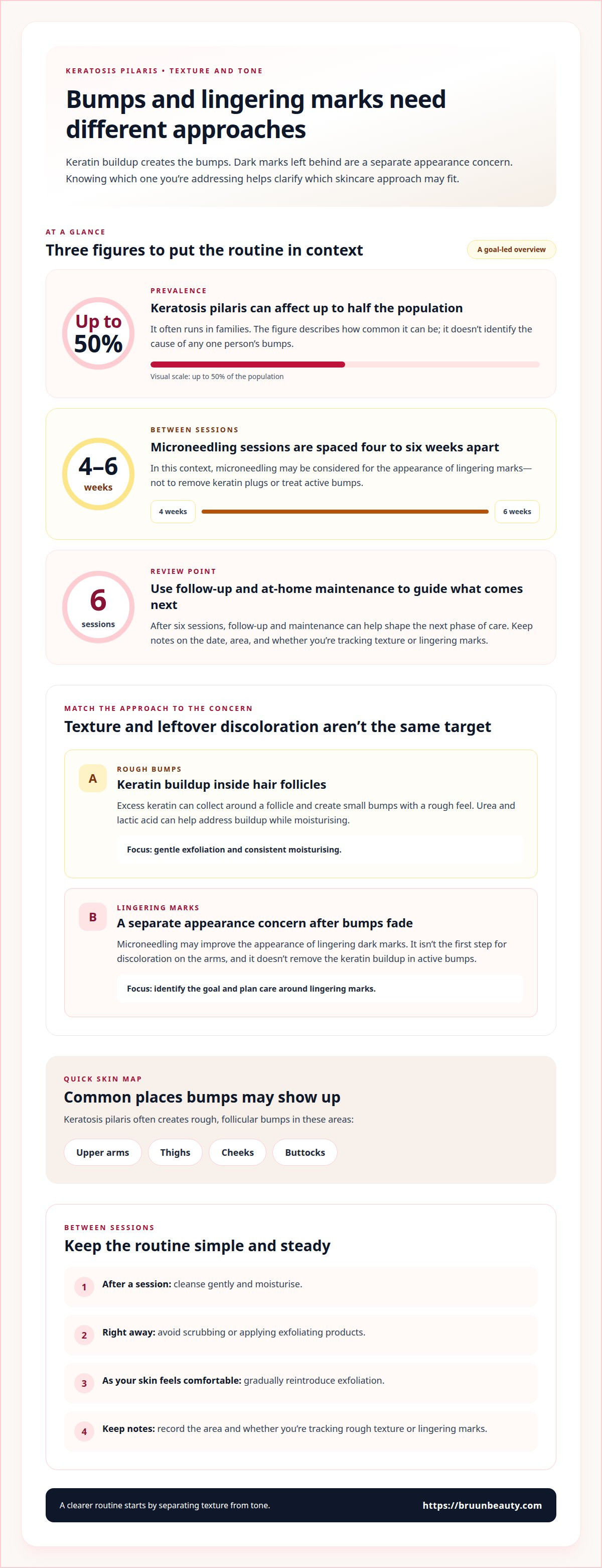
The exact reason for the buildup can vary, and keratosis pilaris tends to run in families. It can affect up to 50% of the population. That figure helps put the condition in perspective, but it doesn’t tell you what caused an individual person’s bumps. A family pattern may be a clue, while the visible follicular texture points to where keratin has accumulated.
Keratosis pilaris is generally harmless and typically doesn’t cause pain or irritation. It isn’t contagious, so ordinary contact won’t spread it to someone else. These details can help distinguish it from a painful or spreading skin change. If bumps feel uncomfortable or look different from your usual pattern, describing what you see and feel can help clarify what needs attention.
There’s no cure for keratosis pilaris, so it’s helpful to distinguish managing its appearance from removing the underlying tendency. Keratin buildup can recur even after the skin looks or feels smoother. A realistic goal is to support smoother-feeling, moisturised skin, rather than expect one step to permanently stop follicular buildup.
- Keratin buildup: Excess keratin collects inside hair follicles.
- Common sign: Small follicular bumps create a rough texture.
- Typical course: The condition is harmless, noncontagious, and has no cure.
Knowing the cause also helps you judge which concern you’re addressing. Keratin buildup creates the bumps; discoloration left behind is a separate appearance concern. That distinction matters before considering approaches such as microneedling products and tools. Microneedling isn’t a way to remove the keratin plugs themselves, so understanding the goal comes first.
If rough bumps are your main concern, focus on the texture and consistent skin care. If the bumps have faded but marks remain, you’re addressing a different concern. Identifying whether you have active bumps, lingering discoloration, or both gives you a clearer starting point.
Microneedling side effects and treatment intervals
Plan microneedling around a clear goal and a simple routine. For keratosis pilaris, the schedule matters most when addressing lingering marks, not active bumps. Sessions are spaced four to six weeks apart. This gives you time to follow a consistent skin-care routine between appointments and observe changes in the treated area.
Standard skin-care options serve a different purpose. Urea and lactic acid can help address keratin buildup while moisturising, so they suit routines focused on rough bumps. Microneedling isn’t a substitute for these topical steps. Its possible role is addressing residual marks, so the concern you want to treat is the key difference between the approaches.
Professional microneedling costs in the United States depend on the treatment area, practitioner, and planned number of sessions. A small area and a broader area require different treatment plans. The session schedule also affects the total cost, so no single figure applies to everyone or every treatment goal.
Microneedling doesn’t target the keratin buildup in active bumps. If an area looks inflamed, keep your routine gentle and focused on comfort rather than adding a procedure. The distinction is the goal: topical care supports rough texture, while microneedling may be considered for lingering marks.
Using a microneedling device at home doesn’t make it a direct treatment for keratosis pilaris bumps. Be clear about the purpose, follow the device instructions, and don’t target active bumps. For any device-based routine, consider the planned area and your skin’s current condition.
After a session, keep your routine simple. Cleanse gently, moisturise, and avoid scrubbing or applying exfoliating products right away. Reintroduce exfoliation gradually once your skin feels comfortable. This sequence helps you maintain a steady routine without adding several new steps at once.
Use the time between sessions to keep notes on the treated area. Record the date, location, and whether you’re tracking texture or lingering marks. After six sessions, follow-up and at-home maintenance can help guide the next phase of care. Notes also make it easier to discuss your progress clearly.
Choose products that fit the routine you’ve planned, rather than adding extra steps just because a session is scheduled. A simple microneedling skincare routine from Bruun Beauty can keep your focus on consistent care between appointments.
Keep the interval in mind when deciding whether to continue: sessions for keratosis pilaris are spaced four to six weeks apart. This leaves time to follow your existing routine and note whether the concern is rough texture or lingering marks. Don’t treat a calendar reminder as a reason to add products or change several steps at once.
Between appointments, focus on the treated area and how it looks over time. If your skin feels uncomfortable or looks inflamed, keep care gentle instead of adding exfoliation or another procedure. Once it feels comfortable, gradually return to exfoliation as planned. Clear notes about the area and your concern can help keep the next step aligned with your goal.
Exfoliation and moisturising
Keratosis pilaris care works best as a steady routine, not a scrub-heavy approach. Dryness, cold weather, and too little moisture can make rough texture more noticeable. Gentle exfoliation helps loosen surface buildup, while moisturiser supports skin comfort. Because these steps serve different purposes, combining them thoughtfully matters more than scrubbing harder.
Scrubbing alone won’t remove hardened keratin plugs inside follicles. A rough washcloth or abrasive body scrub can irritate skin without addressing that buildup. Instead, choose a gentle exfoliator and use it two to three times a week. Don’t add extra scrubbing on the same day just because bumps remain visible.
Ingredients can make your routine more targeted. Urea and lactic acid can help break down keratin buildup while moisturising, and glycerine supports moisture. A lactic acid-based body cream is one option for daily moisturising. Follow product directions and introduce exfoliating products gradually, especially if your skin feels dry or sensitive.
Some routines include a salicylic acid-based cleanser in the morning and at night. Other products use alpha hydroxy acids (AHAs) or beta hydroxy acids (BHAs); the guidance in this article recommends at least 10% AHA and 2% BHA. Concentration isn’t the only consideration, so pay attention to how your skin responds when adding an exfoliant.
Keep cleansing gentle, too. Fragrance-free products can help you avoid unnecessary scent exposure, so skip scented soaps and body washes on areas with rough bumps. For example, switch from a strongly fragranced shower gel to a fragrance-free cleanser, then apply moisturiser after washing. This simple sequence supports a consistent routine without extra scrubbing.
- Cleanse: Use a gentle, fragrance-free cleanser instead of scented body wash.
- Exfoliate: Use a gentle exfoliator two to three times a week.
- Moisturise: Apply a moisturiser daily; consider lactic acid, urea, or glycerine.
Change one step at a time. If you start using a lactic acid body cream, keep the rest of your routine familiar before adding another exfoliant. That makes it easier to notice whether the product feels comfortable. If your skin becomes irritated, pause the new exfoliating step and return to gentle cleansing and moisturising.
After microneedling, don’t rush back to exfoliation. Wait until your skin feels comfortable, then gradually reintroduce products rather than applying acids immediately. Keep daily moisturising consistent and cleanse gently while your skin settles. A simple routine is easier to follow than several active products used at once.
Keratosis pilaris symptoms and common locations
Keratosis pilaris often appears as small bumps with a rough, sandpapery feel. Common locations include the upper arms, thighs, cheeks, and buttocks. Check each area separately, since the visible pattern and texture can differ from one place to another. A cheek, for example, may look uneven, while an upper arm feels rough to the touch.
Describe what you notice in specific terms. Are the bumps easier to see, feel, or both? Does the area feel consistently rough, or does the texture vary? These observations help distinguish a texture concern from a change in skin color without assuming they need the same approach.
Map the affected areas before changing your routine. Note whether bumps appear on one or both upper arms, whether your thighs are affected, and whether you also notice them on your cheeks or buttocks. This simple record can help you apply routine skin care consistently instead of focusing only on the area that first catches your attention.
Texture and color can appear together, but they describe different features. You might, for instance, feel raised bumps on your thighs and see darker-looking marks nearby. Record each feature separately: “rough bumps” describes texture, while “uneven color” describes appearance. This makes it easier to track the specific change you’re concerned about.
Use a consistent method to observe changes. Choose one area, such as an upper arm, and note its feel and appearance under similar lighting. Don’t compare a close-up cheek photo with a distant arm photo; differences in angle can make texture or color seem more pronounced. A brief written note can keep your observations specific.
- Upper arms and thighs: Note where rough bumps are visible or easy to feel.
- Cheeks and buttocks: Record whether the concern is texture, color, or both.
- More than one area: Track each location separately instead of combining observations.
These details also help you set a clear skin-care goal. If you mainly feel roughness, describe the texture you want to improve. If you mainly notice uneven color, record where the marks appear. If both are present, track them as separate goals. Clear observations give you a practical way to assess whether your routine addresses the concern that matters to you.
Microneedling for hyperpigmentation left after keratosis pilaris
Microneedling’s possible role is narrower than its name may suggest. The appropriate approach depends on whether the concern is lingering discoloration or active bumps. Skin care and chemical peels may improve the appearance of discoloration, with microneedling sometimes considered alongside them.
Can microneedling help with keratosis pilaris? It may help improve the appearance of lingering marks after hyperpigmentation begins to resolve, but it doesn’t remove active keratin plugs. The distinction matters: microneedling isn’t a first step for discoloration on the arms.
For arm discoloration, initial steps include a skin lightener and sunscreen, followed by chemical peels. Microneedling may be considered later for remaining scars, once hyperpigmentation has begun to resolve. If you’re weighing whether microneedling can help with keratosis pilaris-related marks, let the concern being addressed guide the approach.
Consider each area separately. An upper arm might have rough bumps and lingering dark marks, while a thigh may mainly feel uneven. Treating both as one issue can blur your goal. First identify whether bumps remain, marks remain, or both, then consider which concern needs attention first.
If the bumps are still prominent, focus on skin care that supports smoother-feeling texture. If they have faded but discoloration remains, topical skin care and chemical peels may be considered to improve its appearance. Microneedling may have a role for remaining scars, but it isn’t a shortcut for keratosis pilaris itself.
Match the method to the concern. A plan for active bumps differs from one for lingering discoloration, and your skin’s current appearance matters. Keep moisturising and gentle exfoliation as routine skin-care steps. Microneedling doesn’t replace these habits or prevent keratin buildup.
Use this simple distinction to frame your next step:
- Rough bumps remain: Focus on routine skin care for texture.
- Dark marks remain: Consider approaches for discoloration first.
- Scars remain after marks begin fading: Microneedling may be considered as part of a broader approach.
Microneedling may improve the appearance of marks left after keratosis pilaris, but it doesn’t target the underlying bumps. For arm hyperpigmentation, it isn’t the initial recommendation. Keeping that distinction clear helps you choose a relevant next step.
For marks that persist after keratosis pilaris, the aim is to improve the skin’s appearance, not address active bumps. Topical skin care and chemical peels may be used for this purpose, with microneedling sometimes considered alongside them. These options address lingering discoloration, not keratosis pilaris itself. Let the concern guide your approach: visible pigmentation calls for appearance-focused care, while active bumps are a separate issue.
For arm hyperpigmentation, the suggested sequence starts with a skin lightener and sunscreen, followed by chemical peels. Microneedling isn’t the first recommendation, but may be considered as part of a broader approach to improve appearance. Keeping the steps in order distinguishes initial care for discoloration from options considered later. Topical care, peels, and microneedling aren’t interchangeable; their possible roles depend on the concern that remains.
Bruun Beauty
Bruun Beauty sells skincare and beauty supplies for professionals and at-home skincare enthusiasts. If you’re exploring microneedling for lingering marks, the Advanced Microneedling Serum SD - Control Salmon DNA Ampoule Serum is one option in its microneedling range. Jelly Mask Kits and BB Glow Treatment Supplies are also available for other skincare routines.
Choose products that fit your routine and the concern you’re addressing. Microneedling won’t remove active keratosis pilaris bumps, so keep that distinction in mind when exploring your options. For product questions, contact Bruun Beauty.
Choose Your Next Step With Confidence
Start with a clear goal for your skin. Decide whether you’re focusing on rough texture, lingering marks, or a routine that supports both. This distinction keeps your choices practical and helps you avoid expecting one technique to address every skin concern.
So, can microneedling help with keratosis pilaris? It may have a role in improving the appearance of lingering marks, but it won’t remove active bumps. If you’re considering it, be clear about the treatment goal and keep everyday skin care gentle and consistent.
Explore products that support your microneedling routine, and take the next step at a pace that feels right for you.
Thoughtful choices add up. Focus on how you want your skin to look and feel, then build your routine from there.
Frequently Asked Questions
What should a simple routine look like after microneedling?
Keep your routine familiar, with basic cleansing and moisturising. Follow the device or procedure instructions for when to resume your usual products. Avoid trying several new products at once, so it’s easier to tell which steps feel comfortable. A calm, consistent routine gives you a clearer baseline before you reintroduce exfoliants or other active ingredients.
How can I tell whether a product feels comfortable for my skin?
Pay attention to how your skin feels after applying each product, not just how it looks. Introduce one new item at a time and note any stinging, tightness, or unusual discomfort. If a product feels unpleasant, pause it and keep the rest of your routine simple. This helps you identify which products suit your routine without changing several things at once.
How can I track changes in KP-prone areas?
Take photos in similar lighting and from a similar distance, then compare the same area over time. Track texture and color separately: one may change while the other stays the same. For example, note whether an upper arm feels smoother, looks less uneven, or both. Consistent observations can make gradual changes easier to notice than relying on memory alone.
What should I clarify before planning a microneedling session?
Be clear about the area you want to address and the change in appearance you hope to see. Explain your usual skin-care routine, including exfoliating products, so the procedure plan can account for your existing steps. Ask how aftercare fits your routine and what signs indicate you can resume your usual products. Clear expectations make it easier to follow the plan consistently.
Can microneedling worsen KP, cause infection, or lead to scarring or hyperpigmentation?
Microneedling may cause temporary redness and irritation after the procedure.
How many microneedling sessions are needed, and how long do results last for KP?
Sessions are spaced four to six weeks apart, with follow-up and at-home maintenance after six sessions. The duration of results isn’t stated.
V-Line Lifting Masks and Their Claimed Face-Shaping Effects
V-Line Lifting Masks and Their Claimed Face-Shaping Effects
Related Posts

PDRN Benefits for Skin: Regeneration, Results and Safety

How to Dispose of Used Microneedle Cartridges Safely

Self-care rituals for better skin through mindful daily habits

How to Explain Microneedling Benefits for Skin and Scars

How to use a Korean 10-step skincare routine for hydration

Microneedling for atrophic scars: clinic or at-home results
