

PDRN Benefits for Skin: Regeneration, Results and Safety
What if skin regeneration depends less on a quick surface glow and more on supporting the skin’s renewal process? It’s natural to ask whether PDRN is safe to use on skin, especially when products and application methods vary. The potential PDRN benefits for skin regeneration include support for hydration, smoother-looking texture, elasticity, and radiance, but the details matter.
This guide explains how PDRN is thought to work, what it may offer, and when changes in appearance might become noticeable. It also covers practical safety questions, including how PDRN products are used and how to assess whether a formula suits your skin. This context can help you set realistic expectations and make a more informed choice about PDRN in your skincare routine.
Key Takeaways
- Learn how PDRN may support skin renewal and what role collagen and elastin play.
- Understand why an immediate glow differs from changes that develop over time.
- Explore simple aftercare habits that help maintain hydration and skin comfort.
- See how hydration, texture, elasticity, and radiance may respond to PDRN.
- Find out how Bruun Beauty’s Salmon DNA serum and jelly masks may fit into your skincare routine.
How Does Microneedling Enhance PDRN’s Effects on Collagen Production?
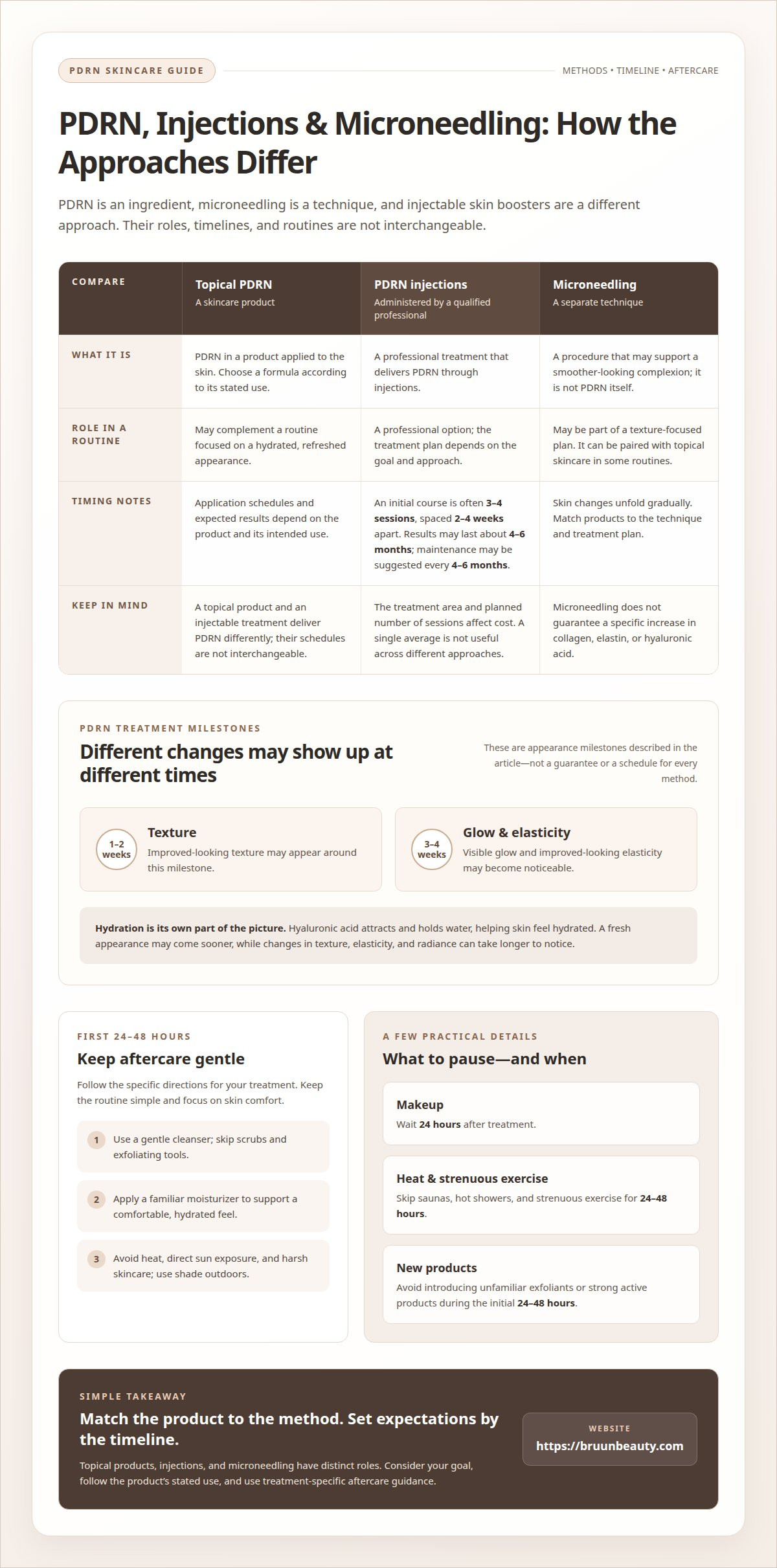
Microneedling and PDRN play different roles in a skincare routine. Microneedling may support a smoother-looking complexion, while PDRN is used in skincare products to support a hydrated, refreshed appearance. Together, they may complement a routine focused on skin texture and hydration.
Changes in skin appearance take time. After microneedling, the skin’s renewal response unfolds gradually. PDRN may complement a skincare routine focused on a refreshed appearance. Hyaluronic acid has a different role: it attracts and holds water, helping skin feel hydrated. Moisture support can complement a routine focused on skin texture, but hydration and collagen production are distinct processes.
How does PDRN compare with PRP, microneedling, and skin boosters? PDRN is an ingredient, PRP refers to platelet-rich plasma, microneedling is a procedure, and skin boosters describe injectable, hydration-focused treatments. These approaches are not interchangeable, though a practitioner may combine them as part of a treatment plan.
Common PDRN methods include topical products applied to the skin and injections administered by a qualified professional. Microneedling is a separate technique that may be paired with topical skincare in some routines; the method and product should match the intended use.
In practice, the product and application method matter. A professional considers the skin’s condition, the goal, and whether a topical approach or an injectable treatment fits the plan. For example, someone seeking a hydrated look may prioritize moisture support, while a plan focused on texture may include microneedling. Choose products according to their stated use rather than assuming every PDRN formula suits every procedure.
Microneedling does not guarantee a particular increase in collagen, elastin, or hyaluronic acid. Responses vary according to individual factors and the treatment approach. Think of changes in skin appearance as a gradual process, not an immediate result: the aim is to support a comfortable, hydrated routine.
When Will You See Results from PDRN?
A quick glow and gradual skin changes happen on different timelines. Improved texture may appear 1-2 weeks after PDRN treatment, while visible glow and improved elasticity may appear 3-4 weeks after treatment. These milestones help distinguish an early surface effect from changes that develop over several weeks.
Hydration may contribute to a fresh appearance soon after treatment, but it is not the whole timeline. Changes in texture may be noticed earlier, while elasticity and radiance may become more noticeable later. The application method matters too: topical products and injections deliver PDRN differently, so their schedules and expected results are not interchangeable.
What is the average cost of PDRN skin treatments in the United States? The cost depends on whether PDRN is applied topically or through injections, the treatment area, and the planned number of sessions. Because these factors vary, a single average is not especially useful for comparing different approaches.
How many PDRN sessions are typically recommended and how far apart? An initial course of 3-4 PDRN injection sessions is often spaced 2-4 weeks apart. That schedule applies to injections, not automatically to topical products; the product and treatment method shape the routine.
For injections, results may last about 4 to 6 months, with maintenance treatment suggested every 4-6 months. Longevity depends on the treatment method, the skin concern being addressed, and how the skin responds. The number of sessions completed also matters: an initial course and a maintenance visit serve different roles in a treatment plan.
Skin condition and daily habits can affect how long a healthy-looking appearance lasts. For example, ongoing dryness can make texture and radiance less noticeable, while consistent hydration supports skin comfort between treatments. Keep notes on texture, glow, and elasticity at each milestone, such as the 1-2-week and 3-4-week marks. This makes gradual changes easier to assess than relying on a same-day impression.
If microneedling is part of your skincare approach, explore microneedling skincare products alongside your treatment plan. Match the product to the method, and use the treatment timeline to set practical expectations for your routine.
Before a PDRN treatment, discuss your skin concerns and goals with your provider so you can understand which approach fits your routine. After microneedling or laser treatments, follow the aftercare guidance for that treatment and use products as directed.
How to Care for Your Skin After PDRN
A simple routine after PDRN treatment helps maintain hydration and skin comfort. For the first 24-48 hours, keep care gentle and avoid heat, direct sun exposure, and harsh skincare. This short reset gives your routine a clear focus: cleanse gently, add moisture, and avoid piling on active products.
Makeup can wait for 24 hours after treatment. During that time, keep hands and tools away from your face, and choose a clean pillowcase for your first night. If you use a professional treatment plan, follow its specific aftercare directions before returning to your usual products.
For the first 24-48 hours, build your routine around these basics:
- Use a gentle cleanser rather than a scrub or exfoliating tool.
- Apply a familiar moisturizer to support a comfortable, hydrated feel.
- Choose shade and limit direct sun exposure when outdoors.
Heat can make skin feel less comfortable after a treatment, so skip saunas, hot showers, and strenuous exercise for 24-48 hours. Choose a comfortably warm shower instead, and keep your evening routine brief. A cleanser followed by moisturizer is more practical than testing several new formulas at once.
Hydration matters beyond the first day. Drink water as part of your normal routine, and use a moisturizer that already works well for your skin. For example, if your face feels dry after cleansing, apply moisturizer while skin is slightly damp. Avoid introducing unfamiliar exfoliants or strong active products during the initial 24-48-hour period.
Once the initial recovery period has passed, return to your regular skincare gradually. Add one product at a time rather than restarting every active formula in a single evening. If you have had microneedling, follow the timing and product guidance for that treatment, since the method determines which aftercare steps apply.
Pay attention to how your skin feels during the first few days. Note any dryness, tightness, or discomfort, and adjust your routine with gentle hydration rather than extra exfoliation. A calm, consistent approach can help maintain a nourished appearance while your skin settles back into its usual routine.
Hydration, Texture, Elasticity, and Radiance Benefits
These cosmetic outcomes describe different aspects of how skin looks and feels. Distinguishing them helps you assess PDRN benefits for skin regeneration without treating one visible change as proof of every possible benefit.
Skin Hydration and Texture
Hydration concerns how comfortable and moisturized skin feels, while texture describes its surface. For example, makeup that flakes may point to a different concern than roughness you can feel while cleansing. PDRN is used in skincare for concerns that include dehydration and uneven texture. Your routine and the product’s intended use still matter when assessing these outcomes.
Observe one area and one quality at a time. Note whether your cheeks feel tight after cleansing or makeup settles unevenly around your nose. These specific observations are more useful than a broad goal such as “better skin.” They also help distinguish comfort from a smoother-looking surface, which are related but different outcomes.
Moisturizer can support everyday comfort, but it does not establish that a PDRN product caused a change. Keep familiar steps in your routine steady while assessing a new product. This makes your observations more useful and helps avoid confusing the effects of several changes made at once.
Elasticity, Radiance, and Clinical Evidence
Elasticity describes a supple appearance, while radiance refers to a brighter, less dull look. Each represents a different cosmetic goal. Someone concerned about dullness may focus on brightness, while someone noticing a less supple appearance may track elasticity. Defining your goal first helps you interpret product claims more carefully.
What skin benefits of PDRN are supported by clinical studies? Evidence needs to be evaluated according to the specific formulation, application method, and outcome measured. A finding about hydration does not automatically establish an effect on elasticity, radiance, wrinkles, or texture. The phrase PDRN benefits for skin regeneration can refer to different claims, so look for evidence that addresses the specific result being discussed.
When assessing a claim, note whether it concerns a topical product or a professional procedure. Consider, too, whether the measured outcome matches your goal. For example, a study on surface texture does not answer a question about radiance. This distinction helps you make a more informed choice and set a clear, realistic skincare objective.
PDRN’s Proposed Skin-Regeneration Mechanism
Understanding a proposed mechanism can help you decide how PDRN might fit into a skincare plan. It also helps distinguish ingredient science from the visible cosmetic goals you can track in your routine.
Build a Comfortable PDRN Routine
A routine works best when each product has a clear purpose. Decide whether your priority is a topical skincare step or a professional microneedling approach, then choose products intended for that use. Keeping the plan simple makes it easier to notice how your skin looks and feels without confusing changes caused by several new products.
Think of your skincare routine as a set of distinct steps, not a collection of ingredients that must all be used together. For example, if you’re considering a new PDRN product, keep familiar products consistent while you assess the new addition. You can explore microneedling products as part of that ingredient and application decision.
Comfort is useful information, too. Notice whether your usual routine feels manageable and whether your skin’s appearance stays consistent across the areas you are observing. If you are working with a professional, share the products already in your routine so they can take them into account when planning treatment.
Support a Consistent Skin-Renewal Plan
Consistency makes cosmetic changes easier to assess. Choose one visible goal, such as a smoother-looking cheek area, and observe it under similar lighting. Brief notes about your routine and how your skin looks can help distinguish a lasting pattern from a one-day change. Focus on appearance and comfort, not assumptions about cellular activity.
Product labels and application directions matter. Use a topical formula according to its directions, and follow the specific treatment plan for a professional procedure. Do not assume that products with a similar ingredient name share the same formulation or intended application. This distinction helps keep your skincare choices practical.
In a professional setting, a clear product plan can support consistent communication with clients. Explain the intended cosmetic goal in plain language, record which products are part of the routine, and avoid presenting a proposed mechanism as a guaranteed result. At home, choose a manageable routine you can follow consistently. In either setting, match product use thoughtfully to the skincare goal.
Bruun Beauty
Bruun Beauty gives you a product-focused next step after learning what PDRN may and may not do. If you’re exploring Salmon DNA skincare, the Advanced Microneedling Serum SD - Control Salmon DNA Serum connects directly with the ingredient discussed here. It lets you consider a PDRN-related product without treating a topical formula and an injectable treatment as the same approach.
Start by clarifying your intended routine. Are you interested in adding a topical serum, or learning about PDRN as part of a professional treatment plan? The distinction matters because products have different uses. Understanding application methods, proposed mechanisms, and aftercare can help you decide what fits your skincare goals.
For licensed estheticians and spa or salon owners, product selection is one part of planning a service menu. For people exploring advanced at-home skincare, understanding a product’s role in a routine can help before adding another step. In either case, focus on the formula’s intended use and the routine around it, rather than assuming the ingredient name guarantees a particular result.
Bruun Beauty also offers Jelly Mask Kits and BB Glow Treatment Supplies. These are separate skincare and treatment categories, not substitutes for PDRN or evidence of the same effects. A jelly mask may fit into a mask step in your broader routine, while BB Glow supplies serve a different treatment purpose. Keeping those roles clear helps you choose what to add.
There is no need to build an elaborate routine around one ingredient. Consider your current products, the method you are exploring, and whether your priority is a topical skincare step or professional treatment supplies. Then choose the category that meets that need. A measured approach keeps expectations grounded and helps distinguish cosmetic goals from medical claims.
Bruun Beauty offers products for professional settings and at-home skincare routines, including PDRN microneedling serums, Jelly Mask Kits, and BB Glow Treatment Supplies. Use what you have learned about PDRN’s proposed effects and application methods to guide your next product choice. Explore Bruun Beauty’s range and choose the products that fit your routine.
Choose Your Next Skincare Step with Confidence
Make your next skincare choice intentional. Start with the result you care about most, then consider whether a topical product or a professional treatment approach fits your routine. Understanding PDRN benefits for skin regeneration can help you ask clearer questions and set goals focused on gradual, healthy-looking skin rather than instant change.
Keep your routine comfortable and consistent as you explore. A simple plan makes it easier to notice what works for your skin and avoid adding several new steps at once. If you’re considering microneedling products, Bruun Beauty offers options for professional settings and advanced at-home skincare routines.
Take the next step at your own pace. Thoughtful product choices and a routine suited to your goals can support a nourished, smooth, radiant appearance.
Frequently Asked Questions
How do I add PDRN to my skincare routine?
Follow the product directions and review the ingredient list before adding a topical PDRN formula to your routine. Introduce it as a new step and notice how your skin responds. For a professional treatment, ask which topical products are included and what routine to follow afterward.
What should I expect during and after a PDRN microneedling treatment?
A PDRN microneedling session typically takes 45-60 minutes. The exact sequence depends on the treatment plan and the products used. Before booking, clarify which topical products the session includes and what routine to follow afterward. That helps you plan your day and choose simple, familiar skincare for the rest of your routine.
Can You Use PDRN with Other Actives?
PDRN may fit into a routine with other active ingredients, but introduce products thoughtfully. For example, avoid starting a new PDRN formula and a new exfoliating product on the same day. Follow each product’s directions and add one unfamiliar formula at a time so you can tell which steps suit your skin.
How Does PDRN Work?
PDRN is an ingredient used in some topical skincare formulas and aesthetic procedures, not a procedure itself. Its effects depend on the specific formula and how it is applied. When comparing products, read the intended-use directions rather than assuming that formulas with the same PDRN label work the same way.
How is PDRN different from other anti-aging ingredients like retinol or peptides?
PDRN, retinol, and peptides have different roles in skincare and are not interchangeable. Your choice depends on your routine goals and how your skin responds to each formula. If you are updating several steps, add one ingredient at a time. This makes it easier to identify which products fit comfortably into your routine.
What Is PN (Polynucleotide) and How Is It Different from PDRN?
PN stands for polynucleotide, while PDRN means polydeoxyribonucleotide. The terms are related but may appear differently in product descriptions. Use the exact ingredient name and the product’s directions as your guide. A shared reference to nucleotides does not establish that two formulas have the same composition or intended use.
What is PDRN and how does it work in skin regeneration?
PDRN is short for polydeoxyribonucleotide, a DNA-derived ingredient used in cosmetic skincare. It appears in topical products and professional treatment discussions, but the ingredient name alone does not tell you how a particular formula should be applied. Read the product directions and distinguish topical skincare from procedures that use different application methods.
What evidence supports PDRN for wrinkles, acne scars, and skin texture?
Assess evidence according to the specific concern, product formulation, and application method studied. Findings about texture, for example, do not automatically establish an effect on wrinkles or acne scars. Look for evidence that measures the outcome you care about, and do not treat results for one PDRN product as proof about every formula.
How to Dispose of Used Microneedle Cartridges Safely
How to Dispose of Used Microneedle Cartridges Safely
Related Posts

How to Dispose of Used Microneedle Cartridges Safely

Self-care rituals for better skin through mindful daily habits

How to Explain Microneedling Benefits for Skin and Scars

How to use a Korean 10-step skincare routine for hydration

Microneedling for atrophic scars: clinic or at-home results

V-Line Lifting Masks and Their Claimed Face-Shaping Effects
