

Preventative Anti-Aging Skincare for Daily Skin Support
Prevention starts with daily habits, not a complicated shelf of products. Preventative anti-aging skincare routines pair hydration and barrier support with broad-spectrum SPF 30 each morning, plus antioxidants such as vitamin C and retinoids introduced gradually.
Learn how preventative anti-aging skincare routines fit together, what preventive care means, and how it differs from corrective skincare, so you can build a practical routine for your skin.
Key Takeaways
- Build your routine around hydration and barrier support, using ingredients such as hyaluronic acid or glycerin to help keep skin hydrated.
- Apply broad-spectrum SPF 30 every morning, and reapply every two hours when spending extended time outdoors.
- Layer an antioxidant serum, such as vitamin C, in the morning before sunscreen to support a brighter, more even-looking complexion.
- Introduce retinoids gradually, starting once or twice weekly and increasing use as your skin builds tolerance.
- Think of prevention as steady daily care, while corrective skincare focuses on visible concerns that have already developed.
1. What is Preventative Anti-Aging Skincare?
Preventative skincare supports hydration, the skin barrier, and a more even-looking appearance before lines and wrinkles become pronounced. Collagen production begins declining in the mid-20s; it decreases by about one percent per year starting around age 20 to 25. Daily care cannot stop aging, but consistent habits can help slow premature visible changes.
Hyaluronic acid helps attract and retain water, making it a useful ingredient for hydration. Apply a moisturizer containing hyaluronic acid morning and night, choosing a texture that suits your skin. Glycerin is another humectant that can support hydration. For dry skin, choose a richer moisturizer; combination skin may benefit from a lighter formula on oilier areas.
The most useful ingredients depend on your goals. Daily broad-spectrum sunscreen helps protect against UV exposure, while retinoids can support collagen and improve the look of skin texture. Topical vitamin C can brighten skin and reduce the appearance of dark spots. A well-chosen moisturizer also helps maintain the skin barrier and keep aging skin comfortable and hydrated.
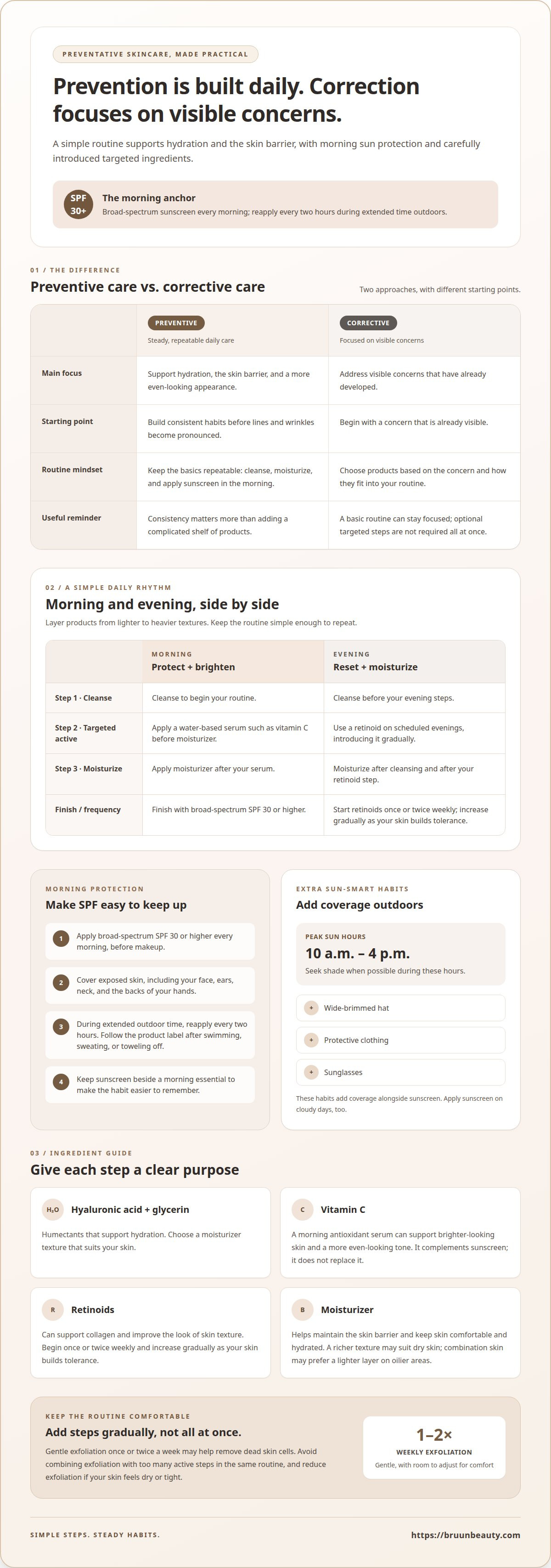
An effective basic routine has a few repeatable steps: cleanse, moisturize, and apply sunscreen in the morning. In the evening, cleanse and moisturize, and use a retinoid gradually if it suits your routine. Start with a low-concentration retinoid once or twice weekly, then increase use gradually as your skin builds tolerance.
Apply products from lighter to heavier textures. In the morning, cleanse, apply a water-based serum such as vitamin C, moisturize, then finish with sunscreen. At night, cleanse, apply a retinoid on its scheduled evenings, and moisturize. This order keeps your routine simple without layering every active ingredient at once.
Gentle exfoliation once or twice a week can help remove dead skin cells. Choose a gentle formula and avoid combining exfoliation with too many active steps in the same routine. Skin cell turnover changes with age, but aggressive scrubbing will not make the process more effective. Keep your skin barrier comfortable and reduce exfoliation if your skin feels dry or tight.
Skincare costs vary depending on ingredients, formula, product size, and how many steps you choose. A basic routine can focus on cleanser, moisturizer, and sunscreen; optional serums or retinoids add targeted steps. Compare products by their purpose and how easily they fit your daily routine, rather than building a shelf of overlapping formulas.
See a dermatologist if you need help choosing products for persistent concerns or want professional guidance about treatment options. A spot that changes in shape, color, or size should also be evaluated. These changes matter more than adding another cosmetic active to your routine.
For the best chance of sticking with your routine, use each product consistently and give it time to become a habit. For dry skin, prioritize moisturizer after cleansing; for combination skin, apply a lighter layer across oilier areas and more where skin feels dry. Keep your routine simple enough to repeat morning and evening.
2. Daily broad-spectrum sunscreen for preventing photoaging
Daily broad-spectrum sunscreen is a practical foundation for protecting your skin from UV exposure. Choose SPF 30 or higher and apply it every morning to exposed skin. Broad-spectrum protection covers UVA and UVB rays, which can contribute to changes in skin texture, uneven tone, and visible signs of aging. Consistent use makes sun protection part of care you can maintain, not an occasional extra.
Sun exposure can affect collagen production, the protein that helps skin feel firm and supported. UV exposure also contributes to dark spots and a rougher appearance over time. Some estimates attribute up to 90% of skin aging to sun damage. That makes sunscreen a useful daily step alongside moisturizer and other ingredients in preventative anti-aging skincare routines.
Apply sunscreen as the final step in your morning skincare routine, before makeup. Cover exposed areas, including your face, ears, neck, and the backs of your hands. Follow the product label for application instructions. If you spend extended time outdoors, reapply every two hours. Swimming, sweating, or toweling off can affect how long sunscreen remains on your skin, so follow the label after these activities.
Make sunscreen easy to remember by keeping it beside your morning moisturizer, toothbrush, or makeup. Apply it on cloudy days, too, and consider incidental exposure while driving or sitting near a bright window. Building this repeatable step into preventative anti-aging skincare routines helps keep sun protection in place, even when the rest of your routine changes.
Sun-protective habits add coverage alongside sunscreen. During peak sun hours, from 10 a.m. to 4 p.m., seek shade when possible. A wide-brimmed hat and protective clothing provide extra coverage outdoors. Sunglasses protect the eye area from UV rays and reduce squinting, which can contribute to crow’s feet.
Use this simple checklist:
- Apply broad-spectrum SPF 30 or higher every morning.
- Cover exposed skin, including your neck, ears, and hands.
- Reapply every two hours during extended outdoor time.
- Pair sunscreen with shade, a hat, protective clothing, and sunglasses.
How should sunscreen be used daily to help prevent premature skin aging? Apply broad-spectrum SPF 30 or higher every morning to exposed skin, then reapply every two hours during extended time outdoors. Add shade and protective clothing for extra coverage.
Daily sunscreen is a steady habit, not a substitute for other skincare. Keep it in your morning routine as you adjust other products, including treatments aimed at texture or uneven tone. Regular application and sensible sun-protective habits support your skin’s appearance and make preventative anti-aging skincare routines easier to sustain.
3. Antioxidants and vitamin C
Vitamin C adds a targeted step to a morning routine, supporting brighter-looking skin and a more even tone. Topical vitamin C can help reduce the appearance of dark spots, while antioxidants support skin against environmental stressors. These ingredients complement sunscreen, but they do not replace it.
Antioxidants help counter oxidative stress, a process linked to environmental exposure. Think of daily exposure to sunlight and pollution as reasons to consider antioxidant support, not as a reason to layer on numerous products. A simple antioxidant serum can make this step easier to repeat consistently.
Vitamin C is a familiar choice because it can help brighten the complexion and soften the appearance of uneven tone. If dark spots or dullness are your focus, look for a topical vitamin C serum designed for facial use. Follow its label and give the formula time to become a regular part of your routine.
Use the order of application to make your morning steps work together: cleanse, apply antioxidant serum, moisturize, then finish with sunscreen. Apply the serum before moisturizer and sunscreen, as its lighter texture fits beneath them. Keep sunscreen as the final skincare step before makeup.
Antioxidants also fit into early collagen-support plans. Collagen helps give skin its structure, and collagen production begins to decline in the mid-20s. An antioxidant serum cannot replace daily sun protection or guarantee a change in fine lines, but it can be one focused step in a broader routine that supports skin health.
Choose one antioxidant serum rather than combining several new formulas at once. Check the ingredient list for vitamin C, follow the product directions, and use it consistently in the morning. If your routine already includes other active ingredients, introduce the serum as a separate step so you can see how your skin responds.
An antioxidant-rich moisturizer is another option if you prefer fewer layers. A vitamin C serum may suit someone seeking a dedicated brightening step, while an antioxidant moisturizer combines hydration and antioxidant ingredients in one product. Choose based on your texture preferences, existing products, and which step you will use regularly.
Science-informed skincare works best as a set of complementary habits. Pair morning antioxidants with the sunscreen already in your routine, and keep evening care focused on hydration and other chosen actives. This approach supports smoother-looking texture without treating vitamin C as a substitute for the rest of your daily care.
4. Retinoids and gradual introduction
Retinoids are a group of skincare ingredients used to improve the appearance of wrinkles and uneven texture. They support skin renewal and collagen, making them a targeted option for preventative skincare. Retinol is one type of retinoid found in cosmetic products; choose a formula suited to your routine and introduce it patiently.
Start with a low-concentration retinoid once or twice weekly, then gradually increase use as your skin builds tolerance. Apply it in the evening to clean, dry skin, following the product directions. On other nights, focus on moisturizer and hydration rather than adding several new active ingredients at once.
Gradual use matters because a strong formula or frequent application can make a routine harder to maintain. If your skin feels dry, simplify your evening steps and give it time to feel comfortable before increasing frequency. A manageable, consistent schedule is more useful than using an active ingredient every night from the start.
Retinol and bakuchiol are different ingredients, so do not treat them as interchangeable names. Retinol belongs to the retinoid family; bakuchiol is a separate ingredient used in some skincare formulas. When comparing them, consider the product directions, your existing active products, and how easily each formula fits your routine.
Keep your routine straightforward by using a retinoid on scheduled evenings and initially avoiding exfoliating products in the same routine. On alternate evenings, prioritize moisturizer or other simple hydration steps. Introducing one active product at a time makes it easier to understand which steps support your skin’s texture and which may feel too demanding.
What skincare ingredients should not be combined, or can cause irritation? Pairing a retinoid with exfoliating acids or several other active products in one evening may be difficult for skin to tolerate. Separate those steps across different routines and introduce each new active ingredient gradually.
Retinoids can be part of advanced skincare, but a complicated routine is not required. Keep the number of active products manageable, follow each formula’s directions, and use sunscreen every morning. These habits support a routine focused on visible lines and wrinkles while helping limit premature sun-related changes.
Think of retinoids as one considered step, not a quick fix for every concern. Choose a formula based on your skin’s comfort and texture goals, then follow a gradual schedule. If your routine becomes uncomfortable, stop increasing use and return to basic cleansing and moisturizing before reassessing your active steps.
Retinoids are described as one of the most effective options for treating wrinkles, but a gradual schedule can help make their use comfortable and sustainable.
5. Preventive versus corrective anti-aging skincare
Preventive skincare aims to support skin before visible concerns become prominent; corrective care focuses on concerns already present. The distinction is about emphasis, not two completely separate routines. Daily sunscreen, moisturizer, and carefully chosen active ingredients can support prevention, while vitamin C or retinoids may also address the appearance of existing uneven tone or fine lines.
Starting a consistent routine in your 20s can help slow visible signs of aging. More than 65% of consumers aged 25-35 prioritize prevention over correction when choosing skincare products. That preference makes sense: habits such as daily sun protection and hydration are easier to maintain before dark spots, pronounced lines, or uneven texture become the main focus.
Corrective care starts by identifying the concern you want to address. For dark spots, topical vitamin C can help brighten skin and reduce their appearance. For wrinkles and texture, retinoids are one option to consider. Hyaluronic acid supports hydration and can make skin feel more comfortable, but it does not replace ingredients selected for a specific visible concern.
Both approaches rely on realistic, repeatable steps. Prevention puts daily protection and barrier support first; correction adds targeted ingredients based on the appearance you want to improve. If stress makes your routine inconsistent, simplify it to cleansing, moisturizing, and morning sunscreen before adding extra active products. A routine you can follow is more useful than a long list used sporadically.
Some habits support both goals. Sunscreen helps limit UV exposure that can contribute to premature visible changes, while moisturizer supports hydration whether you are preventing dryness or addressing rough texture. Retinoids may fit either approach, but introduce them gradually and keep their frequency manageable. Adding multiple active ingredients immediately can make it harder to maintain a comfortable routine.
Choose your next step by separating protection from targeted care. Keep sunscreen and moisturizer as daily foundations, then add one ingredient tied to your main concern. For example, choose vitamin C for dullness or the appearance of dark spots, or a retinoid for wrinkles and texture. Review how your routine feels before adding another active formula.
Prevention does not mean ignoring changes, and correction does not require abandoning protective habits. Use consistent daily care to support your skin, then adjust targeted ingredients as your priorities evolve. If a spot changes in shape, color, or size, have it evaluated rather than treating it as an ordinary cosmetic concern.
Preventive Botox in a person’s 20s or 30s can help prevent deep-set wrinkles. This option sits alongside, rather than replacing, everyday skin-care habits such as sun protection and moisturizing. Preventive and corrective approaches can therefore remain centered on consistent care, with targeted steps chosen for existing visible concerns.
Bruun Beauty: Advanced Microneedling Serum SD - Control Salmon DNA Ampoule Serum
Advanced Microneedling Serum SD - Control Salmon DNA Ampoule Serum gives estheticians and at-home skincare enthusiasts a serum option for routines that include microneedling. It may suit those looking to complement their skincare setup with a Salmon DNA serum, while keeping daily sunscreen, hydration, and other foundational steps in place.
Choose products according to the role they play in your routine. This serum is specifically positioned for microneedling skincare, rather than as a replacement for your everyday moisturizer or sunscreen. Explore the Advanced Microneedling Serum SD to see whether it suits your approach.
Visit Bruun Beauty to explore the serum and related skincare products.
Make Your Routine Work for You
Your skincare routine should fit your real life, not compete with it. Treat it as a set of choices you can adjust as your skin’s needs and priorities change. Building preventative anti-aging skincare routines starts with choosing steps you understand and can use consistently, then noticing how your skin responds over time.
Keep your next step focused. If your routine feels crowded, simplify it before adding another product. If you are ready to explore a professional skincare tool or serum, choose options that complement your approach rather than replace everyday care. Small, thoughtful choices can make your routine feel more manageable and personal.
Keep learning, pay attention to what your skin needs, and let consistency guide your choices. Your next routine can be simple, considered, and entirely your own.
Frequently Asked Questions
What is Preventative Anti-Aging Skincare?
It is a long-term approach focused on supporting skin before visible concerns become your main priority. Choose products around your current needs, such as dryness or uneven tone, and keep a simple record of how your skin responds as you adjust your routine.
How does your skin change as you get older?
Skin may feel drier and show changes in firmness, texture, or tone over time. Needs can also vary across your face. For example, you might use a richer moisturizer on dry cheeks and a lighter texture on your forehead.
Retinoid or retinol?
Retinoid is the name for a family of ingredients; retinol is one member of that family. Check the product label and directions, since formulas differ. Introduce one new active at a time so you can assess how it fits your routine.
What Causes Aging Skin?
Natural changes over time and environmental influences both affect skin’s appearance. Sun exposure is one contributor; daily habits and stress can also influence how consistently you care for your skin. A practical routine focuses on habits you can maintain rather than relying on one product.
What Technologies Are Leading the Preventive Revolution?
Microcurrent tools use electrical stimulation in routines focused on firmness. Some devices also use thermal conduction to support ingredient absorption. These technologies serve different purposes, so choose a tool based on the step you want to add and follow its instructions.
Why Is Starting Early the Key to Healthy Skin?
Starting early gives you time to build habits and understand what suits your skin. Record new products and how your skin feels after use. Changing one step at a time makes it easier to identify which choices fit your routine.
How do you introduce retinoids safely, and who should avoid them?
Follow the product directions and add a retinoid as the only new active in your routine. Do not apply it to irritated or compromised skin; wait until the skin has healed. If you are unsure whether it suits your circumstances, seek guidance from a qualified skincare professional.
What are the differences between retinol and retinal?
Retinol and retinal are distinct ingredients in the retinoid family, and formulas may have different directions. Compare labels instead of assuming one product’s use schedule applies to another. Choose one product and follow its instructions as you introduce it to your routine.
Understanding Skincare Ingredient Compatibility: What to Mix
Understanding Skincare Ingredient Compatibility: What to Mix
Related Posts

PDRN Benefits for Skin: Regeneration, Results and Safety

How to Dispose of Used Microneedle Cartridges Safely

Self-care rituals for better skin through mindful daily habits

How to Explain Microneedling Benefits for Skin and Scars

How to use a Korean 10-step skincare routine for hydration

Microneedling for atrophic scars: clinic or at-home results

V-Line Lifting Masks and Their Claimed Face-Shaping Effects
