

Can You Use Vitamin C with Microneedling? A Guide to Radiant Results
Applying your favorite Vitamin C serum immediately after a Dr. Pen session might seem like a shortcut to a glow, but it's actually the fastest way to cause a chemical burn. If you're wondering, can you use vitamin c with microneedling, the answer is a cautious yes, but only after your skin's protective barrier has had time to reset. For most, this means waiting a minimum of 48 to 72 hours before reintroducing this potent antioxidant to your routine.
You've likely seen the stunning "glass skin" results from professional microneedling and want to amplify those effects with brightening actives. It's completely normal to feel confused by conflicting advice online or to worry about causing permanent irritation. This guide will show you exactly how to bridge the gap between these two powerhouse treatments to maximize collagen production and brightness without the dreaded redness.
We'll dive into the science of why timing matters, the specific needle depths that affect absorption, and how to use nourishing alternatives like Salmon DNA in the interim. By the end, you'll have a clear, professional schedule for your post-procedure skincare that ensures a radiant, firm complexion. You don't have to choose between safety and results when you have the right plan in place.
Key Takeaways
- Learn why waiting 48 to 72 hours is the golden rule for when can you use vitamin c with microneedling to avoid unnecessary stinging and redness.
- Discover how micro-channels created by your Dr. Pen device can increase product absorption by up to 40 percent for faster results.
- Identify the crucial differences between pure L-ascorbic acid and stable derivatives to prevent chemical burns on vulnerable skin.
- Explore the professional "brighten and nourish" strategy of pairing Vitamin C with SD - Control Salmon DNA Ampoule Serum for maximum skin support.
- Access a complete 7-day post-needling routine designed to achieve a professional-level glow with minimal downtime.
Understanding the Synergy: Why Vitamin C and Microneedling Are a Power Couple
Microneedling and Vitamin C are a match made in skincare heaven. When you use a professional microneedling device, you're doing more than just pricking the skin. You're creating a pathway for nutrients to reach deeper layers where they can do the most good. Many people ask, can you use vitamin c with microneedling? The answer lies in how these two work together to support your skin's natural structure and tone.
The Science of Enhanced Absorption
Your skin barrier, specifically the stratum corneum, is a tough shield. It's designed to keep environmental stressors out, but it also blocks up to 90% of your topical serums from reaching the deeper dermis. What is microneedling? It's a process that creates thousands of tiny channels, effectively bypassing this barrier to allow for much better product uptake.
This process is known as transdermal delivery, which is the movement of active ingredients through the skin layers rather than just sitting on the surface. Data suggests that microneedling can increase the absorption of topicals by up to 40%. This massive boost in efficiency is why the ingredients you apply post-procedure have such a profound impact on your results. Knowing exactly when can you use vitamin c with microneedling ensures you get these benefits without overwhelming your skin's natural defenses.
Collagen Induction and Antioxidant Support
Vitamin C isn't just for a temporary glow; it's a critical co-factor in collagen synthesis. It acts like a stabilizer for collagen molecules, helping to keep your skin's internal structure firm and resilient. When combined with the natural collagen induction triggered by the needles, you're giving your skin the exact building blocks it needs for a smoother, firmer appearance.
Antioxidants also play a major defensive role during recovery. After a session, your skin can be vulnerable to oxidative stress from free radicals. Vitamin C helps neutralize these, which can minimize the appearance of post-inflammatory hyperpigmentation (PIH). K-beauty professionals often pair this with a Salmon DNA serum to provide a "brighten and nourish" duo that leaves the skin looking clear and vibrant.
- Brighter Tone: Helps reduce the look of dark spots and uneven skin.
- Firmer Texture: Supports the skin's natural bounce and elasticity.
- Deep Protection: Fights off environmental stressors during the recovery phase.
The Golden Rule of Timing: When to Apply Vitamin C After Needling
Timing is everything when you're aiming for that post-procedure glow. While you might be eager to start your brightening routine, the most common mistake is rushing the process. Applying pure L-ascorbic acid too soon can lead to an intense burning sensation or even chemical burns because the skin's barrier is temporarily compromised. If you're asking, can you use vitamin c with microneedling, the safest baseline for most users is to wait at least 24 hours before even considering it.
The reason for this delay is the pH level of most Vitamin C serums. Pure L-ascorbic acid typically has a pH between 2.5 and 3.5. This acidity is necessary for the serum to work on intact skin, but it's far too harsh for open micro-channels. Professional protocols may differ if a serum is specifically buffered for post-needling, but for your standard daily serum, patience is your best friend.
The First 24 Hours: Focus on Hydration
During the first day, your skin is in a high-alert recovery mode. Your primary goal is to keep the skin "wet" and calm. Hyaluronic Acid is generally the only active ingredient considered safe for immediate use because it mimics the natural moisture already found in your body. It helps maintain the skin's moisture levels without causing the stinging associated with acids or antioxidants.
To support this initial phase, many estheticians recommend using specialized Bruun Beauty microneedling serums. These formulations, like the Salmon DNA Ampoule, provide essential nourishment without the irritation of Vitamin C. Keeping the skin hydrated during this 24-hour window ensures the barrier stabilizes quickly, which actually helps you return to your regular routine faster.
The 24-72 Hour Window: Introducing Actives
Once you pass the 24-hour mark, your skin's micro-channels begin to close. However, sensitivity can still be high. Standard microneedling aftercare often suggests waiting a full 48 to 72 hours before reintroducing Vitamin C, especially if your skin still shows signs of redness or "sunburn" sensations. When you feel ready to start, follow these steps:
- Perform a patch test: Apply a small amount of serum to your jawline first. If you feel intense stinging that lasts more than a few seconds, wash it off and wait another day.
- Choose a buffered formula: If your skin is naturally sensitive, start with a Vitamin C derivative like Sodium Ascorbyl Phosphate, which is less acidic than pure L-ascorbic acid.
- Gradually increase frequency: Start with once-daily application in the morning. Don't jump back into a twice-daily routine until your skin feels completely normal.
To ensure your skin stays calm while the channels are open, consider starting with a professional-grade microneedling serum specifically designed for immediate post-procedure use before pivoting back to your brightening actives.
Managing Sensitivities: What to Do if Your Skin Reacts
Even when you follow the recommended timeline, your skin might still have its own ideas. It's vital to distinguish between the standard post-needling pinkness and a genuine adverse reaction to an active ingredient. If you're wondering, can you use vitamin c with microneedling without any risk, the truth is that it depends heavily on your skin's unique sensitivity levels and how well your barrier has stabilized.
Normal tingling usually subsides within a few minutes of application. Abnormal irritation, however, feels like a persistent heat or a sharp, stinging itch that doesn't let up. Because L-ascorbic acid is highly acidic, typically ranging between 2.5 and 3.5 on the pH scale, it can act as a trigger for some skin types. This acidity can lead to prolonged inflammation if applied while the skin is still in a reactive state.
One specific concern with applying non-sterile Vitamin C too early is the risk of granulomas. These are small, firm bumps that form when the immune system reacts to a foreign substance trapped deep within the skin. By ensuring your micro-channels are fully closed before applying potent actives, you keep the serum on the surface where it can safely perform its brightening work.
Red Flags to Watch For
Keep a close eye on the color and texture of your skin during the first 72 hours. Persistent redness, also known as erythema, that lasts longer than 48 hours is a sign that your recovery is being hindered. Another warning sign is an "orange peel" texture, which often indicates that your skin barrier is over-exfoliated and struggling to retain moisture.
When in doubt, wash it out: if your skin feels hot to the touch or looks significantly more inflamed after serum application, it is time to pause all actives and return to a basic, hydrating routine until the redness disappears completely.
Soothing the Sting: Professional Tips
When the sting becomes too much, your priority is to lower the skin's temperature and replenish moisture. Cold compresses are a great first step, but applying a professional jelly mask is the gold standard for cooling reactive skin. These masks create a vacuum-like seal that helps push hydration back into the tissue while providing an immediate, soothing effect that calms the visible signs of irritation.
Remember that less is more during the first three days of your recovery. Embrace the K-beauty philosophy of "calm and cool" rather than "strip and sting." By prioritizing soothing ingredients like Salmon DNA or peptides during the initial window, you create a stronger foundation for when you eventually reintroduce Vitamin C.
Serum Selection: Finding the Best Formulation for Post-Procedure Skin
Selecting the right bottle is just as critical as your needle depth. While pure L-ascorbic acid is the most researched form of this antioxidant, its high acidity can be a hurdle for many asking, can you use vitamin c with microneedling. If you have sensitive skin or are new to at-home procedures, choosing a buffered derivative can provide a safer path to a professional-level glow without the risk of an adverse reaction.
L-Ascorbic Acid vs. Gentle Derivatives
L-ascorbic acid is famous for its potency, but it requires a very low pH, usually between 2.5 and 3.5, to be effective. This can feel like liquid fire on skin that hasn't fully recovered. Sodium Ascorbyl Phosphate (SAP) is a fantastic alternative; it's more stable and has a neutral pH, making it ideal if you struggle with post-procedure breakouts. Tetrahexyldecyl Ascorbate (THD) is another professional favorite because it's oil-soluble, allowing it to penetrate deeper into the dermis to support collagen without the surface sting.
The Importance of Serum Stability
Stability is the secret to a serum that actually works. If your Vitamin C has turned a dark orange or brown color, it has oxidized and is no longer effective. Using oxidized serum can actually cause oxidative stress, which is the opposite of what you want after using your Dr. Pen device. Always look for airless pumps or dark, opaque glass bottles to protect the formula from light and air. Store your bottles in a cool, dark place, like a skincare fridge, to keep them fresh for your next monthly session.
Many enthusiasts wonder, can you use vitamin c with microneedling safely, and the answer often comes down to the purity of the product. Fragrances and alcohols are the most common culprits for post-procedure irritation. When your skin is recovering, it's much more permeable, meaning these additives can travel deeper than they normally would. Look for a "clean" ingredient list that prioritizes skin-identical lipids and soothing bases. A high-quality serum will often include Ferulic acid and Vitamin E; these ingredients don't just stabilize the Vitamin C but also boost its photoprotective qualities. This combination creates a synergistic effect that helps protect your newly revealed skin cells from environmental damage while you recover.
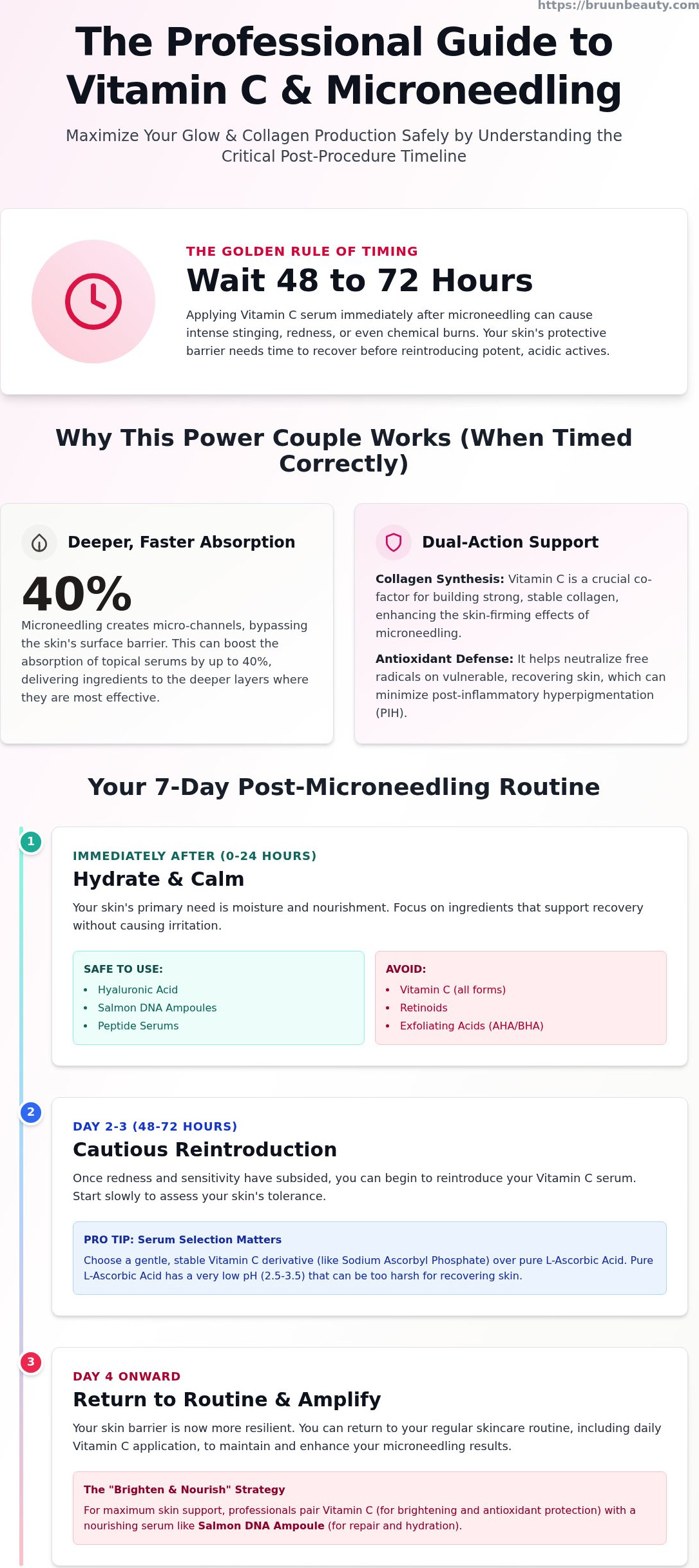
The Ultimate Post-Needling Routine for Glowing Skin
Consistency is the secret to moving from basic results to a professional-level glow. To get there, many estheticians recommend the "sandwich method" of hydration, active, and then hydration again. This involves layering a soothing base, applying your active serum, and sealing everything in with a nourishing barrier cream or mask. This structure ensures your skin stays plump and calm while it processes potent ingredients.
Day 1-3: The Recovery Phase
Your skin is most vulnerable during the first 72 hours. This is the time to prioritize barrier support over everything else. Instead of asking can you use vitamin c with microneedling on day one, focus on the SD - Control Salmon DNA Ampoule Serum. This serum provides the essential nourishment your skin craves immediately after a session.
Salmon DNA (PDRN) is a K-beauty innovation that supports the skin's natural structure without the acidity found in brightening serums. During these first three days, follow these guidelines to ensure a smooth recovery:
- Use a gentle, non-foaming cleanser to avoid stripping your natural oils.
- Avoid direct sun exposure and heavy makeup to prevent heat-induced irritation.
- Apply your Salmon DNA ampoule twice daily to keep the skin nourished and supple.
Day 4-7: The Brightening Phase
By day four, your skin barrier is typically stabilizing and redness has subsided. This is finally the window where can you use vitamin c with microneedling becomes a safe and effective part of your routine. Start by introducing your Vitamin C serum every other morning. If your skin feels comfortable and shows no signs of stinging, you can move back to daily application.
To maximize the brightening effects, layer your serum under a professional jelly mask for a 15 to 20 minute at-home spa treatment. These masks create a vacuum-like seal that helps your skin absorb the antioxidants more efficiently. Always finish your morning routine with a broad-spectrum SPF 30+ to protect your fresh, radiant skin from UV damage.
Maintaining your results between monthly sessions is just as important as the procedure itself. Follow this checklist to keep your skin in top condition:
- Hydrate from the inside out by increasing your daily water intake.
- Stick to your "brighten and nourish" duo of Vitamin C and Salmon DNA for long-term radiance.
- Avoid using harsh physical scrubs or high-percentage chemical peels for at least 14 days.
- Ensure you wait the full 4 to 6 week window before your next session to allow for deep collagen synthesis.
Achieve Your Most Radiant Skin Ever
Combining microneedling with Vitamin C is the ultimate way to unlock a brighter and firmer complexion. By mastering the 48 to 72 hour waiting period, you ensure your skin stays calm while benefiting from deep antioxidant delivery. Focusing on K-beauty standards ensures your results are focused on long-term nourishment rather than just a temporary fix. You now have a clear routine that prioritizes hydration with Salmon DNA before introducing potent actives to your routine.
If you've been wondering, can you use vitamin c with microneedling safely, you now have the professional roadmap to do it. Our professional-grade devices are trusted by estheticians and shipped fast from Miami and Los Angeles to help you reach your goals. By choosing clean, stable formulations and following the golden rule of timing, you can celebrate clear, nourished, and glowing skin every single day.
Your journey to a professional-level glow starts with the right tools and a little bit of patience. You're just one session away from the vibrant, healthy skin you deserve.
Frequently Asked Questions
Can I use Vitamin C 24 hours after microneedling?
Yes, for many people, 24 hours is the minimum baseline to wait. However, if your skin is still red or feels like a sunburn, it is better to wait 48 to 72 hours. The key is to listen to your skin's sensitivity. Starting too early with a low-pH serum can cause irritation, so always perform a patch test on your jawline before a full application.
What happens if I use Vitamin C too soon after needling?
Using Vitamin C too soon can lead to intense stinging, persistent redness, and even chemical burns. Because the micro-channels are still open, the acidic nature of L-ascorbic acid penetrates too deeply, causing inflammation. In rare cases, this can lead to the formation of granulomas, which are small bumps caused by the immune system reacting to foreign substances trapped under the skin during the recovery phase.
Does Vitamin C help with microneedling results for acne scars?
It definitely supports the process by acting as a co-factor in collagen synthesis. While microneedling creates the physical stimulus for new tissue, Vitamin C provides the necessary building blocks to stabilize collagen molecules. This combination helps improve the appearance of skin texture and reduces the look of post-inflammatory hyperpigmentation (PIH) often associated with old breakouts, leading to a much smoother and more even complexion over time.
Can I use a Vitamin C serum with my Dr. Pen device during the treatment?
No, you should never use a standard Vitamin C serum as a gliding medium during your session. Most serums are not sterile and their low pH is designed for surface application, not deep dermal entry. Instead, use a specialized, sterile serum like the SD - Control Salmon DNA Ampoule during the procedure. This ensures safety and provides the right nourishment while the needles are active without causing deep-seated irritation.
Is it normal for Vitamin C to sting after microneedling?
A very light, fleeting tingle can be normal when you first reintroduce actives, but intense stinging is a red flag. If the sensation lasts more than a few seconds or is accompanied by heat, your skin barrier hasn't fully stabilized yet. If you're wondering, can you use vitamin c with microneedling without pain, the answer is to wait until all visible redness has subsided before your first application to ensure comfort.
What is the best type of Vitamin C for sensitive skin after a procedure?
Sodium Ascorbyl Phosphate (SAP) or Tetrahexyldecyl Ascorbate (THD) are the best choices for post-procedure sensitivity. Unlike pure L-ascorbic acid, these derivatives are more stable and have a neutral pH. This means they deliver brightening benefits without the harsh acidity that causes stinging. They are much gentler on the skin's barrier while it is in the final stages of recovery after a professional-grade session with your device.
Can I mix Vitamin C with Hyaluronic Acid after microneedling?
Mixing them is an excellent strategy to buffer the acidity of the Vitamin C. Applying Hyaluronic Acid first creates a "moisture cushion" that helps the skin stay hydrated and calm. You can then layer your Vitamin C on top to target brightness. This "sandwich" approach is a favorite in K-beauty routines to ensure the skin stays nourished while processing potent antioxidants for a clear, glowing finish.
How long should I wait to see results from this combination?
You will likely notice a "glow" within the first week as your skin recovers, but real structural changes take time. Collagen synthesis is a slow process that typically peaks around four to six weeks after your session. By consistently using Vitamin C and Salmon DNA between your monthly procedures, you will see cumulative improvements in firmness and tone after three to four consecutive sessions, resulting in a professional-level radiance.
How to Use a Dr. Pen at Home: A Professional Esthetician’s Guide
Dr. Pen Settings for Stretch Marks: Microneedling Guide
Related Posts

Getting Spa Results on a Budget: Build a Smart At-Home Routine

Professional vs. At-Home Microneedling: Cost Comparison

Hydrogen Water Bottle Buying Guide: Choose the Right Size and Features

Microneedling for Men’s Skincare: What to Know in 2026

What Results to Expect After 3 Microneedling Sessions: A Realistic Guide

Creating a Yearly Microneedling Schedule: A Practical 2026 Guide

How to Choose Professional Esthetician Lighting: A Moon Lash Light Buying Guide
