

Signs Your At-Home Treatment Went Wrong and When to Seek Help
Signs your at-home treatment went wrong can include worsening redness, swelling, burning, or discomfort that persists rather than settling. Stop using the treatment and seek professional help if symptoms are severe, keep worsening, or interfere with daily activities.
Key Takeaways
- Pause an at-home treatment if symptoms worsen instead of settle, and avoid repeating the step while you assess what changed.
- Notice whether symptoms are becoming more intense, returning, or interfering with everyday activities; these patterns can help you decide when to seek professional guidance.
- Get urgent help for a sudden major change in behavior or personality accompanied by confusion, a severe headache, fever, or difficulty speaking or walking.
- If a treatment makes you feel worse, note what you used and when symptoms began so you can clearly explain the timeline to a professional.
- Choose skincare products that fit your routine and intended use, and keep the focus on gentle, consistent care rather than adding more steps.
1. When to seek professional help
Stop an at-home skincare treatment and seek professional guidance if symptoms worsen, feel severe, or interfere with ordinary activities. Spreading redness, increasing swelling, persistent pain, or a rash after using a product or device deserves prompt attention. Don’t repeat the treatment while these changes continue.
Timing matters. For mental health symptoms, changes that persist for more than two weeks without improvement are a reason to consider professional help. New or worsening depression, distressing thoughts, or difficulty managing daily tasks can mean self-guided support isn’t enough. Talking honestly with someone you trust can help you describe what you’re experiencing, but it doesn’t replace a professional assessment or diagnosis.
Seek urgent medical attention for a sudden major personality or behavior change accompanied by confusion, a severe headache, fever, or difficulty speaking or walking. Delusions, hallucinations, disorganized speech, and confusion also need prompt evaluation. If you might hurt yourself or someone else, call or text 988 for the Suicide and Crisis Lifeline. These are different concerns from temporary discomfort after a beauty treatment, but they should never be dismissed as normal.
Call 911 for a life-threatening emergency after a home treatment mistake. For a suspected harmful exposure, contact Poison Control for case-specific guidance; use 911 if someone needs emergency help. Don’t wait for an online answer when the person’s condition is rapidly worsening.
When speaking with a doctor, give a clear timeline and the details needed to assess the situation. Share the product name and ingredients, if available, the device used, when you started, and when symptoms began. Describe what changed, what you did afterward, and whether symptoms are improving or worsening. Mention what anyone else observed; photos can also show how your skin changed over time.
Bring the product packaging or a photo of its label, if possible. For example, explain that you used a new exfoliating product before redness and stinging appeared, rather than simply saying your skin feels irritated. Be honest about how often you used it and whether you combined it with other steps. Specific details can help a professional assess the reaction and decide what evaluation is appropriate.
For ongoing mental health care, pay attention to patterns between appointments as well as symptoms themselves. Consistently feeling worse after therapy sessions is a sign that therapy may not be working; raise that pattern with a doctor or therapist so the care can be reconsidered. Delusions, hallucinations, disorganized speech, and confusion should be evaluated promptly because they can signal underlying psychotic disorders. Derealization merits discussion with a doctor if symptoms cause distress, interfere with daily life, affect work, school, or relationships, or keep returning.
Professional assessment matters outside health concerns, too. If you suspect foundation problems at home, contact a qualified professional for an inspection. In any situation, describe what has changed and how often it happens so the appropriate professional can assess the concern.
2. Complications and disclosed treatment risks
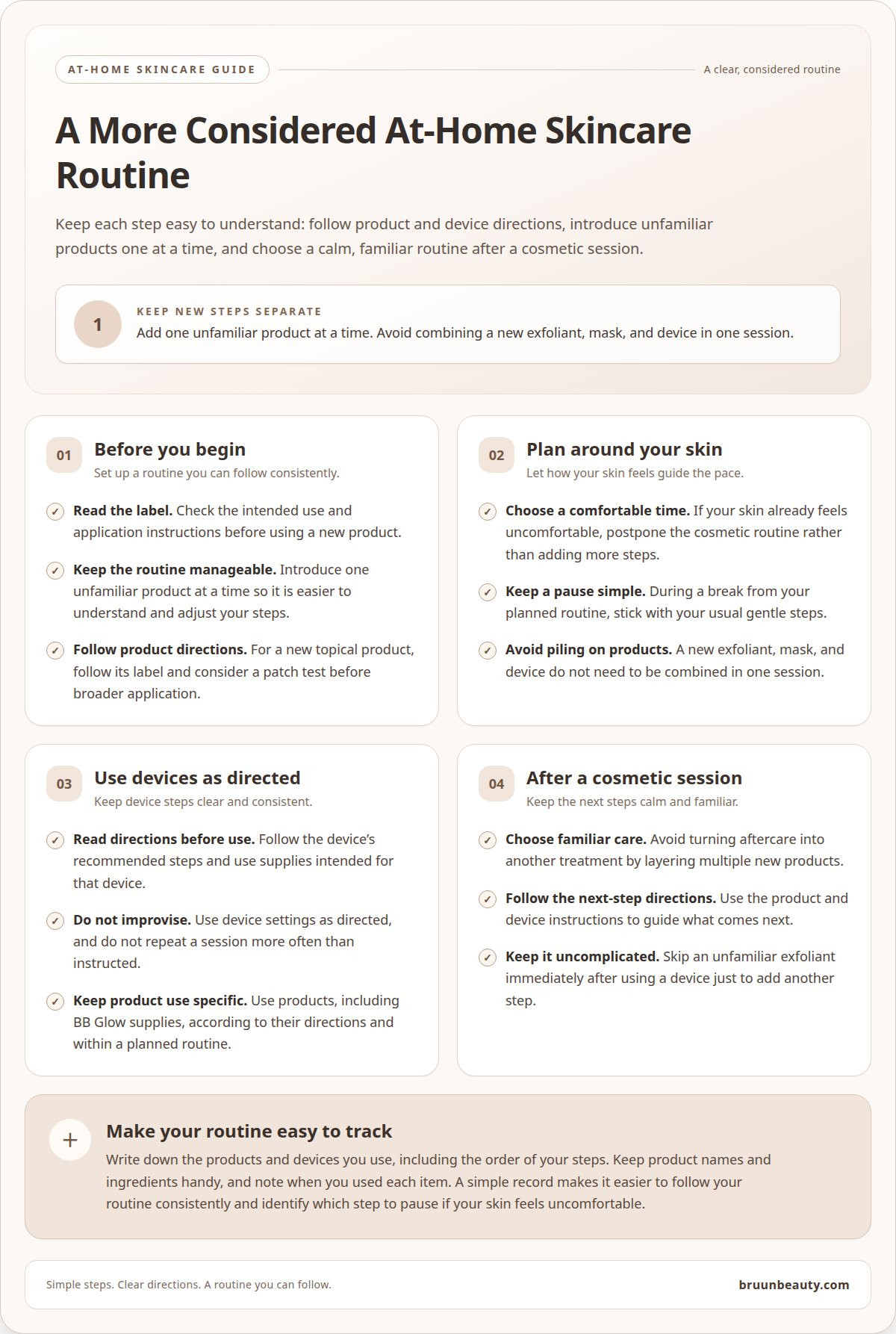
A thoughtful skincare routine starts with clear directions and a manageable number of steps. Before using a new product, read its label, intended use, and application instructions. Add one unfamiliar product at a time instead of combining a new exfoliant, mask, and device in one session. This makes your routine easier to understand and adjust.
Plan treatments around your skin’s current condition. If your skin is irritated or otherwise compromised, wait until it has healed before applying skincare products or using a device. Postpone a cosmetic routine if your skin already feels uncomfortable, rather than adding more steps to address the feeling. Keep your usual gentle routine simple during the pause.
Device care matters, too. Read the directions before use, follow the recommended steps, and use supplies intended for that device. Don’t improvise with settings or repeat a session more often than directed. A written routine can help you remember which product or device you used and follow its instructions consistently.
For a new topical product, follow its label and consider a patch test before broader application. Keep the product’s name and ingredients handy, especially if your routine includes several formulas. If you’re planning a microneedling routine, microneedling skincare options can help you select products for that routine; always follow each product’s directions.
After a cosmetic session, avoid turning aftercare into another treatment. Choose a calm, familiar routine rather than layering multiple new products. Don’t add an unfamiliar exfoliant immediately after using a device just to make the routine feel more complete. Follow the product and device directions for your next steps.
BB Glow supplies are designed for BB Glow treatments, so use them according to their product directions and within a planned routine. Keep notes about the products and devices you use, including the order of steps. A simple record helps you repeat a routine consistently and identify which step to pause if your skin feels uncomfortable. Careful planning supports a more comfortable, considered skincare experience.
A clear account of treatment risks should keep distinct experiences separate and avoid implying a connection that has not been established. The author estimates that about one-third of their patients who already had a depression diagnosis experienced worsening symptoms in 2020. This is an estimate about patients with an existing diagnosis, not a statement about everyone receiving skincare or cosmetic treatment. About 1% of people experience disconnection from reality often enough for it to become an ongoing issue, and derealization episodes can last from a few hours to months. These details describe experiences and duration; they do not identify a skincare product or device as their cause.
The page states that hundreds of thousands of patients in the United States experience surgical difficulties. That statement concerns surgical difficulties, not complications from topical products or cosmetic devices. When discussing a treatment, keep the treatment type and reported outcome clear. Figures about one experience should not be presented as evidence for another. Consider disclosed risks alongside the directions for the specific product or device, without assuming those experiences apply to every treatment or individual.
3. What are general warning signs that an at-home medical treatment has gone wrong?
Look for a change in direction, not just a single uncomfortable moment. Among the signs your at-home treatment went wrong, symptoms that intensify, spread, or return after you stop deserve attention. Note whether irritation stays in the application area or appears elsewhere. Compare your experience with the product’s directions, and pause use if the response is worsening.
Function matters, too. If a reaction makes it hard to sleep, eat, move normally, or complete usual tasks, don’t treat it as a minor inconvenience. For a skin treatment, increasing tenderness that makes gentle washing difficult is useful information to report. For another at-home treatment, note whether symptoms disrupt work, school, or relationships. The effect on everyday activities helps clarify how seriously to take the change.
A sudden shift in behavior or personality can signal an urgent concern, especially alongside confusion, a severe headache, fever, or difficulty speaking or walking. Delusions, hallucinations, disorganized speech, and confusion also call for prompt evaluation. These aren’t ordinary signs of a skincare reaction. If they appear after any at-home treatment, seek immediate medical attention rather than troubleshooting the product.
Keep mental and emotional changes on your radar, too. Persistent anxiety, low mood, or troubling thoughts after trying a treatment shouldn’t be ignored, particularly if they interfere with daily life. Mental health symptoms lasting more than two weeks without improvement are a reason to consider professional help. Note when the feeling began and whether it changes after stopping the treatment.
Distinguish an expected response from a concerning change by checking the specific instructions. If the directions describe temporary warmth, for example, but you experience worsening discomfort, that difference matters. Don’t assume a stronger sensation means a better result. Record the product or device, the steps you followed, and when symptoms appeared. Don’t repeat the step just to see whether the same response happens again.
To recognize signs your at-home treatment went wrong, use a simple check: Is the symptom getting worse? Is it affecting normal activities? Is there a sudden change in thinking, speech, movement, or behavior? A “yes” to any question is a reason to pause and seek appropriate professional guidance. Share specific observations, such as when symptoms began and what changed, rather than relying on a general description like “I feel strange.”
Watch for worsening or spreading symptoms, increasing tenderness, or fever after treating a wound. Pause treatment and seek professional guidance if these occur.
5. When should you stop an at-home treatment and contact a doctor?
Stop the treatment as soon as you notice a worsening or unexpected response. For example, pause a new exfoliating product if burning continues after you remove it, or stop using a device if it causes increasing discomfort. Don’t apply another product to mask the reaction or repeat the step to test your skin. Continuing can make it harder to identify what triggered the change.
Contact a doctor when symptoms persist, intensify, spread, or interfere with normal activities. A spreading rash after using a skincare product, swelling that keeps increasing, or discomfort that makes gentle washing difficult are concrete reasons to seek medical guidance. Describe what changed and when. A doctor can assess the symptoms in context, including your health history and the products or devices involved.
Seek urgent medical attention for a sudden major change in personality or behavior with confusion, severe headache, fever, or difficulty speaking or walking. Delusions, hallucinations, disorganized speech, and confusion also need prompt evaluation. If someone may hurt themselves or someone else, call or text 988 for the Suicide and Crisis Lifeline. Call 911 for a life-threatening emergency.
Mental health symptoms need attention, too. If depression, anxiety, or distressing thoughts persist for more than two weeks without improvement, consider professional mental health support. Contact a doctor sooner if those thoughts affect safety or make everyday activities difficult. Note when the change began, how often it occurs, and what has shifted in your sleep, mood, or daily routine.
Before you call, gather useful details without delaying urgent care. Note the treatment name, ingredients listed on the label, device model, time of use, and when symptoms started. Include the steps you followed, any other products used that day, and whether symptoms improved after stopping. For example, “I used a new mask in the evening, then noticed facial swelling” gives a clearer timeline than “my face feels strange.”
Keep the product container or take a clear photo of its label, and bring it to an appointment if practical. Don’t restart the treatment while symptoms are worsening or before receiving guidance. If you’re unsure whether the situation is urgent, describe the most concerning symptom directly when calling a medical professional. A specific account helps them understand what is happening and what attention may be needed.
5. What should you do if an at-home treatment makes symptoms worse?
Pause the treatment as soon as you notice a clear worsening. Stop applying the product or using the device, and don’t repeat the step to test your response. If a topical product remains on your skin, follow its label directions for removing it. Avoid scrubbing or adding another new product, which can make it harder to identify the trigger.
Next, write down a simple timeline. Record the treatment name, the steps you followed, when symptoms began, and how they changed. Note whether facial redness appeared during a mask application or after using another product. Save the packaging or take a photo of the ingredient list so you can give a doctor specific information.
Keep your routine steady while observing the change. Avoid introducing new products or repeating the treatment, and note whether symptoms improve, persist, or spread. Don’t rely on a single photo alone; write down changes in comfort and daily activities, too. Include it in your notes if gentle face washing becomes difficult.
Contact a doctor if symptoms continue, worsen, or interfere with normal activities. Share your timeline and any product labels, and describe what you stopped using. Mental health symptoms also deserve attention: persistent changes lasting more than two weeks without improvement are a reason to consider professional help. If you’re experiencing distressing thoughts, explain how they affect your daily life.
Some changes need urgent action rather than routine follow-up. A sudden major personality or behavior change with confusion, a severe headache, fever, or difficulty speaking or walking requires urgent medical attention. Call 911 for a listed mental health emergency; call or text 988 if you might hurt yourself or someone else.
Keep treatment details together in one place, such as a note on your phone. Include the date, product or device, application area, other steps used, and how symptoms progressed. If someone else observed the change, ask them what they noticed. These specifics help a doctor understand the sequence and distinguish the treatment from other changes in your routine.
Once symptoms have worsened, don’t restart the same routine simply because the visible change fades. First get professional guidance when symptoms are persistent or concerning, and follow product directions before considering another session. For future skincare planning, browse microneedling skincare options with careful attention to their intended use and instructions.
Bruun Beauty: BB Glow Treatment Supplies
Bruun Beauty’s BB Glow Treatment Supplies are a product option for a planned cosmetic skincare routine, not a response to worsening symptoms. If a treatment has left your skin increasingly uncomfortable, pause and prioritize professional medical guidance before considering another cosmetic step.
Once you’re ready to plan a routine, choose products according to their directions and intended use. Bruun Beauty also offers Jelly Mask Kits and Advanced Microneedling Serum SD - Control Salmon DNA Ampoule Serum for skincare routines. Keep each step clear and avoid adding unfamiliar products while your skin is still reacting.
For questions about Bruun Beauty’s offerings, contact Bruun Beauty.
Build a More Thoughtful Routine From Here
Your next skincare step can be more intentional than the last. Consider what your routine already includes, what you want to add, and whether your skin feels ready for another cosmetic step. Recognizing the signs your at-home treatment went wrong can help you choose carefully, without feeling pressured to continue a routine that isn’t working for you.
If symptoms are still worsening or interfering with daily life, prioritize professional guidance before returning to cosmetic treatments. When you’re ready to explore skincare options, focus on products that match your intended routine and follow their directions. A steady, considered approach gives you room to adjust thoughtfully and support your skin’s comfort.
Take your next step at a pace that feels right for you and your skin.
Frequently Asked Questions
Which symptoms after home treatment require emergency care?
Call 911 for a life-threatening emergency, such as trouble breathing, fainting, or rapidly worsening symptoms. Sudden confusion with difficulty speaking or walking also needs urgent attention. For an immediate mental health crisis involving possible harm to yourself or someone else, call or text 988. Don’t wait for symptoms to pass before seeking emergency help.
How can you tell if an at-home remedy caused an allergic reaction?
A new itchy rash, hives, or swelling after applying a product may indicate an allergic response. Stop using it and note when the changes began. Facial or throat swelling, breathing difficulty, or faintness requires emergency care. Keep the label available so a clinician can identify the ingredients.
What are signs of chemical burns or skin damage from home treatments?
Persistent burning, blistering, severe tenderness, or skin that looks unusually pale or dark after a peel or household product may indicate chemical damage. Stop using the product and follow its label directions for rinsing. Don’t scrub or apply another product to counteract it. Get medical guidance, especially if the area is extensive or worsening.
How can you tell if a home remedy or device is causing a harmful reaction?
A device may be contributing if discomfort begins during use, persists afterward, or reliably returns when you use it. Stop the session rather than changing settings to push through. Note the device, setting, session length, and timing. If the response continues or affects routine activities, discuss those details with a doctor.
Should you restart a treatment after symptoms improve?
Improvement alone doesn’t mean it’s appropriate to restart the same treatment. Review its directions, avoid changing several routine steps at once, and wait until your skin feels comfortable and looks back to baseline. If the earlier response was severe, persistent, or unexplained, seek professional advice before resuming.
Orange Peel Skin: Causes and Ways to Smooth Texture
Orange Peel Skin: Causes and Ways to Smooth Texture
Related Posts

PDRN Benefits for Skin: Regeneration, Results and Safety

How to Dispose of Used Microneedle Cartridges Safely

Self-care rituals for better skin through mindful daily habits

How to Explain Microneedling Benefits for Skin and Scars

How to use a Korean 10-step skincare routine for hydration

Microneedling for atrophic scars: clinic or at-home results

V-Line Lifting Masks and Their Claimed Face-Shaping Effects
