

7 Signs You Are Over-Microneedling Your Face: A Recovery Guide for 2026
More microneedling might seem like the fastest way to get that glass skin glow, but doing it too often is actually the quickest way to stall your results. You want the collagen boost and the smooth texture that comes with a professional grade device, but lately, your skin feels tight and reacts to even your gentlest serums. It's easy to miss the early signs of over microneedling face until your skin barrier is already shouting for help.
We understand how frustrating it is when a routine meant to improve your complexion starts causing persistent redness or a strange orange peel texture. This guide will show you exactly how to identify if you've pushed your skin too far and provide a clear, professional approved plan to repair your barrier. You'll learn how to pivot from treatment to recovery using soothing ingredients like Salmon DNA to restore your healthy, nourished glow.
By following these 2026 guidelines for safe treatment intervals and post care, you can get your skin back on track. We're covering everything from identifying deep tissue damage to the specific steps for a safe, successful return to your microneedling routine.
Key Takeaways
- Recognize physical red flags like the "orange peel" effect and persistent redness to identify the early signs of over microneedling face.
- Understand why your skin requires a minimum 4-week recovery period to successfully complete its natural collagen induction cycle.
- Learn a professional recovery protocol that involves pausing harsh actives and using humectants to restore a compromised skin barrier.
- Discover how using professional-grade devices and correct needle depths prevents chronic inflammation and ensures long-term results.
- Explore the benefits of K-beauty inspired ingredients like Salmon DNA (PDRN) for nourishing skin during its essential rest phases.
What Is Over-Microneedling and Why Does It Happen?
Microneedling is a powerful tool for skin transformation, but it's not a daily workout for your face. At its core, Collagen induction therapy works by triggering a controlled healing response. Over-microneedling occurs when you exceed your skin's natural ability to repair those microscopic channels. Instead of building fresh collagen, you're essentially keeping your skin in a state of perpetual trauma.
It's helpful to distinguish between a single aggressive session and chronic overuse. Acute trauma happens during one bad treatment where the depth was too great or the technique was too rough. Chronic over-microneedling is more common in at-home communities; it's the result of performing treatments every few days or every week. This constant injury prevents the skin barrier from ever fully closing, leading to the telltale signs of over microneedling face.
Many enthusiasts fall into the "more is better" trap, thinking that more needles or more frequent sessions will speed up the results. In reality, professional results depend on controlled repair, not constant injury. If you don't give your skin the time it needs to rebuild, you risk creating a thin, shiny appearance often called the "orange peel" effect. True skin health comes from the rest days as much as the treatment days.
The Science of the Skin Repair Cycle
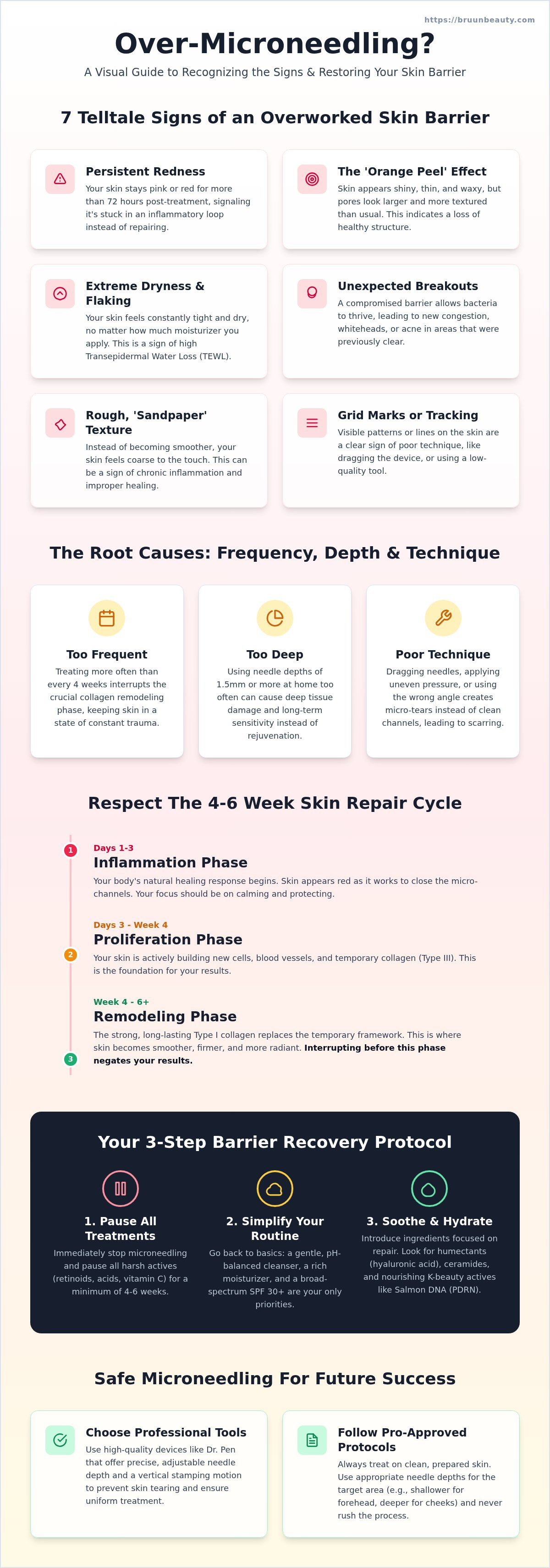
Your skin doesn't just fix itself overnight. The full cycle of collagen remodeling typically takes 4 to 6 weeks to complete. During the first few days, your skin is busy with inflammation and initial closure. The following weeks are dedicated to the proliferation of new cells and the actual building of collagen fibers. When you interrupt this cycle by needling too soon, you stop the remodeling phase in its tracks. This leads to suboptimal results and a compromised skin barrier that struggles to hold onto moisture.
At-Home vs. Professional Frequency
Needle depth is a major factor in how much downtime you really need. While a very shallow 0.25mm roller might be used more often for product absorption, deeper treatments require significant rest. Using needles 1.5mm or longer at home too frequently is a recipe for long-term sensitivity. At BRÜUN, we focus on providing professional-grade microneedling tools like Dr. Pen devices that allow for precision. Even the best tools require a disciplined schedule. Professional results come from patience, not from how many times you can use your device in a single month.
7 Visible Signs of Over-Microneedling on Your Face
Knowing the difference between a healthy post-treatment glow and a damaged barrier is essential for long term skin health. While mild pinkness is expected for 24 to 48 hours, persistent redness that lasts longer than 72 hours is one of the most common signs of over microneedling face. This lingering erythema suggests your skin is stuck in an inflammatory loop rather than moving into the repair phase. According to FDA guidelines on microneedling safety, side effects should be temporary; anything lasting longer requires immediate attention to your recovery protocol.
Beyond redness, you might notice these specific changes in your skin's behavior and appearance:
- The "Orange Peel" Effect: Your skin looks shiny and thin, but your pores appear larger or more prominent than usual.
- Increased TEWL: Transepidermal water loss leaves your face feeling bone-dry, no matter how much moisturizer you apply.
- Unexpected Breakouts: A compromised acid mantle allows bacteria to enter easily, leading to new congestion or whiteheads.
- Rough Surface: Instead of feeling smooth, your skin develops a sandpaper like texture that doesn't improve with exfoliation.
Texture and Tone Red Flags
If you see "grid marks" or tiny track-mark patterns, your technique or device might be the culprit. This happens when needles are dragged across the skin or used at an improper angle. You might also notice your skin looks dull or "waxy" rather than radiant. This lack of luster indicates that the top layer of your skin is struggling to shed properly. Choosing professional-grade microneedling equipment ensures you have the precision needed to avoid these common pitfalls and maintain a healthy, even tone.
Sensory Symptoms You Should Not Ignore
Your skin often speaks to you before the damage becomes fully visible. A sharp burning sensation when you apply a basic, fragrance free moisturizer is a major warning sign. This reactivity means your protective barrier is no longer intact. You might also feel a constant tightness, similar to a mild sunburn, even days after your session. Increased sensitivity to environmental factors, like a slight breeze or indirect sunlight, confirms that your skin needs a total break from all stimulation to rebuild its defenses.
The Root Causes: Frequency, Depth, and Technique
Most people think a "botched" session is the only way to ruin their skin. In reality, the most common signs of over microneedling face often stem from cumulative habits that add up over time. If you needle every two weeks because you're eager for results, you're essentially digging a hole faster than your skin can fill it. This "recovery debt" leads to chronic inflammation that looks like premature aging or textural irregularities. A minimum four week window between sessions is non negotiable for most users. This pause allows the collagen remodeling phase to finish its job without being interrupted by a new injury.
Patience is your best friend when it comes to collagen induction. When you treat the skin too frequently, you never allow the skin barrier to fully close and strengthen. This makes you more susceptible to common microneedling side effects like persistent sensitivity or localized infections. Professional results aren't about how many times you can use your device, but about how well your skin repairs itself between those sessions.
The Danger of "Dragging" Your Device
One major culprit of damage is improper movement across the face. If you move your pen too fast, you risk "dragging," which creates microscopic tears instead of clean, vertical punctures. This is a primary driver of track mark scarring and prolonged scabbing. You should use a slow, steady glide or a gentle "stamping" motion to maintain control. Always invest in high quality cartridges from a trusted US based source like BRÜUN to ensure every needle is sharp and perfectly aligned. A dull or bent needle acts like a tiny fishhook that rips the skin rather than piercing it, leading to unnecessary trauma.
Depth Mistakes by Facial Zone
Not all skin on your face is created equal. The "one depth fits all" approach is a fast track to barrier damage. For example, the skin on your forehead is very thin and sits directly over bone, while your cheeks have more "meat" to them. Going 1.5mm deep on your forehead can cause significant trauma, while that same depth might be safe for deep acne scars on the lower face. You must adjust your settings as you move across different facial landscapes.
Use a tailored approach for different zones. For the delicate under eye area, stay around 0.25mm to avoid bruising and irritation. For the cheeks, you might go up to 1.0mm depending on your specific goals. Professional Dr. Pen devices make this easy by allowing you to adjust the needle depth with a simple turn of a dial. The device should always glide over the surface. If you feel the need to press down hard, you're likely using the wrong depth or speed setting. Let the motor do the work while you focus on maintaining a light, even touch.
The Recovery Protocol: Restoring Your Skin Barrier
If your skin is showing the signs of over microneedling face, it's time to hit the pause button. Your first step is immediate cessation. You must stop all microneedling sessions and put away your active acids for at least 10 to 14 days. This includes Retinol, Vitamin C, and any exfoliating AHAs or BHAs. Your skin is currently in a state of emergency; it needs rest, not more stimulation.
Focus on hydration and barrier support to rebuild your skin's natural defenses. Start with humectants like hyaluronic acid and glycerin to pull moisture back into the tissue. You then need to "seal" that moisture with a rich barrier cream containing ceramides and fatty acids. This mimics your skin's natural lipids and helps close the gaps in your compromised acid mantle. During this time, your skin is roughly ten times more prone to UV damage. Apply a mineral based sunscreen every single morning, even if you don't plan on spending much time outdoors.
The Power of PDRN and Salmon DNA
Salmon DNA, also known as PDRN, is a powerhouse for skin recovery. It works by providing the essential building blocks for cellular repair, making it a staple in advanced K-beauty routines. We highly recommend SD Control Salmon DNA Ampoules for deep nourishment. This serum helps calm inflammation and encourages the skin to return to its healthy, vibrant state without the risk of further irritation. It's the perfect bridge between a damaged barrier and that sought after "glass skin" glow.
Soothing with Jelly Masks
Professional jelly masks are an esthetician's secret weapon for immediate cooling. These masks create an occlusive seal over the face, which forces hydrating ingredients deeper into the skin while physically lowering the skin's temperature. Look for masks infused with Calendula or Aloe to reduce the heat and redness associated with over treatment. Using a soothing mask twice a week during your recovery phase provides the intense, focused hydration your skin needs to bounce back.
Safe Microneedling Practices for Future Success
Once your barrier feels strong again, don't rush back into the same habits that caused the trouble. The "less is more" philosophy is the gold standard for long term collagen production. You aren't just trying to injure the skin; you're trying to send a signal to your fibroblasts to start building. If you ignore the signs of over microneedling face and continue to over-treat, you're likely over-stimulating those cells and causing them to shut down instead of produce. Patience is what transforms a standard routine into a professional-grade transformation.
Success starts with a sterile environment. Always wash your face thoroughly and use a fresh, single-use needle cartridge for every single session. Never reuse a cartridge, even if you've soaked it in alcohol. Microscopic dulling happens after just one use, and those tiny imperfections can lead to the skin tearing we discussed earlier. Keeping your environment clean and your tools fresh ensures that your skin's energy goes toward building collagen rather than fighting off potential irritants.
Choosing the Right Microneedling Collection
Finding the right equipment makes a massive difference in your results. We recommend browsing our curated microneedling collection to find kits that prioritize both safety and efficacy. Since BRÜUN ships directly from Miami and Los Angeles, you can count on getting fresh, high quality supplies with fast 2026 shipping timelines. This prevents the temptation to reuse old cartridges while waiting for a restock.
It's vital to use a skincare device that offers adjustable speed and depth settings. Having this control allows you to customize the treatment for each facial zone, ensuring you don't go too deep on the forehead or under-eyes. A professional grade pen should feel stable in your hand and provide consistent needle oscillation to prevent any snagging or dragging across the skin surface.
When to Return to Treatment
How do you know if your skin is truly ready for another round? Don't just look at the calendar; look at your skin's behavior. Before you pick up your device, go through this "ready" checklist:
- Your skin tone is even and free of lingering pinkness or "hot spots."
- You no longer experience a stinging sensation when applying your regular serums.
- Your skin feels naturally hydrated and supple, not tight or waxy.
- The "orange peel" texture has completely smoothed out.
When you do decide to return, start with a shallow depth test. Use a 0.25mm setting on a small area to see how your skin reacts over the next 48 hours. If your skin stays calm and radiant, you can proceed with a full treatment during your next session. Think of yourself as a "knowledgeable friend" to your skin; if it looks tired or reactive, give it another week of rest. Your future glow depends on your ability to listen to those subtle signals.
Restore Your Radiant Glow
Microneedling is a marathon, not a sprint. Mastering the balance between stimulation and recovery is the secret to achieving professional results without compromising your skin health. By recognizing the early signs of over microneedling face, you can pivot from accidental damage to deep nourishment before long-term issues set in. Your skin repair cycle requires dedicated patience, typically needing at least four to six weeks to build that fresh, resilient collagen you're looking for.
Transitioning to a recovery focused routine with K-beauty savvy ingredients like Salmon DNA and professional jelly masks will help restore your barrier strength. Once your skin feels hydrated and calm, you can return to your routine with more confidence and better technique. BRÜUN is here to support your journey with professional-grade Dr. Pen devices and soothing formulas shipped fast from our Miami and Los Angeles hubs. We're committed to helping you achieve clear, nourished, and glowing skin safely.
You deserve skin that feels as good as it looks. Take the time to rest, nourish, and rebuild for a truly radiant 2026.
Frequently Asked Questions
How long does it take for skin to recover from over-microneedling?
Most skin types require 2 to 4 weeks of total rest to reset the moisture barrier after mild over-treatment. If you've caused more significant trauma, you might need to wait a full 6-week skin cell turnover cycle before your texture returns to normal. During this time, it's essential to avoid all mechanical and chemical exfoliants to let the tissue strengthen naturally.
Can over-microneedling cause permanent skin damage or scarring?
Yes, aggressive overuse or improper "dragging" techniques can lead to permanent track-mark scarring or long-term hyperpigmentation. Chronic inflammation from needling too frequently actually breaks down the collagen you're trying to build. Using professional-grade devices with sharp, single-use cartridges is the best way to prevent these complications and ensure clean, vertical punctures that resolve quickly.
What is the "orange peel" texture after microneedling and will it go away?
The "orange peel" effect is a sign of a severely dehydrated and thinned epidermis, making pores look larger and skin look shiny but rough. This is one of the most common signs of over microneedling face and usually resolves once you stop all treatments. Focusing on deep hydration with PDRN serums and ceramides will help the skin regain its natural plumpness and smooth surface.
Is it normal for my skin to feel like sandpaper after a treatment?
A rough, sandpaper-like texture is perfectly normal for the first 3 to 5 days as microscopic "mends" or old skin cells begin to slough off. This is part of the natural shedding process that reveals fresher skin underneath. However, if that rough feeling persists beyond a week or is accompanied by a burning sensation, your barrier is likely compromised and needs immediate nourishment.
Which serums are best for repairing a compromised skin barrier?
Serums containing PDRN (Salmon DNA), Hyaluronic Acid, and Ceramides are the gold standard for barrier repair. Salmon DNA is particularly effective in K-beauty routines for supporting the skin's natural regenerative processes without causing irritation. These ingredients work together to pull moisture into the skin and seal it in, which is vital when you've pushed your skin too far.
Should I stop using Vitamin C if I have signs of over-microneedling?
You should immediately pause Vitamin C, Retinol, and all other acidic actives if your skin shows signs of distress. L-ascorbic acid is highly effective for brightening, but it's far too irritating for a damaged or "open" skin barrier. Wait until your skin feels supple and no longer reacts to basic moisturizers before slowly reintroducing these powerful ingredients into your routine.
How often should I really be microneedling at home for safe results?
For any needle depth over 0.25mm, you should wait a minimum of 4 to 6 weeks between sessions to allow for full collagen remodeling. While it's tempting to needle more often for faster results, the skin needs this downtime to actually build the new tissue. Rushing the process is the primary cause of the signs of over microneedling face and will eventually stall your progress.
The Best Microneedling Aftercare Serum Guide: Post-Treatment Glow Secrets (2026)
How Often Should You Microneedle? The Ultimate 2026 Guide to Safe Frequency
Related Posts

Getting Spa Results on a Budget: Build a Smart At-Home Routine

Professional vs. At-Home Microneedling: Cost Comparison

Hydrogen Water Bottle Buying Guide: Choose the Right Size and Features

Microneedling for Men’s Skincare: What to Know in 2026

What Results to Expect After 3 Microneedling Sessions: A Realistic Guide

Creating a Yearly Microneedling Schedule: A Practical 2026 Guide

How to Choose Professional Esthetician Lighting: A Moon Lash Light Buying Guide
