


RF vs microneedling for skin tightening: Which suits your skin
Choosing between RF vs microneedling for skin tightening depends on your main goal. Traditional microneedling is often used to address texture, tone, pores, and scars, while non-invasive RF focuses on gradual firmness. RF microneedling combines needles with radiofrequency energy.
This guide compares how each approach aligns with your goals and what to consider when planning treatment.
Key Takeaways
- Match the approach to your main goal: firmness, smoother texture, more even tone, or softer-looking scars and pores.
- Understand the difference between traditional microneedling and RF microneedling before weighing their potential benefits.
- Expect changes to develop gradually as collagen remodeling takes place, rather than judging results immediately.
- Learn how non-invasive RF and RF microneedling may complement each other when skin firmness and quality are both priorities.
- Use the decision guide to identify which approach best aligns with your skin concerns and expectations.
Treatment suitability for texture, tone, laxity, and scarring
Start by identifying your main goal: a firmer look, smoother texture, more even tone, or less noticeable scars. Traditional microneedling creates tiny channels and stimulates collagen and elastin production, with a focus on skin quality, including texture, brightness, and tone. Mild laxity may also improve. Non-invasive radiofrequency (RF) heats deeper skin layers to support gradual tightening without needles or disrupting the skin surface. The difference between RF vs microneedling for skin tightening comes down to these distinct treatment goals.
The concern’s severity can help narrow your options. Non-surgical tightening may suit mild laxity and early signs of aging, while traditional microneedling may be a better fit for uneven texture, pores, and acne marks. RF microneedling combines needles with RF energy to address firmness alongside surface concerns. It is not designed to correct advanced sagging, so set a clear, realistic goal when choosing an approach.
| Option | Main focus | Useful distinction |
|---|---|---|
| Traditional microneedling | Texture, tone, brightness, scars | May improve mild laxity |
| Non-invasive RF | Firmness and mild laxity | No needles; gradual collagen remodeling |
| RF microneedling | Firmness plus texture concerns | Combines channels with RF energy |
Rank your main concerns, then compare the treatment goals and expected downtime. A consultation can help match a plan to your priorities, such as laxity, texture, tone, or scarring. If uneven tone matters more to you than firmness, make that distinction clear when discussing your goals.
When researching treatments, distinguish non-invasive RF from microneedling before exploring options. The microneedling products page from Bruun Beauty relates to traditional microneedling; it is not a directory of local RF providers.
During a consultation, ask which device will be used and how its intended use relates to your goals. Discuss the provider’s training and experience with concerns such as texture, mild laxity, or acne marks. Then clarify how the plan will be tailored to the area being treated.
For traditional microneedling, dermatology experts generally recommend 3-4 sessions spaced 4-6 weeks apart. RF treatment schedules depend on the device and goals, so ask how the proposed plan addresses your priorities and allows time for gradual changes to develop.
Before treatment, discuss the target area, your preferred outcome, and aftercare. Clear instructions for each step help you understand how the approach fits your routine and what to expect as your skin responds. Keep the plan focused on your top concern, then review progress with the provider before considering changes.
Choice depends on patients, goals, and lifestyle. Non-surgical tightening suits mild laxity, early aging signs, and those seeking no downtime; results build gradually over several weeks. RF microneedling addresses loose skin and deeper scarring.
RF microneedling skin tightening and collagen stimulation
RF microneedling combines needle-created channels with radiofrequency energy delivered into deeper skin layers. It aims to support collagen remodeling while also refining the skin’s surface.
Skin Tightening and Collagen Remodeling
Traditional microneedling relies on the skin’s response to controlled channels to stimulate collagen and elastin production. RF microneedling adds heat at targeted depths, combining surface stimulation with energy delivered into deeper layers. This distinction matters if you want to address firmness alongside texture, pores, or scarring, rather than focusing mainly on surface refinement.
Collagen remodeling takes time, so changes develop over several weeks rather than appearing immediately. A 2026 systematic review in the Journal of Cosmetic Dermatology included 558 participants and found significant improvements in skin texture and tightening after RF microneedling. That finding reflects the review’s results, not a guaranteed outcome for every person or treatment plan.
Think of the process as gradual support, not an instant lift. As collagen remodels, skin may look firmer and smoother over time. RF microneedling can be adjusted to treatment goals, so the areas of concern and the desired balance between tightening and surface improvement help shape the approach.
Collagen and Elastin Stimulation
Collagen provides structural support, while elastin helps skin retain flexibility. Microneedling stimulates the skin’s production of both proteins through its natural response to the channels. RF microneedling adds radiofrequency heat to support collagen remodeling in deeper skin layers. This distinguishes it from traditional microneedling, which does not deliver radiofrequency energy.
The goal is gradual improvement in firmness and skin quality, not a change in facial volume. RF microneedling supports collagen remodeling and does not target or destroy fat cells. This distinction can help set expectations: the approach focuses on skin structure and appearance, while concerns about lost volume involve a different goal.
Because texture, laxity, and scarring can overlap, define your main priority before choosing a plan. For example, someone focused on uneven texture may weigh surface refinement differently from someone prioritizing mild laxity. A series may be recommended, and results can continue building for weeks after each session. Explore microneedling products when learning about the traditional approach and its collagen-stimulation role.
Radiofrequency treatment is described as stimulating collagen and elastin production, with collagen remodeling over time contributing to firmer-looking skin. Non-surgical skin tightening uses radiofrequency or similar energy to heat deeper skin layers and stimulate collagen remodeling. Both Density RF and RF microneedling stimulate collagen, while RF microneedling reaches deeper and also addresses texture.
The page describes RF microneedling as producing a more comprehensive remodeling effect than skin tightening alone. Non-surgical skin tightening focuses on firmness and elasticity, gradually improving mild skin laxity. Results from radiofrequency skin tightening develop over time.
How does RF microneedling differ from traditional microneedling?
The key difference is how each method delivers energy to the skin. Non-invasive RF heats the dermis without needles, while RF microneedling delivers radiofrequency energy through tiny needles. Traditional microneedling uses needles without RF energy.
Non-Invasive RF Energy Delivery
Non-invasive RF uses electromagnetic waves to generate heat in the dermis. The skin surface remains intact, with no needles or channels, unlike either form of microneedling. Its energy supports gradual collagen remodeling and focuses on firmness rather than the direct surface refinement associated with needle-based methods.
For example, someone focused on mild laxity may consider non-invasive RF if they prefer an energy-based approach without needles. Although it does not use needles, it still works below the skin’s surface. Its purpose is to support firmness and elasticity, not to combine surface channels with deeper energy delivery as RF microneedling does.
RF Microneedling Energy Delivery
RF microneedling combines needle-created channels with radiofrequency energy delivered into deeper skin layers. Unlike non-invasive RF, it affects both the surface and deeper dermis. Unlike traditional microneedling, it adds heat to the needle-based process, supporting collagen remodeling alongside texture refinement.
This combined approach may suit overlapping concerns, such as fine lines and uneven texture alongside mild laxity. Treatment depth and intensity can be adjusted to match goals. Because those adjustments affect where energy is delivered, RF microneedling differs from a device that applies RF across intact skin without needles.
Traditional Microneedling
Traditional microneedling uses needles to create controlled channels, prompting the skin’s natural collagen and elastin production. It does not deliver radiofrequency energy or heat the dermis. The distinction is straightforward: the needles provide the stimulation, while RF microneedling adds targeted energy to that process.
For someone prioritizing tone, brightness, or surface texture, traditional microneedling focuses on those skin-quality goals. It may also improve mild laxity, but it does not add RF energy. The choice depends on whether needle-based stimulation alone suits your concern or deeper energy delivery is also a priority.
Compare the approaches by their delivery path, target, and intended focus:
| Approach | Energy delivery | Main distinction |
|---|---|---|
| Non-invasive RF | Heat through intact skin | Firmness focus without needles |
| RF microneedling | RF energy through needles | Combines deeper energy with surface channels |
| Traditional microneedling | Needles without RF | Collagen stimulation without added heat |
Use your primary goal to guide your choice: decide whether firmness, surface refinement, or both matter most. Fine lines and texture may call for a different delivery method than laxity alone, so the treatment plan should reflect that distinction. Collagen changes are not immediately noticeable; remodeling takes time.
Combining skin tightening and RF microneedling
Pairing skin tightening with RF microneedling can address firmness and skin quality as separate goals. The approaches may be combined over time to support skin structure and refine texture, rather than treated as interchangeable options.
Think of the plan as having two complementary focuses. Non-invasive skin tightening uses RF energy to support firmness, while RF microneedling combines energy delivery with channels that can improve texture. If you are concerned about both a less firm jawline and uneven facial texture, these differences help clarify what each approach may contribute.
Combining methods does not mean every concern needs both. If your main priority is mild laxity, you may focus on skin tightening. If pores, fine lines, or scarring are also concerns, consider whether RF microneedling addresses those additional skin-quality goals. The useful question is what each step contributes, not how many treatments can be combined.
A practical way to map your goals is to separate them before considering a combined plan:
- Firmness: Identify the area where you want a firmer appearance, such as the jawline.
- Skin quality: Note concerns such as texture, enlarged pores, or uneven surface appearance.
- Priority: Decide which concern matters most if the plan needs to focus on one outcome first.
- Approach: Discuss how skin tightening and RF microneedling could contribute differently over time.
Density RF and RF microneedling can be part of a combined treatment plan. The pairing makes conceptual sense because both use radiofrequency energy, but RF microneedling also addresses surface concerns. A clear plan distinguishes the role of each method rather than assuming that combining devices automatically produces a stronger result.
Timing matters. These approaches can be planned over time, allowing collagen remodeling to develop before further treatment decisions. The sequence depends on your priority and the role of each method; there is no universal schedule for every face or body area.
For example, if you want smoother facial texture and firmer-looking skin, identify texture as your first priority, then discuss where non-invasive tightening might fit. If mild laxity is your main concern, you could choose a plan centered on tightening. In either case, the aim is to match the method deliberately to the concern.
The takeaway: combine approaches only when their separate contributions fit your goals. A clear plan names the concern each method targets, explains how the methods differ, and sets realistic expectations for gradual change.
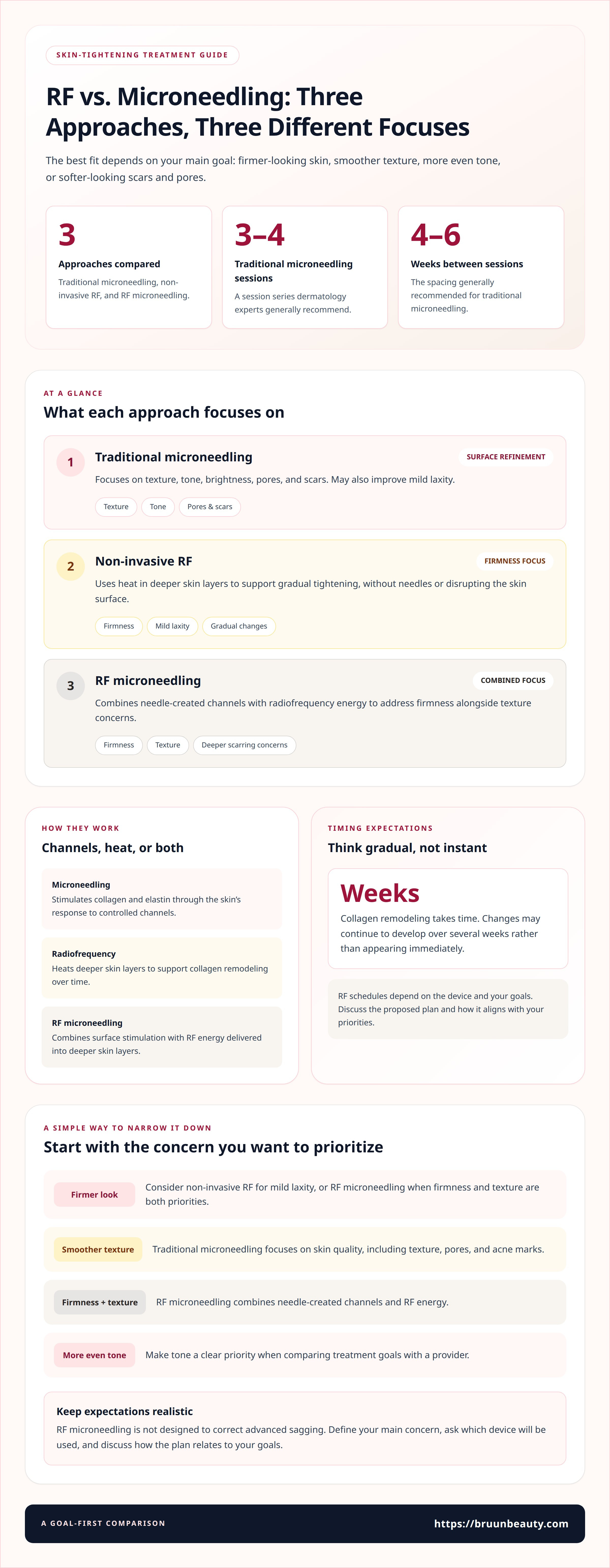
How does radiofrequency skin tightening work compared with microneedling?
Radiofrequency (RF) skin tightening and microneedling stimulate the skin in different ways. Non-invasive RF heats deeper skin without needles, while traditional microneedling uses needles without radiofrequency energy.
Non-invasive RF uses electromagnetic waves to generate heat in the dermis and stimulate collagen remodeling. The surface remains intact, with no needles or channels. Traditional microneedling works through needle-based stimulation and can target skin-quality concerns such as uneven texture, tone, and fine lines.
With traditional microneedling, the needles create controlled channels that prompt collagen and elastin production. It doesn’t add heat or RF energy. Results can begin to appear within a few weeks and continue improving for up to 3 months. The method’s emphasis is skin quality, although mild laxity may also improve.
Non-invasive RF focuses on gradual firmness by heating deeper skin layers. Collagen remodeling takes time, so the treatment is not an instant lift. The American Academy of Dermatology says the best results from non-invasive skin tightening appear in about six months as collagen forms. This timeline differs from microneedling’s surface-focused changes.
RF microneedling combines both delivery methods: needles create channels while radiofrequency energy reaches deeper skin layers. It addresses the surface and deeper dermis, unlike non-invasive RF, which leaves the surface intact. Compared with traditional microneedling, its added RF energy supports collagen remodeling alongside texture refinement.
Compare the options by your primary concern. If mild laxity is your focus and you prefer an approach without needles, non-invasive RF may align with your goal. If texture, tone, or fine lines matter more, traditional microneedling may be a closer fit. If firmness and texture concerns overlap, RF microneedling combines both forms of stimulation.
Downtime and treatment planning also affect the decision. Non-invasive RF does not disrupt the skin surface, while microneedling uses needles to create channels. Your goals, the area being treated, and the method’s delivery path all help determine which approach fits. A consultation can clarify those priorities and set realistic expectations for gradual collagen remodeling.
Focus on the treatment method, not just the device name: heating with the skin surface intact, needle-based stimulation, or needles paired with RF energy. This distinction helps you compare approaches without assuming they produce identical changes. Each offers a different balance of firmness support and surface refinement.
Bruun Beauty
Bruun Beauty offers Advanced Microneedling Serum SD - Control Salmon DNA for cosmetic skincare routines. This serum complements professional skincare routines and can be paired with microneedling pens and derma rollers. For external use only.
This product is intended for cosmetic skincare use only. It is not intended to replace qualified medical diagnosis or treatment and is not intended to diagnose, treat, cure, or prevent any disease. Store in the refrigerator or appropriate cold-storage area as directed; keep the collector inserted in the bottle after use.
Bruun Beauty also offers Jelly Mask Kits and BB Glow Treatment Supplies for other beauty routines. Explore Bruun Beauty’s skincare and spa supplies to find products that suit your routine.
Choose a Next Step That Fits Your Skin Goals
Before deciding, write down the change you want most and how you will recognize progress. A smoother-looking surface, more even tone, or firmer appearance can each point toward a different treatment focus. This simple ranking gives you a clearer starting point than choosing a device based on its name alone.
Use your comparison of RF vs microneedling for skin tightening to frame specific questions about treatment goals, timing, and how an approach fits your routine. If microneedling aligns with your plans, explore products that support this skincare path and help you build a considered routine. Focus on the outcome you value rather than trying to address every concern at once.
Take a thoughtful, manageable next step: choose the approach that aligns with your priorities, then build your skincare routine with care.
Frequently Asked Questions
What Are Microneedling Treatments?
Microneedling treatments use a device with fine needles to create controlled channels in the skin. They’re used to improve the appearance of concerns such as uneven texture, tone, and scars. For example, a treatment plan might focus on facial texture or another area, such as the thighs or abdomen. The method and treatment area depend on the goal being addressed.
What is RF microneedling and how does it work?
RF microneedling combines needle-based treatment with radiofrequency energy delivered into the skin through the needles. Treatment depth and intensity can be adjusted to match your goals. This combination may suit someone whose plan includes both firmness and surface concerns. Ask how the chosen settings relate to your priorities, such as fine lines, texture, or acne scarring.
Who Should Choose RF Microneedling?
RF microneedling may suit people with overlapping concerns, such as moderate laxity alongside acne scarring, uneven texture, enlarged pores, or wrinkles. It may be considered when surface refinement is not the only goal. However, it is not designed to correct advanced sagging. Define your priority before discussing a treatment plan.
Can I do both?
Skin tightening and RF microneedling may be combined over time when their distinct goals fit your plan. One approach can focus on firmness, while RF microneedling also addresses skin quality. Rather than assuming you need both, identify the concern each method would target. The timing and sequence depend on how the plan balances those goals and allows changes to develop.
What is the difference between standard microneedling and RF microneedling?
Standard microneedling uses needles without radiofrequency energy, while RF microneedling adds energy through the needles. This difference can shape a treatment plan: traditional microneedling is often chosen for texture and tone, while RF microneedling may suit overlapping firmness and skin-quality concerns. Start your comparison with the outcome you want, not the device name.
How long do results from RF skin tightening and microneedling last?
Results vary by method and skincare maintenance. Texas Dermatology states RF microneedling results can last up to a year or more with proper skincare maintenance. Maintenance microneedling sessions every 6-12 months can help sustain results. These timelines describe different approaches, so consider which treatment you’re asking about when planning ongoing care.
Who is a good candidate for RF skin tightening or microneedling?
Your main concern can help guide the choice. If you are focused on mild laxity, you may consider non-invasive RF; if you prioritize uneven tone, texture, pores, or scars, you may look at microneedling. RF microneedling may suit you when firmness and skin-quality goals overlap. Bring your priorities and desired treatment area to the consultation to help shape a focused plan.
How do RF and microneedling compare for different areas, such as the face, neck, and body?
Microneedling may be performed on the face, thighs, and abdomen. RF skin tightening is described for areas such as the arms, abdomen, and jawline. The choice depends on the treatment area and your goals.
Do Chin Sculpting Masks Work for a More Defined Jawline?
Microneedling for Beard Growth: Choosing Needles and Frequency
Related Posts

Microneedling for Beard Growth: Choosing Needles and Frequency

Do Chin Sculpting Masks Work for a More Defined Jawline?

Can You Microneedle Your Lips, and How Long Do Results Last?

How Often Can You Use a Hydrojelly Mask? Set a Routine

Skin Purging After Microneedling: How Long Does It Last

Microneedling for Smoker's Lines: Is It Right for You
