

Skin Purging After Microneedling: How Long Does It Last
Post-treatment bumps or breakouts can have different causes, so they aren’t always skin purging. When a treatment speeds up skin cell turnover, a temporary increase in breakouts may last about 2-6 weeks, though the timing depends on your skin and the treatment. Microneedling-related bumps can also have other causes, so their appearance, location, and whether they’re improving all matter.
Learn what post-treatment bumps and whiteheads may look like, how microneedling compares with peels and other treatments that can trigger purging, and why irritation can sometimes resemble a breakout. You’ll also find practical guidance for the first days of aftercare and clear signs that it’s time to seek a professional evaluation instead of trying to manage worsening or uncomfortable skin on your own.
Key Takeaways
- Get a realistic sense of how long temporary post-treatment breakouts may last and what changes can affect the timeline.
- Learn how the location and progression of bumps can help distinguish purging from irritation or an ordinary breakout.
- Understand why microneedling and other turnover-focused treatments may be followed by temporary congestion.
- Use gentle, simple aftercare during the first days, and avoid picking or adding several new products at once.
- Recognize when worsening or persistent changes call for professional evaluation.
How Long Does Post-Treatment Purging Last?
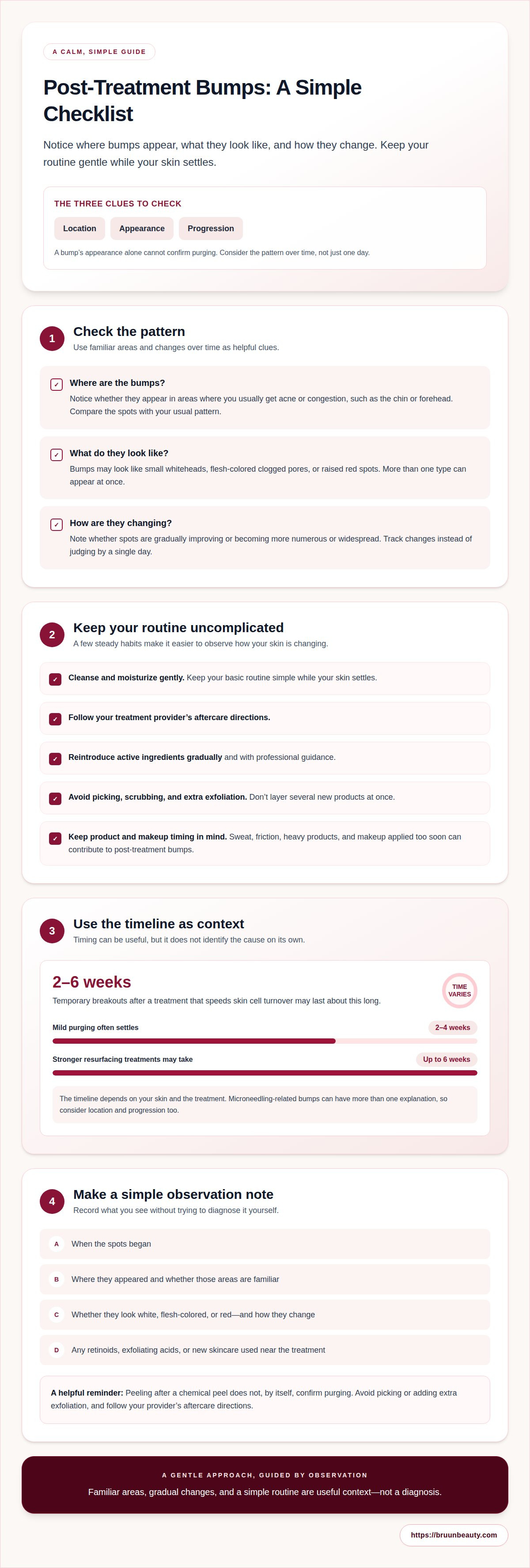
Temporary breakouts after a treatment that speeds cell turnover may last about 2-6 weeks. Mild purging often settles within 2-4 weeks, while stronger resurfacing treatments can take up to 6 weeks. People often ask whether skin purging after microneedling is normal. A short-lived breakout can happen, but the timing alone doesn’t identify its cause.
Purging typically appears where you already get acne or congestion, such as your chin or forehead. The bumps gradually improve rather than steadily worsen. Ordinary breakouts can appear in new areas and may not follow the treatment timing. Existing congestion can also become more noticeable without being a new purge.
Irritation follows a different pattern. Burning, strong stinging, intense itching, widespread redness, a rash, or notable swelling can point to irritation rather than purging. New skincare used too soon may irritate skin after microneedling. If discomfort increases or the breakout worsens, seek professional evaluation instead of adding stronger products.
Post-treatment breakouts can have several triggers beyond cell turnover. Heavy or occlusive products, sweat, friction, makeup applied too soon, and irritating skincare can all contribute. For example, rubbing your face during exercise or layering several new products can make it harder to identify what is bothering your skin.
After a chemical peel, dryness, tightness, flaking, peeling, sensitivity, and small bumps may occur. A peel exfoliates the skin’s outer layers, so temporary congestion or breakouts can accompany changes in cell turnover. Peeling alone doesn’t confirm purging. Avoid picking, scrubbing, or adding extra exfoliation, which can increase irritation.
- Keep your routine simple with a gentle cleanser and moisturizer.
- Follow your treatment provider’s aftercare directions.
- Reintroduce active ingredients gradually, with professional guidance.
- Avoid picking bumps or layering multiple new products.
These steps support a calmer routine while your skin settles. A focused microneedling products collection can help you explore options related to treatment planning, but the products you use should suit your skin and aftercare guidance.
Track whether bumps stay in familiar areas and gradually improve. Contact a professional if breakouts last longer than two weeks without improvement, worsen significantly, or continue beyond 6-8 weeks. Don’t assume changes in your skin are ordinary purging.
Skin purging is a temporary increase in breakouts that occurs when a treatment accelerates the skin’s natural cell turnover. Chemical peels exfoliate the outer layers of skin and can increase cell turnover. After a peel, people may experience dryness, tightness, flaking, peeling, small bumps, temporary congestion, breakouts, or increased sensitivity. Consider these effects alongside the timing and pattern of the bumps.
Breakouts after microneedling may be related to occlusive post-treatment products, sweat or friction, makeup applied too soon, skincare irritation, or existing congestion. After microneedling, the skin barrier needs time to recover, and using active ingredients too soon can cause irritation that looks like a breakout. There is more than one possible explanation, so persistent or worsening symptoms warrant professional input.
Typical appearance of bumps and whiteheads
After microneedling, temporary bumps may look like small whiteheads, flesh-colored clogged pores, or raised red spots. They can resemble familiar acne, especially around the chin, cheeks, or forehead. Their appearance alone cannot confirm purging. Notice where they appear and how they change over time.
Whiteheads usually have a small, pale center beneath or at the skin’s surface. Some bumps may be closed and skin-colored, with no visible center. Red bumps can look more noticeable, while rough texture may be noticeable before it looks dramatic. Several types of spots can appear together rather than following one uniform pattern.
Location offers a useful clue. Someone who commonly gets congestion along the jaw may notice similar bumps there after treatment. Compare the spots with the treatment area and your usual breakout pattern to understand where the changes are appearing.
Timing and progression matter, too. Large red bumps have been reported within 24 hours of microneedling, but that timing does not establish the cause. Notice whether spots are gradually settling or becoming more numerous or widespread. Track how they look and feel over time.
Retinoids and exfoliating acids can increase cell turnover, bringing existing congestion to the surface. If you recently introduced a retinoid or used one near the time of treatment, irritation can also resemble a breakout. Don’t add active products to “clear” the bumps. Doing so can make it harder to tell whether your skin is settling or changing.
Use a simple observation routine instead of squeezing spots. In consistent lighting, note the affected areas and whether the bumps change from day to day. Keep your hands away from whiteheads, and avoid scrubs or picking. For example, a few small spots that fade look different from bumps that become more widespread.
- Compare the affected areas with your usual breakout pattern.
- Note whether bumps are white, flesh-colored, or red.
- Watch for changes rather than judging by one day’s appearance.
- Record how the bumps look and feel over time.
These observations help you describe what you see without self-diagnosing. Note when the spots began, where they appeared, and whether you used retinoids or exfoliating acids. Tracking their appearance over time can help you understand whether temporary congestion is settling or your skin is changing.
Microneedling and skin purging
Microneedling can be associated with temporary breakouts, but it doesn’t automatically cause purging. The treatment may stimulate skin renewal, making existing congestion more noticeable. When small bumps appear in familiar areas, such as the chin or forehead, you may ask, “Is skin purging after microneedling normal?” That pattern is a clue, not proof of the cause.
Post-treatment bumps have several possible explanations. Changes in cell turnover may bring existing congestion forward, while irritation from products, friction, or sweat can also contribute. For example, a heavy moisturizer or makeup applied before skin feels settled may be associated with clogged-looking spots. Microneedling isn’t the only possible trigger.
Topical products may reach more deeply for a time after microneedling. As a result, a product that usually feels comfortable may irritate your skin soon after treatment. Keep your routine simple and follow your provider’s aftercare instructions. Don’t add an exfoliating acid or retinoid to clear new bumps without guidance.
Existing congestion matters. If you often notice clogged pores along your forehead, cheeks, or jawline, breakouts in those areas may reflect congestion that was already present. They don’t prove microneedling caused a purge. Compare the spots with your usual pattern and note whether they gradually improve.
If you notice burning, pronounced itching, widespread redness, a rash, or swelling, simplify your routine and contact a skincare professional for guidance. If bumps worsen or spread into unfamiliar areas, ask a professional to assess the changes. Avoid scrubbing or layering stronger products while your skin feels unsettled.
For a clearer picture, note when the bumps appeared and what touched your skin afterward. Record whether you used makeup, a new serum, or an occlusive product. These details can help a skincare professional weigh cell turnover, irritation, and other breakout triggers. A simple timeline is more useful than guessing from one photograph.
The question “Is skin purging after microneedling normal?” has no single answer for every skin type. Familiar bumps that gradually settle differ from widespread changes or discomfort. Keep your routine basic, avoid picking, and seek professional guidance if symptoms worsen or feel uncomfortable.
For estheticians, this distinction can inform thoughtful treatment planning. Review a patient’s usual congestion areas and current skincare before treatment, then explain aftercare clearly. If a patient reports burning or widespread redness afterward, focus on professional evaluation rather than assuming the change is a purge.
That discussion can also explain what microneedling involves: fine needles support skin renewal, which may make existing congestion more noticeable. This possibility doesn’t mean every new bump is a purge. Patients should compare changes with their usual congestion and look for signs of irritation. Clear aftercare guidance can help them avoid adding products or friction while their skin feels unsettled, and notice whether symptoms are improving or worsening.
A provider can invite patients to describe what they applied after treatment and mention any discomfort, redness, itching, or swelling. Those details keep the conversation focused on the pattern rather than assuming a single cause. When changes are uncomfortable or worsening, professional guidance is a sensible next step.
First 72 hours of aftercare
Keep your routine simple during the first 72 hours after microneedling. Your skin is recovering, so gentle cleansing and moisture matter more than adding new active ingredients. Follow your treatment provider’s specific aftercare directions if they differ from general guidance.
During the first 24 hours, avoid experimenting with new products. Topical skincare may reach more deeply after treatment, so familiar products can feel different. Use gentle, basic skincare, and pause retinoids, exfoliating acids, scrubs, and strong acne products until your provider says you can resume them.
For cleansing, choose a gentle formula and use a light touch. Don’t scrub with a washcloth or cleansing brush. Pat your face dry with a clean, soft towel, then apply a simple moisturizer that keeps your skin comfortable without feeling heavy or occlusive.
Keep your hands away from bumps. Picking or squeezing can prolong visible redness or discoloration. If you notice a small whitehead on day two, leave it alone instead of using a spot treatment or exfoliant. A simpler routine makes it easier to see how your skin is changing.
- Use gentle cleansing and a comfortable, lightweight moisturizer.
- Pause scrubs, retinoids, exfoliating acids, and strong acne products until your provider says you can resume them.
- Skip makeup until your provider’s guidance says it’s appropriate.
- Don’t add several unfamiliar products during the first 72 hours.
Sweat and friction can also make your skin feel less comfortable. Choose loose, comfortable clothing around your face, and avoid rubbing your skin with towels or clothing. If you exercise, keep your hands and equipment away from your face, then cleanse gently according to your aftercare instructions.
Sun protection matters as your skin recovers. Use broad-spectrum sunscreen when your provider’s instructions allow, and limit direct sun exposure. A hat can provide an extra physical barrier outdoors. Choose products that feel comfortable on your skin and follow your provider’s guidance.
After the first 72 hours, don’t rush to restart every active ingredient at once. Ask your provider when to reintroduce retinoids, exfoliating acids, scrubs, or strong acne products. Bringing them back gradually makes it easier to notice which products feel comfortable as your skin settles.
Continue following your provider’s aftercare guidance as your skin settles. Keep your routine gentle, and give your skin time to return to its usual feel before adding products or steps.
Bruun Beauty
Bruun Beauty offers skincare and treatment supplies for a thoughtfully planned microneedling routine. If you’re sorting out post-treatment bumps, focus first on their pattern and appropriate aftercare rather than adding products to force a quick change. Choose products only after considering those factors.
The Advanced Microneedling Serum SD - Control Salmon DNA Ampoule Serum is a skincare option within the microneedling category. It can be considered as part of a planned routine, but it can’t identify whether bumps are purging, irritation, or ordinary breakouts. Follow your treatment provider’s directions about what to apply and when.
For licensed estheticians, a serum may fit a planned service routine when it aligns with the treatment protocol. For advanced at-home users, the first step is still simple post-treatment care. If you notice burning, spreading redness, or worsening bumps, avoid experimenting with products and seek professional evaluation.
Jelly Mask Kits can complement a broader facial-care setup, particularly for professionals organizing post-service skincare options. A mask shouldn’t replace individualized aftercare instructions or cover up a reaction that’s getting worse. Choose the timing and products with the treatment plan in mind, and avoid introducing several unfamiliar products at once.
BB Glow Treatment Supplies serve a different purpose from assessing post-microneedling breakouts. They may suit a separate service plan, but they aren’t a way to identify or manage purging. If your skin is still uncomfortable or visibly changing after microneedling, prioritize professional guidance before adding another cosmetic treatment.
A useful approach is to match each product to its role. Microneedling serum supports a planned skincare routine, jelly masks belong in suitable facial-care protocols, and BB Glow supplies fit their own treatment context. None can confirm the cause of bumps. Note when they appeared, where they are, and what you applied afterward.
Bruun Beauty serves licensed estheticians, spa and clinic owners, and advanced at-home skincare enthusiasts seeking professional-grade skincare and beauty equipment. Its offerings include microneedling, facial-care, and BB Glow supplies, so you can consider relevant options without treating every post-session breakout as the same issue. The right next step depends on what your skin is showing and your provider’s aftercare guidance.
To explore options for a planned microneedling routine, explore microneedling products from Bruun Beauty.
Frequently Asked Questions
Skin Purging After Microneedling, Peels & Laser: What’s Normal?
Temporary bumps can follow treatments that affect skin renewal, but each procedure may cause different visible changes. After a peel, you may notice flaking or dryness. Bumps after laser treatment aren’t always purging. Track their location and progression, and seek professional evaluation if discomfort or redness worsens.
Does Microneedling Cause Breakouts or Acne?
Breakouts can appear after microneedling, but the treatment doesn’t cause them in every patient. Existing congestion, irritating skincare, sweat, friction, or makeup applied too soon may contribute. Note when bumps began and what products you used. This timeline can help a professional assess possible causes.
Does Microneedling Help Acne or Acne Scars?
Microneedling stimulates natural collagen production, but that doesn’t mean it clears acne or acne scars. If these are your concerns, discuss your skin history and goals with a dermatology professional before choosing a treatment. Mention current breakouts, recurring congestion, and lingering marks so they can assess your situation.
What Products Should You Avoid During Purging After Microneedling?
Avoid retinoids, exfoliating acids, scrubs, and strong acne products during early recovery unless your provider advises otherwise. These can irritate skin that’s still settling. For example, don’t combine an exfoliating toner and retinoid to address whiteheads. Keep care gentle, then ask when to reintroduce active ingredients.
What Should You Do If Your Skin Starts Breaking Out?
Keep your routine simple, avoid picking, and note when the breakout began. Record the affected areas and recent changes, such as a new moisturizer, makeup, exercise, or friction. Don’t layer several acne products to clear spots. If changes worsen or feel uncomfortable, seek professional guidance rather than experimenting.
When Should You Contact Your Dermatology Provider?
Contact a dermatology provider if changes worsen or feel uncomfortable, especially if you develop increasing redness or warmth, severe swelling, blistering, drainage, or a widespread rash. Painful cyst-like bumps also deserve evaluation. Share when symptoms began, where they appeared, and which products you used to help clarify what’s happening.
Is purging after microneedling normal, or is it a side effect?
Temporary purging can occur, but not every breakout afterward is purging. Familiar blemish-prone areas and gradual improvement may fit that pattern. Burning, intense itching, widespread redness, or a rash may indicate irritation instead. Appearance offers clues, not a diagnosis; seek professional advice if symptoms worsen or feel uncomfortable.
How long do breakouts or purging last after microneedling?
Temporary purging after treatments may last about 2-6 weeks, but individual timing varies with skin, treatment, and products used. Look for gradual improvement rather than judging one day. If breakouts worsen, persist beyond 6-8 weeks, or cause discomfort, seek professional evaluation to clarify their cause.
Microneedling for Smoker's Lines: Is It Right for You
How Often Can You Use a Hydrojelly Mask? Set a Routine
Related Posts

Do Chin Sculpting Masks Work for a More Defined Jawline?

Can You Microneedle Your Lips, and How Long Do Results Last?

How Often Can You Use a Hydrojelly Mask? Set a Routine

Microneedling for Smoker's Lines: Is It Right for You

Benefits of LED Light Therapy for the Face, Plus Safety

Starting Microneedling in Your 30s: How It Works and Helps
