

How Often Can You Use a Hydrojelly Mask? Set a Routine
Most people can use a hydrojelly mask 1 to 3 times a week, adjusting for skin type and goals. Dry skin may suit 2 to 3 sessions weekly, while sensitive skin can start less often.
A consistent schedule helps you fit masking into your routine without adding sessions at random. Follow the mask’s recommended wear time, then remove it gently.
This guide covers weekly frequency, application and removal, routine planning, and what to consider if a mask stays on too long.
Key Takeaways
- Most people can build masking into their routine 1 to 3 times a week, adjusting the pace to their skin type and how it responds.
- Dry, oily, combination, and sensitive skin may call for different starting schedules, so choose a frequency that feels comfortable for your skin.
- Apply the mask evenly and follow its recommended wear time; leaving it on longer isn’t a shortcut to better results.
- Plan masking around your regular skincare steps to make it a consistent part of the week, rather than an extra layer added at random.
- Learn what can happen when a mask stays on too long and how to keep application and removal comfortable.
Frequency: How Often Should You Use Jelly Masks for Best Results?
A practical answer to how often you can use a hydrojelly mask is 1 to 3 times a week, depending on your skin type and goal. A spa session can generally fit within that same weekly range, with your skin’s comfort guiding the schedule.
Frequency by Skin Type
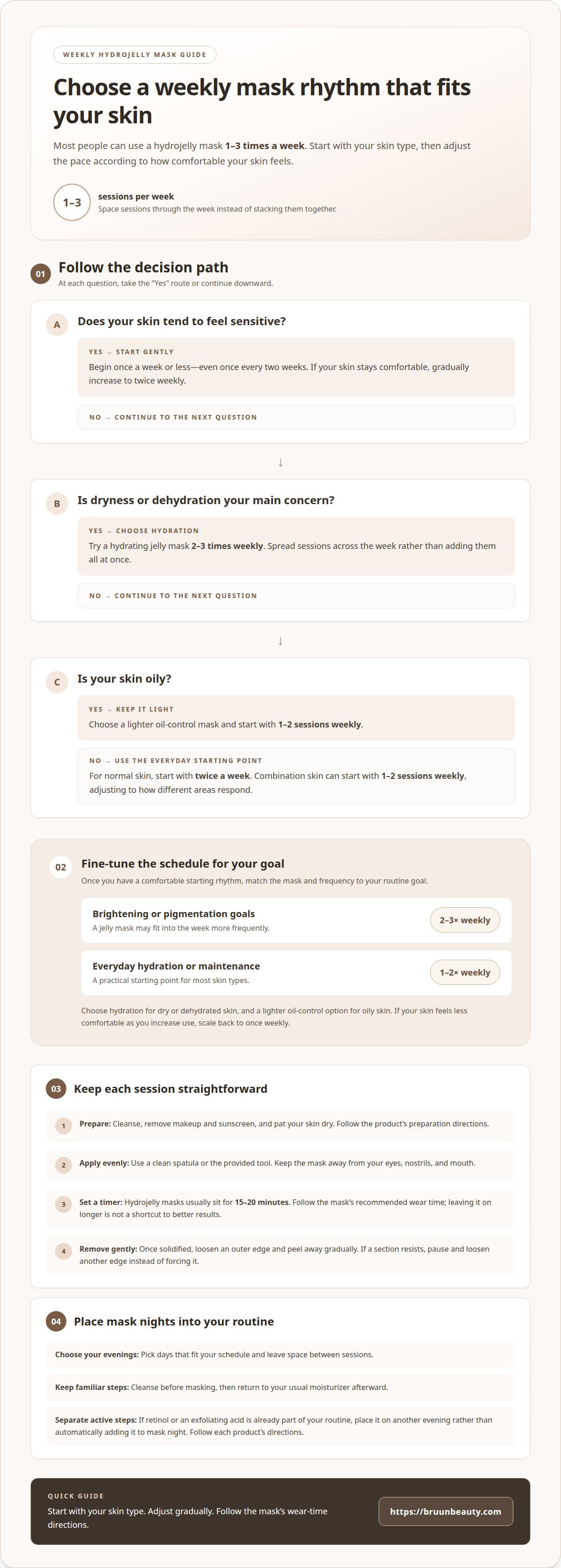
Frequency by skin type means choosing a weekly schedule based on how your skin tends to feel and respond. For normal skin, start with twice a week; increase to three sessions if your skin remains comfortable. Dry or dehydrated skin may use a hydrating jelly mask 2 to 3 times weekly. Oily or acne-prone skin can choose a lighter oil-control mask 1 to 2 times weekly.
Combination skin can also start at 1 to 2 sessions weekly, then adjust based on how different areas respond. Sensitive skin should begin once a week or less, including once every two weeks. If your skin stays comfortable, gradually increasing to twice weekly may suit you. These starting points make it easier to notice whether your chosen cadence feels appropriate.
Adjusting Use for Dry or Problem-Prone Skin
Adjusting use means changing the weekly cadence to match dryness or a specific skin concern. For dry or dehydrated skin, try a hydrating mask 2 to 3 times weekly, rather than adding sessions immediately. People with specific skin concerns may use a jelly mask more often than the usual 1 to 2 times weekly, but the mask’s purpose and your skin’s response matter.
For oily or acne-prone skin, choose a lighter oil-control formula and begin with 1 or 2 weekly applications. If dryness is your main concern, keep the mask hydrating and spread sessions across the week. If your skin feels less comfortable as you increase use, scale back to once weekly. A gradual adjustment helps you identify a workable rhythm.
Frequency by Skin Goal
Frequency by skin goal means matching mask use to the result you want from your routine. For brightening or pigmentation goals, a jelly mask may be used 2 to 3 times weekly. For everyday hydration and maintenance, 1 to 2 sessions can be a reasonable starting point for most skin types.
Keep the formula aligned with the goal: choose hydration for dry or dehydrated skin, and a lighter oil-control option for oily skin. Space sessions through the week instead of stacking them together. For example, a normal-skin routine could use a mask twice weekly, while a sensitive-skin routine begins once weekly or less. Explore jelly mask options to find a formula that fits your preferred routine.
Application and removal steps
A smooth application starts with a clean face, an even layer, and a timer. Hydrojelly masks usually sit for 15-20 minutes, then solidify enough to peel away. Follow the product’s preparation directions, since formulas can differ. Keep your tools and workspace ready before mixing or applying the mask.
- Prepare your skin. Cleanse your face and remove makeup, sunscreen, and other residue. Pat your skin dry so the mask can sit evenly. Tie back your hair, then keep a towel nearby. For a new formula, patch test it for at least 24 hours before applying it across your face.
- Prepare the mask. Follow the package directions for combining or readying the product. Don’t guess at proportions or substitute ingredients. If the instructions call for mixing, work until the texture looks consistent, then apply promptly so it remains spreadable.
- Apply an even layer. Use a clean spatula or the tool provided, if included. Spread the mask across the face in a consistent layer, keeping it away from your eyes, nostrils, and mouth. Check the edges around your hairline and jaw so you can lift the mask cleanly later.
- Set a timer. Leave the mask on for about 15-20 minutes. Avoid extending the session just because the mask feels comfortable. As it sets, stay relaxed and limit facial movement that could crack the surface or loosen its edges.
- Lift and remove. Once the mask has solidified, gently loosen an outer edge and peel it away. Move gradually rather than pulling quickly. If a small section remains, lift it carefully instead of scraping your skin. Dispose of the removed mask, then follow your usual post-mask routine.
Removal should feel controlled, not rushed. If the mask releases evenly, start at the jawline and work upward. If it resists, pause and loosen another edge. Don’t force a section that still clings. A careful peel helps keep removal comfortable and avoids leaving bits near the hairline.
Use the mask’s instructions as your guide if its texture or setting time differs. A thick, uneven application may set inconsistently, while a very thin layer can be harder to lift as one piece. Preparing your tools first helps you apply the mixture without stopping midway. If your wider routine also includes microneedling, explore microneedling skincare products as a separate part of that routine.
Jelly masks in a weekly skincare routine
A weekly plan gives your jelly mask a clear place alongside cleansing, serums, and moisturizer. For a summer routine, two to three sessions a week may fit with your usual skincare steps. Leave space between sessions rather than adding a mask every night.
Can you use a hydrojelly mask with retinol, acids, or other skincare products? Yes, but plan the steps thoughtfully: use the mask as a separate part of your routine, rather than layering several active products into one session. Face masks containing retinol should be limited to two times a week at night.
Plan your week before adding a mask. Keep your usual cleanser and moisturizer, then schedule mask sessions on separate evenings. If retinol or an exfoliating acid is already part of your routine, avoid putting every active step on the same night. Follow each product’s directions.
- Choose mask evenings: Pick two or three days that suit your existing schedule.
- Keep the routine familiar: Use your regular cleanser before masking, then return to your normal moisturizer afterward.
- Separate active steps: Place retinol or acid use on another evening, rather than adding them automatically to mask night.
- Review the week: If several products compete for the same evening, move one step instead of stacking everything.
For instance, a Monday and Thursday mask schedule creates space between sessions. If you also use a retinol mask at night, count that as a separate mask step and keep its use within the two-times-weekly limit. Don’t assume that a jelly mask changes the directions for retinol or acids.
Other products can stay in your routine, but give each step a purpose. Cleanser prepares the skin, while moisturizer finishes the routine. Use serums or exfoliating products according to their own directions, not as part of an improvised combination for one evening.
Keep the plan simple for a few weeks: note your mask days, the other products used, and how your skin feels afterward. If you try a new formula, patch test it for at least 24 hours before full-face use. A clear weekly calendar makes it easier to spot crowded evenings and maintain a consistent routine.
Adjust frequency to your skin’s needs instead of following one schedule. Dry skin may suit a deeply hydrating jelly mask three to four times a week. With sensitive skin, start with one session a week or every two weeks. If your skin remains comfortable, you can gradually increase to twice a week.
A jelly mask may leave skin looking hydrated and temporarily plumper after one use, which can suit a special-occasion routine. If you already tolerate the formula, you may use it the day before an event or a few hours before makeup. Keep sessions appropriate for your skin, and follow the directions for other products.
How long to wear and comfortably remove a mask
A hydrojelly mask is designed for a set wear period, not an all-evening treatment. Jelly masks are usually left on for 10 to 20 minutes. Follow the mask’s directions and remove it at the recommended time for a comfortable, predictable session.
As a mask sets, its texture changes. Use a timer so you can remove it when the session ends, while it’s still comfortable to lift smoothly around the jawline or hairline.
Wearing a mask longer doesn’t mean more hydration. When the recommended time is up, start at an outer edge and gently loosen it. Don’t pull quickly or scrape at pieces near the hairline.
- Follow the wear time: Check the directions and set a timer for the recommended duration.
- Lift gently: Start at an outer edge and remove the mask slowly.
- Take your time: Loosen another edge if the mask doesn’t lift smoothly.
- Keep the session comfortable: Remove the mask when the recommended wear time ends.
If you realize you’ve gone past the intended time, don’t tug. Start at an outer edge and lift slowly. If the mask resists, loosen another edge before continuing. After removal, follow your usual skincare steps.
Notice how your skin feels after each session. If repeated masking leaves it uncomfortable, reduce use to once a week. Note the day, the mask, and how removal felt. This can help you adjust your timing and routine.
For example, if a timer is set for 15 minutes but a call interrupts you, remove the mask as soon as you can. Avoid leaving it on while you finish chores or fall asleep. A planned session works best when you can stay nearby, check the timer, and remove the mask without rushing.
Check the mask’s directions, especially if its setting texture differs from another formula you’ve used. Keep the routine simple: apply as directed, remove when the session ends, and follow the recommended wear time. Consistent timing helps you enjoy a comfortable mask session.
How long should you leave a hydrojelly mask on?
Most jelly masks stay on for 10 to 20 minutes, while many hydrojelly masks are commonly worn for 15-20 minutes. The product’s directions should guide your session because formulas can set differently. Set a timer before applying, so you can remove the mask within its intended window.
Choose a point within the recommended range based on the mask’s instructions and your skin’s comfort. For oily or acne-prone skin, a session can last 10 to 15 minutes. Other jelly masks typically remain on for 15-20 minutes. Don’t assume that a longer session improves the result.
Use these timing cues as a practical guide:
- 10 to 15 minutes: A possible session length for oily or acne-prone skin.
- 15-20 minutes: A typical wear period for many jelly masks.
- 10 to 20 minutes: The broader usual range for jelly-mask sessions.
Start your timer once the mask is applied evenly. If the directions say 15-20 minutes, plan to remove it within that interval rather than waiting until it feels fully dry. A timer helps prevent distractions, such as answering a call or starting another task, from extending the session.
Texture can show you what is happening, but it shouldn’t replace timing directions. A hydrojelly mask may firm up as it sets, but that doesn’t mean you need to wait longer. Follow the stated wear time, then gently lift the mask from an edge.
For an event, leave enough time for application and removal. A jelly mask may be used two to three hours beforehand for a fresh-looking glow. If you already know the formula suits your skin, this timing can fit into your preparation without turning the mask into an overnight treatment.
Keep the rest of your routine simple during the session. Cleanse first, apply the mask, and remove it when the timer ends. Then return to your usual skincare steps. More wear time or extra products don’t replace the recommended timing.
If the mask’s directions specify a different wear period, follow them rather than borrowing the timing for another mask. Texture, setting behavior, and intended use vary. A timer and the package directions give you a clear endpoint, while careful peeling keeps removal controlled.
Bruun Beauty: Jelly Mask Kits
Bruun Beauty’s Jelly Mask Kits offer a practical way to add a mask session to your skincare routine at home or in a treatment room. Choose a kit that suits your preferred schedule, then follow its directions for preparation, wear time, and removal. A consistent routine helps keep each session simple and comfortable.
For a jelly mask option that fits the guidance in this article, explore the Jelly Mask Kits. They’re a natural next step if you’re ready to plan regular masking around your skin’s needs.
Contact Bruun Beauty if you’d like to learn more about its Jelly Mask Kits.
Make your next skincare step intentional
How often you can use a hydrojelly mask depends on the routine you can maintain comfortably. Keep your plan simple, and adjust it when your skin’s needs or the products in your routine change. Consistency makes it easier to notice what works for you.
Bruun Beauty offers Jelly Mask Kits, Advanced Microneedling Serum SD - Control Salmon DNA Ampoule Serum, and professional microneedling devices for different skincare routines. Choose products that suit your next step, whether you’re planning a mask session or exploring advanced microneedling care.
Build your routine at a manageable pace, and make space for skin that looks nourished and glowing.
Frequently Asked Questions
How Many Times a Week Should You Use a Face Mask?
How often to use a face mask depends on its formula and the rest of your routine. Follow the package directions, especially for masks with exfoliating ingredients. For example, avoid using two different active masks on the same evening. Alternate them so you can tell which product suits your skin.
How Often Should You Use a Jelly Mask?
A jelly mask generally fits 1 to 3 times weekly. Keep sessions on planned days and avoid increasing use while introducing another new skincare step. That makes it easier to identify which change affects your routine, rather than guessing between several new products.
What Skin Concerns Can Jelly Masks Help With?
Jelly masks are mainly used for a hydrated, temporarily plumper, refreshed appearance. Some formulas are chosen for brightening goals. They are cosmetic skincare products, not a way to address an underlying skin condition. Choose a mask based on the finish you want and its stated purpose.
How Do You Choose a Jelly Mask Formula?
Choose a jelly mask based on your skin goals and the formula’s stated purpose. Read the directions before mixing or applying it, and follow the recommended wear time. A mask should feel comfortable throughout use, and wearing it longer doesn’t necessarily improve results.
How often can you use a hydrojelly mask?
Most people can use a hydrojelly mask 1 to 3 times a week. Choose a place in that range by considering your skin type, the mask’s purpose, and the other products in your routine. Avoid increasing several skincare steps together, which can make it harder to assess changes.
Can you use a hydrojelly mask every day?
Daily hydrojelly masking is generally unnecessary. Reserve mask sessions for a clear purpose, such as a hydration-focused step, and keep other evenings for the basics in your routine. If you’re considering daily use because your routine feels incomplete, review its other steps before adding another mask session.
How often should you use a hydrojelly mask for dry, oily, or sensitive skin?
Dry or dehydrated skin can use a hydrating mask 2 to 3 times weekly; oily or acne-prone skin generally suits lighter oil-control masking 1 to 2 times weekly. Sensitive skin can start once weekly or less. Align the formula with your skin goal and reassess after routine changes.
How do you choose a hydrojelly mask for sensitive or acne-prone skin?
Choose a hydrojelly mask with a formula that matches your skincare goal and follow its directions. For acne-prone skin, don’t assume a mask replaces your usual routine. Its role is cosmetic, and the formula determines how it fits into your skincare steps.
Skin Purging After Microneedling: How Long Does It Last
Can You Microneedle Your Lips, and How Long Do Results Last?
Related Posts

Do Chin Sculpting Masks Work for a More Defined Jawline?

Can You Microneedle Your Lips, and How Long Do Results Last?

Skin Purging After Microneedling: How Long Does It Last

Microneedling for Smoker's Lines: Is It Right for You

Benefits of LED Light Therapy for the Face, Plus Safety

Starting Microneedling in Your 30s: How It Works and Helps
