

Can You Microneedle Your Lips, and How Long Do Results Last?
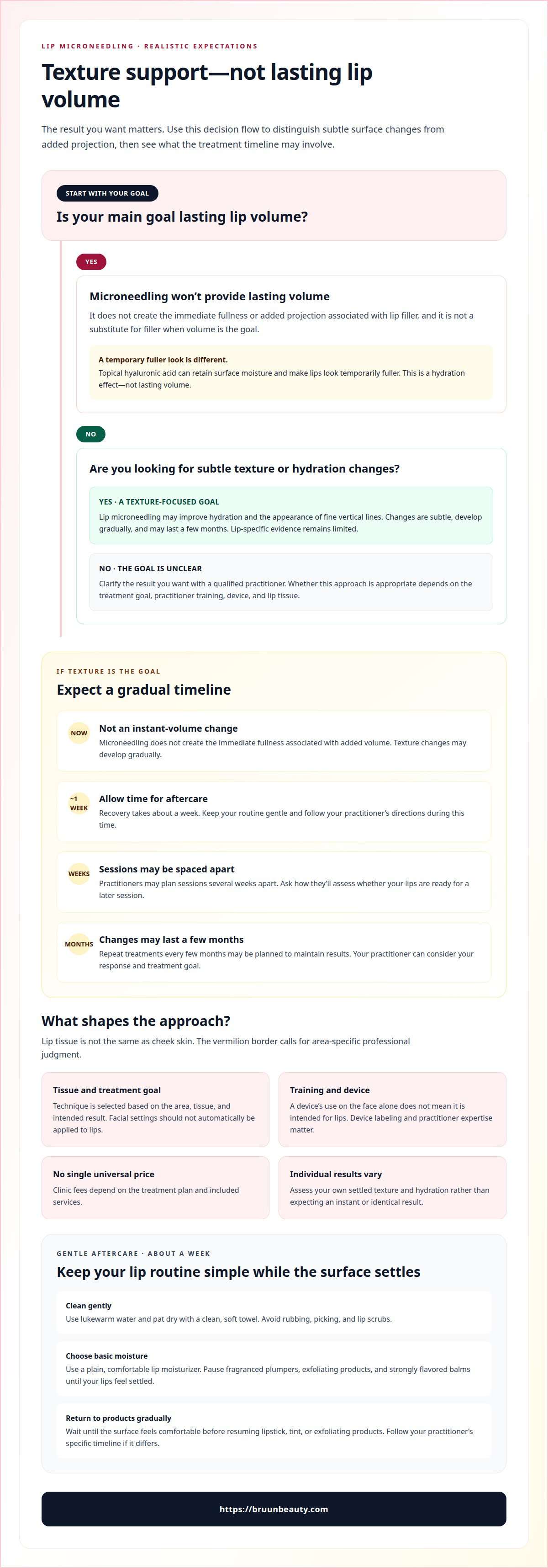
You can microneedle your lips, but hyaluronic acid won’t create lasting volume. It may support surface hydration and a temporarily fuller appearance, while changes in texture and hydration may last a few months.
This guide explains how lip tissue differs from facial skin, what results to expect, and how thoughtful aftercare can support recovery.
Key Takeaways
- Microneedling may improve lip texture and hydration, with benefits that can last a few months.
- Topical hyaluronic acid can boost surface moisture, but it doesn’t create lasting lip volume.
- Temporary fullness and longer-term changes are different outcomes; learn what can cause each.
- Lip tissue differs from facial skin, so the area calls for thoughtful technique and aftercare.
- Simple aftercare choices can support comfort and help you care for your lips as they settle.
How Long Does Lip Microneedling Last?
Lip microneedling may be considered for texture-focused goals, not lasting volume. It may improve hydration and the appearance of fine lines, with changes that can last a few months. Topical hyaluronic acid supports surface moisture rather than permanently changing lip shape or projection.
Pen-style devices use a moving cartridge across the skin. Results depend on tissue structure, technique, device settings, and treatment selection. Collagen support may gradually soften the appearance of fine vertical lines, but it doesn’t create the immediate fullness associated with lip fillers.
Practitioners may plan sessions several weeks apart, then repeat treatment every few months to maintain results. A texture goal is different from a temporary hydration boost. Lip-specific evidence remains limited, so expect subtle changes in moisture and the appearance of lines.
For lip lines, topical hydration and a lip-care routine are non-needling options. Microneedling is not a substitute for lip filler when added volume is the goal. Topical hyaluronic acid can temporarily make lips look fuller by retaining moisture. This is a surface-hydration effect, not added projection.
There is no single U.S. price for professional lip microneedling. Clinic fees depend on the treatment plan and included services. Device use also depends on the specific device and its labeling. A device’s use on the face alone doesn’t mean it is intended for lips.
There is no universal needle depth for professional lip microneedling. Practitioners select a technique based on the area, tissue, device, and intended result. The vermilion border differs from cheek skin, so facial settings shouldn’t automatically be applied to the lips.
Whether lip microneedling is appropriate depends on area-specific professional judgment. The practitioner’s training, device, and treatment goal all shape the procedure. A qualified practitioner should understand lip tissue and choose an approach suited to the vermilion border, rather than treating it like ordinary facial skin.
Microneedling is aimed at goals such as improving lip texture, not adding projection. Before deciding whether to microneedle your lips, clarify which result you want. A professional can consider tissue structure, depth control, and technique when selecting an approach. This helps align the procedure with your goal.
Allow time for aftercare when considering how long results last. Lip microneedling recovery takes about a week, so the treatment timeline extends beyond the period when texture or hydration changes are noticeable. Follow your practitioner’s aftercare guidance during this time and keep your routine gentle. Ask how they’ll assess whether your lips are ready for a later session.
Visible changes also develop differently from filler results. Microneedling doesn’t provide the immediate results of lip fillers, so judging it by the instant change associated with added volume can lead to mismatched expectations. Consider the texture goal, recovery interval, and gradual nature of the changes when deciding whether repeat treatment is worthwhile. If immediate fullness is your priority, this procedure won’t meet that goal. If you want subtle surface changes, allow time to assess them rather than expecting an instant difference.
Aftercare Following Lip Microneedling
Keep your lip routine simple while the surface settles, which usually takes about a week. For example, wash gently with lukewarm water and pat dry with a clean, soft towel. Avoid rubbing, picking, or using a lip scrub during this period.
Choose basic moisture over cosmetic extras. A plain, comfortable lip moisturizer can help reduce dryness. Avoid fragranced plumpers, exfoliating products, and strongly flavored balms until your lips feel settled. These products can make it harder to tell how your skin is responding.
Use these practical guidelines as you resume your routine:
- Apply lip products with clean hands, not a shared applicator.
- Pause lipstick and lip tint until the surface feels comfortable.
- Keep toothbrush bristles gentle around the lip line.
- Drink water regularly, especially if your lips feel dry.
- Follow the specific aftercare directions from your practitioner.
Wait until your lips have settled before applying cosmetic color. Lip tint retention varies with skin turnover, your healing response, and aftercare. Applying tint while the surface still feels tender, for example, may leave the color uneven. Resume makeup gradually, starting with a product that feels comfortable.
Protect the lip area from unnecessary friction. Choose a cup with a smooth rim, and avoid repeatedly pressing or rubbing your lips. If you usually use a face cloth, keep it away from the lip line while patting your face dry. Small routine changes can make daily care gentler.
Pay attention to how products feel as you reintroduce them. If a balm stings or makes the area uncomfortable, stop using it and return to a simpler moisturizer. Don’t layer several new products at once. A short, familiar routine makes it easier to identify what suits your lips.
After about a week, check whether your lip surface feels settled before restarting exfoliating or long-wear cosmetic products. If your practitioner gave you a different timeline, follow those instructions. A gradual return to products can help you maintain a comfortable routine while your lip texture continues to settle.
Lip tint retention after microneedling varies from person to person. Skin turnover, healing response, aftercare, and individual differences all affect the outcome, so someone else’s result may not be a useful guide to yours. These factors don’t provide a simple way to predict how much color will remain. A lighter or more noticeable result doesn’t, by itself, mean you followed your routine incorrectly; individual variation is part of the picture.
When assessing the settled appearance, allow for these differences rather than expecting a fixed level of retention. Skin turnover, healing response, aftercare, and individual variation can all contribute to different outcomes. Follow your practitioner’s specific directions as you return to your usual routine, and avoid drawing conclusions from someone else’s experience. If you have questions about how your tint has settled or what to do next, discuss them with your practitioner, who can consider your treatment and aftercare. A measured approach makes room for natural differences without adding unnecessary products or changes to your lip routine.
Temporary Swelling Versus Lasting Lip Volume
Fuller-looking lips after microneedling don’t necessarily mean lasting volume. Any visible change immediately after the procedure is most likely temporary swelling, not new tissue growth. Microneedling doesn’t add lip projection or replace volume lost with age. That distinction matters if you’re looking for a fuller shape.
Swelling after lip microneedling can be noticeable for two to three days, sometimes longer. During this brief period, lips may look fuller than they will once settled. Compare your lips after the area has settled, rather than judging the result on treatment day. An early, plumper appearance doesn’t show how long texture or hydration improvements will last.
Topical hyaluronic acid works differently. It attracts and holds moisture near the skin’s surface, which can temporarily make lips look smoother or fuller. Think of how hydrated lips look after applying a moisturizing balm: the appearance reflects surface moisture, not added projection. That visual effect fades as moisture levels change.
Microneedling focuses on skin quality, not lip shape. The procedure may support collagen production and improve the appearance of fine lines. Those changes develop differently from swelling and surface hydration. Texture improvements may last a few months, but they don’t create the defined volume associated with injectable filler.
Injectable hyaluronic acid fillers are designed to remain in the body for months. They add volume and can change lip projection, unlike topical hyaluronic acid. Microneedling and filler serve different goals: one focuses on skin texture, while the other is designed for augmentation. Combining approaches doesn’t make microneedling itself a volumizing treatment.
Use the goal to interpret the result:
- Short-term fullness: swelling during the first two to three days.
- Surface plumpness: temporary moisture from topical hyaluronic acid.
- Texture change: a gradual improvement that may last a few months.
- Added projection: a volume change microneedling doesn’t provide.
For example, lips that look fuller on the first day, then return closer to their usual shape, show a temporary change. If fine lines look softer after the area settles, that’s a texture result, not added volume. Separating these outcomes helps set realistic expectations and prevents early swelling from being mistaken for lasting growth.
Choose a procedure based on the result you want. For smoother-looking lip texture, microneedling may offer a temporary improvement. For a lasting change in volume, it isn’t an alternative to lip filler. Hydration and collagen support can affect appearance, but neither turns microneedling into a lip-augmentation procedure.
Differences Between Lip Tissue and Facial Skin
Lip tissue isn’t simply facial skin with a different shape. The lips have a thinner epidermis, limited keratinization, and a dense network of blood vessels. These features help explain why the area responds differently to a procedure than the cheek or forehead.
Facial skin has a more protective outer layer than the lip surface. Limited keratinization means the lips have less of the outer skin structure found in areas such as the cheeks. A practitioner shouldn’t assume that a technique suited to facial skin transfers directly to the lips.
The dense network of blood vessels also distinguishes lip tissue. The vermilion border and surrounding skin, for example, aren’t identical surfaces. Treatment planning must account for the specific area, rather than treating the whole mouth as one flat section of facial skin.
Lip tissue also has a different inflammatory and healing response. This can affect how the area looks and feels as it settles after a procedure. Experience with facial skin alone doesn’t explain how lips will respond; tissue structure, technique, and treatment selection matter together.
These contrasts affect practical decisions:
- Area: the lip surface and vermilion border need separate attention.
- Technique: facial settings shouldn’t be copied automatically to lips.
- Goal: texture improvement differs from changing lip volume.
- Aftercare: lip products should suit the area as it settles.
For instance, a cheek-focused procedure may aim to improve broader facial texture, while lip treatment focuses on a smaller, more delicate surface. Tissue structure and the desired outcome guide the approach, including how the practitioner works around the lip edge.
This contrast helps explain why lip-specific results shouldn’t be inferred from general facial microneedling. Tissue structure, depth control, technique, and appropriate treatment selection all shape outcomes. The lips’ distinct healing response is another reason to plan specifically for this area.
For someone considering lip microneedling, the useful question isn’t whether the same device can touch both areas. It’s whether the procedure is selected and adapted for lip tissue. A clear goal, such as improving the appearance of fine lines rather than adding projection, helps keep expectations aligned with the area’s characteristics.
After the procedure, follow lip-specific aftercare rather than automatically applying a facial routine. A lip scrub or strongly flavored cosmetic product, for example, may not be suitable during the settling period. The thinner outer layer and different response of lip tissue make gentle, area-appropriate care an important part of the plan.
Bruun Beauty
Bruun Beauty offers skincare and beauty supplies for professionals and at-home skincare enthusiasts. If you’re considering lip microneedling, choose products for their intended cosmetic use, not with the expectation of added lip volume. A serum or mask can be part of a skincare routine, but it doesn’t replace a procedure selected for a specific lip-shape goal.
The Advanced Microneedling Serum SD - Control Salmon DNA Ampoule Serum is one skincare option in Bruun Beauty’s range. It’s a topical cosmetic for external use only, not for injection. Follow the product directions and keep its purpose clear: it belongs in a skincare routine, while the treatment approach and intended result require separate consideration.
Bruun Beauty also offers Jelly Mask Kits and BB Glow Treatment Supplies. These categories suit different skincare and cosmetic routines. A jelly mask, for example, is a masking product, while BB Glow supplies are intended for BB Glow treatments. Neither should be mistaken for a lip-volume procedure or described as a way to change lip projection.
For a more useful product decision, start by defining your goal. Are you choosing a topical skincare product, building a professional supply order, or exploring a cosmetic procedure? These are different needs. Keeping them separate helps you select relevant supplies without expecting a serum, mask, or treatment product to deliver an outcome outside its intended use.
- For topical skincare: review the serum’s use directions and intended application.
- For masking: consider whether a jelly mask fits your broader routine.
- For professional supplies: keep BB Glow products distinct from lip-focused procedures.
Estheticians and spa owners can consider these offerings as part of their broader skincare and beauty supply choices. At-home skincare enthusiasts can review product information before adding an item to their routine. In either setting, a product’s category and directions clarify where it fits. Choose based on those details rather than assuming every microneedling-related product is intended for lips.
Bruun Beauty gives you product options to explore as you plan skincare routines and professional supplies. Read each description with your intended use in mind, and keep cosmetic skincare separate from decisions about procedures. For questions about Bruun Beauty’s offerings, you’re welcome to contact the team when convenient.
Frequently Asked Questions
Does microneedling with hyaluronic acid create lasting lip volume?
No. A topical hyaluronic acid product is for cosmetic skincare use, not an injectable lip-volume product. Before using any serum, read its label and follow its directions for application. For example, Bruun Beauty’s serum is for external use only. Keep topical skincare separate from products or procedures intended to change lip shape.
Is microneedling lips an alternative to lip fillers?
No, they serve different purposes. Decide what outcome matters most before considering either approach: improving the look of the skin is different from changing lip contour. If contour is your priority, discuss that goal with a qualified professional. If you’re focused on skincare, ask about approaches designed for the lip area and how they fit your routine.
Is this safer than injectable fillers?
There isn’t a universal safety ranking that applies to everyone. Microneedling and injectable fillers use different methods, so the relevant considerations differ too. A useful comparison starts with your desired outcome, the procedure involved, the practitioner’s experience, and your personal circumstances. Discuss those details with a qualified professional rather than choosing based on the word “non-injectable” alone.
Lip Enhancement Without Shots: Myth or Alternative?
Cosmetic changes that don’t require a procedure are a real option. A moisturizing lip product or carefully chosen lip color can change how lips look as part of your daily routine. These choices don’t provide every result people mean by “enhancement,” however. Decide whether you want a temporary styling effect, a skincare benefit, or a change in shape.
Lip Plumping: Possible Without Fillers?
You can create a temporary plumped look with makeup, such as applying lip color within your natural lip line and adding a touch of gloss at the center. A moisturizing balm can also make dry lips look smoother. These styling choices offer a short-term cosmetic effect; they don’t permanently alter lip shape.
Microneedling Lips: What’s the Real Effect?
Think of it as a procedure aimed at the appearance of the lip surface, not a way to redraw your lip outline. Results depend on the treatment goal, tissue structure, technique, and how your skin responds. Lip-specific evidence is limited, so don’t assume that findings or expectations for facial skin apply directly to lips.
What About Microneedling at Home?
A home device doesn’t automatically make lip treatment straightforward. Device instructions, intended use, and familiarity with the lip area all matter. Don’t adapt a routine designed for cheeks or the forehead to your lips. For home skincare, topical lip products offer a simpler option that doesn’t involve operating a microneedling device.
Can you safely microneedle your lips at home?
No general at-home method can establish that lip microneedling is safe for every person or device. The lip area requires specific judgment, and the device’s instructions should guide its use. For a procedure involving your lips, consult a qualified professional familiar with the area. For everyday care, choose products labeled for topical use and follow their directions.
How Often Can You Use a Hydrojelly Mask? Set a Routine
Do Chin Sculpting Masks Work for a More Defined Jawline?
Related Posts

Do Chin Sculpting Masks Work for a More Defined Jawline?

How Often Can You Use a Hydrojelly Mask? Set a Routine

Skin Purging After Microneedling: How Long Does It Last

Microneedling for Smoker's Lines: Is It Right for You

Benefits of LED Light Therapy for the Face, Plus Safety

Starting Microneedling in Your 30s: How It Works and Helps
