

Professional vs. At-Home Microneedling: Cost Comparison
The lower upfront price isn’t always the lower-cost choice over time. The cost of professional microneedling vs at home depends on more than a session fee or device price: you also need to account for repeat visits, disposable cartridges, compatible skincare, and the value of professional expertise.
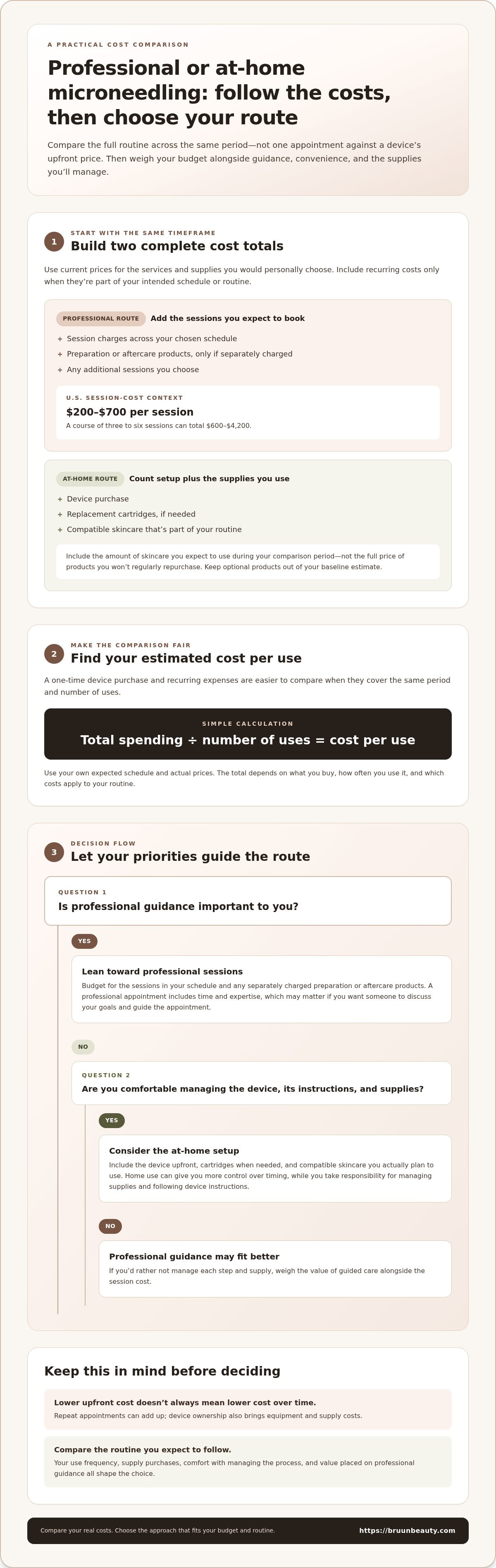
In the U.S., a standard professional session typically costs $200 to $700, so a course of three to six sessions can total $600 to $4,200. At home, your starting costs include a device, but each use may also call for a fresh cartridge and suitable serum. Your total depends on what you buy and how often you use it.
This comparison will help you estimate cost per use with your own routine and actual prices, then weigh convenience and control alongside dollars. You’ll also see why professional guidance can matter, so you can choose an approach that fits your budget, comfort level, and skincare goals.
Key Takeaways
- Compare total spending over the same period, rather than weighing one professional session against a device’s upfront price.
- Use your actual device, cartridge, skincare, and session costs to estimate what each use may cost.
- The cost of professional microneedling vs at home is only part of the decision. Also weigh professional guidance against the convenience and supply management of home use.
- Separate recurring essentials from optional skincare purchases to build a budget that reflects your real routine.
- Choose the approach that fits your budget, how often you plan to use it, and your comfort with managing the process.
Professional Microneedling vs. At-Home Cost: What Belongs in the Comparison?
To compare the cost of professional microneedling vs at home, add up what you expect to spend over the same period. Don’t compare one session fee with one device price. Professional costs may include repeated sessions and separately purchased products, while an at-home total may include the device, replacement cartridges, and skincare you actually use.
| Professional option | At-home option |
|---|---|
| Session charges over your chosen schedule | Device purchase |
| Preparation or aftercare products, if itemized separately | Replacement cartridges, if needed |
| Any additional sessions you choose | Compatible skincare products that are part of your routine |
Session fees and product prices vary. Use current figures for the services and supplies you would personally choose, then compare both options across the same number of months or uses. To find cost per use, divide your total spending by the number of uses in your chosen period. This makes a one-time purchase and recurring expenses easier to compare.
What goes into the cost of a professional session?
Start with the session charge. Add preparation or aftercare products only if they appear as separate costs. Don’t assume they’re included or automatically required. Your schedule matters, too: one visit and a series of visits create different totals. Base your estimate on the frequency you’re considering, rather than treating one session as the full expense.
Microneedling is also known as collagen induction therapy. For a general overview of the procedure, see Collagen Induction Therapy (Microneedling). Keep the financial comparison separate from questions about whether a particular approach suits your skin or goals.
What makes up the cost of an at-home setup?
Count the device as an upfront purchase and cartridges as a possible recurring supply. Add skincare only when it’s part of your intended routine; optional products shouldn’t inflate your baseline estimate. If you use compatible skincare, include the amount you expect to use during the comparison period, not the full price of products you won’t regularly repurchase.
To map those categories, compare the microneedling device and skincare selection, including DR. PEN devices, cartridges, and microneedling serum. Record the current prices and how often you expect to replace each supply. This gives you a useful starting total without assuming every person has the same setup or routine.
Why Professional and At-Home Microneedling Costs Differ
The cost of professional microneedling vs at home reflects two different kinds of spending. A professional session is a paid service, while owning a device means taking responsibility for the equipment and supplies you use with it. The options can also differ in guidance, convenience, and control, so a lower price alone doesn’t make them interchangeable.
The lowest upfront cost may not equal the lowest long-term cost. A device purchase can feel like a larger first step, while repeat appointments add up over time. The reverse can also happen if you use a device infrequently or regularly buy supplies. Compare the full routine you expect to follow, not an idealized best-case schedule.
What are you paying for in a professional session?
An appointment includes a professional’s time and expertise, not just access to equipment. Part of clinic pricing also accounts for sourcing clinical-grade solutions from an established professional chemical peels supplier and aesthetic distributor when designing comprehensive skin rejuvenation regimens. You may value having someone explain the process, discuss your goals, and guide the appointment. Those parts of the service matter even though they don’t appear as separate line items in every price quote.
Guided care may also suit you if you prefer not to manage each step on your own. Consider how much that support matters to you alongside the session charge. Your priorities, such as comfort with the process and convenience, help explain why two people may choose different options even with similar budgets.
What does owning a device add to the home-use budget?
Home ownership shifts spending toward equipment and upkeep. You pay for the device upfront, then budget for cartridges and compatible skincare when you need them. Your actual total depends on how often you use the device and which supplies are part of your routine. Include optional products only if you plan to buy them.
DR. PEN microneedling devices are one device category to compare for home or salon use. Before choosing home use, read the FDA Guidance on Microneedling Devices for information about device considerations. You can also compare DR. PEN devices as you think through the equipment side of your budget.
Home use may offer more control over when you set aside time for your routine, but you’re also responsible for tracking supplies and following device instructions. A professional appointment places the service in someone else’s hands, while a home device asks you to manage the process yourself. Neither option guarantees the same experience or outcome.
To make the comparison practical, list what you value alongside the dollars: professional guidance, scheduling convenience, personal control, and the effort of keeping supplies on hand. If you’re exploring the equipment and skincare categories involved, the microneedling collection can help you review relevant options as you build your estimate.
Which Option Costs Less Over Time? Use a Break-Even Comparison
To see which option costs less over time, compare both routes across the same period and use your own expected schedule. For the cost of professional microneedling vs at home, the useful question isn’t just which total is smaller. Consider how often you’ll use the option and what kind of experience you value, too.
Follow these three steps:
- Choose a comparison period. Pick a timeframe that reflects your real plans, such as a set number of months or a planned series of appointments.
- Enter actual costs. For home use, add the device price to cartridges and compatible skincare you expect to use during that period. For professional care, add session fees and any separately purchased items during the same period.
- Calculate cost per use. Divide each option’s total by the number of uses or sessions you expect within your chosen timeframe.
Use this blank worksheet to keep the comparison consistent. Include optional skincare only if you expect to purchase it, and leave out supplies you won’t use.
Comparison period: ____________________
At-home total: Device ______ + cartridges ______ + compatible skincare ______ = ______
Expected home uses: ______ Home cost per use: At-home total ÷ uses = ______
Professional total: Session fees ______ + separately purchased items ______ = ______
Expected sessions: ______ Professional cost per use: Professional total ÷ sessions = ______
Think of the result as a planning estimate, not a promise of future spending. Prices may change, and your schedule or supply needs may differ from what you first expect. Update the figures if your plans change so the comparison continues to reflect your routine.
How does use frequency change the comparison?
With more uses, the one-time device cost is divided across more sessions, which can lower the device portion of each use. With occasional use, that purchase is spread across fewer sessions. Cartridges and skincare can add costs as you use them, so frequency affects recurring supplies, too. Follow product directions and qualified guidance when deciding on a schedule.
What non-price factors belong beside the calculation?
Put practical preferences beside your totals. Consider the time and convenience of appointments versus managing a routine at home, your comfort with using a device, and whether you value professional guidance. Budget matters, but it’s only one part of a personal skincare decision. Neither option is universally better; the right comparison reflects your priorities and realistic plans.
Build Your Microneedling Budget Without Missing Recurring Costs
A useful budget reflects what you’ll actually buy and use, not a generic estimate. For the cost of professional microneedling vs at home, record current displayed prices, your expected usage, and any sessions you plan to book over the same period.
Recurring supplies belong in any fair ownership estimate. A device price alone won’t capture the cost of keeping a home routine stocked. Keep routine purchases separate from optional products so you can see both your baseline spending and what you might add by choice.
Which recurring supplies should you include?
List cartridges as their own line item, then estimate the quantity you expect to use during your budgeting period. Follow the relevant product directions for use and replacement. Include serum only if it fits your selected routine and the product instructions; don’t treat it as an automatic expense for every device owner.
As you note the cartridge type and displayed price for your estimate, review the microneedling needles and cartridges category.
How can skincare products fit into the total?
Keep skincare distinct from equipment and cartridges. A microneedling serum is a separate product category, not a required purchase for every person comparing costs. If it’s part of your planned routine, record its displayed price and estimate how much you expect to use during the period. Follow the product instructions rather than assuming a particular product is suitable for every device or routine.
For a product-specific line in your worksheet, review the microneedling serum and include it only if it fits your plan.
Use this worksheet to separate setup costs, repeat purchases, and professional appointments. Fill in actual prices rather than estimates from a general article, and update the quantities if your routine changes.
- Device, one-time purchase: ______
- Cartridges, expected quantity and total: ______
- Compatible skincare in your planned routine: ______
- Optional products you expect to purchase: ______
- Professional sessions during the same period: ______
- Separately purchased session products, if any: ______
For each recurring item, note how often you expect to replace or repurchase it. This keeps a product you already own from being counted as a new purchase, while still accounting for supplies you’ll need later. When comparing professional care with home use, keep the time period consistent and add session-related spending separately from at-home ownership costs.
Once you’ve filled in your routine and supply lines, compare relevant device and skincare categories in the microneedling collection.
Choose the Microneedling Route That Fits Your Budget and Routine
The best fit depends on more than the final number in your budget. Consider how often you expect to use microneedling, whether you prefer guided care or home-use convenience, and how comfortable you feel managing equipment and supplies. The cost of professional microneedling vs at home gives you a useful starting point, but your routine and priorities complete the comparison.
Bruun Beauty sells microneedling devices, cartridges, and skincare products. You can use these product categories to plan a home setup while weighing professional sessions separately.
When might professional sessions fit your priorities?
You may prefer professional sessions if you value having an experienced professional guide the appointment and would rather not manage a device at home. Consider how that guidance fits your comfort level, schedule, and budget. Compare the fees for the visits you’re considering, then decide whether the service experience feels worthwhile for your personal skincare plans.
When might an at-home setup fit your priorities?
Device ownership may appeal if you value home-use convenience and want more control over when you set aside time for your routine. Include the device and recurring supplies in your budget, and be realistic about whether you’ll maintain the routine. DR. PEN devices, cartridges, and microneedling skincare products are relevant categories to consider, but use each product according to its directions.
Before choosing, take a moment to weigh these practical questions:
- Budget: Does your estimate account for all planned purchases and appointments?
- Frequency: Does your expected schedule make sense for the option you’re considering?
- Comfort: Would you rather have professional guidance or manage a device yourself?
- Upkeep: Are you willing to keep track of supplies and follow product directions?
Your answers may point clearly toward one route, or show that convenience and professional guidance matter more to you than a small difference in estimated spending. There’s no single choice that suits everyone. Use your cost comparison as a planning tool, then choose the option that feels practical, comfortable, and sustainable for your routine.
Explore relevant devices and skincare as you consider your at-home setup.
Make Your Next Skincare Decision with Confidence
Use your estimate as a starting point, then shape your choice around the routine you can realistically maintain. The cost of professional microneedling vs at home is personal: your budget matters, but so do your comfort with home use and preference for professional guidance.
If you’re considering a home setup, Bruun Beauty offers DR. PEN devices, microneedling cartridges, and microneedling serum, with orders shipping from warehouses in Miami and Los Angeles. Compare the categories and current prices against the supplies you expect to use, then choose at a pace that feels right for you.
Compare microneedling devices and skincare
A thoughtful plan can help you feel more prepared for your next step. Keep your goals, comfort, and budget in view as you build a skincare routine that feels sustainable for you.
Frequently Asked Questions
Is at-home microneedling cheaper than professional microneedling?
At-home use may cost less, but the total depends on the device and supplies you choose, how often you use them, and how many professional sessions you plan within the same period. To compare the cost of professional microneedling vs at home, use current prices and your expected schedule, then divide each total by its planned uses.
Can beginners use a microneedling device at home?
Beginners vary in experience and comfort, so there isn’t one answer for everyone. Read the directions for your specific device before deciding whether home use feels manageable, and make sure you understand the steps. If you’re unsure whether the device suits you or how to use it, seek guidance from a qualified skincare professional.
How often should you use an at-home microneedling device?
There’s no universal schedule for at-home device use. Follow the directions for your specific product and consider your individual circumstances rather than borrowing a routine from someone else. If you have personal questions about timing or suitability, review product guidance and speak with a qualified skincare professional before setting a schedule.
Can you use any serum with a microneedling device?
No, don’t assume every serum suits use with a microneedling device. Read the device directions and product instructions before adding a serum to your routine. Bruun Beauty offers a serum designed for microneedling, but that doesn’t establish compatibility with every device or suitability for every skin type. Follow the guidance for the products you choose.
Are microneedling cartridges reusable?
Don’t assume a cartridge can be reused. Directions vary by product, so read the manufacturer’s instructions for the cartridge you have and follow its guidance on use and disposal. If you can’t find a clear answer about reuse, don’t guess. Use the stated instructions to plan what supplies you’ll need.
Can you switch between professional and at-home microneedling?
Switching may make sense for some routines, but it depends on your comfort, circumstances, and professional guidance. A professional session and home use aren’t automatically interchangeable, so don’t assume they offer the same experience or results. Before changing your approach, discuss your plans with a qualified skincare professional who can consider your situation.
Hydrogen Water Bottle Buying Guide: Choose the Right Size and Features
Getting Spa Results on a Budget: Build a Smart At-Home Routine
Related Posts

Getting Spa Results on a Budget: Build a Smart At-Home Routine

Hydrogen Water Bottle Buying Guide: Choose the Right Size and Features

Microneedling for Men’s Skincare: What to Know in 2026

What Results to Expect After 3 Microneedling Sessions: A Realistic Guide

Creating a Yearly Microneedling Schedule: A Practical 2026 Guide

How to Choose Professional Esthetician Lighting: A Moon Lash Light Buying Guide
