

V-Line Lifting Masks and Their Claimed Face-Shaping Effects
A V-line mask can create a snug, lifted feeling without permanently reshaping your face. A V-line lifting mask is designed to fit beneath your chin, with loops over your ears, and aims to make your lower face look more contoured while delivering skincare ingredients.
Its snug fit and cosmetic claims can sound appealing, but they don’t mean the mask creates a lasting change in facial shape. Any visible effect is temporary, and the experience can vary from person to person.
Learn how these masks work, which ingredients they may contain, and what their lifting and contouring claims mean in practice, including what to expect from the fit, feel, and results.
Key Takeaways
- Separate a temporary contoured appearance from a lasting change in jaw shape when weighing the mask’s claims.
- Look at both the mask’s snug, supportive design and its skincare ingredients to understand what it aims to do.
- Clean, dry skin and a comfortable fit help you follow the basic wearing steps; tap in leftover serum after removal.
- Cooling and moisturizing sensations are reported, but comfort can vary, so pay attention to how the mask feels on your skin.
- For a skincare-focused mask option, explore how jelly masks differ from V-shaped masks in fit and purpose.
Claimed lifting and contouring effects
V-line masks claim to make the lower face look firmer and more defined. Their close fit and skincare serum create a temporary mask experience, not a permanent change in facial shape.
Comparisons With Other Jawline Approaches
A V-line mask uses fabric tension and skincare, while massage uses hand movements and makeup uses visual shading. Cosmetic procedures work through different methods and aren’t equivalent to a sheet mask. This distinction helps you choose based on your goal: a temporary mask-based appearance or another approach to definition.
Temporary Effects and Permanent Reshaping
A mask may make your jawline look temporarily more contoured while it fits snugly against your lower face. It doesn’t permanently reshape your jaw or change your facial structure. Any visible difference after removal is temporary, not a lasting change.
Follow the directions supplied with the specific mask, since designs and formulas vary. The claimed contouring effect isn’t permanent; the mask’s fit and wear time are relevant to what you see. After removal, tap in any remaining serum as directed.
Evidence for Mask Effectiveness
Some users describe a moisturizing feel and a cooling sensation, but those experiences don’t establish lasting lifting. Customer impressions can tell you how a mask feels; they don’t demonstrate permanent jawline reshaping. A snug fit may create a compressed or supported appearance while worn.
Comfort varies, too. Some customer feedback mentions ear discomfort, soreness, or skin irritation, so remove the mask if it feels uncomfortable or irritating. If a particular design has irritated your skin before, avoid using it again.
For a different mask format, a jelly mask approach focuses on skincare application rather than a strap-like fit. That distinction may help you select a mask experience that better matches your priorities.
What Ingredients Go Into Face Slimming Masks?
There isn’t one standard ingredient list for face-slimming masks. Formulas vary, so check the package label to learn what a particular mask contains. Review the full list and consider whether its ingredients suit your existing skincare routine.
Some skincare formulas include humectants, which attract water to the skin’s surface. Glycerin and hyaluronic acid are examples you may see on labels. Other products may include emollients, which soften the feel of skin, or botanical extracts chosen for a particular formula.
Ingredient names alone don’t tell the whole story. The overall formula, concentration, and how it feels on your skin all matter. If you already use products with similar ingredients, consider how the mask fits into your routine rather than layering several new products at once.
How to Read the Ingredient List
Start with ingredients you recognize, then note unfamiliar names for later reference. A label may use a scientific or botanical name instead of the everyday name you know. For example, a plant extract may appear under its botanical name. Read the directions alongside the ingredient list: the list describes the contents, while the directions explain intended use.
- Humectants: Look for names such as glycerin or hyaluronic acid if surface hydration is a priority.
- Emollients: These ingredients can support a softer skin feel.
- Botanical extracts: The source plant and formula purpose can differ from product to product.
- Fragrance: Check whether the formula is scented if fragrance is something you prefer to avoid.
Pay attention to the ingredient list if your routine already includes multiple active products. A mask with a similar ingredient profile may be unnecessary, while a simpler formula can make your routine easier to understand. Introduce unfamiliar skincare one product at a time so you can tell which formula suits your preferences.
Distinguish ingredient claims from marketing language. Words such as “slimming” describe how a product is positioned, not an ingredient category. A label listing botanical extracts or moisturizing ingredients tells you what the formula contains, but doesn’t establish that those ingredients change facial shape.
Use the directions on the specific package, since formulas and instructions can differ. If you know you’re sensitive to an ingredient, review the label before applying the product. Consider the ingredient list alongside your routine to choose based on the formula’s actual contents, not assumptions based on its name.
How Does V-Shaped Slimming Mask Work?
A V-shaped mask combines a serum-covered surface with a chin-and-jaw fit. Applying it in the right order helps the material sit evenly and keeps its loops positioned as designed.
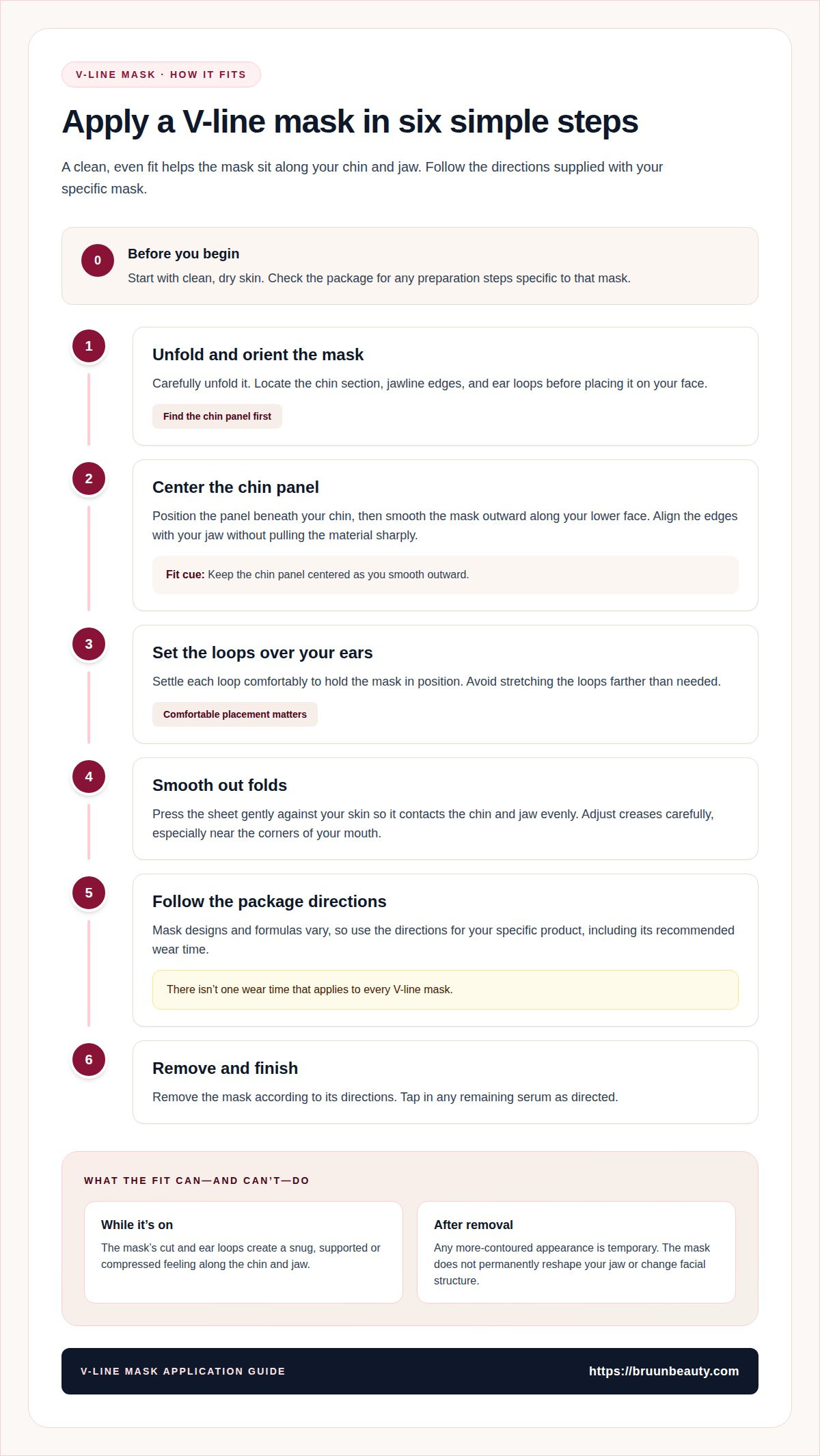
Begin with clean, dry skin. Cleansing removes surface residue that could get between the mask and your face, while drying helps the sheet stay in place. Follow the package directions for any preparation steps specific to that mask.
- Unfold the mask carefully. Find the chin section, jawline edges, and ear loops before placing it on your face. This makes it easier to orient the V shape correctly.
- Center the chin panel. Place it beneath your chin, then smooth the mask outward along the lower face. Align the edges with your jaw rather than pulling the material sharply.
- Fit the loops over your ears. The loops hold the mask in position and create its characteristic upward support. Settle them comfortably instead of stretching them farther than needed.
- Smooth out folds. Press the sheet against the skin so it contacts the chin and jaw evenly. Adjust creases gently, especially near the corners of the mouth.
The mask’s tension comes from its cut and ear loops. Its lower panel rests along the chin, while the sides follow the jaw. This creates a held, compressed sensation, but doesn’t mean the mask is changing your facial structure.
Fit matters because a shifted chin panel can leave part of the jaw uncovered. If an edge folds, reposition it gently instead of tugging the loops. The mask should feel secure, not sharply tight around your ears or jaw.
Wear the mask for the time stated on its packaging. Designs and formulas vary, so there’s no single wear duration for every product. Keep the directions nearby, and don’t extend the session to seek a stronger contouring effect.
After removal, tap any remaining serum into the skin, as mask directions commonly advise. Use clean fingertips and light pressure. Avoid rubbing the lower face, which can shift the skin and leave the area feeling less comfortable.
Some users describe a cool, moisturizing feel, while others report ear discomfort or soreness. If the fit feels unpleasant, remove the mask rather than tightening the loops. Careful application should provide even contact and a comfortable skincare session, not extra pulling.
Once the mask is in place, check that the chin section is centered and both sides follow your jaw. The loops should rest over your ears without forcing the material into a sharper pull. If the sheet shifts as you adjust it, ease it back into position rather than increasing the tension. Even contact helps keep the mask aligned, while comfort is a useful guide to whether the fit needs attention. A secure fit keeps the mask in place; it doesn’t press your face into a different shape. Follow the product’s directions throughout use.
What V-shaped slimming masks are
A V-shaped slimming mask is a skincare mask designed to cover the chin and lower face. Its cut follows the jawline, and many designs include loops that sit over the ears. Together, the shape and loops hold the mask against the skin during wear.
The name describes the mask’s form and cosmetic goal. “V-shaped” refers to the lower-face fit, while “slimming” or “lifting” describes the look the product claims to support. Those words don’t mean the mask changes bone structure or permanently alters your jawline.
Think of the mask as two parts working together. The material contacts your skin, and the ear loops help keep the lower panel in place. Any serum on the mask adds a skincare component, while its cut and tension create the fitted sensation along your chin and jaw.
- Coverage: The chin and lower face, rather than the entire face.
- Shape: A curved or V-like panel intended to follow the jaw area.
- Fit: Loops positioned over the ears hold the mask in place.
- Use: A temporary skincare step, not a permanent reshaping method.
This format differs from a standard full-face sheet mask. A full-face design covers areas such as the cheeks and forehead; a V-shaped design concentrates coverage around the chin and jaw. It also differs from a chin strap without skincare serum, which provides a fitted hold but not a serum-covered mask experience.
Labels may use terms such as “face slimming,” “V-line,” and “lifting” for similar lower-face designs. Compare the shape, directions, and ingredient list instead of relying on the marketing name alone. For example, check whether the product covers only the chin or extends along both sides of the jaw.
After removing a mask, follow its directions for any remaining serum. Some instructions say to tap the residue into your skin. Users also describe a cooling or moisturizing sensation, though comfort varies; reports include ear discomfort and soreness. This product category is best understood as a shaped skincare mask with temporary cosmetic claims, not a tool that permanently reshapes facial features.
Before applying a V-shaped mask, clean and dry your skin as directed. This preparation helps ready your skin for application; it doesn’t change what the product is or what its shape is intended to do. The mask remains a lower-face skincare format, and its lifting or slimming language describes a temporary cosmetic claim, not lasting structural change.
Treat preparation as one part of using the product, then follow the mask’s directions for placement and removal. Don’t infer a particular cleanser, drying method, or waiting period unless the instructions specify one. Once the mask is in place, assess its coverage and fit against the product description, and consider the ingredient list when comparing options. After removal, follow the directions for any serum left on your skin. Keeping preparation, fit, and after-use instructions distinct helps set realistic expectations: the mask is a skincare step, not a way to permanently reshape your jaw.
Do V-line masks permanently reshape the jaw or only create temporary effects?
V-line masks create temporary cosmetic effects, not permanent jaw reshaping. Their fitted design holds the chin and lower face while you wear the mask, but doesn’t alter facial structure. A contoured look immediately after removal isn’t evidence of lasting change.
That distinction matters when setting expectations. A mask may leave your skin feeling moisturized or cool, and its snug fit can create a supported sensation. These are short-term experiences of wearing a skincare mask, not proof that your jawline has permanently changed.
Your appearance can also shift for reasons unrelated to a mask. For example, morning puffiness around the eyes can affect how defined your face looks overall. Sleeping position matters, too: back sleeping reduces facial pressure, while an extra pillow can help limit fluid pooling around the eyes.
Those sleep adjustments address comfort and the appearance of morning puffiness, but they don’t make a V-line mask permanent. A mask’s visible effect depends on its fit, how long you wear it according to the directions, and how your skin looks at the time.
Compare a product’s claims with what its design actually does. Ear loops and a chin panel hold material against the lower face, while serum ingredients sit on the skin. Neither changes the underlying shape of your jaw. A lasting structural change requires an approach beyond a topical mask.
For a realistic check, look at your face before application, after removal, and later under similar lighting. Keep your posture and camera angle consistent. A close selfie taken from below can make your jaw look different from a straight-on mirror view, so don’t treat one image as proof of permanent contouring.
Comfort is part of the experience, too. Customer feedback includes reports of ear discomfort and soreness, as well as descriptions of cooling and moisturizing sensations. If the loops feel uncomfortable, remove the mask rather than pulling them tighter. Tap in leftover serum if the product directions recommend it.
Choose a V-line mask for a temporary skincare session, not a lasting change to your face shape. If your goal is nourished-looking skin, focus on the formula and how it feels after removal. Keep expectations aligned with what a mask can do: cover the lower face, stay in place, and leave skin feeling conditioned.
Bruun Beauty: Jelly Mask Kits
Bruun Beauty’s Jelly Mask Kits offer a skincare-focused alternative when you want a mask without a jaw-strapping design. V-line masks emphasize a fitted shape and temporary contouring claims; jelly masks are a different format for adding a mask step to your skincare routine. Explore the Jelly Mask Kits to find an option that better matches the kind of masking experience you want.
If you’re choosing between mask styles or want help finding the right product category, contact Bruun Beauty.
Choose the Next Step for Your Skincare Routine
Knowing what a V-line lifting mask can realistically offer makes it easier to choose products around your actual skincare goals. If you’re more interested in nourishing your skin than using a strapped mask, consider a different mask format or explore other skincare categories that fit your routine.
Bruun Beauty offers Jelly Mask Kits and Advanced Microneedling Serum SD - Control Salmon DNA Ampoule Serum. Each belongs to a different type of skincare routine, so focus on the product category that matches what you want to explore next. The microneedling collection brings together products for that category without suggesting they reshape your jawline.
Keep your next step simple and choose with your skin’s comfort and routine in mind. Thoughtful product choices can make skincare feel more intentional and enjoyable.
Frequently Asked Questions
Do customer reviews prove that a V-line mask reshapes the face?
No. Reviews can describe personal impressions, such as a cooling feel or moisturizing sensation, but they don’t establish a lasting change in facial shape. Treat them as feedback about individual experiences, not proof of structural reshaping. Product claims and a customer’s impression are different kinds of information.
Can a silk or satin pillowcase help if you sleep on your side?
A silk or satin pillowcase can reduce friction and tugging against your skin while you sleep on your side. This advice concerns overnight contact with your pillow, not a mask’s contouring effect. Choose a smooth pillowcase if you want to minimize rubbing against your cheek and jaw.
Can you sleep while wearing a V-line mask?
Use the mask only for the wear time stated in its directions, rather than treating it as an overnight sleep aid. Sleeping can shift the material or pull on its loops. If the package doesn’t direct overnight wear, keep the mask to its stated skincare session.
Does a cooling sensation mean the mask is lifting your jaw?
No. Cooling describes how the product feels on your skin, not a measurable change to your jawline. A formula or cool material may create that sensation during use. Assess the mask by its directions and skincare experience, rather than treating temperature or tingling as evidence of contouring.
What should you do if the ear loops feel uncomfortable?
Don’t keep wearing a mask that causes soreness or uncomfortable pulling. Remove it and let your skin rest; a snug fit shouldn’t require tightening the loops. If you try another mask later, compare its loop design and placement instructions, since construction can affect how it feels around your ears.
Microneedling and Skin Care for Keratosis Pilaris
Microneedling and Skin Care for Keratosis Pilaris
Related Posts

PDRN Benefits for Skin: Regeneration, Results and Safety

How to Dispose of Used Microneedle Cartridges Safely

Self-care rituals for better skin through mindful daily habits

How to Explain Microneedling Benefits for Skin and Scars

How to use a Korean 10-step skincare routine for hydration

Microneedling for atrophic scars: clinic or at-home results
