

Orange Peel Skin: Causes and Ways to Smooth Texture
Orange-peel skin texture can have several causes, so a balanced routine is more useful than aggressive exfoliation. To improve its appearance, match your skincare to your skin’s needs and use products consistently.
Learn how exfoliation, hydration, and daily habits can support smoother-looking skin, and when professional guidance may help.
Key Takeaways
- Identify whether oil, dehydration, reduced elasticity, or sun exposure may be contributing to uneven texture before adjusting your routine.
- Introduce exfoliation gradually, and alternate BHA and retinol rather than layering them on the same night.
- Support your skin barrier with a suitable moisturizer and hydrating ingredients such as glycerin or ceramides.
- Use daily broad-spectrum sunscreen and make nourishing food choices, including sources of vitamin C that support collagen and elastin production.
- Choose skincare products that match your skin’s needs, then give a consistent routine time to show visible changes.
What Is Orange Peel Skin?
Orange-peel skin describes a dimpled or uneven surface that resembles citrus rind. On the face, it often appears around the nose and cheeks, where visible pores, oil, dehydration, or reduced elasticity can make texture more noticeable. Pore size is influenced by genetics, so skincare may improve their appearance but cannot permanently shrink them.
Retinoids, including retinol, can stimulate skin cell turnover. That helps remove dead skin cells and may make mild roughness and visible pores look smoother. Retinol can also improve the appearance of firmness, while collagen provides structural support for skin. Collagen production starts declining in your mid-20s, so consistent sun protection and a well-matched routine matter over time.
Start retinol gradually rather than applying it nightly right away. Use it on a dry face, follow with moisturizer, and increase use only as your skin tolerates it. Retinol and exfoliating acids can be too much together, so alternate retinol with BHA rather than using both on the same night. Apply broad-spectrum sunscreen with at least SPF 30 each morning; retinol routines work best alongside daily sun protection.
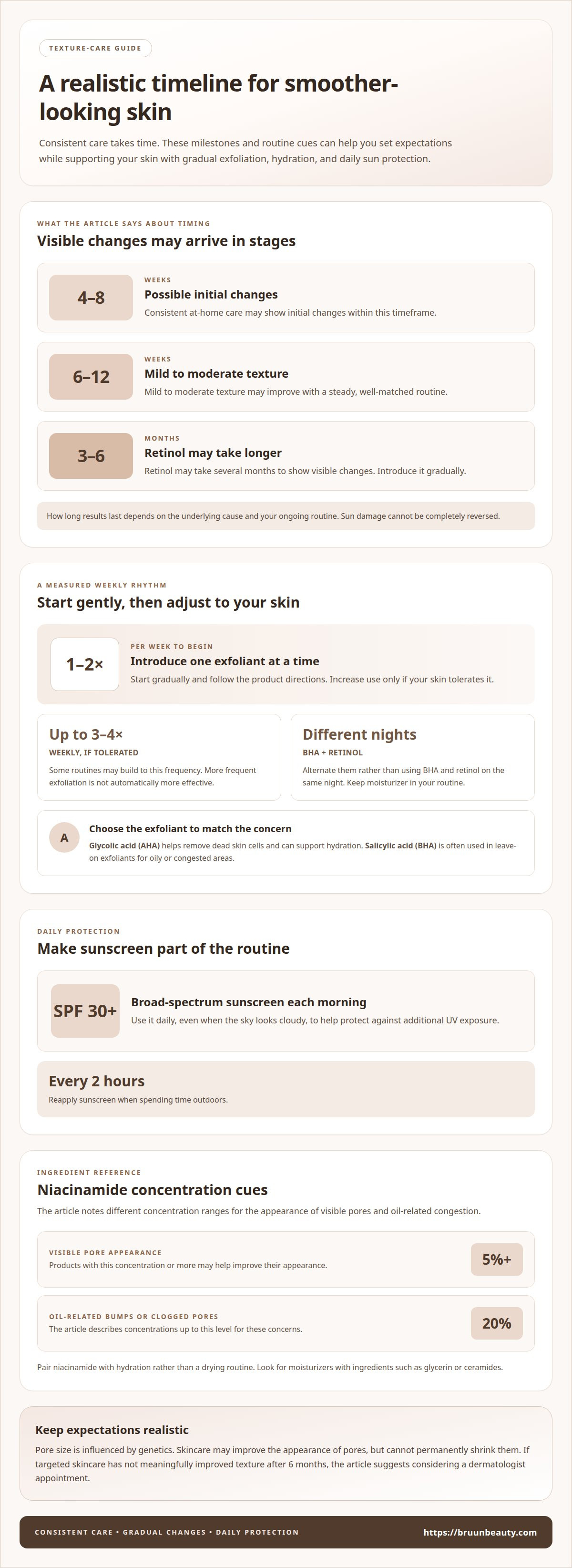
Niacinamide is another option for uneven texture and visible pores. Products with 5% niacinamide or more may help improve their appearance; oil-related bumps and clogged pores may call for concentrations up to 20%. Pair it with hydration, not a drying routine. Look for moisturizer ingredients such as glycerin, amino acids, omega fatty acids, and ceramides to support comfortable, supple-feeling skin.
Glycolic acid exfoliates dead skin cells and can support hydration, but introduce it separately from retinol. For example, use retinol one evening and glycolic acid another, then apply moisturizer. If either product causes persistent irritation, pause and simplify your routine instead of adding more active ingredients.
How long do treatments take to work, and how long do results last? Consistent at-home care may show initial changes in 4 to 8 weeks; mild to moderate texture may improve over 6 to 12 weeks, while retinol may take 3 to 6 months. Results last according to the underlying cause and ongoing routine, and sun damage cannot be completely reversed.
When should you see a dermatologist about orange peel skin texture? Consider an appointment if targeted skincare has not meaningfully improved the texture after 6 months. Orange-peel-like skin on the breast also warrants a medical appointment, rather than an at-home skincare approach.
Causes including oil, collagen loss, dehydration, and sun damage
Orange-peel texture can reflect several changes at once, rather than a single pore concern. Oil, dehydration, aging, and sun exposure can each affect how smooth facial skin looks.
Oil, Dehydration, and Skin Texture
Oil and dehydration can make facial pores and surface irregularities more noticeable. Excess oil can combine with debris inside pores, creating visible congestion, while dehydrated skin may look less supple and emphasize uneven areas. These concerns differ, so stripping away oil may leave skin feeling tight without addressing dehydration. Notice whether texture appears with shine, clogged-looking pores, or dry patches; these clues can help you choose what your routine should support.
Aging, Collagen Loss, and Sun Exposure
Collagen loss and reduced elasticity can make pores appear more enlarged as skin changes with age. Collagen production starts declining in the mid-20s, while orange-peel texture commonly becomes visible in a person’s 40s and beyond. Cumulative sun exposure contributes to visible damage over time, which can further affect firmness and texture. Daily broad-spectrum sunscreen helps reduce signs of skin aging and protects against additional UV exposure.
Sun protection is a practical step for limiting further damage, not a way to erase existing changes. Apply broad-spectrum sunscreen with at least SPF 30 every day, including when the sky looks cloudy. If you spend time outdoors, reapply every two hours. Existing sun damage cannot be completely reversed, so prevention and realistic expectations belong in the same skincare plan.
Which in-office treatments may improve orange-peel texture? Facial peels exfoliate a superficial layer of dead skin, while light-based procedures may address the appearance of texture and pores. Microneedling is another professional option for texture concerns. The approach depends on whether the main concern is surface roughness, visible pores, or loss of facial volume.
How much do professional treatments cost in the United States? Cost depends on the treatment, the area addressed, and the number of sessions. Peels, light-based procedures, microneedling, and fillers are different services, so their costs are not interchangeable.
Dermal fillers address volume loss and creases rather than oil or surface congestion. Most fillers last around 6 months, although some types last 2 years or more. That difference makes the specific filler and the concern being addressed important parts of the decision. Fillers don’t remove sun damage or change the underlying cause of enlarged pores.
For a professional skincare routine that complements texture-focused care, explore microneedling skincare options alongside daily sun protection and hydration.
Chemical and physical exfoliation
Exfoliation loosens or removes surface buildup that can make visible pores and dimpled texture more noticeable. Chemical exfoliants use ingredients such as glycolic or salicylic acid; physical methods use tools or particles to lift dead skin cells. The right fit depends on whether your main concern is surface roughness, oil-related congestion, or uneven texture.
Start chemical exfoliation with a low-strength AHA or BHA 1 to 3 times per week. Glycolic acid, an AHA, helps remove dead skin cells and encourages hydration. Salicylic acid, a BHA, is often used in leave-on exfoliants for oily or congested areas. Follow the product directions and introduce one exfoliant at a time, so you can tell how your skin responds.
A gradual schedule keeps exfoliation easier to assess. Begin chemical exfoliation 1 to 2 times per week, then increase only if your skin tolerates it; some routines may reach 3 to 4 times weekly. Don’t use BHA and retinol on the same night. Keep moisturizer in the routine, and use sunscreen to protect skin from further sun damage. More frequent exfoliation isn’t automatically more effective.
Physical exfoliation can include a gentle facial scrub or professional microdermabrasion. If using a physical exfoliant at home, start once a week and increase frequency only if your skin remains comfortable. Microdermabrasion may improve uneven texture and tone. Avoid vigorous rubbing, which can leave skin feeling stripped rather than smoother.
Facial peels offer another professional exfoliation option. They remove a very superficial layer of dead skin cells, which can smooth texture and reduce the appearance of enlarged pores and lines. A short series of chemical peels may improve mild orange-peel texture, with early changes for many people in 3 to 4 months. Peels and home acids work differently, so don’t stack them without a clear routine.
After exfoliating, keep the rest of your routine simple: cleanse gently, moisturize, and apply broad-spectrum sunscreen during the day. That step helps protect against additional sun damage while exfoliation addresses surface buildup. If you’re exploring professional texture-focused options alongside home care, browse microneedling skincare options as a separate part of your routine planning.
Keep the pace modest: start exfoliating once a week and gradually increase frequency only if needed and your skin remains comfortable. Use this as a way to assess your skin’s response, not as a target to reach. If roughness, congestion, or uneven texture remains a concern, consider whether your chosen method suits it. Chemical and physical exfoliants address surface buildup in different ways. Do not add another exfoliating step just because the first has not produced an immediate change. Follow product directions, moisturize, use daytime sunscreen, and avoid vigorous rubbing.
Facial peels are a professional option and may exfoliate deeper layers of old skin to reveal smoother skin and tighter pores. They are distinct from home acids, so plan them as a separate part of exfoliation rather than layering treatments without a clear routine. Keep other care simple around an exfoliating treatment, and pay attention to comfort as you adjust frequency. A steady, restrained approach makes it easier to judge whether the routine suits your skin, without assuming that more exfoliation will necessarily improve texture.
Diet, hydration, and lifestyle changes
Daily habits can support your skin’s comfort and appearance, although no single food or drink smooths texture on its own. A balanced diet, regular hydration, and a moisturizer suited to your skin can complement topical skincare. For example, include vitamin C-rich foods in meals and apply moisturizer after cleansing to support a nourished-looking complexion.
Vitamin C supports collagen and elastin production in the skin. Include foods such as strawberries, citrus fruit, or bell peppers in meals, and keep the rest of your diet varied. These foods support overall nutrition; they do not replace topical care or instantly improve skin texture. Aim to include nourishing choices in regular meals rather than relying on one ingredient.
Hydration also means caring for the skin’s surface, not just drinking fluids. Moisturizer helps reduce water loss and can make dry, rough areas feel more comfortable. Look for ingredients such as glycerin, amino acids, omega fatty acids, or ceramides. Apply moisturizer after cleansing, while skin is still slightly damp, to help maintain a soft feel.
Hyaluronic acid is a popular hydrating ingredient in serums and moisturizers. It helps attract and hold water at the skin’s surface, which can temporarily make dry-looking texture appear more supple. Layer a hyaluronic acid product under moisturizer rather than using it as your only hydration step. The moisturizer helps maintain a comfortable skin surface.
Consistent cleansing removes oil, dirt, and debris that can collect during the day. Cleanse your face twice daily with lukewarm water, then apply moisturizer. Avoid very hot water and harsh, drying cleansers, which can leave skin feeling tight. This simple sequence supports comfort without adding exfoliation to an already active routine.
Daily sun protection is another useful habit because UV exposure contributes to visible skin aging. Apply broad-spectrum sunscreen with at least SPF 30 each morning, and reapply every two hours when outdoors. Sunscreen helps protect skin from further sun damage; it doesn’t erase existing changes. Pairing sun protection with hydration makes your routine more supportive over time.
Keep your routine steady instead of changing several habits at once. For example, add a moisturizer first, then assess how your skin feels before introducing another product. This makes it easier to notice whether dryness improves or a product feels uncomfortable. Make room in your daily routine for balanced meals, fluids, gentle cleansing, and sunscreen.
These habits support your skin’s overall condition, while persistent texture may call for a more targeted skincare approach. Keep meals varied, choose hydrating products that suit your skin, and protect your face from UV exposure. Together, these practical choices can help skin feel more comfortable and make texture less noticeable.
Skincare products for textured skin
A useful routine matches products to the texture you see instead of piling on every active ingredient. If you’re figuring out how to fix orange peel skin texture, first identify whether oil-related congestion, visible pores, or dryness bothers you most. That priority helps you choose products with a clear purpose and assess their effects.
For enlarged-looking pores with oil-related bumps, niacinamide concentrations up to 20% may be necessary. Start with one niacinamide product and follow its directions; combining several high-strength formulas doesn’t automatically improve results. Genetics influence pore size, so focus on a smoother appearance rather than expecting pores to disappear.
Retinol can support cell turnover and the appearance of firmness, but it takes consistent use. Mild orange-peel texture may improve after 3 to 6 months. Start gradually, apply it in the evening, and use moisturizer afterward. If your routine includes BHA, alternate the two rather than applying them on the same night.
Build the rest of your routine around a gentle cleanser and a suitable moisturizer. Glycerin, amino acids, omega fatty acids, and ceramides help keep skin hydrated. Hyaluronic acid can add surface hydration, while moisturizer helps maintain a comfortable feel. These supportive products complement targeted ingredients without requiring multiple actives at once.
Keep your routine simple enough to follow and assess. Add one active product at a time, then note changes in oiliness, dry patches, and visible texture. For example, use niacinamide consistently while keeping your cleanser and moisturizer unchanged. Once your routine feels comfortable, decide whether retinol or an exfoliant addresses another specific concern.
Daily broad-spectrum sunscreen with at least SPF 30 belongs in a routine that includes retinol or exfoliation. Apply it each morning and reapply every two hours when outdoors. Sunscreen helps protect against further sun damage, though it can’t fully reverse existing changes. This is an important part of how to fix orange peel skin texture while supporting your skin’s appearance over time.
Topical products support daily care, while professional options address texture differently. Microdermabrasion may improve uneven tone and texture, and facial peels exfoliate dead skin cells. Keep these treatments distinct from your at-home routine; more exfoliation is not a shortcut to better results. Choose products based on your main concern and give your routine time to work.
A suitable facial moisturizer can help keep skin hydrated. Consider ingredients such as glycerin, amino acids, omega fatty acids, and ceramides when choosing a moisturizer for textured skin.
Bruun Beauty
Bruun Beauty offers skincare supplies that can complement a texture-focused routine, including the Advanced Microneedling Serum SD - Control Salmon DNA Ampoule Serum, Jelly Mask Kits, and BB Glow Treatment Supplies. For readers and skincare professionals incorporating microneedling into their approach, the serum is one option to explore alongside consistent cleansing, hydration, and sun protection.
Choose products based on the steps you already use and the texture concerns you want to address. A mask can complement a nourishing skincare routine, while BB Glow supplies are intended for BB Glow treatments. Explore the Advanced Microneedling Serum SD to learn more about this option.
Explore Bruun Beauty’s skincare products online to find supplies that fit your routine.
Choose a Routine You Can Keep
Your next step in deciding how to fix orange peel skin texture is to choose one priority for your routine. Focus on the concern that matters most, then make changes deliberately instead of adding several new steps at once. A steady approach makes it easier to notice what feels comfortable and what may need a rethink.
Think of skincare as an ongoing practice, not a one-time reset. Your needs may shift with the season, your schedule, or how your skin feels. Keep your routine manageable, and let consistency guide your next choices.
Small, considered choices can help you build a routine that feels personal and sustainable. Keep learning what works for your skin, and take your next step with confidence.
Frequently Asked Questions
What causes orange peel skin texture on the face?
Facial orange-peel texture can reflect visible pores, excess oil, dehydration, reduced elasticity, or cumulative sun exposure. The mix varies by area: the nose may look congested, while cheeks may feel rough or tight. Noting where texture appears and whether your skin feels oily or dry can help you choose relevant care.
How can you tell orange peel skin from enlarged pores, acne scars, or cellulite?
Orange-peel texture describes an overall dimpled surface; enlarged pores look like small openings, while acne scars appear as distinct depressions or marks. Cellulite causes dimpling on body areas such as the thighs, not facial skin. If a new orange-peel appearance develops on the breast, arrange a medical appointment.
What skincare ingredients help improve orange peel skin texture?
Niacinamide may improve the appearance of pores, while retinol supports cell turnover and smoother-looking skin. For dryness, choose moisturizers with glycerin, ceramides, amino acids, or omega fatty acids. Hyaluronic acid adds hydration. Select ingredients to address your main concern rather than layering several active products in one routine.
What is a dermatologist-recommended routine for orange peel skin?
A practical routine can include gentle cleansing, moisturizer, and broad-spectrum sunscreen in the morning. In the evening, cleanse and moisturize, then gradually add one targeted ingredient. Keep other products consistent as you assess your skin. A dermatologist can tailor recommendations to your skin’s texture, habits, and skincare history.
Do retinoids, exfoliating acids, or niacinamide help, and how should they be used safely?
Each ingredient has a different role: retinol supports cell turnover, AHAs exfoliate the surface, BHAs address oil-related congestion, and niacinamide may improve the appearance of pores. Introduce one active at a time and follow its directions. Alternate retinol and BHA rather than using them on the same night.
How can you build a comfortable routine for textured skin?
Keep your routine straightforward: use a gentle cleanser, moisturizer, and daytime sunscreen, then gradually add a targeted product. Avoid changing several steps at once so you can identify which choices suit your skin. Consistency makes it easier to maintain a routine that supports comfortable, nourished-looking skin.
What are the risks and side effects of treatments for orange peel skin?
Retinol or exfoliating acids may cause persistent irritation. If this happens, pause them and simplify your routine. Vigorous rubbing during physical exfoliation can leave skin feeling stripped.
Signs Your At-Home Treatment Went Wrong and When to Seek Help
Signs Your At-Home Treatment Went Wrong and When to Seek Help
Related Posts

PDRN Benefits for Skin: Regeneration, Results and Safety

How to Dispose of Used Microneedle Cartridges Safely

Self-care rituals for better skin through mindful daily habits

How to Explain Microneedling Benefits for Skin and Scars

How to use a Korean 10-step skincare routine for hydration

Microneedling for atrophic scars: clinic or at-home results

V-Line Lifting Masks and Their Claimed Face-Shaping Effects
