

Microneedling for Rosacea: Is At-Home Treatment Safe
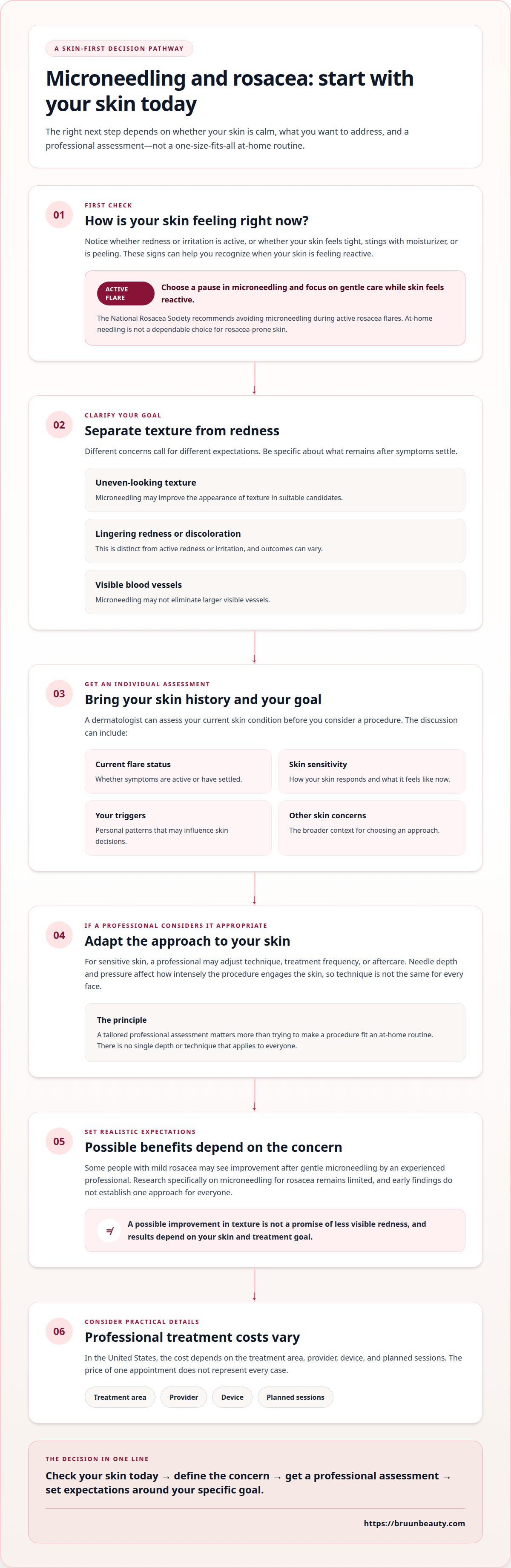
Microneedling for rosacea at home safely isn’t a dependable option, especially during an active flare, when skin may be more reactive. This guide explains whether professional microneedling may improve the appearance of residual redness or texture, and why flare-ups call for a pause. You’ll also learn how to recognize common symptoms and triggers and consider gentler next steps.
Key Takeaways
- At-home needling isn’t a dependable choice for rosacea-prone skin, especially when redness or irritation is active.
- Professional microneedling approaches can be adjusted for sensitive skin, including changes to technique and aftercare.
- Texture and lingering redness are different concerns, so the possible benefits depend on what you want to address.
- Recognizing your rosacea symptoms and personal triggers can help you make more skin-conscious decisions.
- Gentle skincare and sun protection offer practical ways to support your skin while you consider treatment options.
Is Microneedling Good For Rosacea?
There isn’t a dependable way to microneedle for rosacea safely at home, especially during a flare. Whether professional microneedling may be appropriate depends on your skin’s current condition and the concern you want to address.
Modified Techniques for Sensitive Skin
Modified microneedling means adjusting technique, treatment frequency, or aftercare for sensitive skin. Those adjustments matter because rosacea-prone skin may react differently from less sensitive skin.
A professional can assess your skin and adapt a procedure to its sensitivity and your goals. Lingering texture concerns, for example, differ from active redness. Research into microneedling for rosacea remains limited, so an approach intended for sensitive skin is not necessarily suitable for everyone. Your skin’s condition and your treatment goals shape the decision.
Skin Barrier and Treatment Setting
Microneedling passes through the skin’s surface and temporarily disrupts its protective barrier. During recovery, skin may feel more sensitive, particularly if it was already reactive.
For example, stinging after applying a gentle moisturizer can signal that your skin is currently sensitive. Consider that change when discussing treatment timing and aftercare with a professional. A calm treatment setting and an approach suited to your skin are more useful than trying to make a procedure fit an at-home routine.
Needle Depth and Skin Reactivity
Needle depth and pressure affect how intensely a procedure engages the skin. A professional considers your skin type and concern rather than applying the same technique to every face.
Repeated passes or uneven pressure may make reactive skin more uncomfortable. Tightness, stinging, or peeling can signal a compromised barrier, making at-home needling a poor fit at that time. There is no specific depth to recommend because sensitivity, rosacea severity, and treatment goals all matter.
Is microneedling safe for people with rosacea? Some people may be considered after a professional assesses their skin and adapts the procedure. The National Rosacea Society recommends avoiding microneedling during active rosacea flares.
In the United States, professional microneedling costs vary according to the treatment area, provider, device, and planned sessions. These factors shape the procedure, so the price of one appointment does not represent every case.
Whether microneedling for rosacea at home safely suits your situation depends on your skin’s current condition. A dermatologist can assess rosacea severity, flare status, triggers, and other skin concerns before you consider a procedure. This is especially important if your flares are frequent or severe.
Gentle care is more practical while skin feels reactive. Avoid experimenting with at-home needling on stinging or peeling areas. The microneedling collection shows products in this category, but a device alone can’t assess rosacea or select a suitable technique.
Potential microneedling benefits for residual redness and texture
Residual redness and uneven texture are separate concerns, even when they appear together. Microneedling stimulates collagen production and may improve the appearance of skin texture in suitable candidates. That potential does not mean it addresses every kind of redness or changes the underlying rosacea condition.
Some people with mild rosacea may see improvement after gentle microneedling performed by an experienced professional. The key question is what remains after symptoms settle, such as a rough surface or uneven-looking tone. A professional can assess that goal and your skin’s current sensitivity before deciding whether the procedure is appropriate.
Evidence for microneedling specifically for rosacea is still developing. Early findings suggest possible improvement for selected people, but they do not establish one approach for everyone. The device, technique, treatment goal, and individual skin response all affect what outcomes may be realistic.
A home dermaroller cannot determine whether redness is residual discoloration or part of an active flare. Nor can it adapt its approach based on a professional’s assessment of your skin. If texture is your concern, an assessment can help determine whether the procedure is suitable or whether your current symptoms call for a different skincare plan.
Be specific about the result you hope to see. Smoother-feeling texture, more even-looking tone, and less visible redness are different goals. Lingering discoloration after a flare, for example, may be assessed differently from flushing that continues throughout the day. Defining the concern makes it easier to judge whether microneedling is relevant.
Microneedling may improve the appearance of some discoloration, but it may not eliminate larger visible blood vessels. A possible change in surface texture is not a promise that rosacea will disappear. The useful measure is whether the specific concern you identified changes while your skin remains comfortable.
If you’re exploring the category, the microneedling collection can help you review related products. Product selection is separate from deciding whether a procedure suits rosacea-prone skin. For that decision, focus on your skin’s present condition and the result you want, rather than assuming an at-home roller can deliver a professional assessment.
Microneedling’s proposed effects on rosacea redness and inflammation
Microneedling may affect the appearance of redness and discoloration, but it can also prompt inflammation. The difference between lingering color and active symptoms matters when considering a procedure.
Redness and Discoloration
Microneedling works by stimulating collagen, which may improve the appearance of some skin concerns. It may significantly improve rosacea-related discoloration for selected people, but it is not a cure-all. This possibility is relevant if uneven tone remains after a flare has settled, not during active redness or irritation.
Visible blood vessels are a separate concern. Microneedling may reduce the overall appearance of redness, but it may not eliminate larger visible vessels. A consultation can clarify whether your main concern is diffuse discoloration, individual vessels, or both. Those differences help determine whether microneedling is relevant.
Prolonged Redness and Irritation
Redness or irritation that continues after a procedure is a possible response, particularly for reactive skin. Rosacea already involves sensitivity and inflammation, so additional irritation can make the skin look and feel worse.
For example, increased flushing, stinging, or tightness after needling signals that your skin is reacting, not simply becoming smoother. A professional should consider these changes alongside your rosacea history before another session. The goal is to understand your skin’s response, not repeat a technique that has aggravated it.
Inflammation also affects how skin responds to stimulation. A procedure intended to support collagen production can still intensify redness when skin is reactive. That is why a consultation should consider your skin’s current condition, not just the desired result. Calm, residual discoloration is different from a visibly inflamed area.
Keep your treatment goal specific. If uneven tone is the concern, ask whether it looks like lingering discoloration or visible vessels. If texture is the concern, note whether the surface feels rough after symptoms have settled. These distinctions help a professional assess potential benefits without assuming every type of redness responds alike.
At-home needling makes it harder to adjust technique in response to changing redness or irritation. A professional can observe how your skin reacts during treatment and adapt the approach to its sensitivity. If redness worsens or persists afterward, pause further needling and seek a professional assessment before considering another procedure.
The evidence supports a measured view: microneedling may improve the appearance of some rosacea-related discoloration, while larger vessels may remain visible. Results depend on the concern and your skin’s response. A consultation that considers inflammation, vessels, and residual tone can help set a realistic goal before treatment begins.
Rosacea flares as a reason to avoid at-home needling
An active rosacea flare is a clear reason to pause at-home needling. Skin that is already flushed, inflamed, or irritated may react more strongly to a procedure that stimulates collagen production.
Needling During Active Flares
Needling during an active flare means using a device while rosacea symptoms, such as increased redness or bumps, are present. The National Rosacea Society recommends avoiding microneedling during active flare-ups because needling may trigger inflammation and worsen redness.
For example, do not needle skin that is stinging, visibly inflamed, or affected by an active rash. Visible blood vessels and persistent redness also need careful assessment rather than repeated passes over the area. An at-home device cannot determine whether today’s redness reflects a flare or settled discoloration.
Reducing Flare-Up Risk
Reducing flare-up risk starts with recognizing your own triggers and keeping skincare gentle. Sun exposure, stress, wind, alcohol, spicy foods, and certain products can contribute to flares, so note whether any coincide with flushing or increased redness.
Gentle skincare and broad-spectrum sun protection can help prevent flare-ups. If a new product causes burning or stinging, avoid adding other new steps while your skin feels reactive. These measures support a calmer routine, but they do not make at-home needling appropriate during active symptoms.
Device Clearance and Post-Needling Flares
There isn’t one FDA-clearance answer for every at-home microneedling device. Clearance depends on the specific device and its intended use. Do not assume one device’s status applies to another or that clearance means it is suitable for rosacea-prone skin.
Can at-home microneedling worsen rosacea or trigger a flare? Yes. It can increase inflammation and redness, particularly when skin is already reactive. If a flare appears after microneedling, stop further needling and avoid adding irritating skincare steps.
What should you do if rosacea flares after microneedling? Keep your routine gentle and seek help from a dermatologist. The American Academy of Dermatology Association recommends dermatologist care during an active flare. Prompt assessment can help distinguish a rosacea flare from another reaction and guide your next steps.
Rosacea symptoms can include flushing, persistent redness, small bumps, dryness, burning, and visible blood vessels. A flare can last weeks to months, so a temporary quiet period does not prove your skin is ready for needling. Track symptoms and possible triggers, such as sun exposure or a product that stings.
If your flare-ups are frequent or severe, discuss treatment options with a dermatologist before considering microneedling. They can assess current symptoms, triggers, and other skin concerns, then consider whether targeted care or an alternative makes more sense. Your skin’s current condition matters more than whether redness is visible in the mirror.
Rosacea symptoms and common triggers
Rosacea is a chronic skin condition that can affect appearance and comfort. Recognizing your symptoms and personal triggers helps you describe what changes before considering any skin procedure.
Rosacea Symptoms
Rosacea symptoms can include persistent redness, flushing, visible blood vessels, small red bumps, dryness, burning, swelling, and eye irritation. One person may notice cheek flushing, while another experiences stinging after trying a new skincare product. These different patterns matter because redness alone does not describe every concern or show whether skin is currently reactive.
Symptoms may come and go, and flare-ups can last weeks to months. Note where changes appear, how they feel, and whether they coincide with a new product or sun exposure. This record gives a dermatologist useful detail about your condition and can help distinguish persistent symptoms from a short-lived reaction.
Common Triggers
Possible triggers include sun exposure, stress, wind, alcohol, spicy foods, and certain skincare products. You might notice flushing after time outdoors or stinging after applying a new cleanser, for example. Triggers differ, so do not assume another person’s experience predicts your own.
Track symptoms alongside daily exposures: record the product used, weather, food, or activity, then note any flushing or discomfort. A pattern may emerge after repeated observations. Gentle skincare and broad-spectrum sun protection can support a calmer routine, while noting a trigger helps you discuss practical changes with a dermatologist.
Rosacea can look different from person to person, with symptoms ranging from redness and visible vessels to bumps, dryness, or eye irritation. These descriptions are useful, but they are not a way to diagnose a rosacea subtype at home. A dermatologist can assess persistent or severe concerns, particularly if eye irritation, swelling, or repeated burning affects daily comfort.
Symptom timing matters, too. A face that flushes after spicy food may settle, while persistent redness or visible vessels can remain between episodes. Write down the difference. A concise symptom history helps explain what you mean by a flare and whether your concern is appearance, sensation, or both.
Triggers can overlap. Sun exposure, stress, wind, and a product that stings may occur on the same day, making it difficult to identify one cause. When practical, change one routine factor at a time and note what follows. This makes your observations more useful than removing several products or foods at once.
These details matter before microneedling because a procedure that stimulates collagen does not identify why redness or bumps appeared. Describe current symptoms and recent triggers during a professional consultation, especially if flushing or irritation is active. Clear information keeps the conversation focused on your skin’s present condition and specific concerns.
Bruun Beauty
Bruun Beauty offers skincare products and supplies for professional and at-home routines. If you’re exploring options beyond needling while your skin is reactive, browse products with your routine in mind, not as rosacea treatments. Bruun Beauty’s offerings include Advanced Microneedling Serum SD, Control Salmon DNA Ampoule Serum, and Jelly Mask Kits. Neither replaces the need to avoid needling during an active flare.
For readers considering microneedling products, the key is separating product selection from deciding whether a procedure suits your skin. A device or serum cannot assess rosacea symptoms or replace guidance from a dermatologist. If you have questions about Bruun Beauty’s product offerings, contact Bruun Beauty.
Choose a Skin-Conscious Next Step
There isn’t a dependable way to practice microneedling for rosacea at home safely, so let your skin’s current condition guide your next step. If you’re considering a procedure, discuss your goals and skin history with a dermatologist before using a device. Pausing can be a thoughtful skincare decision, especially when your skin feels reactive.
Bruun Beauty offers professional-grade microneedling devices, Advanced Microneedling Serum SD, Control Salmon DNA Ampoule Serum, and Jelly Mask Kits. These products support skincare routines, but they cannot determine whether microneedling suits your rosacea.
Keep your routine gentle, pay attention to changes, and choose a next step that respects your skin’s needs.
Frequently Asked Questions
Dermapen Treatments for Rosacea: How Does It Work?
A Dermapen moves a needle cartridge across the skin to stimulate collagen production. For rosacea, a professional first considers whether the concern is settled texture or active redness, then adapts technique and aftercare to your skin’s sensitivity. This differs from following a standard at-home routine: device settings and treatment decisions depend on your skin and goals.
How Long Does It Take To See Results From Microneedling?
There isn’t one reliable timeline for rosacea-related changes after microneedling. The concern being addressed, your skin’s response, and the procedure used all affect how appearance changes over time. Texture and persistent redness are separate outcomes, so assess them separately rather than expecting one result to represent both. A dermatologist or experienced professional can explain what progress to watch for in your case.
What Is Rosacea, and How Is It Managed?
Rosacea is a chronic skin condition that can involve persistent redness, flushing, visible vessels, bumps, dryness, or burning. Management focuses on understanding symptoms and personal triggers, using gentle skincare, and protecting skin from the sun. A dermatologist can assess ongoing or severe concerns and discuss appropriate options. For example, note whether a new cleanser stings or outdoor exposure precedes flushing.
Who Is Most Likely to Have Complications From DIY Microneedling?
People with highly reactive skin, an active rosacea flare, or a compromised skin barrier face greater concerns with DIY needling. Stinging, tightness, or peeling are signs to pause rather than needle. Active acne, eczema or dermatitis flares, and a tendency toward raised scars also call for caution. Skin sensitivity and current symptoms matter more than simply owning a home device.
Do Dermatologists Recommend Microneedling for Rosacea?
Dermatologists do not recommend one approach for everyone with rosacea. Evidence remains early, and any potential role depends on symptoms, flare status, skin sensitivity, and the goal, such as addressing residual texture. Selected people may be considered for professionally performed, modified microneedling. Avoid needling during active flares and seek dermatology guidance, especially if symptoms are frequent or severe.
What Needle Length Is Safe for At-Home Microneedling, If Any?
No universal needle length can be called safe for at-home use on rosacea-prone skin. The appropriate approach depends on your skin’s sensitivity, current symptoms, and the concern being addressed, not just the device label. Professionals can adjust treatment for individual skin. Choosing a shorter needle at home does not establish that needling is suitable, particularly during irritation or a flare.
What Rosacea Treatments Are Safer Alternatives to Microneedling?
A gentle routine, a barrier-supporting moisturizer with ceramides or glycerin, and daily broad-spectrum sun protection are practical alternatives to at-home needling. If redness or other symptoms persist, a dermatologist can discuss options suited to your skin. The American Academy of Dermatology says light and laser therapy may improve the appearance of skin damaged by rosacea. Suitability depends on your concerns and skin condition.
When Should Someone With Rosacea Avoid Microneedling?
Avoid microneedling during an active flare or when skin is stinging, tight, peeling, or otherwise irritated. The National Rosacea Society recommends avoiding microneedling during active rosacea flare-ups. Pause as well if you have an active rash or skin injury. If symptoms flare after a procedure, stop further needling and seek guidance from a dermatologist before considering another session.
Rubber Masks or Sheet Masks: Which Suits Your Skin
Rubber Masks or Sheet Masks: Which Suits Your Skin
Related Posts

PDRN Benefits for Skin: Regeneration, Results and Safety

How to Dispose of Used Microneedle Cartridges Safely

Self-care rituals for better skin through mindful daily habits

How to Explain Microneedling Benefits for Skin and Scars

How to use a Korean 10-step skincare routine for hydration

Microneedling for atrophic scars: clinic or at-home results

V-Line Lifting Masks and Their Claimed Face-Shaping Effects
