

How to Treat Pimples After Microneedling and Calm Skin
Temporary pimples or surface congestion can appear after microneedling, but a few bumps don’t automatically mean your routine has failed. To understand how to treat pimples after microneedling, keep care gentle, avoid adding irritation, and watch how your skin changes as it settles.
Blemishes after a treatment intended to refresh your skin can be frustrating. This guide explains why breakouts may appear and how to make thoughtful choices during recovery without piling on products or rushing back to your usual routine. Learn which changes may be temporary, when to seek professional advice, and how to decide when to resume your regular skincare. The goal is a clear path forward: care for your skin gently and let its response guide your next steps.
Key Takeaways
- Keep cleansing gentle: use lukewarm water and a mild, fragrance-free cleanser, then pat your skin dry instead of rubbing.
- Give your skin a simple start: avoid facial products for the first 24 hours and sleep on a clean pillowcase the night of your treatment.
- Skip makeup for the first 24 hours, and wait until your skin has settled before using light makeup with clean brushes.
- Let redness and sensitivity settle before bringing active ingredients back, and reintroduce products one at a time.
- Use the article’s ingredient-specific timelines to plan when to resume retinoids, benzoyl peroxide, azelaic acid, and exfoliating acids.
How should you cleanse acne-prone skin after microneedling?
To care for pimples gently, cleanse once or twice daily with a mild, fragrance-free cleanser, lukewarm water, and light pressure. To help prevent new breakouts, clean your device according to its instructions, avoid touching or picking at your skin, and use a clean pillowcase on treatment night.
Gentle Cleansing and Lightweight Moisturizing
Gentle cleansing means washing without scrubbing; a lightweight moisturizer can add comfort without leaving a heavy layer. After microneedling, choose a mild cleanser for sensitive skin and rinse with lukewarm water. Pat your face dry with a clean towel, then apply a simple, lightweight moisturizer if your skin feels dry. These steps help support the skin barrier without rough friction.
Cleansing During the First 24-48 Hours
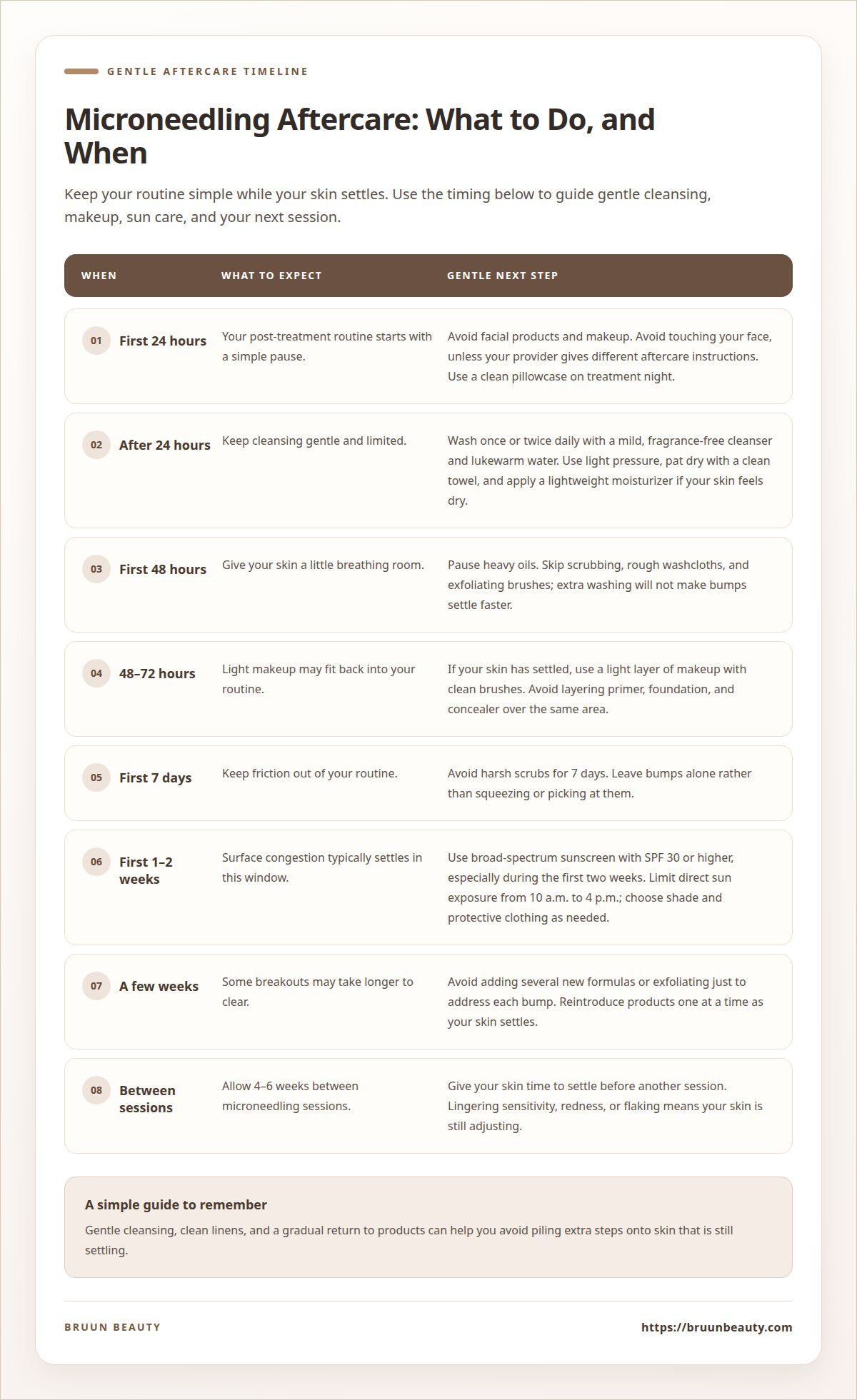
For the first 24 hours, avoid touching your face or applying facial products, unless your provider gives different aftercare instructions. After that initial period, keep cleansing gentle and limited to once or twice daily. Use lukewarm water, then pat rather than rub. A lightweight moisturizer can help with dryness when you resume products. Adding several new formulas at once makes it harder to tell what your skin tolerates.
Clean Pillowcases and Infection Prevention
A clean pillowcase gives your face a fresh surface while you sleep after treatment. Change it before bed, and avoid resting your face on used towels or pillowcases. Fabric can collect oil, sweat, and bacteria, so a clean sleeping surface is a simple part of careful aftercare. Keep hair products and styling residue away from your cheeks and forehead overnight.
Avoiding Picking and Excess Cleansing
Picking pimples or peeling skin can irritate the area and interfere with recovery. Leave bumps alone rather than squeezing them, and skip rough washcloths, scrubs, and exfoliating brushes. Avoid harsh scrubs for 7 days after microneedling. Repeated washing won’t remove bumps faster; excessive cleansing can leave skin feeling tight and uncomfortable. If a cleanser stings, rinse it away and return to a mild, fragrance-free option.
Clean equipment matters too: follow the device’s cleaning instructions before and after each use, and don’t share tools. Needles can carry bacteria across facial areas, so careful handling belongs alongside clean hands and fresh linens. Thoroughly cleanse skin before microneedling, then keep the post-treatment routine simple. For products related to a microneedling routine, choose gentle options that suit the stage of your aftercare.
Recognizing normal healing versus possible infection
Build recovery around gradual changes, not a perfectly smooth complexion immediately after treatment. Redness, swelling, bruising, and flaking can occur as skin settles, and recovery typically takes about one week. Notice whether your skin feels more comfortable over time. If pain or redness worsens after the first 48 hours, contact your practitioner for guidance.
Inflammation and Skin Healing
Temporary inflammation is part of the skin’s response after microneedling, and it can make treated areas look uneven for a while. Mild redness or flaking may appear alongside small bumps, so avoid judging your skin’s texture from a single day. A helpful approach is to observe changes in similar lighting and avoid adding new products just to address each visible change.
Focus on comfort while your skin settles. Follow the aftercare directions for your treatment, and choose shade or protective clothing if sun exposure feels uncomfortable. Surface dryness and flaking can change how your skin looks, so wait until these signs settle before planning another procedure or making major routine changes.
Healing Time After At-Home Microneedling
At-home recovery varies with your skin’s response and the treatment routine, but allow 4-6 weeks between microneedling sessions. That interval gives skin time to settle before another session. Don’t use a smoother-looking day as the only signal to repeat treatment; lingering sensitivity, redness, or flaking means your skin is still adjusting.
Sun care supports a more comfortable recovery. Use broad-spectrum sunscreen with SPF 30 or higher, especially during the first two weeks after treatment. Limit direct sun exposure from 10 a.m. to 4 p.m. If sunscreen feels uncomfortable, use shade and protective clothing while following your provider’s aftercare directions.
Contact your practitioner if symptoms worsen after day 3, or if you notice pus-like fluid, yellow crusts, or multiple pustules appearing 24-72 hours after treatment. These changes need timely professional advice rather than extra exfoliation or home extraction. Sharing when symptoms began and how they changed helps your practitioner understand your recovery pattern.
Can Microneedling cause temporary acne to form?
Yes, microneedling can temporarily worsen existing acne or bring on new breakouts. Up to 20% of people who undergo microneedling experience some form of breakout. Irritation around oil glands and hair follicles, plus sebum and dead skin cells surfacing, can contribute to temporary bumps. Understanding how to treat pimples after microneedling starts with recognizing that irritation and congestion can look similar.
The timing and appearance offer useful clues. Surface congestion typically settles within 1 to 2 weeks, while some breakouts clear within a few weeks. Avoid treating each new bump as a cue to exfoliate or add acne products. Extra friction and several new formulas can increase irritation while skin is settling.
Keep makeup off your face for the first 24 hours after treatment. Patients may resume light makeup 48-72 hours after microneedling, using clean brushes. Choose a light layer rather than combining primer, foundation, and concealer over the same area. Heavy oils can trap oil, so pause them for 48 hours and keep your routine simple.
Skip scrubs, exfoliating tools, and facial treatments during early recovery. Wait 7 days before using harsh scrubs, and avoid facial treatments for 2-4 weeks after microneedling. These pauses reduce friction and prevent stacking procedures while skin remains sensitive. If a product stings or increases redness, stop using it instead of adding another active formula.
Hands can transfer oil and bacteria, so avoid touching bumps throughout the day. Don’t squeeze blemishes or peel flakes, as picking can leave lingering marks. A pimple may look ready to extract, but pressure can add irritation. Leave it alone and continue gentle cleansing instead of washing repeatedly to clear congestion.
Give sweat and heat a pause, too. Avoid exercise and sweating for 24-48 hours after treatment, since sweat may irritate skin. Don’t microneedle over active, inflamed acne; the process may spread bacteria and prolong recovery. If active breakouts are present before a planned session, discuss timing with a qualified professional instead of passing needles over inflamed areas.
If you’re wondering how to treat pimples after microneedling, keep your routine predictable: gentle cleansing, minimal layering, and no picking. Once your skin has settled, reintroduce acne-focused ingredients gradually, one at a time. This makes it easier to notice which products your skin tolerates. Contact a practitioner if congestion persists beyond three weeks or becomes painful.
Post-procedure face-touching and product use
Hands, makeup, and layered skincare can add friction or residue while your skin settles. Minimize contact and products, then watch how redness and surface congestion change over time.
For the first 24 hours, avoid touching your face or applying facial products. After that, use clean hands when applying a lightweight moisturizer or a simple, water-based serum. A short routine makes it easier to notice whether a product causes stinging or extra redness. Skip experimenting with several new skincare formulas during the same recovery period.
Temporary surface congestion typically settles within 1 to 2 weeks, while some breakouts clear within a few weeks. Don’t keep adding products because bumps remain visible for a few days. Give your routine time to work, and avoid rubbing or squeezing congested areas. If congestion lasts beyond three weeks or becomes painful, contact your provider for guidance.
Keep makeup off your skin for the first 24 hours. Patients may resume light makeup 48-72 hours after microneedling, using clean brushes. Choose a light layer rather than combining primer, foundation, and concealer over the same area. Clean tools matter because brushes collect product and skin residue between uses. Remove makeup gently at day’s end, without scrubbing.
Keep post-treatment skincare predictable: gentle cleansing, a lightweight moisturizer, and only products that feel comfortable. Water-based serums can add hydration without the heavier feel of rich oils. Don’t add exfoliants just to clear bumps; acids and scrubs can increase irritation while skin remains sensitive. Reintroduce stronger products later, following the timing guidance in the active-ingredient section.
A plain hydrocolloid pimple patch may be a reasonable option after 3 to 5 days, once skin has settled. Apply it only to an individual blemish, not across irritated or peeling areas. Don’t use a patch as permission to pick or press the spot. If the surrounding skin still feels tender or looks notably red, leave the blemish undisturbed.
Treat face-touching like another product choice: keep fingers away from bumps, flakes, and red areas. Avoid resting your cheek on your hand while working, and use a clean phone screen rather than pressing it against your face. If congestion changes after you introduce a product, pause it and return to the simpler routine your skin tolerated.
When to restart active skincare ingredients
Reintroduce active skincare only after redness and sensitivity have resolved. Start with one cosmetic formula at a time rather than restoring every step in a single evening. This makes it easier to track your skin’s response and keep your routine comfortable as it settles.
Before adding a product, consider its role in your routine. A hydrating serum supports moisture, while an exfoliating formula is designed to loosen surface buildup. Start with the gentler option and follow its directions. Avoid combining several concentrated formulas at once, since that can make it harder to identify the cause of irritation.
Keep your first reintroduction simple. Apply one familiar product to a small area, then notice how your skin feels before using it more broadly. If it causes stinging, renewed redness, or unusual discomfort, pause use and return to the steps your skin already tolerates. Don’t try to counter that reaction by adding another new formula.
Sun protection remains an important part of your routine as skin settles. Choose broad-spectrum sunscreen with SPF 30 or higher, especially during the first two weeks after microneedling. If your usual sunscreen feels uncomfortable, use shade and protective clothing while following your treatment aftercare directions. Keep other routine changes gradual, so you can distinguish a product response from ongoing post-treatment sensitivity.
Active breakouts matter when planning future sessions. Avoid microneedling over active, inflamed acne, and don’t use it as a first-line approach for active acne. If you have a history of cystic acne, tell your practitioner before a session. The location and condition of current breakouts help determine whether the timing is appropriate for your skin.
Use your skin’s condition, not just the calendar, to guide your next step. Wait until redness and sensitivity have resolved before resuming cosmetic actives, and avoid another session while your skin still feels unsettled. A short note about the product, application day, and any change in comfort can help you make measured adjustments without changing several routine steps at once.
If you have active breakouts or acne scars, consult a doctor or dermatologist before undergoing microneedling. It is not generally recommended as a first-line treatment for active acne because evidence for treating active acne is limited. In particular, avoid treatment over active, inflamed acne, as it may spread bacteria and prolong healing. These considerations can help you decide whether a session is appropriate before planning when to reintroduce stronger products.
Inflammatory irritation of the sebaceous glands can trigger temporary acne outbreaks after microneedling or laser treatments, particularly in people with a history of cystic acne. Tell your provider about that history because preventive medication may be considered. Recovery can also vary: one doctor described microneedling with PRP downtime decreasing from 5-7 days to 2 days, while noting that shorter recovery does not necessarily mean the treatment was less deep. Keep any post-treatment changes gradual, and raise concerns about breakouts or recovery with your provider rather than trying to address them by restarting multiple active formulas at once.
Bruun Beauty: Advanced Microneedling Serum SD - Control Salmon DNA Ampoule Serum
Advanced Microneedling Serum SD - Control Salmon DNA Ampoule Serum is a serum option for your microneedling skincare routine. Keep your immediate aftercare simple, then consider adding it once your skin has settled and redness or sensitivity has passed. Follow the product directions and your provider’s aftercare guidance.
Explore the Salmon DNA ampoule serum if you’re looking for a microneedling-focused product to add to your routine.
Contact Bruun Beauty if you have questions about the serum.
Make your next skincare step a thoughtful one
Use recovery as a chance to learn how your skin responds. Note which products you reintroduce and how your skin looks and feels afterward. This simple record can help you make future routine changes deliberately instead of adding several new steps at once.
If you’re still deciding how to treat pimples after microneedling, keep your approach gentle and seek professional guidance if you’re concerned about changes. Let your skin’s response guide what comes next, without rushing into another treatment or product.
Steady, thoughtful care can help you find a clearer path toward skin that feels comfortable and looks refreshed.
Frequently Asked Questions
Clearing the Confusion: Breakouts After Microneedling?
Yes, temporary breakouts can happen after microneedling, and they don’t automatically mean your routine has gone wrong. Treatment may bring existing congestion to the surface or irritate follicles. Notice where bumps appear and whether they change over time. A few surface bumps differ from rapidly worsening redness, increasing pain, or unusual drainage, which need a different response.
What else can you do?
Keep a brief skin log while your face settles. Note the treatment date, when bumps appeared, and any product you added, such as a new sunscreen or serum. This record can show whether congestion followed a product change or began beforehand. Keep your routine stable while you observe the pattern, rather than switching several products in response to each blemish.
What should you avoid?
Avoid home extractions, exfoliating brushes, and adding multiple acne-focused products at once. For example, don’t pair a new exfoliating toner with a scrub because one pore looks clogged. Friction and product changes can make it harder to tell what your skin tolerates. Also avoid microneedling over active, inflamed blemishes; wait until those areas have settled before planning another session.
What should you do?
Choose a low-friction routine and give your skin a chance to settle. Use clean hands to apply products, and avoid resting your phone against your cheek. If you’re outdoors, use broad-spectrum sunscreen with SPF 30 or higher, and favor shade during peak sunlight hours. Keep notes on redness, tenderness, and new bumps so you can describe changes clearly if needed.
When should you contact your practitioner?
Contact your practitioner if pain or redness worsens after the first 48 hours, or symptoms continue worsening after day 3. Pus-like fluid, yellow crusts, or multiple pustules appearing 24-72 hours after treatment also warrant prompt professional advice. Describe when the changes began, where they appeared, and whether they’re spreading. Avoid squeezing or covering concerning areas with makeup while arranging that advice.
Which products belong in a post-treatment routine?
Choose a mild, fragrance-free cleanser, a lightweight moisturizer, and simple hydration rather than stacking new formulas. Bruun Beauty offers Advanced Microneedling Serum SD - Control Salmon DNA Ampoule Serum for microneedling skincare routines. The ampoule is not injectable and is intended only for topical application with microneedling pens or derma rollers. Use products as directed, and wait until skin has settled before introducing new formulas. Products are intended for cosmetic skincare use only; not intended to diagnose, treat, cure, or prevent any disease.
When can you restart acne medications like benzoyl peroxide, salicylic acid, or retinoids after microneedling?
Use your skin’s response and ingredient-specific timing to guide reintroduction. Wait 5-7 days before benzoyl peroxide or retinol, and 7-10 days before salicylic acid or other AHAs or BHAs. Redness and sensitivity should be gone first. Restart one ingredient at a time, rather than returning to a full acne routine in one evening.
Should you pop or squeeze pimples after microneedling?
No, don’t pop or squeeze pimples while your skin is settling. Pressure can increase irritation and contribute to lingering marks, especially if the area is already red or tender. Keep your hands away and let the blemish change naturally. If a spot becomes painful, spreads, or develops unusual fluid or crusting, contact your practitioner instead of attempting an extraction.
How Microneedling Around the Mouth Relates to Needle Depth and Safety
Signs Your At-Home Treatment Went Wrong and When to Seek Help
Related Posts

PDRN Benefits for Skin: Regeneration, Results and Safety

How to Dispose of Used Microneedle Cartridges Safely

Self-care rituals for better skin through mindful daily habits

How to Explain Microneedling Benefits for Skin and Scars

How to use a Korean 10-step skincare routine for hydration

Microneedling for atrophic scars: clinic or at-home results

V-Line Lifting Masks and Their Claimed Face-Shaping Effects
