

Can Microneedling Cause Breakouts? Understanding Purging and Aftercare
A breakout after microneedling doesn’t automatically mean something went wrong. Yes, microneedling can cause breakouts: up to 20% of people who undergo treatment experience some form, and temporary purging may bring congestion to the surface as skin recovers. The key is whether the bumps are mild and short-lived or keep getting worse.
It’s understandable to feel frustrated when you expected smoother-looking skin and instead notice new spots. Microneedling can be followed by temporary breakouts, but active, inflamed acne is a reason to postpone treatment on those areas until the skin clears.
This guide explains why breakouts may follow treatment, how purging differs from ongoing acne, and when to pause another session. You’ll also learn how gentle aftercare and the products you use during recovery can help you care for your skin.
Key Takeaways
- Notice where bumps appear and how they change over time to better understand whether they resemble temporary congestion or a continuing breakout.
- Use the pattern and duration of purging to decide whether to pause another session and reassess your skin.
- Know which changes, including painful cysts or persistent congestion, call for professional evaluation.
- Keep recovery simple: focus on gentle skin care and be thoughtful about when you return to makeup, exercise, and other products.
- Learn how to choose supportive microneedling aftercare products without adding unnecessary steps to your routine.
Can microneedling be done on active acne?
Skin readiness matters when planning microneedling around acne. Consider the condition of the treatment area, your usual breakout pattern, and whether your skin has settled before scheduling a session.
Temporary Congestion and Acne Breakouts
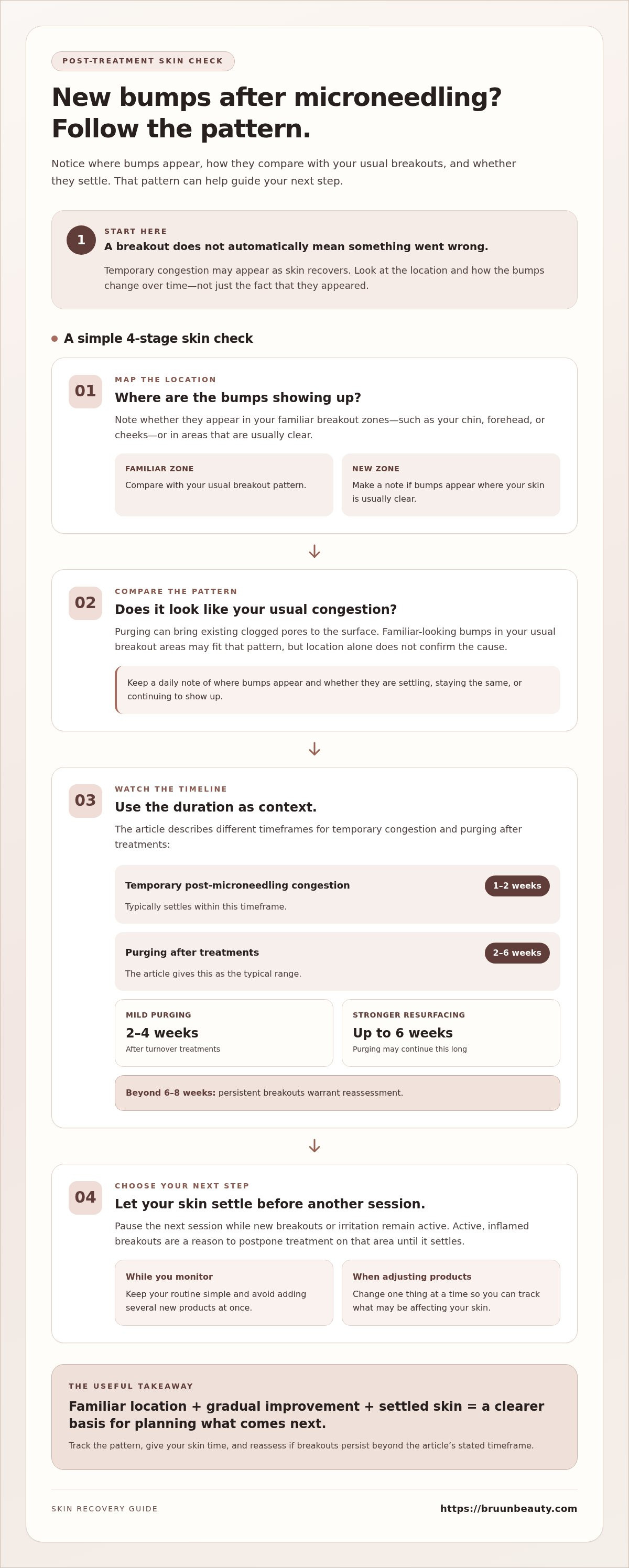
Temporary congestion can appear as skin recovers, while an acne breakout reflects ongoing blemish activity. Distinguishing between them helps you judge whether your skin is returning to its usual baseline. Note the areas involved and compare them with your typical acne pattern. Familiar bumps along the jawline, for example, may tell a different story from new changes across usually clear cheeks.
Breakout Patterns and Acne-Prone Areas
Breakouts often occur in areas where you regularly experience acne. This context helps you describe your skin accurately when planning treatment. Keep a simple record of recurring zones, such as your chin, forehead, or cheeks, and note whether each area is currently clear. That map can help you identify which areas are ready for treatment and which need more time to settle.
Needling Over Active Acne
Microneedling is generally planned for skin that is clear in the intended treatment area, not over active breakouts. If a flare appears, postpone treatment on that area until it settles. This keeps the plan aligned with your skin’s current condition. Areas without active blemishes can be assessed separately.
Risk of Post-Treatment Breakouts
People prone to acne, especially those experiencing a current flare, may be more likely to notice breakouts after microneedling. Your usual breakout locations and the condition of the treatment area both matter. Note your recurring patterns and any recent changes when discussing a session. This gives you a clearer starting point for monitoring your skin afterward.
Use your skin’s condition, not a calendar alone, to plan treatment timing. Reviewing microneedling supplies can help you understand the tools and skincare options involved, while a clear treatment plan keeps attention on areas ready for care.
Active, inflamed breakouts are a reason to avoid needling that area: treating through them may spread bacteria and extend healing. Microneedling should not be performed over active breakouts, cold sores, or bacterial or fungal infections because it can spread infection across the treatment area. Temporary post-microneedling congestion is different and typically settles within 1 to 2 weeks.
A doctor said they usually consider acne treatment before microneedling for patients with known acne problems, often using antibiotics. This means acne treatment may be considered before proceeding for someone with a history of acne. Active inflammation or infection remains a reason not to needle the affected area.
Should I stop treatment if purging happens?
Pause your next session while new breakouts or irritation remain active, then assess how your skin changes. Purging typically follows familiar breakout patterns. Severe itching, hives, widespread redness, or burning aren’t typical purging signs and warrant professional evaluation.
Purging and Accelerated Cell Turnover
Purging describes existing clogged pores becoming visible as the skin’s renewal process speeds up after a resurfacing treatment. Those bumps can look like a new acne flare, even when they appear where you usually break out. Track their locations and changes in a daily note to see whether they settle or continue appearing.
Pre-Existing Clogged Pores
Pre-existing clogged pores are blockages already developing beneath the skin’s surface before treatment. As skin turnover increases, several familiar spots may become noticeable close together. A cluster along your usual forehead breakout area, for example, may fit this pattern better than bumps across previously clear areas. Location alone doesn’t prove purging, so watch whether the pattern improves.
Purging Versus Irritation
Purging usually resembles your familiar breakouts, while irritation can involve broader discomfort or changes in areas that don’t normally break out. Severe itching, hives, widespread redness, and burning aren’t typical purging signs. If these appear, stop further sessions and seek professional evaluation rather than treating them as ordinary congestion. Avoid adding new products while you assess the pattern.
How Long Purging Typically Lasts
Purging after treatments typically lasts 2-6 weeks, while mild purging after turnover treatments may last 2-4 weeks. Stronger resurfacing procedures can be followed by purging for up to 6 weeks. The direction matters: note whether familiar bumps gradually improve or whether new areas keep becoming involved. Breakouts that persist beyond 6-8 weeks warrant reassessment.
To reduce the chance of prolonged congestion, keep your routine simple during recovery and avoid introducing several new products at once. Record when each product or treatment enters your routine, then change one thing at a time. This makes it easier to spot a possible trigger and distinguish product-related irritation from familiar breakouts.
Before planning another session, wait until your skin has settled and review your routine. Browsing microneedling skincare options can help you explore products for a considered routine, rather than adding multiple unfamiliar formulas during recovery.
Skin purging usually occurs in areas where you already tend to break out. Treat this familiar pattern as one factor when deciding whether to resume microneedling, alongside whether your skin has settled.
Can professional treatments cause cystic acne during purging?
Microneedling may be followed by temporary congestion, but don’t automatically label cyst-like blemishes as purging. Their appearance alone doesn’t establish the cause, so base your next treatment plan on your skin’s current condition.
Treating Breakouts and Consulting a Dermatologist
A dermatologist can assess whether persistent blemishes fit your usual acne pattern or need a different approach. Before an appointment, note the treatment date, when spots first appeared, and which areas changed. Record whether your skin felt different before treatment and list products introduced around that time. This timeline can make the discussion more specific.
Don’t try to extract deeper blemishes at home. Professional extraction may be considered around the two-week mark only after a provider confirms your skin has fully recovered. The surface may look settled before the full treatment area is ready for additional hands-on care. Let the provider assess recovery rather than relying on the calendar alone.
Managing Breakouts After Treatment
Keep your routine steady while you observe a breakout. Use products you already tolerate, avoid picking, and hold off on adding multiple new formulas. If you changed several products around the treatment date, list each one and when you started using it. This record helps identify possible patterns without guessing which step caused the change.
Small bumps can appear during the first few days of recovery, while purging may show up during the first week or two. Note whether each spot is new, familiar, or changing instead of treating every bump the same way. If you’re planning another session, share your notes and discuss timing before proceeding. A clear description supports a more considered treatment plan.
For example, write “new bumps appeared on my forehead after the session” instead of simply noting “breakout.” Include whether you changed your cleanser, moisturizer, or other routine steps. Bring this timeline to your follow-up so you can discuss what changed and what to do next. Keep your care simple while gathering these details.
Microneedling supports collagen-focused skincare goals, but it isn’t a way to manage active cystic acne. Treat each new change as information about your skin, not as a reason to intensify your routine. A measured approach makes it easier to plan future treatments around your skin’s condition.
Aftercare for a Smooth Recovery
A steady routine gives your skin room to recover after microneedling. Focus on gentle care, sun protection, and noticing whether your skin feels more comfortable each day.
For cleansing, use clean hands and a gentle approach rather than scrubbing. Pat your face dry with a fresh, soft towel instead of rubbing. This keeps your routine comfortable while your skin feels sensitive. Follow the specific aftercare directions provided for your treatment, as they reflect the approach used during your session.
Keep sun protection part of your daily routine during recovery. Use sunscreen with SPF 30 or higher, and reapply as directed on its label. If you spend time outdoors, shade and a hat can add practical coverage. These habits help you stay consistent while your skin returns to its normal feel.
Give your skin a calm setting after treatment. Avoid strenuous exercise for 48 hours after standard microneedling, since sweat and heat can make recovery less comfortable. Choose a quiet activity instead, such as reading or relaxing at home. Resume your usual workout only after that initial period and in line with your treatment aftercare directions.
For most people, redness after standard microneedling typically begins to fade on days two to three. Pay attention to the overall direction rather than expecting every part of your face to look the same. A simple daily note about comfort, redness, and dryness can help you recognize gradual changes without adding unnecessary steps.
If a small spot appears, resist squeezing or scrubbing it. Plain hydrocolloid pimple patches are typically a reasonable option after the first 3 to 5 days of recovery. Keep the rest of your routine gentle, and avoid layering several spot products over the same area. A few deliberate steps are easier to assess than a complicated routine.
Choose familiar skincare while your face settles, and introduce other products gradually. For example, don’t test a new cleanser, mask, and moisturizer all on the same day. Changing one product at a time helps you notice how your skin responds and keeps your routine manageable.
Use comfort and visible progress as cues for returning to your usual habits. If redness or swelling worsens after day three instead of improving, contact your treatment provider for guidance. Otherwise, follow your aftercare plan and keep your routine steady as your skin settles.
Breakouts after microneedling
Yes, a microneedling treatment can trigger temporary purging or acne breakouts. Up to 20% of people experience some form of breakout; inflammation, clogged pores, and aftercare choices can contribute.
Breakouts Versus Purging
Purging describes temporary bumps as existing congestion becomes visible during skin recovery. A breakout can also involve new acne that doesn’t follow your usual pattern. This distinction matters: familiar spots that gradually settle suggest a different pattern from spreading or painful bumps. Track where each spot appears and whether it improves.
Small bumps can appear during the first few days after treatment, and purging can also show up during the first week or two. Note whether spots appear in areas that commonly break out, such as your chin or forehead. New bumps outside those zones, or symptoms that keep worsening, deserve closer attention.
How Often Breakouts Occur
Up to 20% of people who undergo microneedling experience some form of breakout. That figure includes different kinds of breakouts, rather than a single predictable response for everyone. Your existing acne tendency, skin recovery, and aftercare all affect what you notice. The percentage gives context, but your own pattern and progression matter most.
Breakouts after microneedling typically clear within a few weeks. Timing can vary: bumps may appear in the first few days, while purging can become visible during the first week or two. Write down the treatment date and when spots first appeared. This timeline helps you explain changes clearly during follow-up.
Causes of Post-Microneedling Breakouts
Temporary inflammation during recovery can worsen pore inflammation or clogging, making existing congestion more visible. People already prone to acne may be more likely to notice breakouts. Aftercare can also play a part: touching your face with unwashed hands, applying heavy products too soon, or sweating during the initial healing window can contribute.
For example, a new spot after a sweaty workout differs from a familiar cluster of bumps that appeared without a change in your routine. Keep your hands away from your face, avoid heavy products during initial recovery, and follow your treatment aftercare directions. Changing several products at once makes it harder to identify what may have contributed.
Consider timing and symptoms together, not the word “purging” alone. If congestion persists beyond three weeks or becomes painful, contact your provider. Painful cysts also warrant professional evaluation. Breakouts that continue beyond eight weeks call for reassessment. These markers help you decide when observation is no longer enough and professional evaluation is needed.
Bruun Beauty: Advanced Microneedling Serum SD - Control Salmon DNA Ampoule Serum
Advanced Microneedling Serum SD - Control Salmon DNA Ampoule Serum is one option for your microneedling skincare routine. Choose products with your skin’s current condition and treatment aftercare directions in mind, especially if you’re managing new breakouts. Keep your routine simple while your skin settles, and avoid adding unfamiliar products just to speed up recovery.
If you’re ready to explore a serum for your skincare routine, visit Bruun Beauty.
Explore the Salmon DNA ampoule serum
Make your next treatment decision with confidence
If you’re still wondering whether microneedling can cause breakouts, let your skin’s changing pattern guide your next step. Note when new bumps appear, where they develop, and whether they improve before scheduling another session. This gives you a clearer basis for discussing timing and aftercare with a qualified professional.
Build a routine around what your skin currently needs, rather than adding products simply because bumps appeared. If discomfort or persistent changes concern you, pause and seek professional guidance before another treatment. Thoughtful timing and simple aftercare can help you approach your skincare goals with more confidence.
Listen to your skin, and take the next step when you feel ready.
Frequently Asked Questions
Clearing the Confusion: Breakouts After Microneedling?
Yes, microneedling can cause temporary breakouts, but new spots don’t all mean the same thing. Compare them with your usual acne pattern: note whether they appear in familiar areas, feel different, or continue spreading. Keep a brief record of treatment timing and skin changes. Painful cysts, worsening symptoms, or persistent congestion warrant professional evaluation rather than another session or attempts to extract spots yourself.
How does aftercare impact microneedling safety?
Aftercare helps limit avoidable irritation while your skin recovers. Follow the treatment-specific directions, keep your routine simple, and avoid touching your face with unwashed hands. For example, don’t add a new exfoliant and heavy foundation on the same recovery day. Introducing products gradually makes it easier to notice what your skin tolerates and describe any changes accurately.
How does microneedling affect different skin conditions?
Your starting skin condition influences what you may notice afterward. Acne-prone skin can be more likely to develop temporary congestion, while active, inflamed acne is a reason to postpone treatment on those areas until they clear. Microneedling may improve the appearance of acne scars, but that goal differs from treating active breakouts. Consider current skin activity separately from older marks.
Is purging a good sign?
Purging isn’t proof that a treatment is working or that your skin will improve. It describes a possible temporary change, not a measure of results. Look at the pattern instead: familiar breakout areas and gradual improvement are more consistent with purging than new symptoms that spread or intensify. Don’t continue a treatment simply to push through discomfort or persistent changes.
What Is Skin Purging?
Skin purging is a temporary increase in visible blemishes as existing congestion comes to the surface during skin renewal. It tends to appear in places where you already get breakouts. Spots confined to your usual acne-prone area, for example, may fit that pattern better than bumps across areas that typically remain clear. Track location and progression to distinguish patterns.
How soon after microneedling can breakouts appear, and how long do they last?
Small bumps may appear during the first few days after treatment, while purging breakouts can show during the first week or two. Breakouts often clear within a few weeks, though purging after treatments may last 2-6 weeks. Record when spots begin and whether they improve. Painful changes or congestion lasting beyond three weeks call for professional follow-up.
Does microneedling worsen active acne, and should it be avoided?
Microneedling over active, inflamed acne may worsen the situation, so postpone treatment on affected areas until the skin clears. Treating directly across inflamed spots may spread bacteria and extend recovery. If a flare appears before an appointment, tell your treatment provider and reschedule rather than trying to needle around individual pimples. A calm baseline makes post-treatment changes easier to interpret.
How can you prevent breakouts after microneedling?
Keep recovery care clean and uncomplicated: wash your hands before touching your face, avoid heavy products during the initial healing window, and follow your provider’s aftercare directions. Hold makeup for at least 24 hours, and wait longer if your skin remains sensitive. Avoid strenuous exercise for 48 hours after standard microneedling, since sweat can complicate early aftercare.
How to match machine features to services and client needs
How to match machine features to services and client needs
Related Posts

PDRN Benefits for Skin: Regeneration, Results and Safety

How to Dispose of Used Microneedle Cartridges Safely

Self-care rituals for better skin through mindful daily habits

How to Explain Microneedling Benefits for Skin and Scars

How to use a Korean 10-step skincare routine for hydration

Microneedling for atrophic scars: clinic or at-home results

V-Line Lifting Masks and Their Claimed Face-Shaping Effects
