

Build a skincare treatment plan at home for daily care
A skincare plan works best when it’s simple enough to follow and flexible enough to adjust after a professional treatment. Building a skincare treatment plan at home means choosing a manageable routine with cleansing, targeted care, moisturizing, and sun protection.
Adding more active ingredients may seem like a shortcut, but overlapping products can make a routine harder to maintain. Thoughtful choices help every step serve a purpose.
Learn how to structure morning and evening care, combine active ingredients carefully, support your skin barrier, and adapt your routine after professional treatments.
Key Takeaways
- Choose active ingredients with distinct roles, and introduce new products one at a time so you can judge how they fit your routine.
- Build morning and evening care around cleansing, targeted support, moisturizer, and consistent sun protection.
- Support your skin barrier by choosing a moisturizer that helps retain hydration and feels comfortable in your routine.
- After a professional treatment, follow clear guidance on what to pause, what to use, and when to resume your usual products.
- Review your routine when your skin needs change, and keep it practical enough to follow consistently.
1. Consistency and consultation when combining active ingredients
Building a skincare treatment plan at home starts with an honest inventory. List each cleanser, serum, moisturizer, and exfoliant, including how often you use it. This can reveal overlap: two exfoliants may have similar roles, while a hydrating serum and moisturizer serve different purposes.
Check labels for repeated functions and active ingredients. Several products aimed at the same concern can complicate your routine without adding a clear purpose. A vitamin C serum and another brightening formula may overlap, depending on their ingredients. Keep steps with distinct roles and set aside products that duplicate one another.
Serums can provide targeted support for hydration, brightness, or resilience. Choose one based on your current goal, such as hydration if your routine feels drying. Vitamin C and peptides are examples of ingredients used in corrective skincare. Follow each product’s directions, and don’t introduce several unfamiliar actives at once.
There’s no single average cost for a basic skincare routine that suits everyone. Spending depends on what you already own, the formulas you choose, and whether you add targeted serums. Start by identifying the essentials you still need, then choose products that fit your budget and skincare priorities.
To identify your skin type at home, cleanse gently and notice how your skin feels afterward. Note areas that feel tight or dry, look shiny, or show a mix of both. Write down visible concerns, such as uneven tone or rough texture, and record the products you use. These observations can help guide your choices.
When building a skincare treatment plan at home, add one new active product at a time. Use it as directed for several weeks before deciding how it fits your routine. This gradual approach makes it easier to assess your experience with each formula. If ingredient overlap is unclear, share your product list or photos with a skincare professional.
Patch test a new product according to its label before applying it across your face. Watch for redness, itching, stinging, or unusual tightness. If discomfort appears, stop using the product and seek professional guidance before trying another active. Testing products separately can also help identify which formula may be causing a reaction.
See a dermatologist about persistent or changing skin concerns rather than trying to address them by adding more active products. A dermatologist can assess what’s happening and discuss suitable next steps. Keep a list of your products and when you began using them; this can make the conversation more specific.
2. Morning cleansing, antioxidants, moisturization, and sunscreen
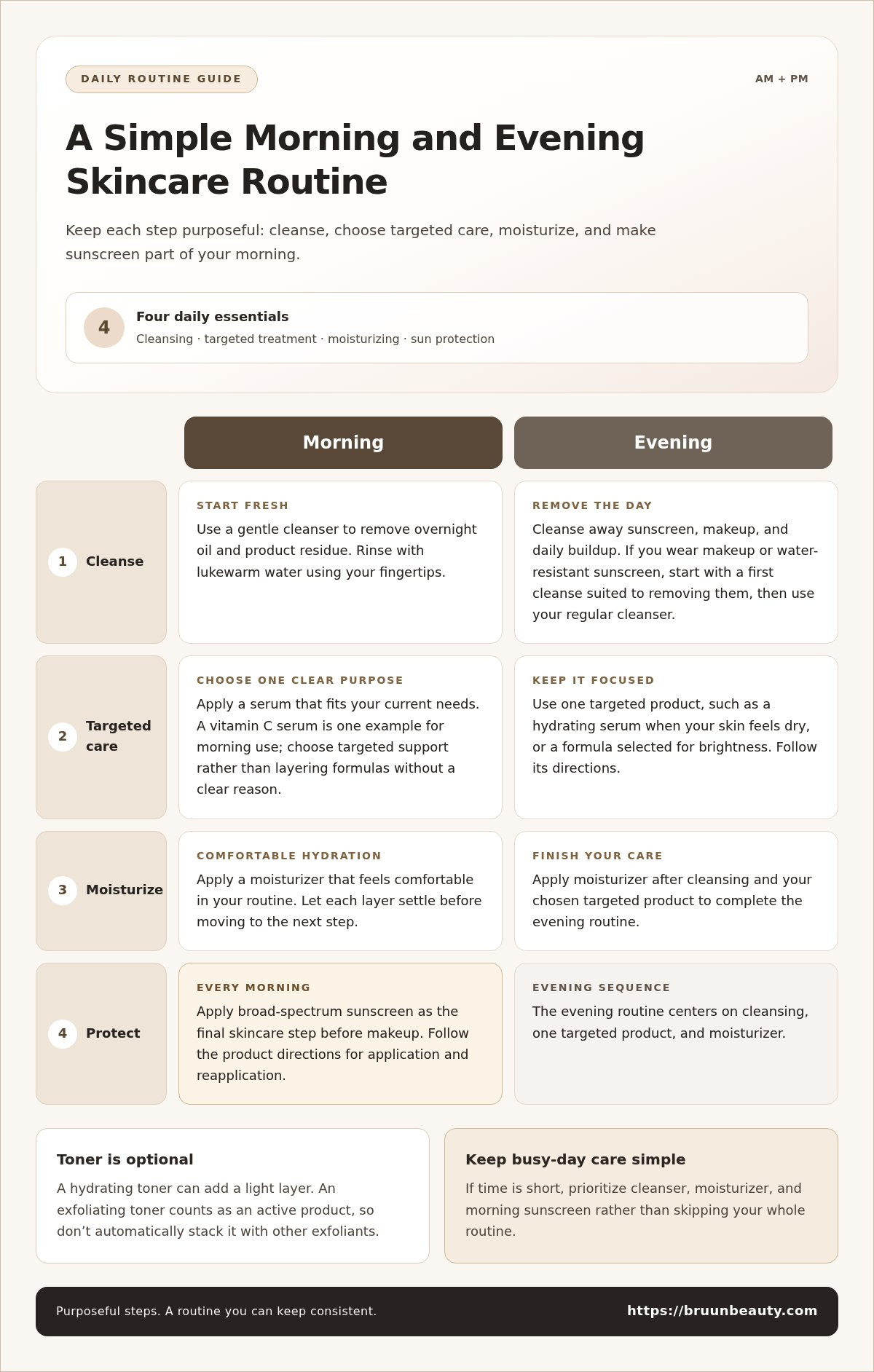
A practical morning routine has four essentials: cleanse, treat, moisturize, and protect. Start with a gentle cleanser to remove overnight oil and product residue without stripping your skin barrier. Use lukewarm water and your fingertips, then rinse thoroughly. If your skin feels tight afterward, reconsider the cleanser or how often you use it.
Next, choose a serum with a clear purpose. An antioxidant serum containing vitamin C is one example for morning use; Charleston Medical Spa includes vitamin C among corrective skincare ingredients. Serums can also provide targeted support for hydration, brightness, or resilience. Choose according to your current skin needs rather than layering formulas just to add steps.
Follow with moisturizer, then broad-spectrum sunscreen every morning. Choose a moisturizer that nourishes without clogging, as Charleston Medical Spa recommends. Apply products in sequence, allowing each layer to settle before applying the next. Keep sunscreen as the final skincare step before makeup. Follow the product directions for how much to apply and when to reapply.
Cleanse again in the evening to remove sunscreen, makeup, and the day’s buildup. A gentle cleanser helps clean without disrupting the skin barrier. If you wear makeup or water-resistant sunscreen, use a first cleansing step suited to removing those products, followed by your regular cleanser. Avoid scrubbing with rough cloths or using hot water.
Toning is optional, not essential. If you use a toner, match it to your routine: a hydrating formula can add a light layer, while an exfoliating toner counts as an active product. Don’t automatically stack it with other exfoliants. Check the ingredient list and directions, especially if you already use a targeted serum.
A simple evening order is cleanse, apply one targeted product, then moisturize. For example, choose a hydrating serum when your skin feels dry, or use a formula selected for brightness. Targeted skincare serums can fit a treatment-focused routine when their directions match your intended use.
Keep both routines manageable on busy mornings and evenings. If you’re short on time, prioritize cleanser, moisturizer, and morning sunscreen rather than skipping the whole routine. Notice how your skin feels after each step, and adjust your cleanser or moisturizer if tightness or persistent discomfort appears.
Keep the routine anchored to its purpose: four daily essentials are cleansing, treatment, moisturizing, and sun protection. Charleston Medical Spa recommends cleansing the face in the morning and evening, supporting a consistent approach to removing buildup and preparing skin for the next steps. Protection deserves particular attention; Charleston Medical Spa describes UV exposure as the #1 contributor to premature aging and visible skin damage. This makes sunscreen a daily priority, rather than a step to reserve for bright weather or time outdoors.
Between visits, hydration and antioxidant protection can help HydraFacial clients maintain skin clarity and brightness. Choose serums according to your skin’s current needs: skincare serums can provide targeted support for hydration, brightness, and resilience. A focused choice keeps treatment purposeful instead of adding products without a clear reason. Keep your routine steady enough to assess whether a serum suits you, and avoid introducing several new formulas at once. If discomfort persists, simplify your routine and reassess the products you’re using.
3. Daily broad-spectrum sunscreen
Broad-spectrum sunscreen belongs in your morning routine every day, not just on beach days. It protects against ultraviolet exposure during ordinary activities, including a walk, errands, or time near windows. According to Charleston Medical Spa, UV exposure is the number-one contributor to premature aging and visible skin damage. Making sunscreen a consistent step helps protect the effort you put into your skincare plan.
Choose a broad-spectrum formula you’ll use consistently. Texture matters: if a lotion feels too rich, you may prefer a lighter formula; if your skin feels dry, a more moisturizing texture may suit you better. Consider how sunscreen layers with your moisturizer and makeup. Test the combination during a regular morning so pilling or a heavy finish doesn’t catch you by surprise.
Apply sunscreen as the final skincare layer before makeup, following the product label. Cover commonly missed areas, such as the sides of your face, hairline, ears, and neck. If you part your hair, include the exposed scalp line. Use a mirror to check for gaps around your nose and jaw. Consistent coverage matters more than choosing a formula that stays unused in a drawer.
Use your daily schedule to prompt reapplication. Keep sunscreen with your keys or in your work bag, then follow its label directions during the day. Outdoor plans, extended time in sunlight, and activities that remove product can affect when you need another application. A phone reminder can make the step easier to remember when your routine changes.
Sun protection is especially relevant after professional skincare treatments. Daily sunscreen helps protect treatment results and reduce irritation, discoloration, or collagen breakdown associated with sun exposure. Follow the written aftercare instructions for your specific treatment, as they may guide when to resume your usual products. Don’t assume a familiar active belongs in your post-treatment routine right away.
Build practical backups into your plan. Store one sunscreen near your morning skincare and another where you prepare to leave. If makeup makes reapplication tricky, consider how you’ll refresh protection without disrupting your preferred look. The best choice is one that fits your skin feel and daily habits, so this protective step can help counter visible sun-related changes over time.
Track consistency without making skincare complicated. Mark each morning you apply sunscreen on a calendar or in your routine app. If you repeatedly skip it, identify the obstacle: perhaps the texture clashes with your moisturizer, or the bottle isn’t easy to reach. Adjusting that detail can make daily protection more manageable and help preserve a healthy-looking complexion.
4. Moisturizing and skin-barrier support
Use moisturizer after treatment products to support your skin barrier and lock in hydration. A supported barrier contributes to skin’s glow, smoothness, and resilience. Apply moisturizer as the final evening skincare step, after your serum or other targeted product. In the morning, apply it before sunscreen, following the product directions.
Choose a moisturizer based on how your skin feels after cleansing and throughout the day. If your face often feels tight, try a richer formula; if a heavy finish bothers you, choose a lighter texture. Charleston Medical Spa recommends a moisturizer that nourishes without clogging. Comfort matters: a formula you’ll use consistently is a better fit for daily care.
Keep application simple. After applying a treatment serum, spread moisturizer gently across your face and neck. Follow the product label for the amount, and avoid rubbing hard. If you use separate products for different areas, apply each where it belongs. For example, a dry-feeling cheek may need more attention than an oilier forehead.
Adjust the texture as your needs change. Indoor heating, air conditioning, travel, and seasonal weather can affect how comfortable your skin feels. Keep the same basic routine, but reconsider whether your moisturizer still feels suitable. If you change formulas, introduce the new product on its own so you can tell how it fits.
After exfoliating or using a targeted active, finish with moisturizer rather than adding another treatment step. This keeps your routine focused on hydration and barrier support. If your skin feels persistently uncomfortable, pause the newest product and review your full routine. A list of product names and application steps can make that review clearer.
Notice how your moisturizer layers with other products. Pilling can happen when formulas don’t sit well together or when you apply too much. Try using the amount specified on the label, allowing each layer to settle, and changing one step at a time. If the issue continues, simplify the combination instead of adding another product.
Review whether your moisturizer still suits you when your skin’s needs or schedule change. A routine for a dry indoor winter may feel different during humid summer weather or after travel. Note changes in comfort, finish, and how well makeup sits. These observations can help you decide whether to keep the formula, adjust its use, or reassess other steps.
For a professional routine review, bring photos of your products and note which steps you skip. A skincare professional can help identify overlap and assess whether your moisturizer supports the rest of your plan. Keep your routine practical: cleansing, targeted care, moisturizer, and daytime sun protection each have a distinct role.
5. Adjusting home care after professional treatments
A professional treatment can temporarily change what belongs in your routine. Separate everyday care from post-treatment care, then follow the written instructions for that specific treatment. They should clarify what to use, what to pause, and when to resume each product. Keep the instructions handy instead of relying on memory.
After microneedling, focus at home on calming care and supporting the skin barrier. Avoid irritating products during the initial recovery period, including exfoliants and other strong actives. Use only the products and steps allowed in your aftercare directions. A gentle cleanser, hydrating product, and moisturizer may fit the plan when those instructions permit them.
If microneedling is part of your treatment plan, microneedling skincare products can be considered alongside your professional aftercare directions. The instructions for your treatment determine when each product belongs in your routine.
Retinol products may need to be paused in the days before and after a professional treatment. Follow your provider’s directions for timing, then resume only as instructed. Don’t treat your regular evening routine as automatic after a treatment. A product that suits everyday use may not belong in post-treatment care.
How often should you exfoliate at home? There isn’t one schedule that suits every exfoliant and routine. Follow the product directions and your professional treatment instructions. Pause exfoliation during the initial recovery period, then resume when your aftercare guidance allows.
Make aftercare instructions clear enough to follow without guesswork. Write down each product name, how to apply it, what not to combine, what to pause, and the next check-in date. For example, label a cleanser “use” and an exfoliating toner “pause” until the stated point in your aftercare plan.
At follow-up, review the routine as you actually followed it. Note which products you used daily, which steps you skipped, and anything you added or stopped. Describe whether the routine felt confusing or difficult to maintain. These details can help a professional decide what to keep, replace, or reintroduce.
Keep everyday products separate from treatment-specific steps. A short written list or separate shelf can help prevent mix-ups. If your instructions allow a hydrating mask, use it only as directed; don’t add extra exfoliation because your skin looks dull. Return to usual care gradually, following the timeline provided for your treatment.
For BB Glow, follow the treatment-specific home-care directions rather than assuming microneedling aftercare applies. The procedure and recommended products can differ, so keep its instructions with your product list. Clear notes can help you follow the right routine and discuss any needed changes at your next review.
Bruun Beauty: Advanced Microneedling Serum SD - Control Salmon DNA Ampoule Serum
Advanced Microneedling Serum SD - Control Salmon DNA Ampoule Serum is a topical skincare product intended for use with microneedling pens or derma rollers. It is not injectable. Follow the product directions and your professional’s treatment-specific guidance when incorporating it into your routine.
Explore the Salmon DNA serum to see its product details. It is intended for cosmetic skincare use only; not intended to diagnose, treat, cure, or prevent any disease.
For product questions, contact Bruun Beauty.
Make your routine a practice you can sustain
Building a skincare treatment plan at home isn’t about finding a fixed set of steps and never changing them. It’s about noticing what fits your life, how your skin responds, and where your routine feels difficult to maintain. Keep a brief note when you change a product or adjust care after a professional treatment. Those observations can guide your next choices more clearly.
As your needs shift, make one thoughtful adjustment at a time. A focused routine is easier to follow and review than a shelf full of overlapping products. Give each step a purpose, and let consistency, not constant experimentation, shape your daily care.
Keep learning what works for you, and make room for skincare that feels practical and rewarding.
Frequently Asked Questions
What are the basic steps of a daily skincare routine?
A basic routine includes cleansing, targeted skincare, moisturizer, and daytime sun protection. To make it easier to maintain, connect each step to a purpose: remove buildup, address a current concern, support comfortable skin, and protect exposed areas during the day. At night, choose targeted products based on your routine rather than automatically repeating every morning step.
Which skincare ingredients help acne, dryness, dark spots, and fine lines?
Look for ingredients that match your skincare goal, and check the product label. Niacinamide is commonly used in formulas for blemish-prone or uneven-looking skin; glycerin and hyaluronic acid are humectants used in hydrating products. Vitamin C appears in brightening formulas, while peptides are used in products focused on the appearance of fine lines. Introduce one unfamiliar formula at a time.
How do I choose a gentle cleanser, moisturizer, and sunscreen?
Choose a cleanser that leaves your skin comfortable, not tight, after rinsing. Pick a moisturizer with a finish you’ll use regularly, then select broad-spectrum sunscreen that suits your everyday activities and layers well with other products. Compare product directions and ingredient lists, and try a new formula on a small area first before making it part of your full routine.
How should I layer skincare products morning and night?
Apply products from lighter to richer textures, unless a product’s directions specify otherwise. For example, apply a lightweight serum before a cream moisturizer, and keep sunscreen as your final morning skincare layer. At night, use only the targeted products that fit your plan. If layers pill, reduce the amount or simplify the combination instead of adding more steps.
What daily sunscreen SPF should I use, and how often should I reapply?
Use broad-spectrum sunscreen every morning, and follow its label for the SPF level and reapplication instructions. Reapplication needs can depend on your product and the day’s activities, especially time outdoors. Keep sunscreen accessible so you can use it as directed. If makeup affects your routine, plan how to refresh protection without skipping the label guidance.
Microneedling and Sun Exposure: Vacation Healing Tips
Microneedling and Sun Exposure: Vacation Healing Tips
Related Posts

PDRN Benefits for Skin: Regeneration, Results and Safety

How to Dispose of Used Microneedle Cartridges Safely

Self-care rituals for better skin through mindful daily habits

How to Explain Microneedling Benefits for Skin and Scars

How to use a Korean 10-step skincare routine for hydration

Microneedling for atrophic scars: clinic or at-home results

V-Line Lifting Masks and Their Claimed Face-Shaping Effects
