

Microneedling for Men’s Skincare: What to Know in 2026
Microneedling for men's skincare is less about gender and more about your skin goals, grooming habits, and comfort with the process. Professional procedures and at-home devices are not interchangeable, so it helps to understand the differences before choosing an approach.
If you’re weighing how facial hair or shaving fits into your routine, start with the guidance for the specific device or procedure. Your skin’s needs, your experience, and the care you can give your skin afterward all matter more than gendered skincare rules.
This guide covers how microneedling works, what to consider when comparing professional procedures with at-home devices, and how to plan around shaving and aftercare. It also explains how to assess microneedling serums and devices as separate product decisions. The goal is to help you make an informed choice, not promise a particular result or replace individualized clinical guidance.
Key Takeaways
- Start with your skin goals and grooming habits, not assumptions about men’s skincare.
- Understand what microneedling involves and keep expectations measured rather than relying on quick-result promises.
- Compare professional procedures and at-home devices by considering the setting, device instructions, and your own experience.
- Plan preparation and aftercare around the relevant guidance, shaving, and a simple skincare routine.
- For microneedling for men's skincare, choose a device and serum separately, and consider whether each suits your intended use.
Microneedling for Men’s Skincare: What It Is and What It Isn’t
Microneedling uses a device with fine needles to create tiny, controlled contact points in the skin. For microneedling for men's skincare, start with your individual skin goals, not a separate set of rules based on gender.
These tiny openings are called microchannels. They’re different from applying a serum or moisturizer, which places product on the skin’s surface. For a broader overview of the technique, see Collagen Induction Therapy (Microneedling).
What does microneedling do to the skin?
Microneedling is a skincare procedure that uses a fine-needle device to create controlled microchannels in the skin. That describes the process, not a guaranteed result. Skin responses and how it looks afterward can vary. Microneedling also doesn’t replace everyday cleansing, moisturizing, or sun protection.
This distinction matters when you choose products. A serum designed for ordinary topical use isn’t automatically suitable for use with a microneedling device. Treat the device and product as separate decisions, and follow the directions for each specific device and skincare product.
Why might men consider microneedling?
You might explore microneedling if you’re interested in the appearance of uneven texture or old marks. Those goals don’t make it the right approach for every person or concern. Your skin history, current condition, and expectations all belong in the decision, and results vary. No device or serum can guarantee a particular appearance.
Facial hair adds a practical grooming question. A beard can make it harder to work evenly across the skin beneath it, while regular shaving may affect how you plan your routine. Consider which areas you want to focus on and how your grooming habits fit the device or procedure guidance. Facial hair doesn’t automatically call for a different gender-based protocol.
Men don’t automatically need a distinct microneedling method. Skin goals and individual needs matter more than gender, so don’t choose a device or approach just because it’s marketed specifically to men. Bruun Beauty sells microneedling devices and skincare, including options to explore as you compare product categories.
A useful first step is to name the visible concern you hope to address, then decide whether the procedure and its care requirements fit your routine. If facial hair, frequent shaving, or sensitive-feeling skin complicates that plan, account for it before choosing. A considered decision starts with your skin and a realistic understanding of the process, not a promise of a quick change.
How Microneedling Works, and What Results You Can Reasonably Expect
Microneedling results don’t appear on a guaranteed schedule. A device makes controlled contact with the skin, which then responds through its natural renewal processes. What you notice depends on your starting skin, the method used, and how thoughtfully you follow aftercare guidance.
What happens during a microneedling session?
At a high level, a device passes over selected skin and creates tiny, controlled contact points. The skin responds to that stimulation, but the session itself is only one part of the experience. Preparation, device instructions, and aftercare all shape how the process fits into your routine.
A professional session takes place in a clinical or spa setting, with a practitioner responsible for the procedure. At home, you’re responsible for understanding and following the device directions and deciding whether the process fits your experience and needs. Device capabilities and user skill are separate considerations. More features don’t automatically make a device the right choice for every person.
For microneedling for men's skincare, this distinction matters if you’re comparing settings or planning around shaving. Be clear about the responsibilities involved before you decide. This Benefits and Applications of Microneedling overview offers additional background on the process and appearance-focused uses.
Which skin goals can microneedling address?
People may consider microneedling when they want to improve the appearance of uneven texture, fine lines, or old marks. These are goals to weigh, not promised outcomes. Your skin may respond differently from someone else’s, even when the concern looks similar.
Separate how your skin looks soon after a session from changes you may hope to see over time. Temporary redness or sensitivity can affect your immediate appearance, so don’t judge the overall experience by the first mirror check. Longer-term expectations depend on the approach and your individual skin. Dramatic before-and-after images aren’t a reliable prediction of your own results.
Microneedling results can’t be guaranteed because every person’s skin and approach are different.
Consistent, gentle aftercare supports a considered routine, but it can’t promise a particular result. Follow device guidance, avoid unnecessary steps, and pay attention to how your skin feels and looks. If you’re comparing equipment and topical products, Bruun Beauty’s microneedling products and devices let you explore the categories while keeping their uses distinct.
Choose based on your skin goals, comfort with the setting, and ability to follow the relevant care guidance. Browsing microneedling options can help you compare devices and products as part of that decision, rather than treating them as a promise of a specific outcome.
Professional Microneedling vs. At-Home Devices: How to Compare
A professional procedure and an at-home device may use similar technology, but the experience isn’t interchangeable. The setting, operator, device, and level of personal responsibility differ. For microneedling for men's skincare, compare these practical factors alongside your goals instead of assuming one option suits everyone.
What differs between an in-office procedure and a home device?
In a professional setting, a practitioner operates the device and manages the session. At home, you’re responsible for understanding the instructions, handling the equipment, and deciding whether it matches your experience. Neither setting is automatically the best choice for every person or skin goal.
| Factor | Professional setting | At-home device |
|---|---|---|
| Setting | A clinic or spa environment | Your chosen home environment |
| Who operates it | A practitioner | You |
| Main consideration | Your goals and the practitioner-led approach | Your experience, device instructions, and ability to follow them |
A home device doesn’t automatically recreate a professional session. Devices can differ in design and intended use, and operator experience also affects how they’re handled. A device’s capabilities and your skill are separate considerations. Extra features can’t replace familiarity with the instructions or good judgment about your own skin.
What should you consider when comparing devices?
Start with intended use. Read the manufacturer’s instructions and consider whether the device’s handling requirements fit your experience and routine. Don’t assume two devices work alike simply because they share a category or look similar.
Pay attention to cartridges and other components, too. Follow the manufacturer’s guidance for selecting, replacing, and caring for them. Don’t improvise with parts or use a component outside the instructions. When looking at various microneedling options available at Bruun Beauty, product details can help you understand the available choices. Choosing a device still requires considering your skin, experience, and intended use.
Your grooming habits belong in the comparison as well. If facial hair or frequent shaving affects which areas you’re considering, account for that before choosing a setting or device. Then weigh your comfort with the responsibilities involved: following instructions, maintaining the equipment as directed, and keeping your skincare routine appropriate for your skin’s needs.
There’s no universal winner. A professional setting places operation with a practitioner, while a home device gives you more responsibility for understanding and handling the equipment. Choose based on your goals, experience, and comfort with those differences. Convenience doesn’t mean the process or outcome is the same.
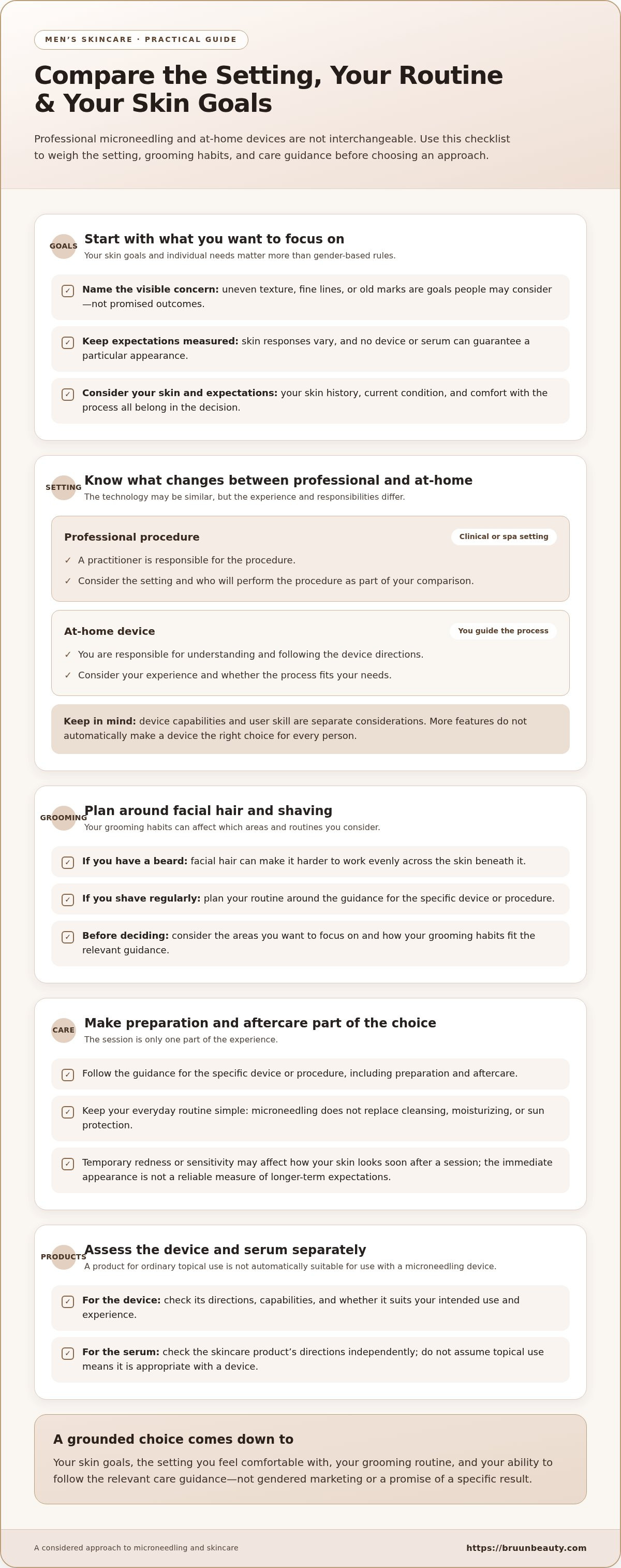
Shaving, Preparation, and Aftercare: Plan Around Your Routine
Good planning for microneedling for men's skincare starts with the specific device or professional’s instructions, not a universal grooming rule. Facial hair, shaving habits, and the products you already use can all affect how you prepare and care for your skin afterward.
Use this sequence to organize your routine:
- Review the guidance. Read the device instructions or the preparation and aftercare advice for your professional session.
- Consider shaving. Note which areas have facial hair and how your usual shave fits with the instructions.
- Simplify your skincare. Avoid adding extra steps or experimenting with product combinations around the session.
- Monitor your skin. Pay attention to how it looks and feels, and follow the specific guidance you were given.
How should facial hair and shaving factor into planning?
Facial hair can affect access to the skin, while shaving may be part of your everyday grooming routine. Neither automatically determines the right approach. Don’t direct a device over facial hair or change your shaving schedule based on general advice alone. Follow the instructions for your device or session, since preparation can depend on the approach being used.
If you shave frequently, include that habit in your planning. You may prefer to coordinate grooming around a session, but there isn’t one shave interval that suits everyone. Let the specific directions guide your decision, and don’t shave or change your routine in a way those instructions don’t support.
What skincare approach makes sense afterward?
Keep post-session care simple and follow the professional’s or device manufacturer’s instructions. Your usual products may not all be suitable right after microneedling, so don’t assume a familiar serum, exfoliant, or aftershave is appropriate. Avoid unnecessary irritation and keep the routine easy to follow.
If your skin feels unusually sensitive, skip improvised combinations and avoid introducing several unfamiliar products at once. A product marketed for skincare isn’t automatically intended for every use or every point in your routine. Read the product directions alongside the specific session guidance before deciding what to apply. When curating gentle post-treatment formulas, professional skincare retailers such as Alfa Omega Shop offer specialized options suited for calming and maintaining recovering skin.
Monitor your skin rather than relying on a fixed post-session timeline. If you notice a concerning reaction, pause use and seek guidance from a qualified medical professional. Do the same if a reaction persists or worsens. Don’t try to address it by adding more products or repeating the procedure.
Choosing Microneedling Products for Men’s Skincare
For microneedling for men's skincare, treat choosing a device and choosing a serum as two separate decisions. The device is the equipment used for the procedure; a serum is a skincare product with its own directions and intended use. A product’s presence in a microneedling routine doesn’t automatically mean it suits every device or application method.
Start by clarifying your goal and the setting you’re considering. Then review the device instructions and the serum label independently. This helps you avoid assuming two products are compatible just because they appear in the same routine or product category.
How do devices and serums fit into a microneedling routine?
A device and a serum serve different roles. The device performs the microneedling procedure, while a serum is a topical skincare product. Whether and how a particular serum belongs in your routine depends on its directions and the instructions for the device or professional session. Don’t assume a serum should be applied during a procedure just because it is marketed for microneedling.
Bruun Beauty sells DR. PEN microneedling devices and the Advanced Microneedling Serum SD - Control Salmon DNA Ampoule Serum. Review the Salmon DNA ampoule serum directions as a separate product decision, along with the relevant device guidance. That way, you can compare the product details without assuming a specific pairing.
For skincare enthusiasts, check directions before adding a product to your routine. For licensed estheticians and other skincare professionals, consider product instructions alongside the device and the needs of the person receiving the service. In either case, don’t rely on ingredient names or marketing language alone to establish suitability.
When should you keep the routine simple?
Keep things straightforward if you’re unfamiliar with a product or your skin feels unusually sensitive. Avoid layering several unfamiliar products at once. Adding one new item at a time makes it easier to notice how your skin responds and reduces guesswork about which step may not agree with you.
Before choosing, ask yourself:
- Do I understand the device’s intended use and instructions?
- Have I read the serum’s own directions?
- Am I assuming these products work together without guidance?
- Can I keep the rest of my routine simple and consistent?
You don’t need a complicated shelf to make a considered choice. Start with the device or product decision you need to make now, and use its instructions to guide your next step. To compare the available categories, browse the microneedling collection.
Make Your Next Skincare Choice With Confidence
Think of microneedling for men's skincare as a decision you can revisit, not a commitment you need to make all at once. Before changing your routine, write down what you’re considering and what you’d like to learn. This gives you a clear reference point as you decide whether to move forward.
If you explore a new device or product, make one informed choice at a time. A steady, thoughtful approach can make your skincare routine more manageable and help you stay intentional about what you add.
Browse Bruun Beauty’s microneedling collection to compare devices and skincare products, then follow each product’s instructions as you build a routine that fits your goals.
Frequently Asked Questions
Is microneedling different for men?
Not by default. The procedure doesn’t become a different technique because you’re a man. What matters is whether the approach fits your skin goals and situation. A product or device marketed specifically to men isn’t automatically a better match, either. Review its intended use and directions instead of relying on packaging or gender-focused claims.
Can microneedling be used on a beard area?
Whether the beard area is appropriate depends on the device’s intended use and the guidance for the specific procedure. Don’t assume information about using microneedling on another body area applies to facial hair. If beard-area skin is your focus, discuss that specific goal with a qualified professional before choosing an approach.
Does microneedling make facial hair grow?
You shouldn’t rely on microneedling to increase beard density. A procedure aimed at skin appearance doesn’t establish that it will stimulate facial hair, and no specific growth result can be promised. If sparse facial hair is your concern, ask a qualified medical professional about options intended for that goal instead of experimenting with a skin device.
How often should men use a microneedling device?
Follow the schedule provided for the specific device or professional procedure; don’t create one from general online advice. Keep session frequency separate from cartridge replacement or other equipment-maintenance directions, since those instructions address different things. If the guidance doesn’t clearly explain when use is appropriate, pause and seek clarification from a qualified professional or the device manufacturer.
Can you shave before or after microneedling?
Shaving may be part of your preparation or return to grooming, but the right timing depends on the session or device instructions. If shaving usually leaves your skin irritated or nicked, don’t treat a close shave as a requirement. Follow the specific directions you were given instead of relying on a blanket rule that ignores how your skin responds.
How long can redness last after microneedling?
Redness can vary, so there isn’t one duration that applies to everyone. Use the aftercare guidance for your procedure or device as your reference, rather than treating redness as a measure of how well the session worked. If it worsens, feels concerning, or persists beyond the guidance you received, pause and seek qualified medical advice.
What Results to Expect After 3 Microneedling Sessions: A Realistic Guide
Hydrogen Water Bottle Buying Guide: Choose the Right Size and Features
Related Posts

Getting Spa Results on a Budget: Build a Smart At-Home Routine

Professional vs. At-Home Microneedling: Cost Comparison

Hydrogen Water Bottle Buying Guide: Choose the Right Size and Features

What Results to Expect After 3 Microneedling Sessions: A Realistic Guide

Creating a Yearly Microneedling Schedule: A Practical 2026 Guide

How to Choose Professional Esthetician Lighting: A Moon Lash Light Buying Guide
