

How to Make Microneedling Less Painful: A Practical Guide
If you’re wondering how to make microneedling less painful, start by asking what to expect from your specific session. Sensation can vary with your skin’s sensitivity, the treatment area, and the technique used.
Before your appointment, discuss your concerns and available comfort measures with a qualified provider. Follow their instructions about preparation, numbing products, and aftercare.
This guide explains what to ask, how professional and at-home options differ, and what to check before choosing a device or skincare product.
Key Takeaways
- To understand how to make microneedling less painful, consider how personal sensitivity, treatment area, and technique can affect comfort.
- Contact your provider with questions before your appointment, and follow their instructions rather than a generic skincare schedule.
- Compare professional and at-home options by considering oversight, comfort planning, and your responsibilities.
- Speak up if discomfort feels unexpected or difficult to manage. Don’t push through or adjust device settings on your own.
- Before choosing a device or serum, check its intended use and instructions, and ask your provider whether it fits your plan.
How to Make Microneedling Less Painful: Understand What Affects Discomfort
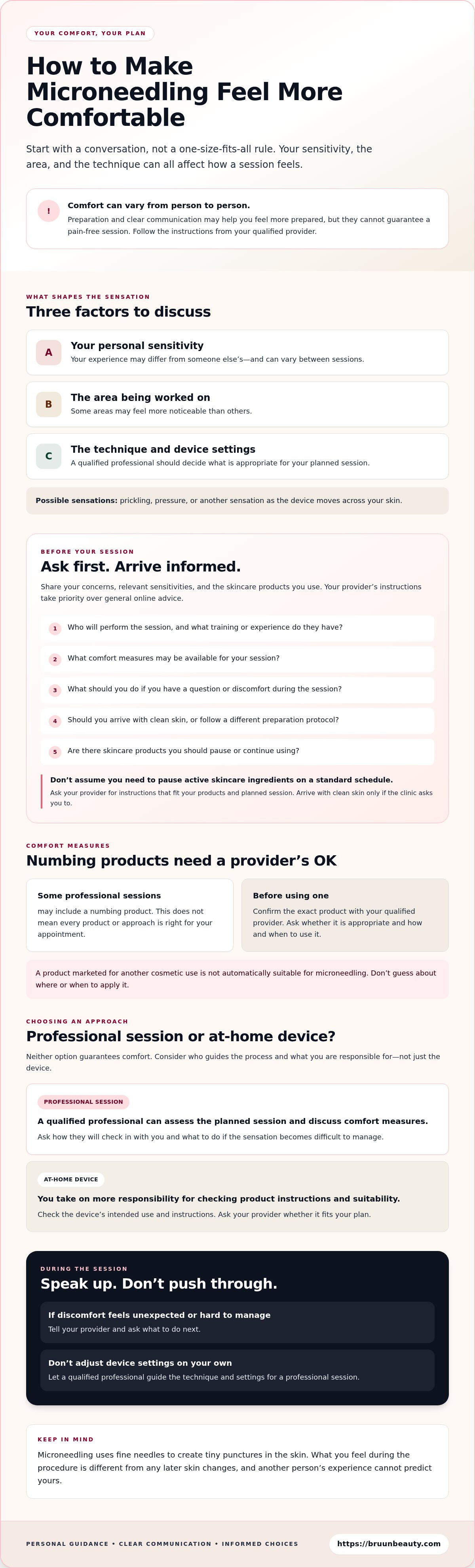
Preparation, clear communication, and appropriate professional guidance may help you feel more comfortable during a microneedling session. They can’t guarantee a pain-free experience. Sensation differs from person to person and may vary between sessions.
Personal sensitivity, the treatment area, and the technique used can all affect how microneedling feels. Knowing this can help you ask useful questions before your appointment and explain your experience during the session.
Microneedling uses fine needles to create tiny punctures in the skin. It’s also known as collagen induction therapy. What you feel during the procedure is different from any later skin changes, and another person’s experience can’t predict yours.
What does microneedling feel like?
You may notice prickling, pressure, or another sensation as the device moves across your skin. Some areas may feel more noticeable than others. There isn’t one sensation that applies to everyone, so ask your provider what you might experience during the specific session they’ve planned.
Why can microneedling feel more uncomfortable for some people?
Your sensitivity and the treatment area can influence how a session feels. Technique and device settings may matter, too. A qualified professional should determine what’s appropriate for your planned procedure instead of relying on a general rule.
Before the appointment, tell your provider what concerns you and whether you’ve had a different experience with a similar procedure. Ask how they’ll check in with you and what to do if the sensation becomes difficult to manage. This gives you both a chance to discuss comfort and next steps before the session begins.
If you’re comparing equipment and supplies, Bruun Beauty’s microneedling collection lets you browse relevant options. Browsing products isn’t a substitute for professional guidance. Ask your provider to explain the planned technique and settings for your session.
Preparing for a Comfortable Microneedling Session
Preparation can help you feel informed and ready to speak up during your appointment. Start by contacting the provider with your questions and concerns. Your provider’s instructions for your session take priority over general online advice.
What should you ask before your appointment?
Use the conversation to learn who will perform the procedure and what comfort measures may be available. Mention relevant sensitivities and the skincare products you use, then confirm the provider’s instructions for before and after the session.
- Who will perform the procedure, and what training or experience do they have?
- What comfort measures may be available for this session?
- Should I arrive with clean skin, or follow a different preparation protocol?
- Are there skincare products I should pause or continue using?
- What should I do if I have a question or discomfort during the session?
Don’t assume you need to stop active skincare ingredients on a standard schedule. Recommendations may depend on your products and planned procedure, so ask your provider for instructions tailored to you. Arrive with clean skin only if the clinic asks you to. Protocols can differ.
Can you use numbing cream before microneedling?
Some professional sessions may include a numbing product, but don’t choose or apply one without checking first. Ask your provider whether a specific product is appropriate and, if so, how and when to use it. Cleveland Clinic describes the use of numbing cream as part of some microneedling sessions. That doesn’t mean every product or approach is right for your appointment.
A product marketed for another cosmetic use isn’t automatically suitable for microneedling. Confirm the exact product and instructions with your qualified provider. Don’t guess about where or when to apply it, especially if you have questions about the ingredients or how the product fits your preparation plan.
After getting professional guidance, browse Bruun Beauty microneedling devices and supplies to compare available options. Use product information to support an informed discussion, not to replace your provider’s recommendations.
Compare Professional and At-Home Ways to Make Microneedling More Comfortable
Choosing a professional session or an at-home device changes who guides the process and what you’re responsible for. Neither option guarantees comfort. When considering how to make microneedling less painful, compare the oversight and planning involved, not just the device.
Professional session
Provider oversight: A qualified professional can assess the planned session and discuss comfort measures.
Comfort planning: You can share concerns and ask how the provider will check in during the procedure.
Your responsibilities: Confirm the provider’s experience and follow the instructions for your session.
At-home device
Provider oversight: A professional may not guide each use. Seek qualified guidance if you’re unsure whether at-home use is appropriate for you.
Comfort planning: Don’t assume a device or setting will feel comfortable based on its description or someone else’s experience.
Your responsibilities: Read the device maker’s instructions. Don’t use a device or setting just because you own it.
What can a professional session offer?
A professional can discuss the planned procedure, listen to your concerns, and explain which comfort measures may be available. Before booking, ask who will perform the session, what experience they have with the procedure, and which instructions apply to your appointment. A conversation can help you make an informed choice, but it can’t predict exactly how the session will feel.
What should at-home users consider?
At-home use calls for careful decisions, not improvisation. Follow the device maker’s instructions and ask a qualified professional for guidance if you’re unsure about use or suitability. Don’t change settings to try to manage discomfort. If you’re comparing options, Bruun Beauty’s DR. PEN device collection lets you review available devices, but browsing doesn’t determine which device or approach is right for you.
Cartridges are another product category to check. Review the device maker’s information for the device you’re considering, and don’t assume compatibility. Choose a device or cartridge based on its instructions and appropriate guidance, not as a shortcut to greater comfort.
Managing Discomfort During and After Microneedling
Knowing how to make microneedling less painful includes knowing when to speak up. You don’t need to push through discomfort that feels unexpected or difficult to manage. Agreeing on how to communicate beforehand gives you and your provider a clear plan.
How should you respond if the session feels too uncomfortable?
Before the session begins, ask how to signal that you need a pause. You might agree to raise your hand or use a short phrase. If discomfort becomes difficult to manage, use that signal and describe what you’re feeling so the person performing the procedure can respond.
Don’t stay silent because you’re worried about interrupting, and don’t try to adjust professional equipment yourself. The provider can decide whether to pause and discuss what comes next. If you’re using an at-home device, stop and refer to its instructions or seek qualified guidance rather than changing settings to push through discomfort.
What comfort questions should you ask about aftercare?
Before you leave, ask what sensations your provider expects afterward and which changes should prompt you to contact them. Follow their guidance for your session. If a reaction concerns you, reach out to the provider instead of trying to interpret it using a general online checklist.
Make your aftercare questions specific. Ask which products are appropriate for your skin and when you can resume your usual routine. Don’t add a new serum, exfoliant, or other active product unless your provider says it’s suitable. A product that works in your usual routine may not be the right choice immediately after a procedure.
- Which products should I use, and which should I avoid for now?
- When can I return to my usual skincare routine?
- What should I do if a sensation or skin reaction worries me?
Keep your provider’s instructions accessible so you can refer to them at home. If they haven’t explained what to expect or how to contact them with a concern, ask before the appointment ends. Clear aftercare instructions help you avoid guesswork when making decisions about your routine.
Choose Microneedling Products with Comfort and Professional Guidance in Mind
A product can help you understand your options, but a device or serum shouldn’t be presented as a way to reduce pain without evidence. If you’re considering how to make microneedling less painful, focus first on professional guidance and intended use, not comfort promises in marketing copy.
How do you compare devices and supplies?
Start with the setting you’re considering, such as a professional session or at-home use. Check the product description and manufacturer’s instructions for the specific intended use. If anything is unclear, ask a qualified professional or the manufacturer before deciding.
Use this checklist as you compare options:
- Intended setting: Is the device described for the setting you have in mind?
- Professional guidance: Has a qualified provider discussed whether that approach is suitable for you?
- Device instructions: Have you read the manufacturer’s directions and warnings?
- Cartridge information: Do the product details confirm compatibility with the device you’re considering?
- Comfort claims: Does the information explain how a feature changes sensation, or is it simply a product description?
DR. PEN devices and microneedling cartridges are distinct product categories. Don’t assume a cartridge will fit a device or that a particular feature will make use more comfortable. Check the manufacturer’s information for the specific device and cartridge, and ask for qualified guidance if you’re unsure.
How can skincare products fit into your routine?
Think of a serum as a skincare product, not a numbing product or a guaranteed comfort solution. Ask your provider whether a specific serum is appropriate for your planned session and when to use it. A product labeled for microneedling isn’t automatically suitable for every procedure or application.
Bruun Beauty offers the Advanced Microneedling Serum SD - Control Salmon DNA Ampoule Serum. The product name alone doesn’t establish that it reduces discomfort or that it’s appropriate for use during a procedure. Review the product information and follow your provider’s directions before adding it to your routine.
After reviewing professional guidance, browse the microneedling product collection to compare device and skincare categories. Use product details to guide your questions, not to replace advice from a qualified professional.
Make Your Next Microneedling Decision with Confidence
Learning how to make microneedling less painful starts with realistic expectations and a plan for your session. Sensations vary, so share your concerns, follow your provider’s instructions, and speak up if discomfort becomes difficult to manage. Don’t treat a device or serum as a comfort solution without evidence.
If you’re comparing at-home options, read the manufacturer’s instructions and confirm any questions with a qualified professional. Bruun Beauty offers DR. PEN devices and microneedling supplies, with orders shipping from warehouses in Miami and Los Angeles. Browse products to compare categories, not to replace advice about what’s appropriate for you.
For your next step, browse Bruun Beauty’s microneedling products and use the product details to prepare questions for your provider.
Frequently Asked Questions
Does microneedling hurt?
Microneedling can feel uncomfortable, but sensation varies from person to person. You might notice prickling or pressure. The area, technique, and your sensitivity can affect the experience. No one can promise a pain-free session. Ask your provider what to expect and how to signal if discomfort becomes difficult to manage.
How can I make microneedling less painful?
To learn how to make microneedling less painful, discuss your concerns and available comfort measures with a qualified provider before the session. Follow their preparation and aftercare instructions instead of a generic online schedule. Agree on a signal to pause, and speak up if the sensation feels unexpected or difficult to manage.
Can I use numbing cream before microneedling?
Check with your qualified provider before using numbing cream for microneedling. They can tell you whether a particular product is appropriate and explain how to use it if recommended. Don’t assume a cream marketed for another cosmetic purpose is suitable. Don’t choose a product or apply it based on someone else’s routine.
Is professional microneedling less painful than using a device at home?
Neither professional nor at-home microneedling is guaranteed to feel more comfortable. Sensation depends on factors such as personal sensitivity, the area, technique, and device use. A professional can assess the planned session and discuss comfort measures. At home, follow the device maker’s instructions and ask a qualified professional if you’re unsure about suitability.
What should I avoid before microneedling?
Ask your provider what to avoid before your specific session. Don’t follow a generic skincare pause schedule or start a new product because an online source recommends it. Confirm whether you should arrive with clean skin, too. Preparation guidance can vary, so follow the instructions from the person overseeing your procedure.
What should I do if microneedling feels too uncomfortable?
Tell the person performing the procedure as soon as discomfort becomes difficult to manage. Agree on a signal, such as raising your hand, before the session starts. Don’t push through distress or adjust professional equipment yourself. If you’re using a home device, stop and check its instructions or seek qualified professional guidance.
Can skincare serum make microneedling less painful?
Don’t assume a serum reduces microneedling discomfort unless reliable evidence supports that claim. Ask your provider whether a specific product suits your planned session and when to use it. Ingredients or marketing language don’t make a serum a numbing product. Follow professional guidance before adding products around the procedure.
Related Posts

Microneedling for Hair Loss at Home: What to Know

How to Get a Glass Skin Facial at Home in 2026

Alternating Microneedling and Chemical Peels: Complete Protocol Guide (2026)

How to Combine Microneedling with Other Treatments for Radiant Skin

Microneedling Healing Process Day by Day: Your 2026 Recovery Guide

How to Speed Up Healing After Microneedling: A Professional Recovery Guide
