

Assessing Microneedling Candidacy for Cellulite Reduction
Radiofrequency microneedling may temporarily smooth bumpy areas by supporting skin elasticity; a typical series involves 3-6 sessions spaced 4-6 weeks apart. Your goals and the area you want to address help shape candidacy, while lifestyle habits and at-home skincare can support your routine.
This guide explains what to expect from treatment and how professional options differ from at-home devices and products.
Key Takeaways
- Learn how radiofrequency microneedling differs from at-home skincare and what each approach may contribute to smoother-looking skin.
- Understand how cellulite’s underlying structure and your skin goals can shape whether a treatment approach may suit you.
- Explore practical lifestyle habits and topical skincare that can support the appearance of your results over time.
- See how to think about at-home devices and products as part of a broader skincare routine, rather than a guaranteed standalone solution.
- Find out how Bruun Beauty’s microneedling serum and other skincare offerings may fit into your routine.
Treatment candidacy
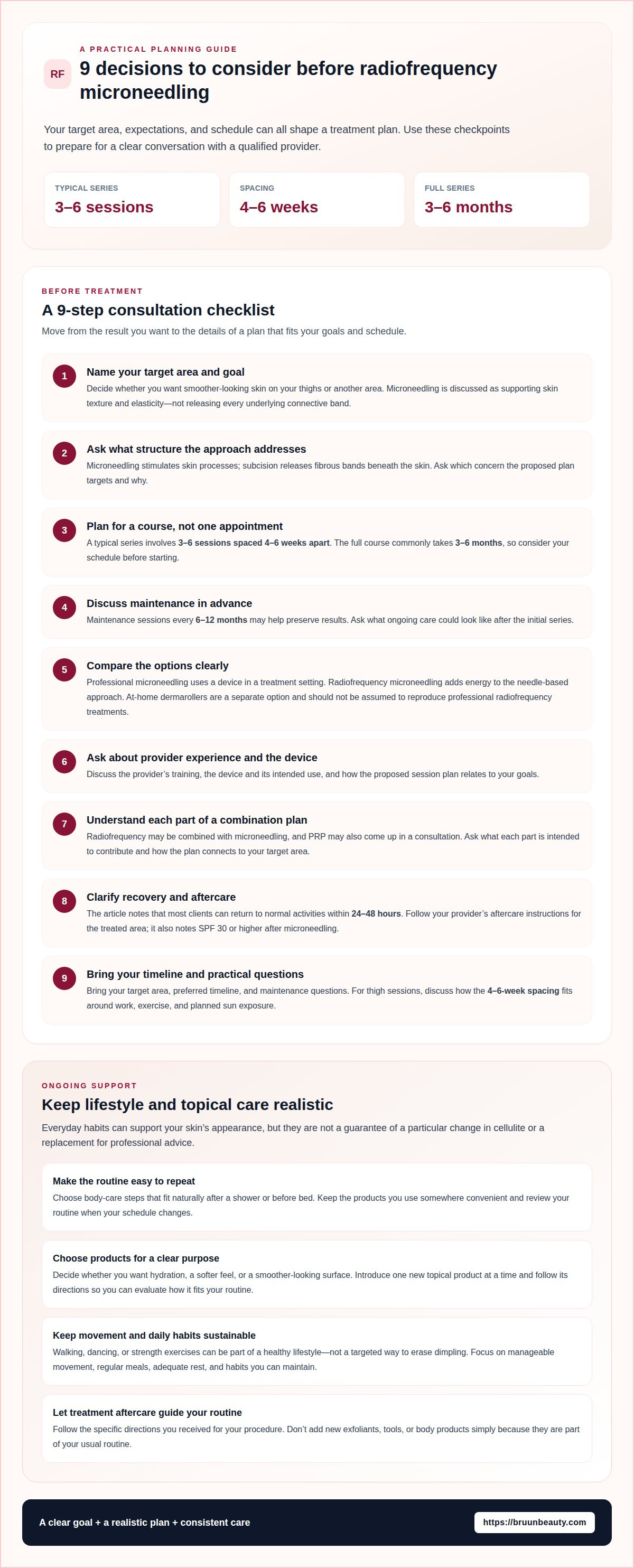
- Set a specific goal. Decide whether you want smoother-looking skin on your thighs or another area. Microneedling for cellulite is discussed as a way to support skin texture and elasticity, not as a method for releasing every underlying connective band.
- Compare the mechanism with subcision. Microneedling stimulates skin processes, while subcision releases fibrous bands beneath the skin. These approaches address different structures, so ask during a consultation which concern the proposed plan targets and why.
- Plan for a course, not a single appointment. A typical cellulite microneedling series involves 3-6 sessions spaced 4-6 weeks apart. The full series commonly takes 3 to 6 months, so consider your schedule before beginning treatments.
- Discuss maintenance before you start. Maintenance sessions every 6-12 months After completing a treatment series can help preserve results. Long-lasting cellulite or skin-tightening results cannot be achieved with only one, two or even three sessions, so plan around the full series.
- Compare professional, radiofrequency, and at-home options. Professional microneedling uses a device in a treatment setting; radiofrequency microneedling adds energy to the needle-based approach. At-home dermarollers are a separate option and should not be assumed to reproduce professional radiofrequency treatments. Explore professional microneedling equipment and supplies as a distinct category.
- Choose an informed provider. Ask about the provider’s training, the device, its intended use, and the proposed session plan. Ask how the provider’s training and experience relate to the device and your goals, and what to expect from the proposed plan.
- Discuss combination plans clearly. Radiofrequency can be combined with microneedling, and PRP may also come up in a consultation. Ask what each part is intended to contribute, how the plan is structured, and how it relates to your goal for your thighs or other areas.
- Set recovery expectations. Most clients can return to normal activities within 24-48 hours After treatment. According to ALC Med Spa, use SPF 30 or higher after microneedling; follow the provider’s aftercare instructions for the treated area.
- Keep the first appointment focused. Bring your target area, preferred timeline, and questions about maintenance to the consultation. For example, someone considering thigh sessions can ask how the 4-6-week spacing fits around work, exercise, and planned sun exposure.
Lifestyle and topical approaches to maintaining results
- Build a routine around your actual day. Choose body-care steps that fit naturally after a shower or before bed. A routine you can repeat is easier to maintain than several products you use only occasionally. For example, keep your chosen moisturizer with your everyday skincare items so it’s visible and convenient.
- Choose products for a clear purpose. Read the label and decide whether you want hydration, a softer feel, or a smoother-looking surface. These are practical skincare goals. Don’t expect a topical product to change deeper tissue structure or permanently alter cellulite. Use it for the skin benefits it is designed to provide.
- Keep new products easy to evaluate. Introduce one new topical product at a time and follow its directions. If you change several products at once, you won’t know which one suits your routine. A simple record of what you use can help you stay consistent without making body care complicated.
- Make movement sustainable. Choose regular activities that suit you, such as walking, dancing, or strength exercises. Treat movement as part of a healthy lifestyle, not as a targeted way to erase dimpling. A manageable habit is more useful than a short-lived routine focused on changing one area’s appearance.
- Keep daily habits balanced. Regular meals, adequate rest, and manageable routines support general well-being. They don’t guarantee a particular change in cellulite, since several personal factors affect its appearance. Focus on habits you can maintain rather than strict plans that promise to reshape skin or underlying tissue.
- Use professional aftercare instructions as your guide. If you’ve had a treatment, follow the specific directions for your skin and procedure. Don’t add new exfoliants, tools, or body products simply because they’re part of your usual routine. Resume familiar steps according to the guidance you received.
- Review your routine when it stops fitting. Seasonal dryness, travel, or a change in your schedule can make a simple routine harder to follow. Keep the core steps that suit your skin and remove extras you rarely use. The goal is practical skincare, not a long list of products.
- Keep product use separate from treatment claims. A serum or moisturizer can be part of topical care, while a device-based procedure has a different purpose. Explore microneedling skincare products as one category for professional routines, and follow each product’s own directions.
- Set a realistic standard for maintenance. Think of lifestyle and topical care as ongoing support for your skin’s appearance, not a replacement for professional advice or a guarantee of lasting change. If your priorities shift, simplify your routine and keep the steps that feel useful and easy to sustain.
Can Microneedling Really Reduce Cellulite?
- Define what “reduce” means for you. It may mean an area looks more even in everyday lighting, not that every dimple disappears. Write down the change you hope to see before choosing an approach. A clear target makes it easier to judge whether a proposed treatment matches your goal.
- Read treatment claims carefully. A claim about smoother-looking skin differs from a claim about removing cellulite. Check which outcome the claim describes and whether it refers to traditional microneedling or a radiofrequency combination. These are different approaches, so don’t assume results from one apply to the other.
- Ask how progress will be evaluated. Before starting, agree on a consistent way to review the treated area. For example, compare photos taken with the same lighting, posture, and viewing angle. This helps distinguish visible change from differences caused by shadows, camera position, or how you’re standing.
- Consider the exact area being discussed. A statement about facial skin doesn’t automatically describe results on the thighs or buttocks. Ask whether the information applies to the body area you’re considering and the specific device planned. That context is more useful than a broad claim about microneedling.
- Keep the treatment goal specific. If your main concern is uneven texture, describe where it appears and how you notice it. If you want a change in deeper contours, explain that too. A precise description helps distinguish your desired outcome from what a skin-focused approach is designed to address.
- Use follow-up to assess fit. At a review appointment, compare your observations with your original goal. Note what looks different and what remains unchanged. This gives you a concrete basis for discussing whether to continue the plan, adjust expectations, or consider another approach with the professional.
- Make a decision based on your priorities. Microneedling may be relevant when your focus is skin texture, while cellulite’s appearance can involve several factors. Ask the provider to explain the intended outcome in plain language. Choose a plan that aligns with that outcome, your preferences, and how you want to assess progress.
RF microneedling combines tiny needles with radiofrequency energy to stimulate the skin's healing processes and collagen production. It warms deeper skin layers and stimulates collagen and elastin production, cell turnover, and skin tightening. The page says deeper microneedling can stimulate collagen and elastin synthesis at depths up to 2 mm. Dr. Amanda Kahn described radio-frequency microneedling as a way to support skin laxity, sagging, and cellulite on body areas beyond the face. These effects describe intended skin responses, not a guaranteed change in cellulite’s appearance.
Cellulite characteristics and causes
- Identify the area and pattern you want to understand. Cellulite commonly appears on the thighs, hips, buttocks, and belly. Note whether dimpling is visible while standing, sitting, or changing position. This simple observation helps you describe the appearance you want to discuss without assuming every area has the same cause.
- Understand the basic structure beneath the skin. Cellulite occurs when fat pushes against connective tissue beneath the skin, creating a bumpy texture. The visible surface reflects how these structures meet across different layers. A needle-based skin approach works on the skin, so it may not address every deeper structural factor contributing to dimpling.
- Keep prevalence in perspective. Cellulite affects roughly 80-90% of women at some point. Its presence is common and doesn’t indicate a specific body size or fitness level. Use that context when setting a personal goal: focus on the appearance you want to improve, rather than treating cellulite as a measure of health.
- Consider how connective tissue is arranged. Cellulite is more common in women partly because fat, muscles, and connective tissue are arranged differently. Those structural differences can influence how fat presses against connective tissue and how visible the surface texture becomes. The pattern may vary across the thighs or hips, even for the same person.
- Review the factors that can influence visibility. Hormones, genes, diet, lifestyle, and skin thickness and stretchiness may affect how noticeable cellulite is. For example, two people with similar thigh dimpling may have different skin characteristics or family patterns. These factors help explain why cellulite can look different from person to person.
- Separate surface texture from deeper structure. A topical product sits on the skin’s surface, while cellulite involves fat and connective tissue beneath it. Microneedling also focuses on skin processes, so don’t assume it releases the bands associated with dimpling. This distinction helps align a treatment choice with the concern you want to address.
- Describe your concern precisely during a consultation. Name the area, such as the outer thighs, and explain whether you notice shallow rippling or more defined dimples. Mention how the texture looks in different positions. Specific examples help a professional discuss the skin and tissue features involved and what an approach may realistically target.
- Use anatomy to set a useful goal. Since cellulite reflects interacting structures and personal factors, aim for a change in visible texture rather than a promise of complete removal. For instance, you might focus on whether thigh skin looks more even in consistent lighting. That goal reflects the difference between improving appearance and changing underlying anatomy.
At-home products and devices
- Separate surface care from device treatments. Body lotions and serums can support hydration and the look of smooth skin, but they don’t release the connective bands linked with cellulite. Think of topical care as routine skin support, not a substitute for professional treatment or a way to reshape deeper tissue.
- Set a clear purpose for an at-home device. Don’t assume a dermaroller or other microneedling device reproduces professional radiofrequency microneedling. Radiofrequency adds energy that warms deeper skin layers, while a basic roller doesn’t offer the same combination. Choose a device only for its stated purpose and use instructions.
- Keep body and face goals distinct. A device designed for facial skincare isn’t automatically appropriate for large areas such as the thighs. Before using any device on your body, follow its directions and consider whether its intended use matches your goal. A professional assessment can help clarify where a device fits in a broader plan.
- Don’t chase deeper results at home. More pressure or repeated passes don’t mean a better outcome. Skin texture depends on the area, the device, and individual characteristics. Follow the device directions, and leave decisions about professional treatment settings to a qualified provider.
- Choose topical products for your routine. Look for skincare that supports comfortable, hydrated skin and follow the product directions. Ingredients applied to the surface don’t reach the same structures as professional treatments. For example, a moisturizer may improve the feel of dry thigh skin without changing the underlying cause of dimpling.
- Give skin time between changes. Avoid adding several new products and devices to your routine at once. Introduce one change at a time, follow its directions, and note how your skin looks and feels. This makes it easier to identify which step supports your routine without confusing topical effects with gradual collagen production.
- Understand the role of stimulated skin processes. Professional microneedling is designed to stimulate skin processes, including collagen activity. At-home products don’t trigger the same professional treatment process. If your goal is to address cellulite’s appearance, use skincare for routine support and discuss device-based options with a qualified professional.
- Make consistency practical. Choose a simple routine you can repeat, such as applying body moisturizer after bathing and recording changes under similar lighting. If you’re considering a device, read its directions first and keep your goal realistic: supporting skin appearance is different from eliminating cellulite.
Bruun Beauty
Bruun Beauty offers estheticians and advanced at-home skincare enthusiasts products for microneedling and skincare routines. If you’re planning professional microneedling, the Advanced Microneedling Serum SD - Control Salmon DNA Serum may complement your skincare setup. Jelly Mask Kits and BB Glow Treatment Supplies offer additional options for broader facial-care routines, rather than cellulite-specific treatments.
Use these products as part of a considered skincare approach, not as a promise to remove cellulite. For questions about which offering fits your routine, contact Bruun Beauty.
Choose a Next Step That Fits Your Goals
Before choosing microneedling for cellulite reduction, decide what change would feel meaningful to you. You might focus on smoother-looking skin in a particular area or on maintaining a consistent skincare routine between professional appointments. A clear goal makes it easier to compare approaches without expecting one product or device to address every factor behind cellulite.
For your next conversation with a skincare professional, bring your main questions and describe the area you want to focus on. Ask how the suggested approach aligns with your goal and what role at-home skincare can play alongside it. Because results vary, a plan should account for your skin, preferences, and the difference between improving surface appearance and changing underlying structures.
Explore Bruun Beauty’s skincare products for a considered microneedling routine, whether you’re a professional or an advanced at-home skincare enthusiast.
Choose your next step with care, and keep your skin goals grounded in what matters to you.
Frequently Asked Questions
How Does Traditional Microneedling Work?
Traditional microneedling uses a device with fine needles to stimulate the skin’s natural processes. For cellulite concerns, its focus is skin texture and elasticity, not releasing connective bands beneath the skin. For example, a professional may discuss it when your goal is smoother-looking thigh skin, while explaining how that differs from procedures aimed at deeper structures.
How Many Treatments Will You Need?
A typical cellulite microneedling series involves 3-6 sessions, usually spaced 4-6 weeks apart. The right plan depends on the treatment approach, area, and your goals. Use the initial consultation to discuss the full schedule and follow-up, rather than judging the approach by one appointment. A single session doesn’t represent the expected course.
How Long Do Results Last?
Results vary, and microneedling shouldn’t be viewed as a permanent change to cellulite. Maintenance sessions every 6-12 months After completing a treatment series can help preserve results. Keep in mind that changes in skin appearance and the factors influencing cellulite may continue over time. Discuss maintenance in relation to your personal goals and treatment plan.
What Is Cellulite And Why Does It Look That Way?
Cellulite is a dimpled or uneven skin appearance created by the interaction between fat and connective tissue beneath the skin. The pattern can look different across areas such as the hips and thighs. Hormones, genes, lifestyle, and skin characteristics also influence visibility, so the same approach may not produce identical changes for everyone.
What Results Can You Reasonably Expect?
You may notice temporarily smoother-looking skin as elasticity improves, but keep expectations focused on appearance rather than cellulite removal. For instance, a change in how thigh texture looks under consistent lighting is a more practical measure than expecting every dimple to disappear. Outcomes depend on personal skin characteristics and the treatment approach.
Why Is Cellulite So Hard To Treat With Surface-Level Procedures?
Cellulite involves structures beneath the skin, while creams and other surface-level products mainly support the outer skin. A moisturizer may make dry skin feel softer, for example, without changing the connective bands associated with dimpling. This difference explains why topical care can complement a routine but shouldn’t be expected to address every source of uneven texture.
Does microneedling reduce the appearance of cellulite, and what does the evidence show?
Microneedling for cellulite reduction may temporarily improve the look of bumpy areas by supporting skin elasticity, but results vary. Radiofrequency microneedling combines needles with energy that warms deeper skin layers. These approaches focus on skin quality; they don’t release fibrous bands. When weighing the available information, consider the intended effect, treatment plan, and your own goal.
What results can people expect from microneedling for cellulite, and how long do they last?
People may see smoother-looking skin, but the degree and duration of change differ. Results aren’t the same as permanent removal, and maintenance may be part of a longer-term plan. Compare photos taken under similar lighting and posture, then discuss your observations during follow-up. This gives you a more consistent way to assess visible changes.
Are Glass Skincare Ampoules Safe to Open? How They Work
Are Glass Skincare Ampoules Safe to Open? How They Work
Related Posts

Are Glass Skincare Ampoules Safe to Open? How They Work

Cica vs Niacinamide for Redness: Which Calms Skin Faster

Complete Dr Pen M8 Instructions: Guide for Success

PDRN Benefits for Skin: Regeneration, Results and Safety

How to Dispose of Used Microneedle Cartridges Safely

Self-care rituals for better skin through mindful daily habits
