

Ways to ease microneedling redness and support skin recovery
More redness doesn’t mean better results. What helps with microneedling redness is gentle cooling, simple hydration, and giving your skin a break from irritating products. Redness is often most noticeable in the first 24 hours, and skin can look sunburned for the first three days.
It’s understandable to want warmth and redness to fade quickly, especially when your skin feels tight or sensitive. Aftercare should focus on comfort, not extra steps. A cool compress may soothe warmth, while ingredients such as hyaluronic acid and ceramides can support moisture and the skin barrier.
You’ll learn what redness can look like after microneedling, how long it may last, and which cooling and hydrating options can help your skin feel more comfortable as it settles. We’ll also cover what to avoid to keep your routine gentle during recovery.
Key Takeaways
- Use a cool, not frozen, compress for warmth, and follow your practitioner’s guidance before applying it.
- Know which changes can be part of the recovery process, including temporary tightness, dryness, or flaking.
- Keep your routine gentle: cleanse carefully, avoid picking, and pause irritating products while your skin is sensitive.
- Learn how hyaluronic acid, ceramides, and aloe vera can support a more comfortable, hydrated-feeling complexion.
- Choose post-procedure skincare with a simple approach, and use the serum recommended for your treatment.
1. Expected redness and skin appearance after treatment
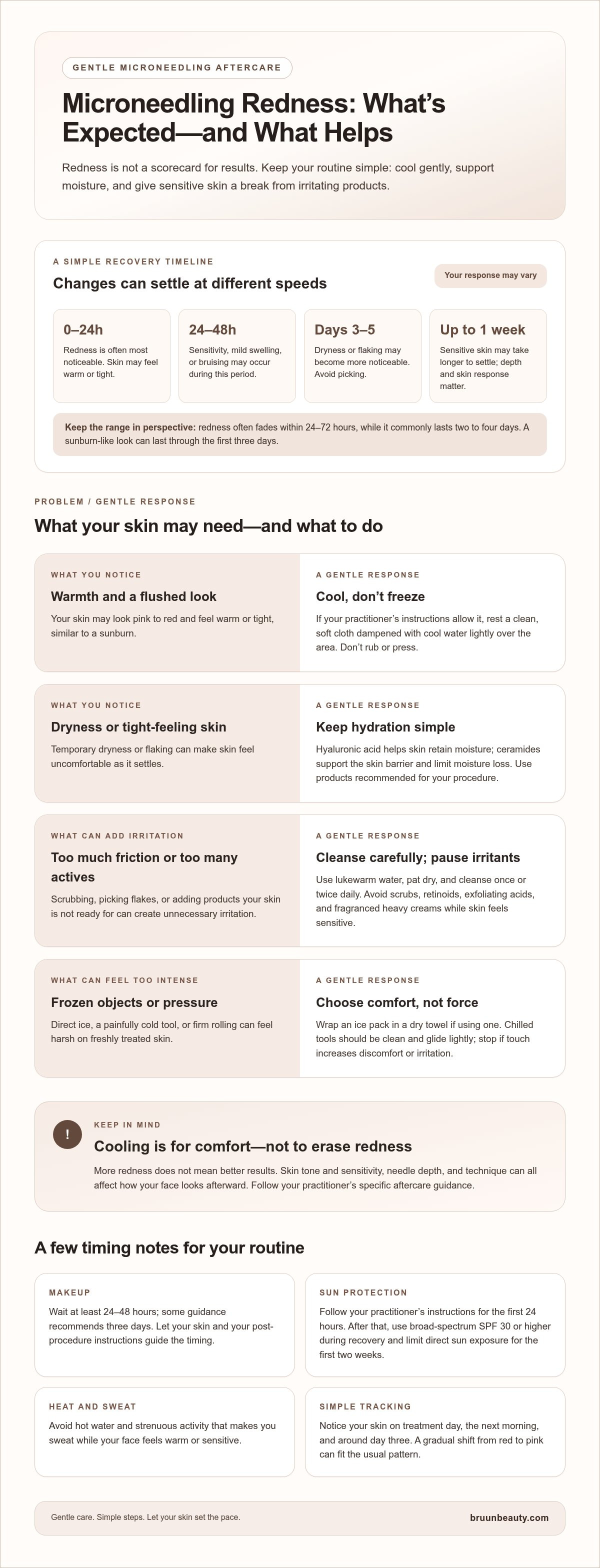
Immediately after microneedling, your skin may look pink to red and feel warm or tight, much like a sunburn. Redness is often most noticeable during the first 24 hours, and a sunburn-like appearance can last through the first three days. Mild swelling, bruising, or extra sensitivity may also occur during the first 48 hours.
That flushed look reflects a temporary response to the procedure, not a scorecard for results. More redness does not mean you’ll get better results; skin tone and sensitivity, needle depth, and technique all affect how your face looks afterward. Redness often fades within 24-72 hours, though some people take longer.
If you’re wondering what helps with microneedling redness, start with a simple routine rather than layering new serums. Hyaluronic acid helps skin retain moisture, while ceramides support the skin barrier and limit moisture loss. Aloe vera is another ingredient suggested for post-treatment irritation. Use only products recommended for your procedure, since freshly treated skin may react to ingredients it usually tolerates.
Cleanse gently with lukewarm water, then pat your face dry instead of rubbing with a towel. Cleanse once or twice daily, and follow your practitioner’s instructions about when to apply moisturizer or other skincare. Avoid fragranced heavy creams, scrubs, retinoids, and exfoliating acids while your skin feels sensitive. These steps help prevent unnecessary irritation.
At-home devices don’t automatically cause more redness or irritation than professional treatments. Your response depends on factors such as needle depth, pressure, technique, and skin sensitivity. Aggressive or poorly controlled use can increase irritation in either setting.
Hold makeup for at least 24 to 48 hours after microneedling; some guidance recommends waiting three days. Makeup can add friction and expose sensitive skin to ingredients that sting, so let your skin’s appearance and your post-procedure instructions guide the timing. When you do resume it, choose a lightweight formula and apply it gently.
A simple plan makes these early changes easier to interpret: note your skin’s appearance on treatment day, the next morning, and around day three. A gradual shift from red to pink can fit the usual pattern. The microneedling collection can help you explore supplies and skincare options related to the procedure.
2. Cold compresses and chilled tools for redness
A cool compress can ease the warm, flushed feeling after microneedling. Choose cool, not frozen, contact, since intense cold can feel harsh on freshly treated skin. Use a compress only if it fits the aftercare instructions you received, especially if your practitioner gave you specific guidance.
For a simple option, dampen a clean, soft cloth with cool water. Rest it lightly over the area without rubbing, pressing, or dragging it across your face. If you use an ice pack, wrap it in a dry towel first. Never place ice directly against skin after microneedling.
Keep the goal modest: comfort, not making redness disappear. A cool compress may ease warmth and soothe bothersome redness, but it doesn’t determine your results. If your skin feels more irritated while using it, remove it and return to the gentle skincare routine recommended for you.
Chilled skincare tools can also feel soothing, but they should glide without pressure. Use a clean tool, avoid rough edges, and keep movements light. Don’t press a roller or another chilled object into your skin after microneedling. Skip tools if touching the area feels uncomfortable or increases irritation.
Temperature matters more than elaborate equipment. A cool cloth offers a simple, controlled approach, while a frozen object can be too intense. Don’t apply a chilled tool straight from the freezer. If it feels painfully cold on your hand, it’s not gentle enough for sensitive facial skin.
Keep the rest of your routine calm while your face feels warm. Avoid hot water and strenuous activity that makes you sweat, since heat and sweat can irritate sensitive skin. Don’t add exfoliating products or fragranced skincare just because redness remains. Cooling is a comfort step, not a reason to layer on extra products.
Sun protection is another important part of aftercare. Follow your practitioner’s instructions about the first 24 hours, then use broad-spectrum SPF 30 or higher during recovery. Limit direct sun exposure, especially from 10 a.m. to 4 p.m., and use shade or a hat when outdoors.
A cool compress is a practical option when warmth bothers you; sunscreen protects skin during the days that follow. For treatment-related skincare, you can explore the microneedling skincare collection as you build a simple, gentle routine.
3. How Long Does It Take For Your Skin To Recover After Microneedling?
Redness and sensitivity often ease within 24 to 48 hours after microneedling, but your skin’s recovery can continue beyond that. Redness commonly lasts two to four days, while sensitive skin may need up to a week to settle. The treatment depth and your skin’s response influence the timeline.
Limit direct sun exposure during the first two weeks after microneedling. After the first 24 hours, use broad-spectrum SPF 30 or higher, and follow your practitioner’s instructions for your skin. Avoid prolonged exposure during peak sunlight hours, from 10 a.m. to 4 p.m.
Surface recovery takes several days, and dryness or flaking may increase three to five days after treatment. This temporary change can make your face feel tight or look uneven, so don’t pick at flakes. Deeper collagen and elastin processes may continue for several months, even after visible redness fades.
Keep microneedling aftercare simple while your skin feels sensitive. A plain hyaluronic acid serum can help your skin retain moisture during the first 72 hours, while ceramides support the barrier and limit moisture loss. Choose products recommended for post-procedure use, and avoid adding unfamiliar ingredients while irritation remains.
Use lukewarm rather than hot water to cleanse, since hot water can irritate freshly treated skin. Follow your practitioner’s timing instructions before washing; after treatment, wait at least four hours before patting your skin dry. Use a clean, soft towel and press gently. Rubbing adds friction when your skin is already sensitive.
After cleansing, apply a suitable moisturizer only if your post-procedure instructions allow it. Hydration can support comfort, but layering several serums or creams makes it harder to identify an irritating ingredient. Drink water as part of your routine, and keep products simple while your skin’s barrier feels delicate.
Use visible changes to guide your routine, not as a reason to restart every active at once. Redness may soften to pink between 24 and 48 hours, while dryness can show up later. Reintroduce regular products gradually as sensitivity eases, and keep retinoids and exfoliating acids paused until your skin is ready.
If redness or sensitivity continues, focus on gentle cleansing, hydration, and sun protection rather than stronger products. Your skin may look calm before deeper recovery is complete, so don’t judge the procedure by how it looks on a single day. Patience and consistent aftercare give your skin room to return to its usual routine.
4. Aftercare to support hydration and barrier repair
After microneedling, keep your routine predictable instead of testing several new products. A short routine makes it easier to notice which steps feel comfortable and which may irritate sensitive skin. Follow your post-procedure instructions for product timing, since your skin’s condition and treatment plan determine what to apply.
When cleansing is allowed, use clean hands and lukewarm water. Gently move your fingertips over the skin instead of using a cleansing brush, washcloth, or scrub. Rinse carefully, then press a clean towel against your face to absorb water. Don’t drag it across your skin.
Choose products with simple formulas for your first post-session routine. Heavy creams and fragranced lotions may irritate freshly treated skin, so read the ingredient label before applying anything. If a product is new to you, don’t introduce it alongside several other new steps. That makes it harder to identify what your skin dislikes.
Apply only the serum or moisturizer permitted by your aftercare instructions. Follow its label for the amount and application method, and don’t layer multiple serums just because your skin feels tight. If a step causes stinging or increased irritation, stop using it and return to the basic routine recommended for your session.
Daily habits matter, too. Keep your hands away from your face, and don’t pick at flaking or scabbing areas. Use a clean pillowcase while your skin is regenerating, and avoid strenuous workouts for 24 to 48 hours. Sweat and repeated face-touching can add irritation when skin feels sensitive.
Drink water as part of your usual routine, but don’t rely on it instead of topical aftercare. Dry-feeling skin may need an approved moisturizer, while a complicated lineup of products can introduce avoidable irritants. Keep the goal practical: follow a routine without rubbing, picking, or adding unnecessary steps.
As sensitivity eases, gradually reintroduce your regular skincare. Wait five to seven days before adding products back, and monitor your skin’s response to each change. For example, restart one familiar product before adding another active ingredient. If tightness or irritation returns, pause the new step and simplify your routine again.
Consistent aftercare means making fewer, gentler choices instead of chasing instant changes. A simple cleanser, approved moisturizer, and post-procedure serum may be enough for your routine. Let your skin’s comfort guide each step, and follow the specific instructions for your microneedling session.
5. Hyaluronic acid, ceramides, and aloe vera
After microneedling, choose ingredients for comfort and moisture, not a dramatic overnight change. Hyaluronic acid, ceramides, and aloe vera each serve a different role in a simple skincare routine. Use products intended for post-procedure skin, and follow the instructions given at your appointment.
Hyaluronic acid helps skin retain moisture, which can ease the dry, tight feeling that sometimes follows a session. A plain hyaluronic acid serum is suggested for the first 72 hours after microneedling. Apply it according to product directions, and avoid combining it with several new serums while your skin is sensitive.
Ceramides support the skin barrier, the outer layer that helps limit moisture loss. A moisturizer containing ceramides can be practical when your face feels dry. Keep the formula simple and fragrance-free; heavy, scented creams may cause irritation rather than comfort. Follow your post-procedure instructions about when to apply moisturizer.
Aloe vera is another ingredient suggested after microneedling to soothe irritation and redness. Choose a straightforward product rather than one crowded with unfamiliar ingredients. “Soothing” on a label doesn’t guarantee that every ingredient suits freshly treated skin, so patch testing before your appointment can help you learn what your skin tolerates.
These ingredients don’t need to compete in a complicated routine. For example, use a post-procedure hyaluronic acid serum when your instructions allow, then apply a ceramide moisturizer if approved. Aloe vera can be an alternative soothing step. Introduce one product at a time so you can identify what feels comfortable.
Resist adding vitamin C, retinoids, or exfoliating acids just to speed collagen-related changes. Microneedling already prompts processes beneath the skin’s surface, and additional active ingredients can irritate a sensitive complexion. Gradually resume your regular products, following your practitioner’s guidance and watching for stinging, increased redness, or tightness.
The clearest takeaway: prioritize hydration and barrier support, then keep the rest of your routine simple. Hyaluronic acid helps retain moisture, ceramides help limit moisture loss, and aloe vera offers a soothing option. These ingredients support skin comfort; they don’t determine the procedure’s results or replace your aftercare instructions.
Keeping the goal modest can simplify product choices: look for moisture retention and barrier support rather than making several changes at once. Hyaluronic acid is suggested after microneedling because it helps retain moisture and plump the skin. Ceramides are suggested because they strengthen the skin barrier and help prevent moisture loss. These roles can guide your choice between a hydrating product and a barrier-supporting moisturizer without requiring a crowded routine.
When comparing options, consider whether a product fits your recovery instructions and whether its formula is familiar to your skin. A simple approach makes it easier to notice how your face responds, instead of making it difficult to tell which new product feels comfortable. Focus on supporting moisture and the skin barrier, and let your practitioner’s guidance determine when to make further changes.
Bruun Beauty: Advanced Microneedling Serum SD - Control Salmon DNA Ampoule Serum
Advanced Microneedling Serum SD - Control Salmon DNA Ampoule Serum is one option for a microneedling skincare routine. Keep post-procedure steps gentle, and use products only as directed for your skin and session.
A serum doesn’t replace cooling, hydration, or the aftercare instructions from your practitioner. If you’re choosing products for professional or at-home use, keep your routine simple and avoid introducing multiple unfamiliar ingredients at once. The serum’s full name and product details are available on the Salmon DNA ampoule serum page.
For skincare that aligns with your microneedling routine, visit bruunbeauty.com and explore the available options.
Make Your Next Skincare Step a Thoughtful One
Knowing what helps with microneedling redness can also help you prepare for your next session. Note which products felt comfortable and any ingredients that caused stinging. This record can help you build a simple routine with your skincare professional.
For a professional or at-home setup, Bruun Beauty offers the Advanced Microneedling Serum SD - Control Salmon DNA Ampoule Serum, Jelly Mask Kits, and advanced microneedling devices. Choose products based on your routine and intended use, and follow the aftercare instructions for each session.
Explore Bruun Beauty’s microneedling skincare options to find products that fit your approach.
Keep your routine gentle, listen to your skin, and take your next step with care.
Frequently Asked Questions
Does More Redness Mean Better Results?
No. Redness reflects your skin’s response to the procedure, not its outcome. Treatment depth, technique, and individual sensitivity can affect how much flushing you see. If you’re comparing your skin with someone else’s, remember that different responses don’t show which session was more effective.
How Long Does Skin Recovery Take After Microneedling?
Visible changes can settle within several days, but sensitive skin may take up to a week to feel comfortable again. Skin can also look calm before deeper collagen and elastin processes finish, which may take several months. These are different stages, so the mirror doesn’t show every change happening beneath the surface.
How Long Will My Face Stay Red After Microneedling?
Facial redness may last at least 24 hours and can remain visible for up to three days. Skin type and treatment depth affect the pattern. If you need to plan around an event, allow room for lingering pinkness rather than assuming redness will be gone by a particular morning.
How Long Does Redness Usually Last?
Redness commonly fades within 24-72 hours, though it can last two to four days. Those ranges reflect different skin responses and procedure depths, not a guarantee for an individual session. To describe your progress accurately, note whether the color is fading, staying steady, or becoming more pronounced.
Should I Moisturize After Microneedling?
Ask the practitioner who performed your procedure before applying moisturizer or other skincare. Products that feel comfortable in your everyday routine may sting on freshly treated skin. If moisturizer is approved, choose a simple formula and follow its directions rather than layering multiple creams or serums to address the same dry feeling.
When Can You Use Actives Again?
Wait at least a week before using retinoids, AHAs, or BHAs, and follow your dermatologist’s guidance. Restarting one product at a time makes sensitivity easier to spot. For example, don’t reintroduce a retinoid and an exfoliating acid on the same night; separate changes help you identify what your skin tolerates.
How Long Does Redness Last After Microneedling?
Most redness eases over the first few days, but the exact duration depends on your skin and the procedure. To track changes, take a photo in consistent lighting instead of comparing different mirrors or indoor lighting. This makes it easier to tell whether the redness is genuinely changing over time.
What Redness Is Normal, and What Could Signal a Complication?
Pinkness, warmth, tightness, and mild swelling can occur after microneedling. Contact the practitioner responsible for your procedure if pain increases after the first 24-48 hours, or redness becomes severe or worsens after day four. Describe when the change began and how it has progressed so they can assess the situation.
Advanced Dr. Pen Techniques: The Professional Esthetician's Guide to Results
Advanced Dr. Pen Techniques: The Professional Esthetician's Guide to Results
Related Posts

Consistent Microneedling and the Long-Term Changes to Expect

Aftercare choices to lower infection risk at home after microneedling

How to Create a Relaxing At-Home Spa Day With Simple Rituals

Sunscreen Recommendations After Microneedling: How to Protect Healing Skin

Investing in my skin for the future: what deserves my budget

Post-microneedling skincare routine for masks, makeup, and recovery

Skin Peeling After Microneedling: What to Avoid and When to Resume Makeup
