

How to Choose Safer Microneedling for Melasma-Prone Skin
A skin-conscious microneedling approach for melasma-prone skin considers your skin tone and Fitzpatrick type, along with a gentle, consistent skincare routine. Skin tone can help guide your approach. This guide covers general considerations for keeping your skincare routine measured and focused on nourished, glowing skin.
Key Takeaways
- Build a steady sun-protection and gentle skincare routine around your session to support a calm-looking complexion.
- Consider your skin tone, Fitzpatrick type, and how melasma appears when planning a cautious approach.
- Understand how professional oversight and at-home routines differ, especially when choosing treatment settings.
- Favor a gentle approach that prioritizes skin comfort, thoughtful spacing, and consistent aftercare over intensity.
- Explore how Advanced Microneedling Serum SD - Control Salmon DNA Ampoule Serum and Jelly Mask Kits can fit into a skincare routine.
How to Support Melasma-Prone Skin Before and After Microneedling
A simple routine before and after microneedling helps keep care consistent and your complexion calm. Plan your skincare around the session, prioritizing sun protection and gentle steps.
Prepare Skin for a Calm-Looking Treatment
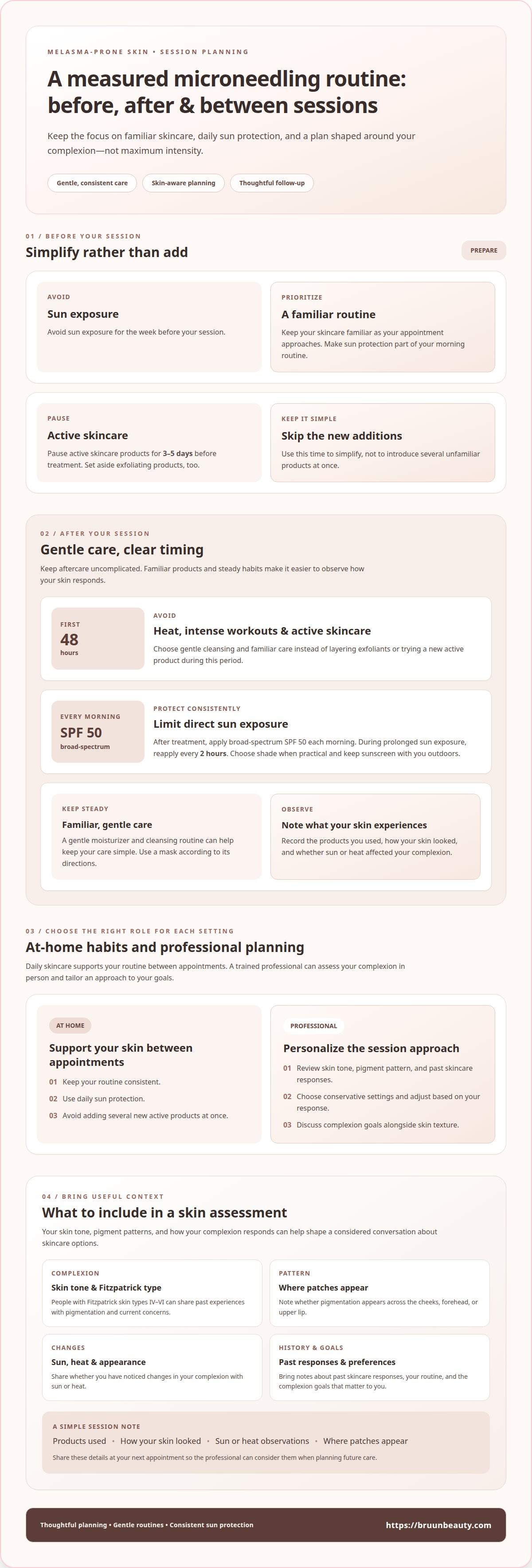
Keep your routine familiar as your appointment approaches. Avoid sun exposure for a week beforehand, and pause retinoids and other active skincare products three to five days before treatment. This limits additional stimulation from sun and active ingredients while your skin prepares for a session.
Treat preparation as a chance to simplify, not add steps. If you rotate exfoliating products during the week, set them aside before treatment. Avoid aggressive exfoliation until your skin has healed, and don’t introduce several unfamiliar products at once. A steady routine makes it easier to notice how your skin responds.
Make sun protection part of your morning routine. After treatment, apply broad-spectrum SPF 50 each morning and reapply every two hours during prolonged sun exposure. Limit direct sun exposure, too. For example, plan outdoor errands around shade when practical, and keep sunscreen with you for extended time outside.
Keep Aftercare Gentle and Consistent
For at least 48 hours after a session, avoid heat, intense workouts, and active skincare products. Choose gentle cleansing and familiar care instead. If you’re deciding what to use, keep the routine uncomplicated rather than layering exfoliants or trying a new active product during this period.
Build a comfortable routine around products you already tolerate. A mask can be a soothing step when used according to its directions, while a gentle moisturizer keeps your routine simple. Avoid aggressive exfoliation until your skin has healed. If new dark patches appear, or existing patches deepen beyond the first week, pause active skincare and consult a qualified provider.
Note your routine and skin observations after each appointment. Record which products you used, how your skin looked, and whether sun or heat affected your complexion. Share these details at your next appointment so the professional can consider them when planning future care.
Keep the focus on steady habits, not a crowded routine. Consistent sun protection, gentle product choices, and attentive observation support a considered approach to melasma-prone skin. Explore microneedling skincare products as one part of the products you consider for your routine, alongside the aftercare guidance for your session.
How Skin Tone and Melasma Type Shape Your Microneedling Plan
Your skin tone, pigment patterns, and how melasma appears all matter when considering microneedling. A skin assessment can help you understand your complexion and discuss suitable options with a skincare professional.
Understanding Your Complexion
Melasma can look different from one person to another. Noting your skin’s tone, texture, and pigment patterns gives you and your skincare professional useful context for a personalized skincare plan. Keep your complexion goals and comfort in focus as you discuss your options.
Deeper Skin Tones and Complexion Patterns
Deeper skin tones may have distinct pigment patterns and complexion goals to consider. People with Fitzpatrick skin types IV-VI can share their past experiences with pigmentation and their current concerns during a skin assessment. A skin professional can consider your tone and melasma pattern rather than relying on a one-size-fits-all plan.
Melasma Type and Skin Assessment
A skin assessment considers where melasma appears and what it looks like. For example, pigmentation across the cheeks may differ in appearance from patches on the forehead or upper lip. Sun exposure, hormones, and heat can all affect melasma. A formal evaluation provides useful context as you explore skincare options.
Planning Your Skincare Approach
Your skincare approach should reflect your complexion, preferences, and skin assessment. A skincare professional can help you discuss options that fit your goals and routine. Focus on choosing an approach that supports comfortable-looking skin and a complexion you feel good about.
Bring specific observations to your consultation: where patches appear, whether they change with sun or heat, and how your skin responded to past treatments. These details help you discuss your complexion goals and skincare options. A personalized assessment can help you make informed choices about your skincare approach.
A simple skincare routine can support comfortable-looking skin between appointments. Explore microneedling skincare options as you consider which products fit your routine.
At-Home vs. Professional Microneedling for Melasma-Prone Skin
At-home skincare and professional microneedling have different roles in a complexion-conscious routine. Daily products support your skin between appointments, while a trained professional can assess your complexion and tailor an approach to your skincare goals.
A professional skin evaluation can help you understand your complexion and its needs. A professional can review your skin tone, pigment pattern, and past responses to skincare, then discuss whether microneedling aligns with your cosmetic goals. Sun exposure, hormones, and heat can also affect the appearance of pigmentation.
At home, focus on skincare habits rather than trying to copy an in-office treatment. Keep your routine consistent, use daily sun protection, and avoid adding several new active products at once. For example, if your skin becomes easily irritated after exfoliation, simplify your routine before discussing a device-based session. Familiar, gentle care makes it easier to notice how your skin responds.
Professional microneedling offers a different kind of control. A qualified practitioner can assess your skin in person, choose conservative settings, and adjust the approach based on your response. This assessment can be helpful if you have deeper skin or patches that change in appearance. The aim is a considered approach, not maximum intensity.
Microneedling is also discussed in connection with collagen production and skin texture. Those goals don’t replace an assessment of your complexion. An approach for uneven texture may need adjustments for pigment-prone areas. Discuss both concerns together so the approach accounts for your complexion, rather than focusing on just one visible feature.
At-home devices can make skincare more hands-on, but convenience alone doesn’t establish that a device or technique suits your skin. If you are considering an at-home electronic device, first understand how it fits into your overall skincare goals. Explore reliable microneedling devices as equipment options, and base your choices on a professional skin assessment.
- At home: Keep daily skincare simple and consistent.
- In a professional setting: Use an in-person assessment to inform your skincare choices.
- For texture goals: Discuss collagen and pigmentation together, not as separate concerns.
Choose an approach that supports careful decision-making. For skin with visible pigmentation, that often means separating routine home care from device use and getting a professional evaluation before proceeding. Advanced aesthetic practices like davamaesthetics.com can evaluate your skin tone, pigment pattern, and texture goals together, helping you make an informed choice about your treatment plan.
Choosing a Gentle Microneedling Approach for Melasma-Prone Skin
If you have melasma-prone skin and are considering microneedling, discuss your skincare goals with a qualified professional first. They can review your skin’s current appearance and help you understand whether microneedling fits your goals.
Discuss Your Skincare Goals
Be clear about what you want to address, such as uneven texture or visible pigmentation. These concerns may overlap, so share your priorities with a qualified professional before deciding on an approach. They can discuss whether microneedling fits your goals.
Talk About the Areas You’re Concerned About
Share which areas you’re concerned about with a qualified professional. Melasma can appear on the cheeks, forehead, nose, and upper lip, and pigment patterns can vary. Discussing the areas you have in mind can help you have a focused conversation about your skincare goals.
Have a Clear Conversation About Your Skin
Before an appointment, share how your skin currently looks and mention any changes you’ve noticed. This gives the professional helpful context for discussing your goals. If you have questions about an area that looks different, bring them up during your conversation.
Share any changes in color, texture, or sensitivity with the professional. This information can help guide a conversation about your skin and skincare goals. Keep the discussion focused on what you’re noticing and what you hope to achieve.
Discuss Your Goals Before an Appointment
Before an appointment, review your skincare goals and share any recent changes in your complexion. Mention products or treatments you’ve added so the professional has relevant context. Use the appointment to discuss whether microneedling aligns with your goals and ask any questions you have.
- Discuss your skincare goals with a qualified professional.
- Share the areas you’re concerned about.
- Describe how your skin currently looks.
- Mention changes in your complexion during your discussion.
A thoughtful approach starts with an open conversation about your goals and what you’re noticing in your skin. Sharing your concerns with a qualified professional can help you explore your options with care.
Bruun Beauty
Bruun Beauty can help you build a considered skincare routine around microneedling, with products for estheticians and advanced at-home skincare enthusiasts. If you’re deciding how to avoid making melasma worse with microneedling, keep the main priorities clear: a conservative treatment plan, consistent sun protection, and simple product choices that fit your routine.
For a skincare step connected to microneedling, consider Advanced Microneedling Serum SD - Control Salmon DNA Ampoule Serum. Keep product selection separate from decisions about treatment settings. A serum doesn’t determine how deeply or intensely a session should be performed, and it isn’t a substitute for professional assessment when you’re planning treatment for melasma-prone skin.
Jelly Mask Kits offer another option for your skincare routine. Consider where a mask fits into your post-session care, following your treatment’s aftercare guidance. Keep the routine uncomplicated: adding several unfamiliar products at once makes it harder to tell how your skin responds.
BB Glow Treatment Supplies are also part of Bruun Beauty’s range. They’re separate from microneedling aftercare, so don’t assume another treatment step is necessary for melasma-prone skin. Keep your plan focused on your goals and the guidance you receive about treatment timing and care.
For licensed estheticians, these products can support planning for client routines. For advanced at-home skincare enthusiasts, they offer options to consider alongside a careful approach to device-based treatments. In either case, product choice should complement, not replace, thoughtful decisions about skin tone, pigment patterns, treatment settings, and sun protection.
A simple way to organize your next steps is to separate product planning from treatment planning:
- Choose skincare products that fit your established routine.
- Keep treatment settings and timing grounded in a careful skin assessment.
- Follow the aftercare instructions provided for your session.
- Maintain consistent sun protection as part of everyday care.
Bruun Beauty offers skincare and beauty supplies, without promising a particular result for melasma. Use this guide to have a more informed conversation about your treatment plan, then choose products that suit your routine and intended use. A measured approach keeps the focus on skin comfort and consistent care, rather than adding steps without a clear purpose.
For questions about Bruun Beauty products, contact Bruun Beauty.
Make Your Next Step a Thoughtful One
Build a skincare routine around your goals and what works for your skin. A conversation with a skincare professional can help you clarify your goals and plan a routine that fits your needs.
Bruun Beauty offers Advanced Microneedling Serum SD - Control Salmon DNA Ampoule Serum, Jelly Mask Kits, and DR. PEN Microneedling Devices. These options can help you plan your products and equipment around your skincare goals.
Choose products with a clear purpose, keep your routine manageable, and care for your skin attentively as you move forward.
A thoughtful routine can support comfortable, nourished-looking skin as you work toward your skincare goals.
Frequently Asked Questions
How Many Sessions of Microneedling Are Needed for Melasma?
A starter series commonly involves three to four sessions, spaced four to six weeks apart. The plan should reflect your skin’s response and pigmentation pattern, not treat the session count as a guarantee. Track changes between appointments, including shifts in patch color or location, and share your observations at follow-up before continuing.
Can I use a home microneedling device instead of professional microneedling for dark patches?
A home device isn’t a substitute for a professional assessment of dark patches. Pigmentation can have different patterns, and melasma-prone skin calls for careful decisions about settings and treatment areas. Before using a device on visible patches, have the pigmentation assessed and discuss whether microneedling fits your plan. Keep at-home skincare focused on gentle, familiar products rather than experimenting with device intensity.
What About Vitamin C and Other Topical Creams?
Don’t add vitamin C or other active creams immediately after a session while your skin is settling. A new product can make it harder to identify what is causing irritation or discomfort. Resume actives only when your skin feels settled and your aftercare guidance allows it. Note the products you use, especially if your complexion becomes more sensitive or visibly changes.
Who should avoid microneedling for melasma, including people with darker skin tones?
Darker skin alone doesn’t automatically rule out microneedling, but Fitzpatrick types IV-VI may experience temporary darkening afterward. Avoid treatment on skin that is broken, sunburned, irritated, or otherwise compromised. A careful assessment should also consider recent pigment changes and triggers. If a patch is changing or its cause is unclear, have it evaluated before making device-based treatment part of your routine.
How should melasma be assessed before microneedling, and when should a dermatologist be consulted?
Before treatment, assess where patches appear, how their color has changed, and whether sun, heat, or hormones seem to affect them. Note previous skincare or device treatments and how your skin responded. Consult a dermatologist when pigmentation is new, changing, difficult to identify, or deepening after treatment. An assessment can help distinguish melasma patterns from other causes of dark patches.
Should microneedling for melasma be done by a dermatologist or licensed professional?
For melasma-prone skin, seek a qualified professional who can assess pigmentation and tailor treatment settings. A dermatologist is a suitable choice when you need a formal evaluation of dark patches or guidance on whether microneedling fits your skin goals. A licensed professional can perform cosmetic treatments within their training and scope. A home device doesn’t provide the same in-person assessment.
What skincare products and sun protection should be used after microneedling for melasma?
Keep post-session care simple: use gentle skincare, avoid aggressive exfoliation until your skin has settled, and protect your complexion from sun exposure. Choose broad-spectrum sunscreen and follow its directions. Avoid introducing several new products at once, since that makes it harder to spot what your skin tolerates. If you notice new or deeper patches, pause active products and seek professional guidance.
How long should someone wait between microneedling sessions when treating melasma?
Allow four to six weeks between sessions for melasma-prone skin. This gives you time to observe how your complexion responds before planning another appointment. Pay attention to changes in color, sensitivity, and patch location during the interval. If pigmentation becomes more pronounced, don’t shorten the interval to pursue faster progress; have the change assessed before continuing treatment.
How to Choose What to Avoid Before Microneedling
How to Choose What to Avoid Before Microneedling
Related Posts

How to Care for Oily Skin After Microneedling

Exercise After Microneedling: How Long to Wait Before Working Out

How to Choose What to Avoid Before Microneedling

Are Glass Skincare Ampoules Safe to Open? How They Work

Assessing Microneedling Candidacy for Cellulite Reduction

Cica vs Niacinamide for Redness: Which Calms Skin Faster
