

Microdermabrasion vs Microneedling for Scars: Which Should You Choose
The counterintuitive answer: for rolling and shallow boxcar acne scars, microneedling is usually the more relevant option because it reaches deeper skin and stimulates collagen. Microdermabrasion works mainly at the surface, so comparing microdermabrasion vs microneedling for scars starts with the scar type, not which treatment sounds gentler.
Both approaches can support smoother-looking skin, but they work differently and involve different recovery needs. Microdermabrasion exfoliates the outermost layer; microneedling creates controlled micro-injuries that prompt a collagen response. Icepick scars often call for a more specialized approach, while flat post-acne marks are typically addressed first with gentle topical care and sun protection.
This guide explains which concerns each method may suit, how their effects on collagen differ, what healing can look like, and why combining treatments requires a carefully planned regimen. It also covers the key safety considerations to weigh before choosing a path, helping you make a more informed decision for your skin.
Key Takeaways
- Match the method to the scar: microneedling reaches deeper skin, while microdermabrasion focuses on surface texture and dullness.
- Rolling and shallow boxcar scars may be more suited to microneedling; icepick scars often need a more specialized approach.
- Microneedling stimulates collagen, and visible changes can take weeks to months as your skin renews.
- Compare recovery needs too: microdermabrasion usually has little downtime, while microneedling can cause temporary redness and sensitivity.
- Combining both methods may address surface concerns and deeper collagen goals, but they shouldn’t be done on the same day unless a medical provider recommends it.
Can You Combine Microdermabrasion and Microneedling for Better Results?
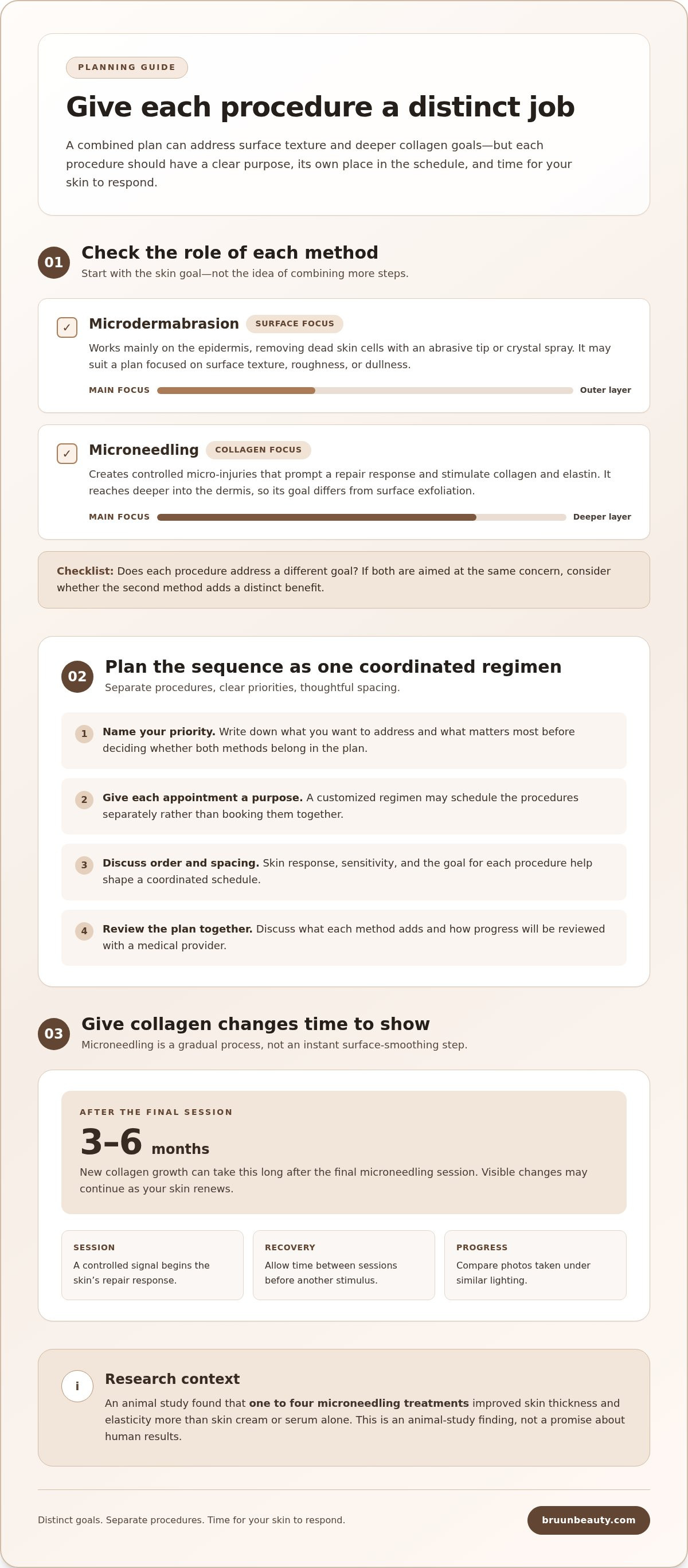
A customized regimen can combine these procedures to address different skin goals. Rather than treating them as competing choices, consider whether your plan needs both surface-focused care and deeper collagen stimulation. The question of microdermabrasion vs microneedling for scars is best approached as a planning decision: what should each procedure contribute, and when should it fit into your routine?
Combining methods doesn’t mean booking them together or automatically adding extra steps. A tailored regimen may schedule each procedure separately, based on your priorities and skin response. Discuss the order and spacing as part of one coordinated plan, so each appointment has a clear purpose rather than duplicating the same goal.
Before committing to both, write down what you want to address and what matters most to you. For example, you might prioritize a change in surface appearance before considering a procedure focused on collagen stimulation. This makes it easier to judge whether the second method adds a distinct benefit or simply another appointment.
Cost comparisons need context. The American Society of Plastic Surgeons reported an average of $131 per microdermabrasion treatment in its 2018 statistic report. These figures describe different sources and time frames, so they’re useful as reference points, not a direct quote for a combined plan.
| Option | How it may fit a plan | Cost reference |
|---|---|---|
| Microdermabrasion | Consider as the surface-focused component | $131 average per treatment, ASPS 2018 |
| Microneedling | Consider as the collagen-focused component | |
| Combined regimen | Use only when the plan assigns each method a distinct goal | No combined cost figure provided |
A combined regimen involves separate procedures, not a single bundled treatment. The total cost depends on the plan’s components and session frequency. Ask for a clear breakdown of each procedure before deciding whether both fit your priorities.
Bring your goal list to a medical provider and discuss which procedure should come first, what each adds, and how progress will be reviewed. That conversation keeps the plan focused and helps you decide whether combining methods makes sense for your skin.
For a professional microneedling workflow, the microneedling collection offers a relevant starting point for exploring devices and supplies.
How microneedling stimulates collagen
Microneedling creates controlled micro-injuries that prompt your skin’s repair response. This process stimulates collagen and elastin, proteins that support skin structure and flexibility. Unlike surface exfoliation, the goal is a deeper renewal response, not simply the removal of dead skin cells. This distinction matters when texture changes involve the dermis rather than just the outer surface.
Think of each session as a signal, not an instant smoothing step. Your skin responds to tiny channels by beginning a repair process that supports new collagen formation. Elastin production also increases, contributing to flexibility. Visible effects develop gradually, so a fresh-looking surface immediately after a session doesn’t show the full collagen response.
Timing is part of the plan. New collagen growth can take 3 to 6 months after the final treatment session. That delay helps explain why skin appearance may continue changing after your appointments end. A useful way to track progress is to compare photos taken under similar lighting, rather than judging your skin from one day to the next.
An animal study offers one comparison: one to four microneedling treatments improved skin thickness and elasticity more than skin cream or serum alone. This finding describes an animal study, not a promise about human results. It does illustrate why microneedling works differently from topical skincare, which mainly interacts with the skin’s surface.
Collagen stimulation also depends on allowing time between sessions. Skin needs a recovery period before another controlled stimulus, so treatment plans space appointments rather than repeating them too soon. Your skin’s response, scar pattern, and sensitivity guide the schedule. Consider how recently the skin was needled before adding strong exfoliation or active ingredients.
For practical skincare after a session, keep care simple and focused on comfort while your skin settles. A gentle, hydrating product can help your skin feel nourished without making aftercare another intensive step. Choose products to suit the procedure and your skin’s condition, not just the goal of faster rejuvenation.
If you’re exploring tools for a professional microneedling workflow, browse the microneedling collection and consider how device use fits your training and protocol. Collagen changes unfold over months, so consistent documentation and appropriate spacing are more useful than chasing an immediate surface effect.
Microdermabrasion primarily works on the epidermis, offering surface-level renewal and modest collagen stimulation; microneedling reaches deeper into the dermis for a stronger collagen response. The two may be combined in a customized regimen.
Are Microdermabrasion and Microneedling Safe?
Safety starts with matching the method to the concern. Microdermabrasion removes dead skin cells from the epidermis using an abrasive tip or crystal spray. This surface exfoliation can support smoother texture and brighter-looking skin when roughness or dullness is the main issue. It may also be considered for acne scars, but it’s usually too superficial to improve most true scars on its own.
Fine lines and shallow texture concerns sit closer to the surface than rolling or indented scars. Microdermabrasion focuses on the outer layer, while microneedling reaches deeper skin and stimulates a stronger collagen response. The practical difference is that surface renewal can refresh the look of skin but doesn’t create the same deeper stimulus as needles.
For rolling acne scars and uneven skin texture, microneedling’s controlled micro-injuries can prompt collagen and elastin production. This deeper response is why it’s often considered for rolling scars and may be used for shallow boxcar scars. Icepick scars have a different shape and may call for specialized techniques rather than surface exfoliation.
Post-acne color calls for a separate approach. Flat red or brown marks are typically addressed first with gentle topical care and sun protection. These marks differ from indented scars: one is a color change, while the other changes skin texture. Choosing a method based on appearance alone can lead you to the wrong option.
Use this quick distinction when identifying the concern:
- Roughness or dullness: Microdermabrasion focuses on the surface and can support a smoother, brighter appearance.
- Rolling or shallow boxcar scars: Microneedling reaches deeper and stimulates collagen, making it more relevant to these contours.
- Flat red or brown marks: Start with gentle topical care and sun protection, not an assumption that the marks are indented scars.
- Icepick scars: Specialized methods may be needed because surface exfoliation alone is generally insufficient.
Skin suitability affects both options. Microdermabrasion is described as suitable for most, but not all, skin types; skin condition and sensitivity still matter. Active infection, eczema, diabetes, or blood vessel problems can affect whether either procedure is appropriate. These procedures also aren’t recommended during pregnancy.
For a safer decision, identify whether you’re seeing color, surface roughness, fine lines, or a depressed scar. Then match the concern to the method’s depth and purpose. If the scar’s shape is unclear, a medical assessment can help distinguish a rolling or boxcar contour from a flat post-acne mark.
Safety considerations and contraindications
Before either procedure, review your health history and current skin condition. If you’re pregnant or breastfeeding, discuss either procedure with a medical provider before scheduling. Skin infections, diabetes, eczema, and blood vessel problems can also affect suitability, so share these details before planning a session.
Active irritation matters, too. For example, eczema can leave skin inflamed, while an infection means the skin already needs attention. These procedures create different levels of stimulation: microdermabrasion exfoliates the surface, while microneedling uses controlled micro-injuries to prompt collagen production. A provider’s assessment should account for your skin’s current state, not just wrinkles or acne scars.
Choose a provider based on an assessment, not a device setting. A medical provider can review your health history, examine the area you want addressed, and explain why one procedure may fit better. Ask what the session involves, what response to expect, and how the plan accounts for your skin concerns. Clear answers matter more than promises of a particular result.
At-home microdermabrasion and microneedling procedures aren’t recommended. At-home dermarollers can be difficult to keep sanitary, adding avoidable uncertainty when a tool touches your skin. Don’t assume that cleaning a roller at home makes its use equivalent to a professional procedure. Device choice and handling are part of the safety plan.
Timing is another safety consideration. Microdermabrasion and microneedling shouldn’t be performed on the same day unless a medical provider recommends the combination. Each procedure affects skin differently, so combining exfoliation and controlled needling can place greater demands on the skin during one visit. Spacing sessions lets the provider consider your response before the next treatment.
Use these points to prepare for a discussion with a medical provider:
- Share conditions such as eczema, diabetes, infection, or blood vessel problems.
- Discuss pregnancy or breastfeeding before scheduling either procedure.
- Describe the concern clearly, such as shallow texture, wrinkles, or indented acne scars.
- Ask how the provider will decide between surface exfoliation and deeper collagen stimulation.
- Keep at-home rollers out of the plan, and don’t combine procedures on the same day without medical guidance.
Safety depends on matching the procedure to your skin and health factors. If you have an active skin infection or eczema flare, pause plans for exfoliation or microneedling and discuss the condition with a medical provider first. Your skin’s immediate needs come before collagen goals.
Healing and side effects
Microdermabrasion is less invasive than microneedling because it exfoliates the surface rather than reaching deeper skin. A diamond tip or crystal spray removes dead skin cells, and suction clears debris. Afterward, your skin may feel dry or tight for 24 hours, with redness or slight swelling lasting a day or two.
Microneedling creates controlled micro-injuries, so its recovery looks different. Redness and mild swelling commonly last 24 to 72 hours. On day 1, redness may resemble a moderate sunburn; pinpoint scabbing can appear on days 2 to 3.
Skin may feel tight or look mildly flaky during days 4 to 7. Most people can return to work and normal social activities within 24 to 48 hours, though the visible response varies. These changes reflect the skin’s recovery process, not an immediate collagen result.
Aftercare helps limit irritation while your skin settles. For the first 24 hours after microneedling, skip makeup. Avoid heavy exercise, saunas, and chlorinated pools for 48 hours, and keep retinoids, AHA/BHA exfoliants, vitamin C, and physical scrubs out of your routine for 5 to 7 days.
- Sun protection: Use broad-spectrum mineral sunscreen with SPF 30 or higher each day, and avoid sun exposure for a week or two after microneedling.
- Microdermabrasion: Skip retinoids for 24 to 48 hours, and give tight, dry skin time to settle.
- Makeup: Wait at least 24 hours after microneedling before applying it.
Microdermabrasion often involves little downtime, but mild redness can still affect plans for the rest of your day. Microneedling usually requires more visible recovery time. If you have an event, plan around possible redness, swelling, or flaking rather than expecting your skin to look settled immediately.
Don’t speed up recovery with extra exfoliation. A scrub or acid layered onto sensitive skin can add irritation, especially during the first 5 to 7 days after microneedling. Keep your routine gentle, follow the post-procedure instructions, and resume active products only after the recommended pause.
Microneedling-related bleeding immediately after a procedure shouldn’t last longer than 2 minutes. If bleeding continues or you notice a reaction beyond the expected redness and sensitivity, contact the medical professional who performed the session. Your provider’s instructions take priority over a general aftercare schedule.
For a professional microneedling workflow, explore microneedling supplies.
Bruun Beauty: Advanced Microneedling Serum SD - Control Salmon DNA Ampoule Serum
Advanced Microneedling Serum SD - Control Salmon DNA Ampoule Serum is a microneedling-focused skincare option for your routine. After comparing surface exfoliation with deeper collagen stimulation, choose products that align with your procedure and its aftercare guidance.
Choose skincare based on your skin’s current condition and your session’s instructions. A serum’s name alone doesn’t establish when or how to apply it around microneedling, so follow the product directions and your provider’s protocol. Bruun Beauty also offers Jelly Mask Kits and BB Glow Treatment Supplies for other skincare needs.
Explore the serum details at Bruun Beauty, or contact the team with questions about the product. You can also visit bruunbeauty.com.
Make Your Next Skin Decision With Confidence
Before choosing a procedure, make a simple skin map. Note where texture changes appear, whether marks are flat or indented, and which areas feel sensitive. A clear description helps focus your next discussion on your actual concern rather than a general goal like smoother skin.
For microdermabrasion vs microneedling for scars, let the scar’s shape and your skin’s current condition guide your next step. Bring a list of your current skincare products and any recent reactions to a medical professional. This context can help shape a plan that fits your routine and comfort with recovery.
Keep expectations focused on steady progress and thoughtful care. You don’t need to choose a procedure based on trends or pressure; start with the concern you most want addressed and build from there. A considered plan is a practical step toward skin that feels comfortable, nourished, and cared for.
Frequently Asked Questions
Microneedling vs Microdermabrasion: Which Is Better for Skin?
Microneedling suits deeper texture concerns, while microdermabrasion focuses on surface roughness and dullness. To narrow your choice, look at your skin in even lighting and note whether the concern is a visible dip, uneven texture, or a flat color mark. A flat mark and an indented scar are different concerns, so describe what you see before choosing a procedure.
What Are the Benefits of Microneedling?
Microneedling can support collagen and elastin production, making it relevant to uneven texture and some acne scar patterns. Its controlled skin stimulus works below the surface, unlike exfoliation alone. Give the process time: collagen changes can take months to develop. Keep a consistent photo record and avoid judging progress from temporary redness or the immediate post-session appearance.
How Does Microneedling Work?
Microneedling uses fine needles to create controlled channels in the skin and prompt a repair response. Needle depth and the area being addressed shape the procedure. Topical products can absorb more readily after needling, so product selection and timing matter. Follow your professional’s aftercare directions instead of applying strong skincare actives immediately after a session.
What Are the Risks and Side Effects of Microdermabrasion and Microneedling?
Microdermabrasion can leave skin temporarily dry, tight, or red; microneedling can bring redness, swelling, and pinpoint scabbing. Keep your calendar flexible after microneedling, especially if you have an event or photos planned. Skip makeup for the first 24 hours, and avoid strenuous exercise, saunas, and chlorinated pools for 48 hours after the procedure.
Which Is Better for Your Concern?
Match the procedure to what you want to change. For roughness or dullness, surface exfoliation may suit your goal. For rolling or shallow boxcar contours, microneedling is more relevant because it stimulates deeper collagen activity. If the concern is a flat red or brown mark, start with gentle topical care and sun protection rather than assuming it’s an indented scar.
How Do Microdermabrasion and Microneedling Compare for Acne Scars?
Microdermabrasion mainly refreshes the outer skin, so it’s better suited to surface texture than deeper acne scar contours. Microneedling reaches deeper skin and can support collagen production, making it more relevant to some indented scars. A useful first step is to identify whether the mark changes the skin’s contour or only its color.
Which Scar Types Respond Best to Microdermabrasion Versus Microneedling?
Rolling and shallow boxcar scars are commonly considered for microneedling. Microdermabrasion is more appropriate for superficial roughness or minor discoloration than pronounced indentations. Icepick scars often need a specialized technique, such as focal chemical reconstruction, rather than microdermabrasion alone. Scar shape, not just the label “acne scar,” helps determine which approach fits.
What Results Can Patients Expect From Microdermabrasion or Microneedling for Scars?
Microdermabrasion can refresh surface texture, while microneedling’s collagen response develops gradually. New collagen growth can take 3 to 6 months after the final session, so immediate appearance doesn’t show the full effect. Keep expectations focused on gradual changes, and use consistent lighting for progress photos. Flat color marks and indented scars can respond to different skincare approaches.
At-Home Microneedling for Beginners: A Safe Step-by-Step Guide (2026)
How Long After Microneedling Can I Do Microdermabrasion?
Related Posts

Consistent Microneedling and the Long-Term Changes to Expect

Aftercare choices to lower infection risk at home after microneedling

How to Create a Relaxing At-Home Spa Day With Simple Rituals

Sunscreen Recommendations After Microneedling: How to Protect Healing Skin

Investing in my skin for the future: what deserves my budget

Post-microneedling skincare routine for masks, makeup, and recovery

Skin Peeling After Microneedling: What to Avoid and When to Resume Makeup
