

Swimming After Microneedling: What to Consider Around Pools and Saltwater
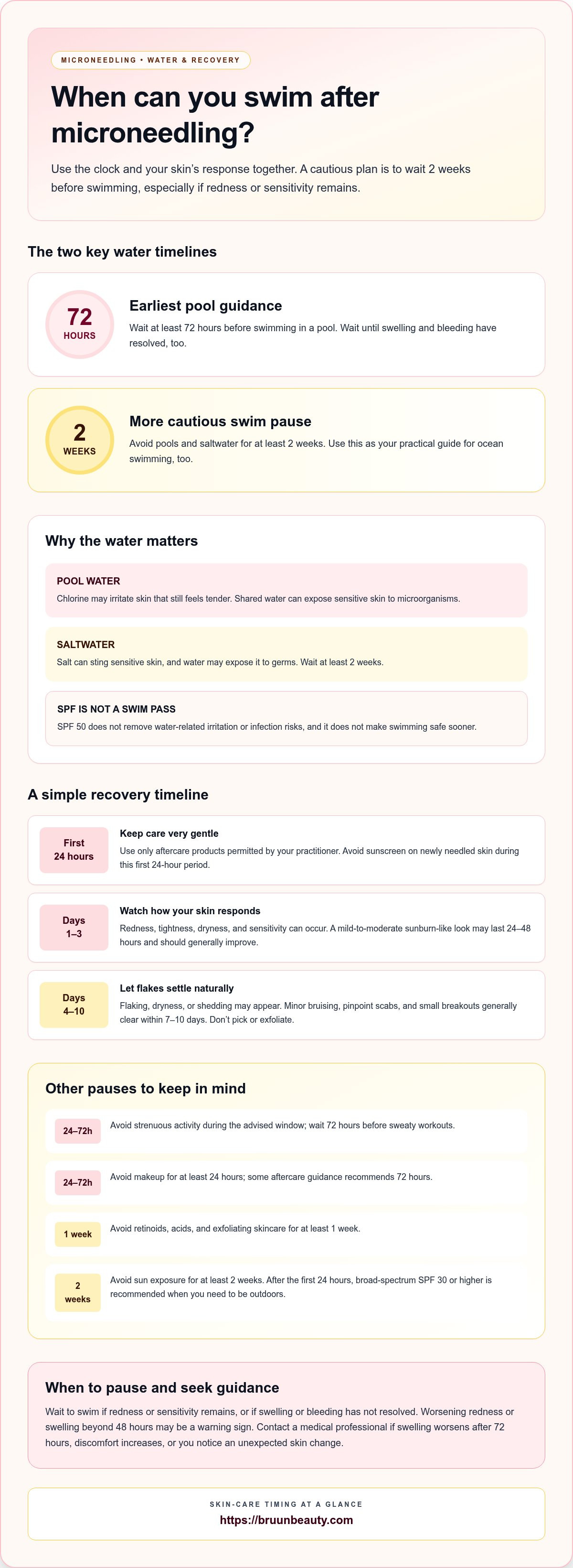
Two days is too soon for the cautious approach to swimming after microneedling: wait at least 72 hours before swimming, and avoid pools and saltwater for at least 2 weeks. An SPF 50 sunscreen doesn’t change that timing, and your skin should also be free of swelling and bleeding before you swim.
It’s understandable to want a clear answer about swimming after microneedling, especially when your skin looks calm and a swim is already on the calendar. But the surface can remain sensitive after treatment, so pool chemicals, saltwater, heat, and germs may irritate it while it recovers.
Here, you’ll find what to avoid right after microneedling, how pools and saltwater differ, and which skin changes can be expected versus signs that may need prompt medical attention. You’ll also get practical guidance for deciding when to return to the water and how to keep your post-session routine gentle in the meantime.
Key Takeaways
- Decide when to return to the water by considering how your skin is responding, not just how it looks at a glance.
- Keep strenuous workouts and heavy sweating out of your early aftercare routine to reduce extra irritation.
- Learn which temporary skin changes can be expected and which worsening symptoms may warrant medical attention.
- Consider how pools, hot tubs, saunas, and steam rooms expose sensitive skin to different sources of irritation.
- Use gentle, low-contact aftercare while your skin feels sensitive, and avoid scratching or exfoliating treated areas.
1. Can you swim in saltwater 2 days after face microneedled wearing SPF of 50?
No. Two days after facial microneedling, skip the ocean, even while wearing SPF 50. Dr. Patricia Faraz advises avoiding swimming for at least 2 weeks, and Dr. Lawrence Broder also recommends staying out of pools and saltwater for at least 2 weeks. Sunscreen doesn’t remove the irritation or infection risks of swimming.
For saltwater, use the 2-week wait as your practical guide. Salt can sting sensitive skin, while water may expose recently treated skin to germs. SPF 50 helps protect against ultraviolet exposure when used appropriately, but it doesn’t create a barrier against saltwater or make swimming safe sooner.
Pool advice varies across the provided recommendations. Avoid swimming for at least 72 hours, and wait until swelling and bleeding have resolved. Some advice recommends avoiding pools for at least 2 weeks. A cautious plan is to wait 2 weeks before swimming, especially if redness or sensitivity remains.
For a pool swim, don’t rely on the water’s appearance or on sunscreen alone. Chlorinated water can irritate skin that still feels tender, and shared water can expose it to microorganisms. Wait until the treated area looks settled and feels comfortable. When drying your face, use a towel gently and avoid rubbing.
Sun protection still matters during early recovery. Avoid sun exposure for at least 2 weeks; during the first 24 hours, avoid sunscreen on treated skin. After that initial period, broad-spectrum SPF 30 or higher is recommended when you need to be outdoors. SPF 50 doesn’t cancel the need to avoid swimming.
Give exercise and makeup a pause, too. Heavy sweating, heat, and friction can bother freshly treated skin. Guidance advises avoiding strenuous activity for 24 to 72 hours; wait 72 hours before sweaty workouts. Avoid makeup for at least 24 hours, with some aftercare guidance recommending 72 hours.
- For the first 24 hours, use only aftercare products permitted by your practitioner.
- For at least 1 week, avoid retinoids, acids, and exfoliating skincare.
- Choose a gentle cleanser the day after treatment, and don’t scrub or rub.
At-home versus professional microneedling doesn’t change the basic water guidance: wait at least 72 hours, and avoid pools and saltwater for 2 weeks. The intensity and your skin’s visible response matter; ongoing redness, swelling, or bleeding means swimming should wait.
Yes, you can swim in a pool after microneedling, but not immediately. Wait at least 72 hours and until swelling and bleeding have resolved; a 2-week pause is the more cautious approach. For ocean or lake swimming, wait at least 2 weeks, since SPF 50 doesn’t prevent water-related irritation or infection risk. For aftercare supplies, the microneedling collection is relevant to your post-session routine.
2. Expected side effects and signs of infection
In the first 1–3 days, redness, tightness, dryness, and sensitivity can occur after microneedling. Skin may resemble a mild to moderate sunburn for 24–48 hours. These changes should generally improve, rather than become more pronounced as days pass.
Other temporary changes can appear later. Flaking, dryness, or shedding may occur on days 4–10. Minor bruising, pinpoint scabs, and small breakouts generally clear within 7–10 days. Don’t pick scabs or exfoliate flakes; friction can further irritate sensitive skin.
A small infection risk remains after microneedling. Keeping the area clean and following aftercare guidance can help minimize it. Avoid touching your face with unwashed hands, and use a gentle cleanser when cleansing is allowed. Don’t share towels or rub the treated area dry.
Pay attention to changes over time. Worsening redness or swelling that continues beyond 48 hours may be a warning sign. Swelling that worsens after 72 hours is a reason to contact a medical professional. Increasing discomfort or an unexpected skin change also deserves prompt attention, rather than extra products or scrubbing.
If you swim too soon, gently rinse your face with clean water and pat it dry with a clean towel. Don’t scrub, exfoliate, or apply extra products to compensate. Contact a medical professional if redness or swelling worsens.
Patients can use a simple symptom check each day: note whether redness is easing, swelling is settling, and the skin feels less sensitive. A mild sunburn-like look during the first 24–48 hours differs from redness that keeps worsening. If you’re unsure whether a change is expected, describe its timing and appearance to a medical professional.
- Expected: mild redness, tightness, or sensitivity during days 1–3.
- Monitor: flaking or dryness during days 4–10.
- Seek guidance: worsening redness or swelling beyond 48 hours, or swelling that worsens after 72 hours.
Keep your routine simple while your skin remains sensitive. Follow the aftercare instructions for your session, use only permitted products, and avoid adding acids or retinoids during the first week. A gentle cleanser is a practical choice when you’re ready to cleanse. Explore microneedling aftercare products as you plan a careful routine.
Keeping the treated area clean and following aftercare advice can minimize the small risk of infection. Let those instructions guide your choices while the skin recovers: avoid improvising with extra products or handling the area unnecessarily. In particular, avoid touching your face after microneedling, since contact can introduce bacteria and dirt. If cleansing is permitted, follow the guidance for your session and handle the area gently.
Before touching your face, pause and ask whether the contact is necessary and consistent with your aftercare advice. Avoiding unnecessary contact is a simple way to reduce the chance of introducing bacteria and dirt. Cleanliness doesn’t mean scrubbing or repeatedly checking your skin by touch. Follow your instructions and observe changes visually. If a change worries you, seek professional guidance rather than repeatedly touching the area or trying new products.
3. Bacterial exposure from pools, hot tubs, saunas, and steam rooms
After microneedling, consider both shared water and heat. A pool or hot tub brings your face into contact with water used by others, while a sauna or steam room exposes sensitive skin to heat and moisture. Each setting can add irritation during early recovery.
Pool water may contain bacteria, and disinfectants can also bother freshly treated skin. Hot tubs combine shared water with warmth, so they aren’t a gentler substitute for a pool. Avoid putting your face underwater, and don’t assume clear-looking water eliminates the risk of exposure.
Shared surfaces matter, too. In a sauna or steam room, benches and towels can come into contact with your face or hands. Use your own clean towel between your skin and shared seating, and avoid touching your face after holding rails or handles. These choices limit unnecessary contact while your skin feels sensitive.
Heat can increase discomfort and sweating. Avoid indirect heat, including saunas and steam rooms, for 48 hours after microneedling. A hot shower can also leave your face feeling flushed; choose lukewarm water and keep the shower brief. Skip facial steaming as well, since it adds heat and moisture directly to the treated area.
Exercise can create a similar combination of warmth and sweat. Choose a calm activity instead of a strenuous workout while your skin remains reactive. If sweat reaches your face, blot gently with a clean towel rather than wiping. Friction can make redness or sensitivity feel worse.
Keep your post-session environment simple. Use a clean face towel, avoid shared washcloths, and change out of damp clothing after exercise. Avoid planning a sauna or hot tub visit during recovery. The goal is to limit heat and unnecessary contact while your skin’s surface remains sensitive.
- Pool or hot tub: avoid submerging your face during early recovery.
- Sauna or steam room: skip indirect heat for 48 hours.
- Shower: choose lukewarm water instead of a hot rinse.
- After exercise: blot sweat gently with a clean towel.
These settings differ, but the practical choice is the same: keep freshly treated skin away from shared water, high heat, and rubbing. Follow your session’s aftercare directions, and return to heat exposure only when your skin no longer feels unusually sensitive.
After microneedling, patients should avoid sun exposure for 7 days and continue using sunblock on their scars, alongside limiting heat and shared-water exposure during recovery.
Initial skin sensitivity, redness, and swelling
Your skin’s response can vary across the treated face. For example, your cheeks may look more flushed than your forehead, while the areas around your nose may feel tighter. Compare similar areas in the same lighting instead of judging your whole face by one patch or a close-up mirror view.
Microneedling creates controlled microchannels. Re-epithelialization describes the process by which surface cells restore a continuous outer layer. That surface response is separate from deeper changes involving collagen and elastin. A temporary change in texture or feel doesn’t, by itself, show how those deeper structures are responding.
Use a simple observation routine instead of repeatedly touching your face. Note where you see color changes, whether the area feels tight or tender, and whether the pattern is improving or worsening. A photo taken in consistent lighting can help you compare changes without rubbing or pressing your skin.
Products can also affect how sensitive skin feels. If an approved moisturizer stings or a cleanser leaves your face feeling unusually tight, stop adding products and follow your session’s aftercare directions. Don’t test several new formulas at once, as that makes it harder to identify which product may be contributing to discomfort.
Keep your environment and hands in mind. A clean pillowcase and fresh face towel reduce avoidable contact with dirt or residue. Avoid resting your cheek against your hands while working, and don’t press your phone screen against treated skin. These small habits support a cleaner routine without extra rubbing.
Makeup can hide changes that are useful to observe. Before applying foundation, check whether your skin feels comfortable and looks settled rather than using coverage to mask irritation. If you resume makeup in line with your aftercare instructions, use clean tools and remove products gently when cleansing is allowed.
- Observe: compare the same facial areas under similar lighting.
- Record: note where sensitivity or visible changes appear.
- Simplify: avoid introducing multiple new products at once.
- Reduce contact: use clean linens and keep hands away from your face.
Changes that worsen rather than settle deserve attention. Tell a medical professional what you’ve observed, including which area changed, what it looks like, and whether a product or activity preceded the change. Clear details are more useful than repeatedly touching your skin to test its sensitivity.
5. Swimming after microneedling
Plan your swim around the details of your appointment, not just a general calendar reminder. Record the treatment date, the areas treated, and the aftercare instructions you received. If you have a beach trip or swim meet coming up, schedule your session so your plans don’t conflict with your recovery routine.
Radiofrequency microneedling still calls for careful planning around water. Radiofrequency doesn’t automatically make swimming appropriate sooner. Use the same cautious approach to water exposure and follow the instructions for your specific procedure. If the treated area remains uncomfortable, choose a dry activity instead of testing it with a swim.
The type of swim matters for planning. Lap swimming often means repeated face immersion, while floating or shallow-water exercise may involve less direct facial contact. Neither activity changes your aftercare instructions, but knowing what you’ll do helps you make a practical decision before arriving at the pool or beach.
Check the details of your outing in advance. A family beach day may involve splashing, sand, and time outdoors, while a pool visit may include shared equipment or goggles that press against your face. Choose activities that don’t rub or press on recently treated areas, and bring your own items rather than borrowing gear.
- Before booking: note your appointment date and planned swim dates.
- Before entering the water: consider whether your activity involves face immersion, splashing, or equipment touching your skin.
- If plans change: choose a dry alternative rather than adjusting your procedure instructions yourself.
A clear plan also helps you keep skincare decisions separate from activity decisions. Don’t use a product or device as a reason to change your swim schedule. Follow the directions for your session, and plan your next water activity around them, whether you’re swimming laps, joining friends at a lake, or relaxing by the shore.
Bruun Beauty: Advanced Microneedling Serum SD - Control Salmon DNA Ampoule Serum
Advanced Microneedling Serum SD - Control Salmon DNA Ampoule Serum is an option to consider for your microneedling routine. Keep water avoidance and gentle aftercare separate from product selection: a serum doesn’t make swimming safe sooner or replace your session’s instructions.
Wait until your aftercare directions allow skincare products before adding anything to freshly treated skin. If you’re comparing options for a later step in your routine, explore the Salmon DNA ampoule serum.
For product details, visit bruunbeauty.com.
Make your next skincare session easier to plan
Build your swim plans into your skincare calendar before booking a microneedling session. That gives you room to follow aftercare without having to choose between a planned treatment and time in the water. Take the same thoughtful approach when selecting your device and post-session products.
If you’re planning swimming after microneedling, focus on a routine that prioritizes your skin’s comfort, not a product that promises to shorten the wait. Bruun Beauty offers DR. PEN Microneedling Devices and Jelly Mask Kits, along with Advanced Microneedling Serum SD - Control Salmon DNA Ampoule Serum. Choose products that fit your routine, and follow your session’s aftercare instructions.
Give your skin the time and care it needs, then return to your favorite activities with a manageable plan. For athletes, runners, and outdoor enthusiasts getting back into their regular exercise routine, dailymilesbeardandsoapco.com offers natural soaps and grooming products crafted specifically for active lifestyles.
Frequently Asked Questions
What Should You Avoid Immediately After Microneedling?
Keep your hands, makeup, and unapproved skincare products away from freshly treated skin. For example, don’t apply a retinoid or exfoliating acid just because your face feels dry. Follow the product instructions provided for your session, especially during the first 24 hours. Avoiding unnecessary contact and active ingredients gives you a simpler routine while your skin is sensitive.
Can you swim in saltwater 2 days after face microneedled wearing SPF of 50?
No. Two days is too soon for saltwater swimming, and SPF 50 doesn’t change the water-related concern. Saltwater may sting sensitive skin, and natural bodies of water can expose it to microorganisms. Choose a non-swimming activity instead, such as relaxing in the shade, and keep sunscreen use consistent with your aftercare instructions.
How Should You Manage Your Skincare Routine During the Healing Process?
Keep your routine simple and follow the instructions for your specific session. When cleansing is permitted, use a gentle cleanser and clean hands rather than a brush or washcloth. Don’t add new serums, acids, or exfoliants to address temporary dryness. If a product stings, stop using it and seek guidance from a medical professional.
What Are the Most Frequently Asked Questions About Microneedling Aftercare?
People commonly ask when they can swim, apply makeup, exercise, and restart active skincare. The answers depend on the activity and your skin’s response, so separate those decisions rather than treating aftercare as one waiting period. For instance, your swimming timeline may differ from the time you resume a gentle cleanser or moisturizer.
What should I do after my treatment?
Follow your session’s aftercare directions first. During the initial 24 hours, use only products your practitioner has permitted; some instructions specify a prescribed cooling gel. After that, gentle cleansing and a simple moisturizer may fit your routine. Avoid touching or rubbing the treated area for 72 hours, and keep notes on changes you notice.
How long should you wait to swim after microneedling?
Wait at least 72 hours and until swelling and bleeding have resolved before swimming. A more cautious recommendation is to avoid pools and saltwater for 2 weeks. For a planned beach or pool day, use the longer interval as your calendar guide instead of relying on sunscreen or a calm-looking complexion to shorten the wait.
When should you contact a doctor after swimming following microneedling?
Contact a medical professional if redness or swelling worsens beyond 48 hours, or if swelling gets worse after 72 hours. If you swam early, note when the swim happened and when symptoms changed; those details help describe the situation clearly. Don’t scrub the skin or apply strong active products while symptoms are worsening.
Can You Drink Alcohol After Microneedling? Understand the Risks
Can You Drink Alcohol After Microneedling? Understand the Risks
Related Posts

Aftercare choices to lower infection risk at home after microneedling

How to Create a Relaxing At-Home Spa Day With Simple Rituals

Sunscreen Recommendations After Microneedling: How to Protect Healing Skin

Investing in my skin for the future: what deserves my budget

Post-microneedling skincare routine for masks, makeup, and recovery

Skin Peeling After Microneedling: What to Avoid and When to Resume Makeup
