

Is Microneedling with Dr. Pen Safe at Home? Expert Guide
You've likely wondered, is microneedling with a dr pen safe at home when you're aiming for that professional-grade glow from your own bathroom? While it's a powerful way to revitalize your complexion, safety depends on following a clinical workflow that protects your skin's delicate barrier. In this guide, you'll learn the exact sterilization steps and needle depths required to achieve radiant results without the risk of scarring or infection.
It's natural to feel a bit hesitant about the technical side of at-home treatments, especially when you're navigating different models and needle cartridges. We'll simplify the process by explaining how vertical needle technology works and which professional-grade serums provide the best post-session nourishment. By the end of this expert guide, you'll have the confidence to handle your device like a seasoned esthetician friend. This sense of confidence and calm is essential for any self-care routine, and for those seeking to manage stress or anxiety more broadly, Amandine Baptista offers specialized support for adults.
Key Takeaways
- Learn why is microneedling with a dr pen safe at home when you follow professional sterilization protocols and stay within recommended depth limits.
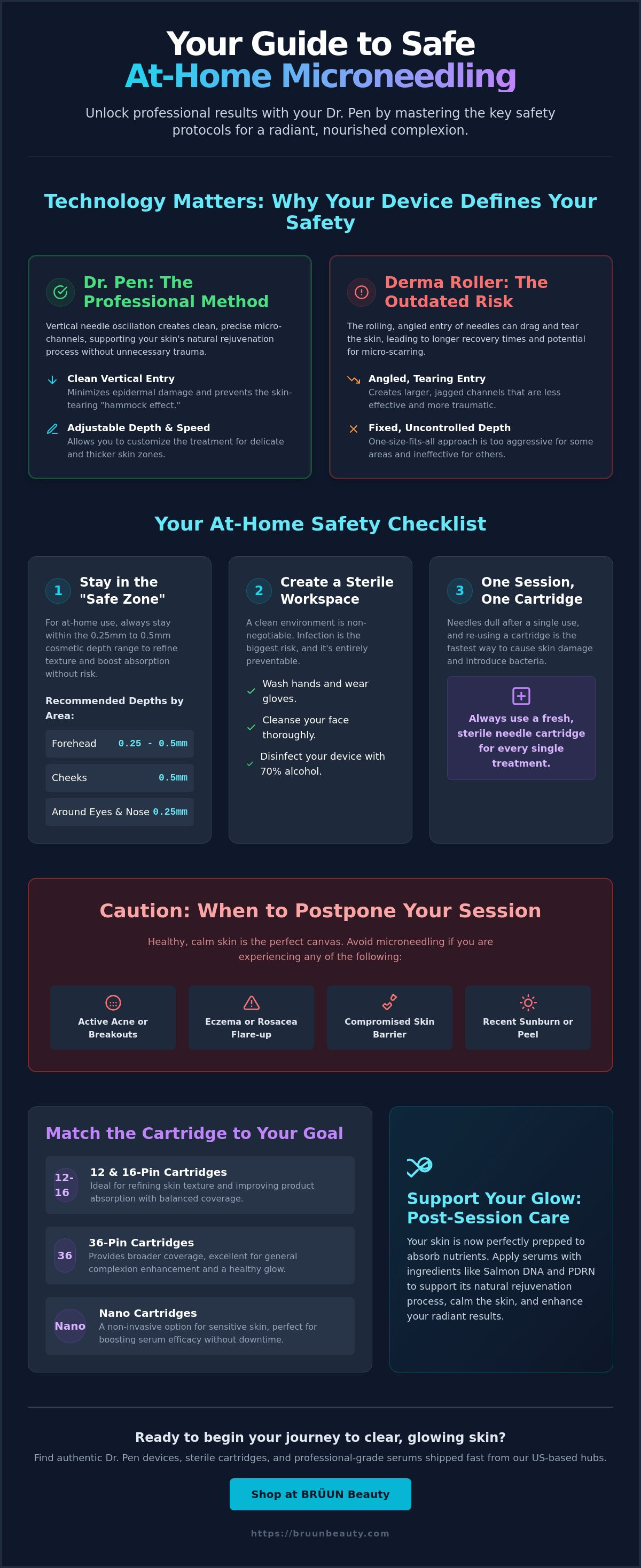
- Understand the "safe zone" depths of 0.25mm to 0.5mm and how vertical needle technology prevents skin tearing for a smoother recovery.
- Master the step-by-step process for creating a sterile workspace using 70% isopropyl alcohol to maintain a hygienic environment.
- Discover the best post-session nourishment strategies, featuring Salmon DNA and PDRN serums to support a radiant, nourished complexion.
- Identify which needle cartridges, from 12-pin to Nano, are best suited for your specific skin texture goals and comfort level.
Understanding the Safety of At-Home Microneedling with Dr. Pen
You're likely asking, is microneedling with a dr pen safe at home? The short answer is yes, but safety depends entirely on your commitment to professional protocols. When you use a high-quality device like a Dr. Pen, you're utilizing the same vertical needle technology found in high-end clinics. This precision is what makes at-home sessions a viable option for maintaining a radiant complexion between professional visits.
The primary safety advantage of an electric pen over a traditional derma roller is the entry angle. Rollers enter and exit the skin at an angle, which can create tiny, unnecessary tears known as the "hammock effect." In contrast, a Dr. Pen creates controlled micro-injuries through vertical oscillation. This process, technically known as Collagen induction therapy, triggers your skin's natural rejuvenation process without dragging or snagging the tissue. It's the difference between a clean stamp and a jagged scratch.
At-home microneedling is generally considered "cosmetic" because enthusiasts typically stick to shallower depths. While a professional might go deeper to address specific concerns, your home routine focuses on improving product absorption and refining skin texture. By using fresh needle cartridges for every single session, you eliminate the risk of cross-contamination that often plagues reusable rollers.
The Mechanics of Safety: Vertical vs. Angled Entry
Electric pens are inherently safer because they offer total control. You can adjust the speed and depth settings to match the different "zones" of your face. For example, the skin around your eyes is much thinner than the skin on your cheeks. A Dr. Pen allows you to toggle these settings instantly, ensuring you never go too deep for a specific area. The rapid vertical movement also means the needles spend less time in the skin, which significantly reduces discomfort and downtime.
Who Should Avoid At-Home Microneedling?
Even with the best equipment, your skin's current state dictates whether it's safe to proceed. You should never needle over active acne, as this can spread bacteria across your face and lead to more breakouts. If you're dealing with eczema, rosacea, or a compromised skin barrier, it's best to focus on soothing topicals first. Safety also means timing your sessions correctly. If you've had a professional chemical peel or spent a long weekend in the sun, give your skin at least two to four weeks to fully recover before reaching for your device. A healthy, calm canvas is the first requirement for a successful session.
Selecting Your Professional-Grade Home Setup
Your journey to a smoother complexion begins with the hardware you hold in your hand. When asking is microneedling with a dr pen safe at home, you must prioritize authenticity over a bargain. Authentic Dr. Pen devices are engineered with stabilized motors and precise depth adjustments that generic versions often lack. Just as you would trust a licensed electrician Ontario to maintain the safety of your home's power systems, using authentic, high-quality skincare devices ensures your at-home treatments remain professional and risk-free. To ensure you're getting genuine gear, BRÜUN ships directly from our hubs in Miami and Los Angeles, providing fast access to professional-grade tools.
The FDA on microneedling devices highlights the importance of using legally marketed tools and understanding the risks involved. While professional devices are often cleared for clinical use, at-home enthusiasts can mitigate risks by choosing pens with consistent power delivery. A device that stutters or has uneven needle oscillation can cause micro-tearing rather than the clean channels you want. Understanding your equipment is the first step in deciding is microneedling with a dr pen safe at home for your specific goals.
Finding the Right Dr. Pen for Your Goals
Choosing between different models often comes down to your experience level and specific skin concerns. Beginners often prefer models with intuitive controls and stable needle performance that feel balanced in the hand. If you're looking for the latest technology, browse our Dr. Pen collection to find models with various speed settings. Higher speeds allow the needles to move faster, which typically makes the process feel more comfortable on your skin.
The Anatomy of a Needle Cartridge
The cartridge is just as important as the pen itself. For general skin texture and product absorption, 16-pin or 36-pin cartridges are the industry standard. These configurations provide balanced coverage without overwhelming the skin. If you're new to the process or have very sensitive skin, Nano-needling cartridges offer a non-invasive way to boost your glow without entering the deeper layers of the dermis.
Safety is built into the design of high-quality needles and cartridges. Look for cartridges that feature a built-in silicone membrane. This membrane acts as a backflow preventer, ensuring that serums and fluids don't enter the motor of your pen. This feature is a non-negotiable for hygiene. Remember, every cartridge is strictly single-use. Even if you've only used it for five minutes, the needles become dull and contaminated immediately after contact with your skin. Always dispose of them in a sharps container to keep your routine professional and safe.
If you're ready to upgrade your skincare game with professional tools, you can explore our full range of microneedling essentials to get started today.
The Golden Rules of Sterilization and Skin Prep
Creating a professional environment at home starts with your workspace. Think of your setup as a mini-clinic. Clear away all personal items from your counter and wipe the surface with a disinfectant. Lay down a clean paper towel or a sterilized tray to act as your sterile field. This dedicated space ensures that your device and needle cartridges stay uncontaminated throughout the entire session.
The 70% rule is a common point of confusion for many beginners. You might think 91% or 99% alcohol is more effective, but it actually evaporates too quickly to kill most bacteria. 70% isopropyl alcohol has enough water content to slow down evaporation. This allows the alcohol to penetrate cell walls and effectively neutralize germs. Hygiene is your best defense against irritation, and getting this right is a major factor in deciding is microneedling with a dr pen safe at home for your routine.
Double-cleansing your skin is a non-negotiable step before you even touch your device. Use an oil-based cleanser first to break down makeup and sunscreen. Follow this with a gentle, pH-balanced water-based cleanser to remove any remaining residue. Your skin must be surgically clean to prevent pushing surface oils or bacteria into the micro-channels created during the process.
Step-by-Step Device Sterilization
Contact time is the secret to true disinfection. Simply dipping a cartridge in alcohol for a second isn't enough to ensure safety. Submerge the cartridge head in 70% isopropyl alcohol for at least five to ten minutes before you attach it to the pen. While the cartridge soaks, use a disinfectant wipe to thoroughly clean the entire body of your Dr. Pen. Always wear a fresh pair of nitrile gloves during the procedure. This prevents the transfer of oils and bacteria from your hands to your face or the device.
Preparing the Canvas: Skin Disinfection
Once your skin is clean, perform a final disinfection swipe. Use a cotton pad soaked in alcohol or chlorhexidine to gently wipe the treatment area. Wait for your skin to dry completely before starting. According to the Cleveland Clinic on microneedling, understanding what to expect during and after the procedure helps you manage the process safely. Never needle over active breakouts, open wounds, or inflamed rashes. If you spot a blemish, simply work around it to avoid spreading bacteria. This careful approach ensures that is microneedling with a dr pen safe at home for you while maintaining the health of your skin barrier.
Mastering Technique: Needle Depths and Mapping Your Face
Mastering the physical movement of your device is where the magic happens. Many people ask, is microneedling with a dr pen safe at home? The answer often depends on your technique and your willingness to respect the skin's limits. Holding the pen at a strict 90-degree angle ensures the needles enter and exit vertically, preventing the dragging that causes irritation. Use light, steady pressure; let the motor do the work for you rather than pushing the device into your tissue.
Working in small, controlled sections (about two inches by two inches) helps you maintain focus and ensures even coverage. Your goal is to achieve "pinpoint erythema," which is a uniform pink or red glow similar to a mild sunburn. If you see active bleeding, you're likely going too deep or applying too much pressure. At-home safety is about gentle stimulation, not trauma. This controlled approach is exactly how you ensure is microneedling with a dr pen safe at home for your specific skin type.
Zone-Specific Depth Guide
The thickness of your skin varies significantly across your face. To keep your routine safe, you must adjust your pen's depth setting as you move between different areas. Following a professional map prevents you from over-treating delicate zones.
- Forehead and Eye Area: Stick to a shallow 0.25mm. The skin here is very thin and sits directly over bone, making it more sensitive to deeper settings.
- Cheeks and Jawline: You can safely increase to 0.5mm in these areas. These zones have more "cushion" and can handle slightly deeper stimulation to help refine skin texture.
- The Golden Rule: More is not better. Staying within the 0.25mm to 0.5mm range minimizes downtime while maximizing your glow.
The Pattern of Success
Consistency is the key to professional-looking results. Use a "cross-hatch" pattern to ensure no spot is missed. Start with horizontal passes across a section, followed by vertical passes, and finish with a diagonal movement. This ensures the micro-channels are distributed evenly across the skin's surface without over-working a single spot.
Maintain a consistent speed setting on your Dr. Pen. If you move the pen too quickly across your skin while the motor is on a slow setting, you risk "tracking" or scratching the surface. Listen to the hum of the device and move your hand in a slow, rhythmic glide. You'll know it's time to stop when the area has a consistent rosy flush. If you're ready to start your journey with the right tools, explore our microneedling essentials to find everything you need for a successful session.
Post-Treatment Care: Serums and Soothing Masks
Your skin's journey to a radiant glow doesn't end when you turn off your device. In fact, the next 24 hours are the most critical for ensuring your session stays effective and your barrier remains protected. To keep asking yourself is microneedling with a dr pen safe at home a positive experience, you must treat your skin with extreme care while those micro-channels are open. This is the period when your skin is most receptive to nourishment but also most vulnerable to environmental stressors.
Follow the 24-hour rule strictly: no makeup, no heavy sweating, and no direct sun exposure. Your skin acts like a sponge during this window, so you want to avoid introducing bacteria from gym equipment or old makeup brushes. Stick to lukewarm water for rinsing and keep your environment as clean as possible. By respecting this downtime, you ensure that is microneedling with a dr pen safe at home remains a staple in your beauty routine without unnecessary setbacks.
Feeding the Skin: Serums That Matter
This is the window where professional-grade ingredients truly shine. Using Salmon DNA (PDRN) is the gold standard for post-needling care because it supports skin vitality and provides deep, essential nourishment. PDRN works by providing the building blocks your skin needs to maintain a refreshed and vitalized appearance. Pure Hyaluronic Acid is also a fantastic choice to provide immediate, weightless hydration without the risk of irritation.
You must avoid "active" ingredients like Retinol, AHAs, and Vitamin C for at least 72 hours. These potent ingredients are wonderful for daily use, but they can be far too aggressive for freshly needled skin. Applying them too early can lead to excessive peeling or unwanted sensitivity. Wait until the initial redness has completely subsided and your skin feels calm before reintroducing your usual exfoliating routine.
The Finishing Touch: Professional Jelly Masks
After applying your chosen serum, a professional jelly mask is the perfect way to lock in those nutrients. These masks create an occlusive seal that physically prevents moisture from evaporating, pushing your serums deeper into the skin's surface. This "vacuum-like" effect ensures your skin absorbs every drop of the beneficial ingredients you've applied. It's an essential step for calming the "spicy" or tight feeling that often follows a productive session.
Incorporating high-quality K-beauty products into your recovery routine ensures you're giving your skin a professional recovery experience at home. These formulations often focus on soothing and barrier support, which is exactly what you need after microneedling. Finally, remember that sun protection is non-negotiable for at least seven days. Your fresh skin is highly sensitive to UV rays, so a broad-spectrum SPF will protect your results and prevent the development of dark spots while your skin is in its most delicate state.
Elevate Your Skincare Journey with Confidence
Achieving professional-grade results from your own vanity is a rewarding experience when you prioritize safety and precision. The answer to is microneedling with a dr pen safe at home is a clear yes, provided you maintain a sterile field and respect the 0.25mm to 0.5mm depth limits. By combining vertical needle technology with clinical-grade sterilization, you can target skin texture concerns while keeping your barrier healthy and resilient.
Your results are only as good as your post-treatment care. Feeding your skin with Salmon DNA and sealing it with a cooling jelly mask ensures your complexion stays nourished and calm. As a US-based leader in beauty, BRÜUN supports your goals with professional-grade inventory and 5-star rated customer support.
We ship directly from our warehouses in Miami and Los Angeles to get your tools to you quickly. Our collection is trusted by licensed estheticians across the country for its quality and reliability. Shop authentic Dr. Pen devices and professional serums at BRÜUN today to start your journey toward clearer, more radiant skin.
Frequently Asked Questions
How often can I safely use my Dr. Pen at home?
You should wait 4 to 6 weeks between deeper microneedling sessions to respect your skin's natural regeneration cycle. This timeline allows your skin to fully recover and produce the collagen and elastin needed for a radiant glow. If you're using nano-needling cartridges for product absorption, you can safely perform sessions once a week. Giving your skin enough time to rest is a key part of ensuring is microneedling with a dr pen safe at home for your long-term routine.
What should I do if my skin bleeds during the session?
Stop the session immediately if you notice active bleeding, as this indicates you've gone too deep or applied too much pressure. Clean the area gently with a sterile saline solution and apply a soothing, barrier-supporting serum. For your next session, adjust the needle depth to a shallower setting, such as 0.25mm. Remember that the goal is a uniform pink flush, not trauma, to maintain a safe and effective at-home practice without damaging your tissue.
Can I reuse the needle cartridges if I clean them with alcohol?
No, you must never reuse needle cartridges, even after soaking them in alcohol. Microneedling needles become dull and can develop microscopic hooks after just one use, which can cause significant skin tearing and irritation. Additionally, proteins and microscopic debris can become trapped inside the cartridge housing where alcohol cannot reach. Using a fresh, sterile cartridge for every single session is the only way to ensure your routine is hygienic and professional.
Is it normal for my skin to peel after microneedling?
Light peeling or flaking is a normal part of the skin's natural exfoliation process following a session. This typically occurs 3 to 5 days after treatment as your skin sheds older cells to reveal a fresher, more radiant texture. Don't pick at any flakes; instead, keep the area deeply hydrated with Hyaluronic Acid or a nourishing Salmon DNA serum. If you're wondering is microneedling with a dr pen safe at home when peeling occurs, rest assured it's a standard sign of skin renewal.
What is the difference between microneedling and nano-needling?
The main difference lies in the depth of penetration and the type of cartridge used. Microneedling uses fine needles to reach the dermis, typically at depths of 0.25mm to 0.5mm for home use. Nano-needling uses microscopic silicone or metal tips that only affect the very top layer of the epidermis. Because nano-needling doesn't create deep channels, it can be done more frequently to boost the absorption of your favorite K-beauty serums and improve immediate radiance.
Can I use microneedling to treat deep surgical scars at home?
At-home microneedling is best suited for improving general skin texture and fine lines rather than addressing deep surgical scars. Substantial scarring often requires professional depths and specialized techniques that go beyond the safe 0.5mm limit for home users. While regular at-home sessions can help soften the appearance of minor surface irregularities, deep or tethered scars should be evaluated by a licensed professional to ensure you achieve the results you're looking for without assuming unnecessary risk.
Maximize Microneedling Results with Exosome Serums
Dr. Pen A6 vs. A7 vs. M8: Which Microneedling Pen is Best?
Related Posts

Consistent Microneedling and the Long-Term Changes to Expect

Aftercare choices to lower infection risk at home after microneedling

How to Create a Relaxing At-Home Spa Day With Simple Rituals

Sunscreen Recommendations After Microneedling: How to Protect Healing Skin

Investing in my skin for the future: what deserves my budget

Post-microneedling skincare routine for masks, makeup, and recovery

Skin Peeling After Microneedling: What to Avoid and When to Resume Makeup
