

Nano Infusion Facial and Active Ingredient Absorption
Deeper isn’t always better for ingredient delivery. If you’re wondering what a nano infusion facial is, it’s a treatment that uses vibrating, hair-thin, pyramid-shaped cones to create temporary, superficial microchannels. It works at the stratum corneum, the skin’s outermost layer, without reaching living tissue.
It’s reasonable to wonder how a treatment can support absorption without going as deep as microneedling. Nano infusion creates tiny channels that help topical ingredients reach the skin’s surface layers, while microneedling works deeper and has different goals and recovery considerations. The methods aren’t interchangeable, so understanding what each does can help you make an informed choice.
This guide explains how nano infusion works, which skin layer it affects, and what its microchannels mean for topical ingredients. It also compares nano infusion with microneedling and explains why the device and single-use cartridge matter in a professional setting. You’ll get a clear picture of where this surface-focused approach may fit into a skincare routine and how to choose ingredients without assuming every serum works the same way.
Key Takeaways
- Understand how nano infusion’s surface-level approach differs from a treatment that reaches deeper skin layers.
- Learn why microchannels can support topical ingredient delivery without guaranteeing that every active ingredient absorbs equally.
- Compare each method’s depth, typical recovery considerations, and suitability for different skincare goals.
- See what to look for in professional device protocols, including single-use cartridges replaced after each service.
- Explore how a serum or finishing mask can fit into a carefully planned skincare routine.
WHAT is nano infusion?
A nano infusion facial uses a vibrating device fitted with hair-thin, pyramid-shaped cones. The cones create temporary, superficial microchannels in the stratum corneum, the skin’s outermost layer. This surface-focused method supports topical ingredient delivery without reaching living tissue.
A typical appointment begins with cleansing, followed by serum application and device passes across the skin. The device creates thousands of nanochannels per minute. These channels offer a pathway for skincare ingredients, but they don’t make every formula absorb in the same way. The serum’s ingredients and intended use still matter.
Some people notice smoother-feeling skin or more radiance immediately after their first session. Nano infusion isn’t designed to reach deeper skin layers or create the same response as microneedling. It focuses on surface-level skincare, so match the method to your goal rather than assuming every facial works at the same depth.
How much does a nano infusion facial cost in the United States? The price depends on the provider, location, products used, and steps included in the appointment. Compare the service components, such as serum application and finishing skincare, to understand what each facial covers.
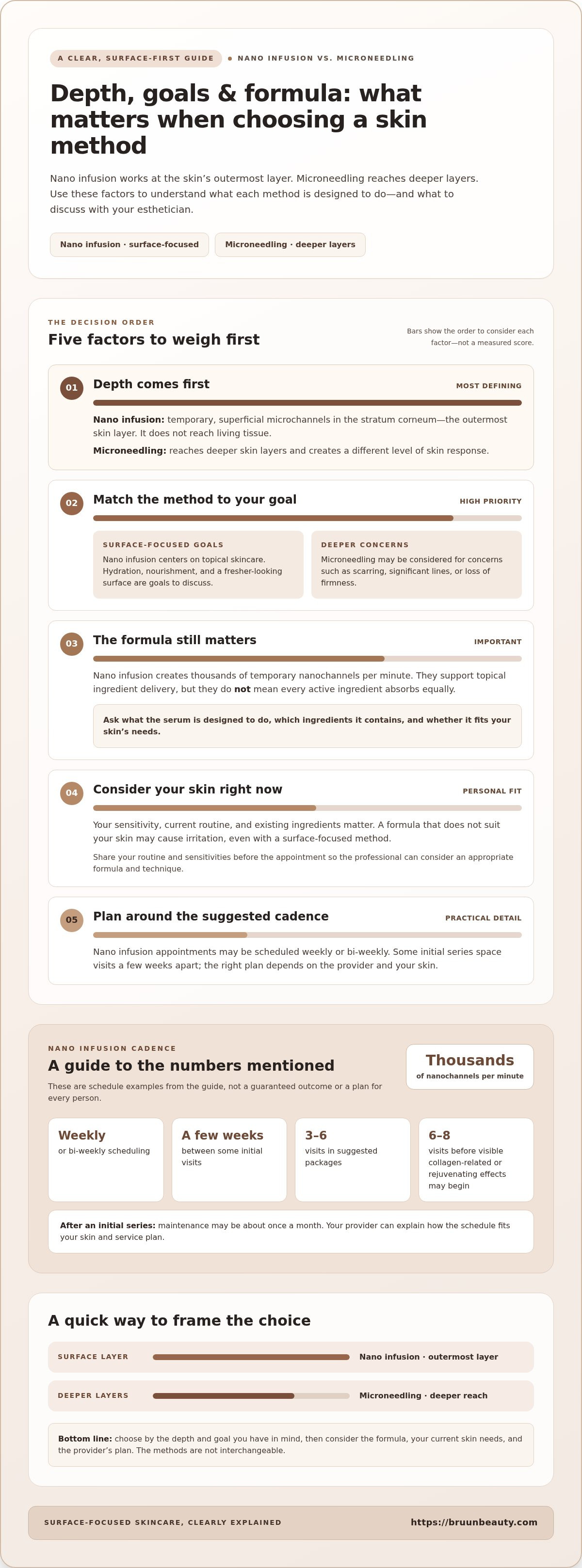
How many sessions are recommended, and how often? Nano infusion facials can be scheduled weekly or bi-weekly, while some initial series space visits a few weeks apart. Suggested packages may include 3-6 treatments. Visible collagen-related or rejuvenating effects may begin after 6-8 visits, followed by maintenance about once a month after the initial series.
What are the risks and side effects? Nano infusion doesn’t puncture the skin, but the formula and device technique still matter. Skincare ingredients that don’t suit your skin may cause irritation. Share your current routine and sensitivities before the appointment, and follow the provider’s aftercare directions.
How can you find a licensed provider near you? Search for local skincare clinics that list nano infusion among their services. Review the practitioner’s credentials and device experience, then ask what the appointment includes. A clear explanation of the procedure, serum, and aftercare helps you understand the service before booking.
Skin layers affected by each treatment
Nano infusion and microneedling differ mainly in how deeply they work. Understanding that difference can help you match a method to your goals and the skin concerns you want to address.
Skin Layers Reached by Treatment
Nano infusion works at the stratum corneum, the skin’s outermost layer. Microneedling reaches deeper layers, so the two methods create different responses. When comparing them, consider the depth your concern calls for, not just the device’s name. Nano infusion focuses on surface-level skincare, while microneedling may suit concerns such as scarring, significant lines, or loss of firmness.
The distinction also affects how you think about absorption. Nano infusion creates temporary pathways through the outer barrier, while microneedling’s greater depth is intended to create a different level of skin response. Neither description means every active ingredient will reach the same destination. Both the formula and method shape what happens at the skin’s surface.
Hydration and Skin Nourishment
For a hydration-focused routine, consider the formula applied during the service and the finish afterward. A hydrating serum, for example, can complement a surface-focused approach by adding moisture-supporting ingredients to your skincare steps. Ask what the formula is designed to do, and keep your goal specific: nourishment and a more comfortable, moisturized feel rather than deeper structural change.
Skin type and current condition also guide formula selection. An esthetician can consider whether your main concern is dryness, dull-looking texture, or uneven-looking tone, then choose compatible serums and a gentle protocol. A formula selected for hydration may not serve the same goal as one chosen to improve the look of radiance. Choose ingredients for the concern, not the trend.
Nano infusion is described as suitable for all skin types, but that doesn’t mean every formula suits every person. Your sensitivity, current skincare routine, and the ingredients you already use still matter when choosing products. Share those details before the service so the professional can select a formula and technique appropriate for your skin’s present needs.
Use the treatment’s depth to set realistic expectations. Nano infusion targets the outer layer, making it a surface-level option; microneedling is generally considered for deeper concerns. If your priority is hydration and a fresh-looking surface, discuss the formula and finishing steps. For professional microneedling skincare products, browse the microneedling collection as you compare options for that separate method.
Nano infusion does not puncture the skin. Clients may notice improved skin texture and radiance immediately after their first nano infusion facial.
Microchannels and active ingredient absorption
Nano infusion pairs temporary surface channels with topical skincare formulas. The channels support ingredient delivery, but they don’t guarantee that every active ingredient absorbs equally.
Microchannels and Active Ingredients
A nano infusion device creates thousands of nanochannels per minute across the stratum corneum. These temporary pathways let topical ingredients interact with the outer skin layer. Treat these channels as a way to interact with the outer skin layer, not as proof that ingredients reach deeper skin. The formula, its ingredients, and the method’s depth all matter when setting expectations.
Standard topical application typically has an absorption rate of 2% to 10%. Nanochannels offer another route through the skin’s outer barrier, but no specific absorption rate applies to every formula or person. Focus on the serum’s intended purpose and how it fits your routine, rather than assuming a device makes all ingredients more effective.
Nano-Channel Product Absorption
The device’s vibrating tip creates tiny channels while a topical product is applied. A practical sequence is to cleanse first, apply the selected serum as directed, then use the device according to its protocol. The temporary channels support contact between the formula and the outer layer. They don’t change the serum’s ingredient list or prove deeper delivery.
For example, compare serums by their active ingredients and intended skincare role, not just their texture. A lightweight formula and a richer serum may behave differently on the skin’s surface. The professional should match product choice to the goal, such as hydration or a brighter-looking complexion, without promising identical absorption across formulas.
Exfoliation and Serum Uptake
Nano infusion is intended to support topical delivery, so consider it separately from other skincare steps. The method focuses on temporary channels in the outer layer, while exfoliation removes surface buildup through a different process. Avoid aggressive exfoliation for about one week after a nano infusion facial, and follow the skincare directions given for the service.
Serum uptake also depends on timing and product selection. Use only formulas suited to the procedure, and avoid layering several strong active ingredients without a clear plan. For example, a simple hydrating serum keeps the routine focused after the service. A crowded routine can make it harder to tell which product supports comfort and which may cause irritation.
Keep the goal specific: channels support topical delivery at the surface, not a guaranteed result. Discuss the formula, application sequence, and aftercare before the procedure. These details help you understand how the active ingredients fit into the treatment and your regular skincare steps.
Nano infusion compared with microneedling
Nano infusion and microneedling differ in depth, skin response, and recovery. Compare these practical differences with your goal, such as surface hydration or a deeper concern involving texture.
How the Methods Differ
Nano infusion works at the stratum corneum, the skin’s outermost layer. Its cones create temporary surface channels without puncturing the skin or reaching living tissue. Microneedling uses needles to reach deeper layers and create a different skin response. That depth makes it more relevant for concerns such as scarring, significant lines, or loss of firmness.
Recovery also differs. Nano infusion protocols don’t require numbing cream or recovery time after the facial. Microneedling typically involves 24 to 48 hours of social downtime, often described as a day or two. These methods aren’t interchangeable: choose based on your skin goal, desired depth, and tolerance for visible downtime.
Choosing Between Nano Infusion and Microneedling
Use your main concern as the first decision point. For surface hydration or a refreshed-looking complexion, nano infusion offers a shallow approach. For deeper concerns involving firmness, pronounced lines, or scarring, microneedling works at a greater depth. Neither method guarantees a particular collagen response, so avoid choosing based only on promises of dramatic change.
Frequency matters, too. Nano infusion facials can be scheduled weekly or bi-weekly, while microneedling can only be performed every 4 to 6 weeks. That difference affects how a series fits your calendar. Discuss your skincare routine, desired recovery window, and treatment goals before settling on a schedule.
Pairing Nano Infusion with Microdermabrasion
Microdermabrasion and nano infusion are separate procedures with different actions. Microdermabrasion exfoliates the surface, while nano infusion uses temporary channels to support topical ingredient delivery. If you’re considering both, discuss the sequence and timing with the professional planning your facial. A combined appointment involves separate steps, so the plan should account for your skin’s current condition and intended outcome.
After either method, follow the specific aftercare instructions for that procedure. For nano infusion, avoid aggressive exfoliation and unprotected UV exposure for about one week. Apply sunscreen when spending time outdoors, and keep hydration in your skincare routine. A simple plan helps you avoid adding extra exfoliation to an already active appointment.
In short, compare depth, goal, and downtime before deciding. Nano infusion focuses on the surface; microneedling reaches deeper layers and requires more recovery time. Choose based on whether you’re prioritizing hydration and radiance or addressing a deeper texture or firmness concern.
Professional nano infusion devices
A professional nano infusion device supports a surface-focused facial, but the tool alone doesn’t define the service. The tip, single-use cartridge, serum, and application technique all shape the protocol. Understanding these elements helps you distinguish nano infusion from microneedling, light therapy, and other skincare services.
What the Device Is Designed to Do
Nano infusion devices use vibrating, hair-thin, pyramid-shaped cones to create temporary channels in the stratum corneum. Their intended action stays superficial, unlike microneedling, which reaches deeper skin layers. Look for a clear explanation of the device’s purpose and how it fits your goal, such as surface hydration or smoother-looking texture.
That distinction matters when setting expectations. Nano infusion isn’t a substitute for every device-based facial. Light therapy uses a different method, while concerns such as scarring may call for a deeper approach than nano infusion provides.
Cartridges and Service Protocol
Cartridges are single-use and should be replaced after each service. This is a core part of the procedure, not an optional device upgrade. Before the session begins, the practitioner should open a fresh cartridge for that appointment and follow the device’s operating instructions.
- Confirm that a new cartridge is used for your service.
- Ask which serum will be applied and why it suits your goal.
- Understand the order of cleansing, serum application, device passes, and finishing skincare.
These steps make the service easier to understand without relying on unsupported device settings or claims. The protocol should explain how the tool and topical formula work together.
Technique and Treatment Goals
Professional use involves more than turning on a device. The practitioner guides the tip across the skin and pairs it with a topical formula suited to the facial’s goal. For example, a hydration-focused service should center on a compatible hydrating serum, rather than implying the device itself supplies moisture.
Ask how the professional adjusts the application for areas such as the cheeks, forehead, or nose. Different contours affect how the device meets the skin’s surface. A clear explanation helps you understand the technique without confusing superficial nano infusion with deeper microneedling.
Choosing a Device-Based Facial
Start by matching the method to your priority. Nano infusion focuses on the outer layer, while microneedling is used for deeper concerns, including scarring, significant lines, and loss of firmness. A professional should explain which method fits your stated goal and what the service includes.
Choose clarity over impressive-sounding device claims. Ask about the cartridge, serum, sequence, and aftercare. These practical details tell you more about a nano infusion protocol than a device label alone.
Bruun Beauty: Advanced Microneedling Serum SD - Control Salmon DNA Ampoule Serum
Advanced Microneedling Serum SD - Control Salmon DNA Ampoule Serum is an option to consider for a microneedling skincare routine. Nano infusion and microneedling work at different depths, so don’t assume a serum labeled for microneedling automatically suits every nano infusion protocol. Match the formula to the device instructions and intended use.
For estheticians and experienced skincare users, choosing a serum starts with its stated purpose and how it fits the planned steps. Keep your routine focused, follow product directions, and don’t treat ingredient names as a promise of a particular result. Bruun Beauty also offers Jelly Mask Kits and BB Glow Treatment Supplies for other skincare routines.
Visit Bruun Beauty online to explore the serum and related skincare supplies.
Choose Your Next Skincare Step with Confidence
Knowing what a nano infusion facial is can help you ask more focused questions about your next skincare step. Start with your main goal, then consider which method and products fit it. Keep your routine intentional: choose formulas for their stated purpose, follow their directions, and avoid adding multiple new products at once.
For a microneedling-focused routine, Bruun Beauty offers advanced microneedling devices and Advanced Microneedling Serum SD - Control Salmon DNA Ampoule Serum. Jelly Mask Kits provide another option for your skincare lineup. Choose products based on the method you plan to use, rather than assuming every item belongs in every routine.
Whether you’re refining a professional setup or planning your at-home skincare steps, let your goals guide your choices. A thoughtful routine gives you a clearer path toward skin that feels nourished and looks radiant.
Frequently Asked Questions
What is a nano infusion facial and how does it work?
A nano infusion facial is a cosmetic service that pairs a topical skincare formula with a surface-focused device. Before booking, define your priority, such as a fresh-looking complexion or product application. This gives you a clearer way to discuss whether the service matches your expectations and routine.
What happens during a nano infusion facial appointment?
An appointment should include a conversation about your goals and the products planned for use. Tell the practitioner which areas concern you and what you currently apply at home. Before leaving, make sure you understand the aftercare directions and which steps to resume in your usual routine.
What skincare ingredients are used in nano infusion facials?
There isn’t one fixed ingredient list for every facial. The provider selects a formula based on the service’s purpose and product directions. Ask to see the ingredient list before application, especially if you already know an ingredient doesn’t suit your skin. This simple step helps you make an informed choice.
What are the benefits and limitations of a nano infusion facial?
The main advantage is a surface-focused service that pairs device use with topical skincare. Its limitation is that it isn’t designed for every skin goal or deeper concern. Treat claims about results as specific to the formula and protocol, and choose the service for a goal it’s intended to support.
What is the recovery time and aftercare for a nano infusion facial?
Nano infusion protocols don’t require recovery time after the facial. Follow the appointment’s aftercare directions, and keep track of the products used during the service. If you’re planning another exfoliating skincare step, don’t add it to the same routine without guidance; give your skin a simple, consistent product lineup.
Who should avoid a nano infusion facial?
Nano infusion is described as suitable for all skin types and tones, but that doesn’t make every product suitable for everyone. If your skin is reacting to a product or feels unusually sensitive, share that before the appointment. Discuss your current routine and the planned formula so the protocol accounts for your skin’s present condition.
How does nano infusion compare with microneedling, dermaplaning, and regular facials?
These services differ in method and purpose. Microneedling works deeper; dermaplaning focuses on exfoliation; and a regular facial can combine cleansing and skincare steps. Compare the specific steps included, not just the service name. This helps you choose an appointment that aligns with your priority, whether that’s exfoliation, surface skincare, or a deeper approach.
Best Serum for Neck Wrinkles: Microneedling Guide
How to Get Rid of Tech Neck Lines: Esthetician's Guide
Related Posts

Consistent Microneedling and the Long-Term Changes to Expect

Aftercare choices to lower infection risk at home after microneedling

How to Create a Relaxing At-Home Spa Day With Simple Rituals

Sunscreen Recommendations After Microneedling: How to Protect Healing Skin

Investing in my skin for the future: what deserves my budget

Post-microneedling skincare routine for masks, makeup, and recovery

Skin Peeling After Microneedling: What to Avoid and When to Resume Makeup
