

How Often to Microneedle: Frequency Guide for Skin
To achieve glowing results safely, you should generally microneedle every 4 to 6 weeks. Determining how often should you microneedle depends on your needle depth and specific goals, as your skin needs time to complete its natural 28-day renewal cycle. Using a device like a Dr. Pen too frequently can interrupt this process and lead to irritation instead of the smooth texture you want.
What if the secret to professional results isn't how often you use your device, but how long you wait between sessions? It's completely normal to feel frustrated by conflicting advice or the fear of causing accidental damage while chasing a clearer complexion. You want to see a difference in your skin's glow, but you don't want to risk long-term sensitivity or slow progress.
This guide will give you a clear, safe schedule to follow so you can enjoy improved skin texture and professional-grade results at home. We'll break down the ideal frequency for different needle depths and explain how to support your skin's recovery with professional-grade Salmon DNA serums and cooling jelly masks. You'll learn exactly when to pick up your device and when to let your skin rest for the best possible outcome.
Key Takeaways
- Learn why the 28-day skin renewal cycle is the foundation of your schedule and why waiting is just as important as the procedure itself.
- Understand how often should you microneedle based on needle depth, ranging from light cosmetic sessions to deeper professional-grade treatments.
- Identify the warning signs of over-stimulation, such as "orange peel" texture or prolonged redness, to keep your skin safe and healthy.
- Discover how to use Salmon DNA serums and jelly masks to support your skin's natural repair response during the crucial days after a session.
- Tailor your frequency to your specific skin goals, whether you're maintaining a glow or working toward significant texture improvements.
The Science of Skin Renewal: Why Timing Matters
Microneedling isn't just about the needles. It's about how your skin responds to them. When you use a DR. PEN device, you create tiny, controlled channels that prompt your skin to enter a natural repair mode. This process is highly effective, but it relies entirely on your body's internal clock.
Your skin typically follows a 28-day cellular turnover cycle. This means it takes about a month for new cells to reach the surface. If you're wondering how often should you microneedle, the answer is usually linked to this specific cycle. Pushing your skin to work faster than it's naturally able to can lead to a compromised barrier rather than the glow you're looking for.
The Role of Collagen and Elastin
Collagen and elastin are the building blocks of firm, smooth skin. These proteins are responsible for improving the appearance of fine lines and uneven texture. However, collagen synthesis is a slow and steady process that doesn't happen overnight. It requires a period of rest to build the strong, organized fibers that give your skin its bounce.
You might see an immediate "plump" after your session, but the real structural changes take place over several weeks. A single session of collagen induction therapy typically shows its most significant results after the 4-week milestone as new fibers mature. Patience is your best friend when waiting for these proteins to reorganize and strengthen your skin's foundation.
Why Recovery is the Most Important Phase
The 48 hours following your session are the most critical for your results. During this time, your skin is highly receptive but also sensitive. While the micro-channels close relatively quickly, the "invisible repair" continues deep beneath the surface for weeks after the needles have touched your skin.
The serums you apply during this window can make or break your final results. Using a professional-grade product like the Advanced Microneedling Serum SD helps provide the vitalizing nutrients your skin craves during recovery. To soothe any temporary redness, many enthusiasts pair their treatment with a cooling jelly mask. This combination ensures you're supporting the repair process rather than just causing stimulation without a plan.
Frequency Guidelines Based on Needle Depth
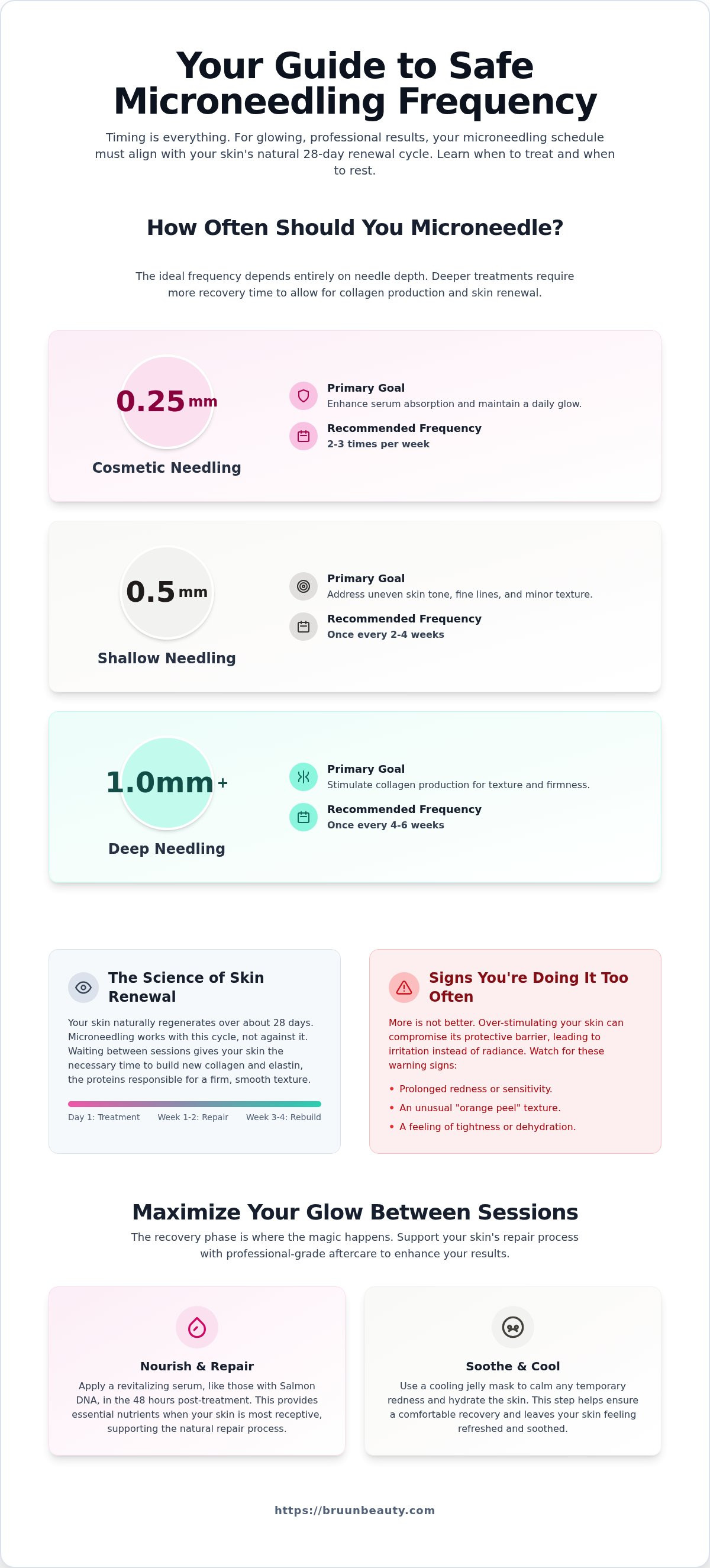
Your needle depth is the most important factor in deciding how often should you microneedle. While it's tempting to reach for your device every few days, your skin needs time to rebuild. Deeper needles create more significant micro-channels, which naturally require a longer recovery period to ensure you achieve a nourished, glowing complexion safely.
Cosmetic Needling (0.25mm): 2-3 Times a Week
At 0.25mm, you aren't reaching the deeper layers of the skin. Instead, this depth focuses on the epidermis to enhance how well your serums absorb. Because this is a non-invasive approach, most skin types can handle sessions 2-3 times a week without irritation. It's a great way to maintain a daily glow and keep your skin hydrated. You can find the right tools for this depth in our microneedling collection.
Shallow Needling (0.5mm): Once Every 2-4 Weeks
The 0.5mm depth is often considered the "sweet spot" for at-home enthusiasts. It's effective for addressing uneven skin tone and minor texture issues. However, because it reaches slightly deeper, you must allow for a full 14-day rest period. Following this schedule helps you see visible results like a smoother surface and improved radiance without over-stressing your skin barrier.
Understanding microneedling recovery and results is vital here, as most professional guidelines suggest spacing sessions to avoid inflammation. For 0.5mm needles, once every 2 to 4 weeks provides the perfect balance of stimulation and rest.
Deep Needling (1.0mm and Above): Once Every 4-6 Weeks
When you move to 1.0mm or 1.5mm, the needles reach the dermis to trigger collagen production. This requires significant downtime. You shouldn't perform these sessions more than once every 4 to 6 weeks. Using DR. PEN devices allows you to adjust these depths with precision, which is essential when working on deeper skin concerns. Using these depths too frequently can lead to thinning of the skin or long-term sensitivity.
Professional Depths (2.0mm and Beyond)
Depths of 2.0mm and above are typically reserved for professional settings or very specific body areas. These sessions should be spaced at least 6 to 8 weeks apart. This extended window ensures the skin has completely finished its internal remodeling before you introduce new micro-injuries.
Customizing Your Schedule for Your Skin Goals
Your skin's specific needs determine how hard it needs to work during the recovery phase. While the general rules for needle depth provide a baseline, your personal goals for texture or tone will shift your timeline. Consistency always beats intensity when you're looking for long-lasting results. We recommend tracking your sessions in a skincare journal or app to ensure you don't overwork your barrier.
When deciding how often should you microneedle, it's helpful to look at professional microneedling frequency for guidance. Most experts suggest a series of sessions rather than a one-time event to see a real change in your skin's appearance. By aligning your schedule with your specific concerns, you ensure every session counts toward your ultimate glow.
Improving the Appearance of Fine Lines
For early signs of aging or fine lines, a moderate frequency is usually the most effective approach. Aim for a session every 4 weeks using a needle depth between 0.5mm and 1.0mm. This rhythm allows your skin to fully recover while keeping the collagen production process active and steady. You'll find that consistent 4-week intervals lead to long-term cumulative benefits that keep your skin looking plump and youthful.
Pairing these sessions with peptide-rich serums helps provide the essential nutrients needed for a smoother look. Since fine lines are often a result of depleted proteins, giving your skin a boost during its repair phase is vital. You don't need to use the deepest setting to see a difference; regular, well-spaced sessions at moderate depths often yield the best results for a refreshed complexion.
Addressing Acne Scars and Texture
Texture concerns and older acne scars often require a more patient and strategic approach. Deeper sessions using 1.0mm or longer needles are typically more effective for these issues, but they require more downtime. Spacing these sessions 6 weeks apart gives the dermis enough time to remodel and smooth out the surface without causing unnecessary stress. Pushing for faster results by needling too soon can actually set your progress back by causing inflammation.
Safety is paramount when working with texture. Never use your device over active breakouts, as this can spread bacteria and cause further irritation or sensitivity. Always use fresh needle cartridges for every session to maintain professional-grade safety and precision. Using a new, sterile cartridge ensures that the needles are sharp and won't cause unnecessary trauma to the skin surface.
If you're focused on aggressive improvement, it's tempting to shorten the window between sessions. However, the remodeling of scar tissue is a slow process. By sticking to a 6-week schedule, you allow the deeper layers of the skin to strengthen and reorganize, resulting in a more even and refined texture over time.
Signs You Are Microneedling Too Often
When you're excited about your results, it's easy to wonder if you can speed things up. However, asking how often should you microneedle is usually a question of safety rather than speed. If you push your skin too hard, you risk creating an "orange peel" texture. This look happens when the skin is over-stimulated and develops tiny, visible pores or a thickened, waxy appearance from excessive micro-trauma.
Physical symptoms are your skin's way of asking for a break. If redness lasts longer than 48 hours or you experience extreme, sandpaper-like dryness, you've likely overdone it. This state of constant inflammation is the enemy of good results. Instead of building healthy collagen, your skin is stuck in a cycle of stress that leads to a compromised barrier. This compromise means your skin can no longer keep moisture in or irritants out effectively.
How to Identify a Damaged Barrier
A damaged barrier feels distinct from normal post-procedure sensitivity. You might notice stinging when applying your regular, gentle moisturizer or see persistent flakiness that doesn't resolve with hydration. Your skin might feel tight, itchy, or reactive to products you usually love. Look for these specific signs:
- Stinging or burning during routine skincare steps.
- Rough, flaky patches that persist for over a week.
- Increased sensitivity to wind, heat, or touch.
If these signs appear, you must take a full month off from all needling activities. Your skin needs to complete at least one full renewal cycle without additional stimulation to reset its defenses. Pushing through the pain will only lead to longer recovery times and may cause long-term sensitivity.
The Recovery Protocol
To reset your skin, follow a simple "Stop and Soothe" protocol. First, put away your device and any active acids or retinols. Second, focus on deep hydration and cooling. Third, protect your progress with daily SPF 30+ to prevent pigmentation while your skin is vulnerable. This simple approach gives your barrier the space it needs to strengthen.
During this window, switch to gentle, hydrating products like jelly masks to cool the surface and lock in moisture. Incorporating a PDRN serum, such as the Advanced Microneedling Serum SD, provides the essential nutrients needed to support the skin’s natural barrier. These professional-grade ingredients help nourish the skin without causing further irritation, helping you get back to your regular schedule safely.
Maximizing Results: What to Do Between Sessions
Microneedling creates thousands of microscopic channels in your skin. These tiny pathways stay open for a very short time, usually closing within a few hours of your session. This makes the immediate post-treatment window the most effective time to deliver high-performance ingredients deep into the epidermis. What you apply during this time determines how well your skin recovers and glows.
When you're planning how often should you microneedle, remember that the downtime is when the real transformation happens. Your skin needs specific nutrients and consistent moisture to complete its natural 28-day repair cycle. Proper care between sessions ensures that you maintain your results and keep your skin nourished and healthy without causing unnecessary stress to the barrier.
The Power of Salmon DNA (PDRN)
One of the best-kept K-beauty secrets is the use of PDRN, or Salmon DNA, to support skin vitality. The SD Control Salmon DNA Ampoule is the perfect companion for your recovery phase. It supports a refreshing and vitalizing appearance by providing the essential building blocks your skin needs to thrive. This serum provides an immediate soothing effect on post-needled skin, helping to reduce the feeling of tightness and heat that often follows a session.
Post-Treatment Cooling with Jelly Masks
Lowering your skin's temperature right after a session is essential for comfort and recovery. Applying a professional jelly mask provides a cooling sensation that calms the skin instantly. These masks create an occlusive seal, which helps your Salmon DNA serums penetrate even deeper into the skin layers rather than evaporating. We recommend choosing masks from our jelly mask kits that feature Hyaluronic Acid or Lavender for their hydrating and calming properties.
Hydration and Active Ingredients
In the weeks between your treatments, your primary focus should be on simple, deep hydration. You should wait at least 5 to 7 days before reintroducing powerful active ingredients like Vitamin C or Retinol. Giving your skin this buffer prevents irritation and allows new collagen fibers to develop without interruption. If you use these actives too early, you might cause redness or sensitivity that delays your next session.
Consistency in your daily routine is what bridges the gap between professional-grade results. Drink plenty of water and use a gentle moisturizer twice a day to support the "invisible repair" happening beneath the surface. Knowing how often should you microneedle is only half the battle; the other half is giving your skin the right environment to bloom and stay radiant.
Start Your Journey to Radiant Skin
Finding the right rhythm for your skincare is about listening to your skin and respecting its natural 28-day renewal cycle. Whether you're using a cosmetic depth for product absorption or deeper settings for texture, consistency will always yield better results than rushing the process. Knowing exactly how often should you microneedle allows you to build a safe, effective routine that delivers professional-grade results from the comfort of home.
Remember to support your recovery with professional-grade Salmon DNA serums and cooling jelly masks to lock in that healthy glow. As a US-based leader shipping from Miami and Los Angeles, BRÜUN provides the same trusted tools used by licensed estheticians across the country. You'll achieve clear, nourished skin by following a schedule that prioritizes safety and long-term vitality.
Your path to a smoother complexion is a marathon, not a sprint; your skin will thank you for the extra care and patience.
Frequently Asked Questions
Can I microneedle every week for faster results?
You should not microneedle every week if you're using needle depths of 0.5mm or greater. Your skin requires at least 2 to 4 weeks to complete its natural repair process and build new collagen. Weekly sessions with deeper needles can lead to chronic inflammation and a compromised skin barrier. The only exception is very shallow cosmetic needling at 0.25mm, which can be done more frequently to help your serums absorb better.
How long does it take to see results from microneedling at home?
You'll likely notice a temporary glow and plumpness immediately after your first session due to increased blood flow. However, significant changes in texture and tone usually take 4 to 6 weeks to appear. This timeline aligns with your skin's 28-day renewal cycle and the time needed for new collagen fibers to mature. Most users see the best outcomes after a series of 3 to 5 consistent sessions.
Is it safe to microneedle if I have active acne?
It is not safe to microneedle directly over active acne breakouts. Doing so can spread bacteria across your face, potentially causing more breakouts or increasing the risk of irritation. You should wait until your skin is clear before starting a session. If you have a single blemish, you can carefully navigate around it, but it's often best to let your skin rest until it's fully calm and ready for stimulation.
How many sessions do I need for significant improvement in skin texture?
Most people achieve visible improvement in skin texture after 3 to 6 sessions. When determining how often should you microneedle for these results, spacing is more important than the total number of sessions. By allowing 4 to 6 weeks between treatments, you give the deeper layers of your skin enough time to remodel. Consistency over several months leads to a smoother, more refined appearance that looks professional and natural.
Can I use Vitamin C immediately after microneedling?
You should avoid using Vitamin C immediately after your session. Because microneedling creates open channels, highly acidic ingredients like L-ascorbic acid can cause intense stinging, redness, and irritation. It's best to wait at least 48 to 72 hours before reintroducing Vitamin C into your routine. Instead, focus on soothing ingredients like Salmon DNA or hyaluronic acid to support the initial recovery phase and keep your skin nourished and calm.
What is the best needle depth for beginners?
Beginners should start with a needle depth between 0.25mm and 0.5mm. A depth of 0.25mm is perfect for getting used to the sensation and improving product absorption without significant downtime. Once you're comfortable, moving to 0.5mm allows you to address minor texture concerns and uneven tone. Always start at the lowest setting on your Dr. Pen device to see how your skin reacts before gradually increasing the depth for future sessions.
Should I microneedle in the morning or at night?
It's best to microneedle at night before you go to sleep. Your skin performs its most intensive repair work while you rest; this timing also allows you to avoid sun exposure and makeup for several hours. After your session, your skin will likely be red and sensitive, so sleeping through the initial recovery window is much more comfortable. You'll wake up with calmer skin that's ready for gentle hydration and protection.
How do I know when my skin is ready for the next session?
Your skin is ready for the next session when all signs of redness, flakiness, and sensitivity have completely disappeared. Even if your skin looks normal, you should still wait at least 4 weeks to ensure the internal remodeling process is finished. If you're still wondering how often should you microneedle, look for a resilient barrier that doesn't sting when you apply your daily moisturizer. Patience ensures your results stay safe and effective.
Dr. Pen A6 Ultima Review: Is This Microneedling Classic Still the Best in 2026?
PDRN vs. Hyaluronic Acid: The Ultimate Guide to Skin Regeneration and Hydration (2026)
Related Posts

Consistent Microneedling and the Long-Term Changes to Expect

Aftercare choices to lower infection risk at home after microneedling

How to Create a Relaxing At-Home Spa Day With Simple Rituals

Sunscreen Recommendations After Microneedling: How to Protect Healing Skin

Investing in my skin for the future: what deserves my budget

Post-microneedling skincare routine for masks, makeup, and recovery

Skin Peeling After Microneedling: What to Avoid and When to Resume Makeup
