

How Cica Serum May Help Sensitive Skin Feel Calmer
Sensitive skin often needs barrier support more than another complicated step. Cica serum benefits for sensitive skin may include helping skin retain moisture, supporting its protective barrier, and soothing the look of redness and irritation. Cica’s antioxidant properties also make it a popular ingredient in calming skincare.
If your skin is reactive, you may hesitate before adding even a product that feels gentle. Cica may be worth considering, but the complete formula and how you introduce it matter, too.
Learn what cica is, how it may help sensitive skin feel more comfortable, and what its antioxidant properties mean in everyday skincare. You’ll also find practical guidance for using a cica serum and introducing it carefully.
Key Takeaways
- Cica may help your skin retain moisture and support its protective barrier, which can make it a useful ingredient when your skin feels dry or easily irritated.
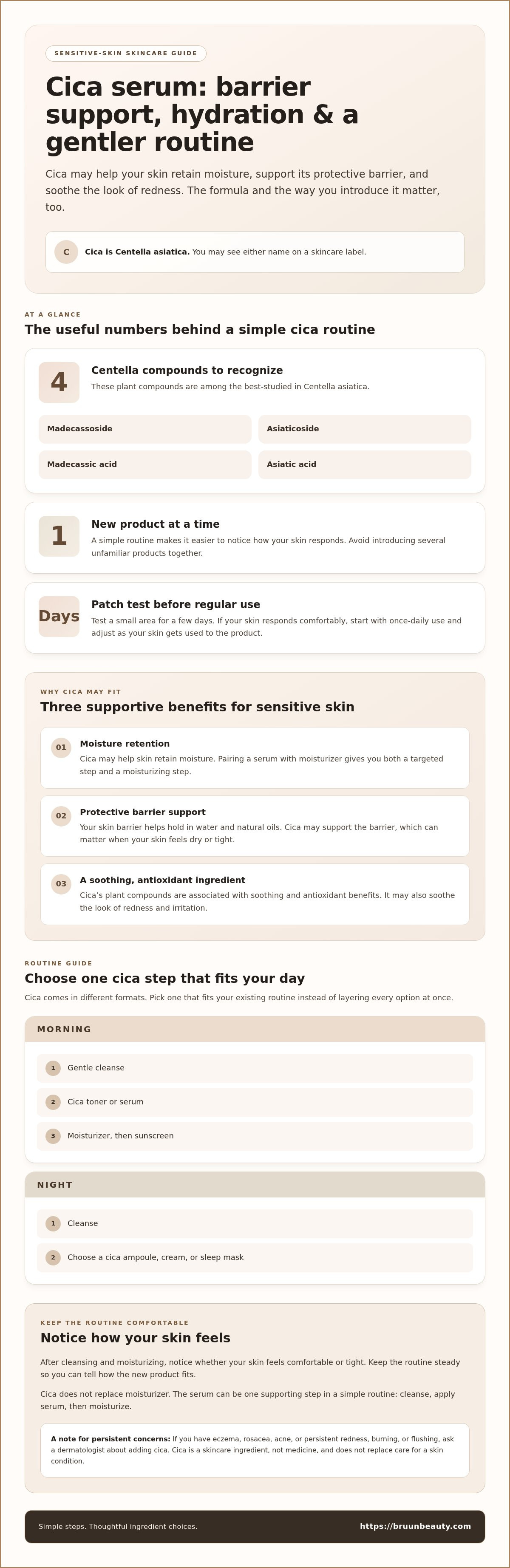
- Cica is a common name for Centella asiatica. Its plant compounds are associated with soothing and antioxidant benefits.
- Try a cica toner or serum in the morning, or an ampoule, cream, or sleep mask at night, based on what fits your routine.
- Introduce a new serum carefully: patch test it for a few days and start with once-daily use before increasing frequency as your skin adjusts.
- For a separate serum option, Bruun Beauty’s Advanced Microneedling Serum SD - Control Salmon DNA Ampoule Serum offers another ingredient-focused addition to explore.
What are the benefits of Cica for the skin?
Cica may help skin retain moisture and support its protective barrier. For sensitive skin, that makes daily hydration a useful focus, especially if dryness leaves your face feeling tight.
Skin Barrier Support
Your skin barrier is the outer layer that helps retain water and natural oils. Cica may support this barrier and help maintain its natural moisture. That support can matter when your skin feels dry or tight after cleansing, making your routine less comfortable.
Try a simple morning routine: cleanse gently, apply a cica serum, then use moisturizer. The serum adds a targeted step, while moisturizer helps keep your routine focused on barrier support. Cica doesn’t replace other skincare steps; it can complement the basics that help skin feel nourished and comfortable.
Notice how your skin responds after adding cica. If your face feels comfortable after cleansing and moisturizing, keep your routine steady instead of adding several new products at once. This makes it easier to identify which steps suit your skin and which may cause discomfort.
Moisturizing and Hydration Benefits
Cica’s moisturizing benefits are associated with helping skin retain moisture. Hydration refers to the water skin holds, while moisturized skin tends to feel less dry and tight. The two are related, but cica isn’t a substitute for moisturizer. Pairing a cica serum with moisturizer is a practical way to include both steps.
For example, apply serum after cleansing, then smooth moisturizer over your face. The lightweight serum goes beneath the moisturizing step. If your skin feels dry by midday, consider whether your routine includes both steps and whether your cleanser leaves your face feeling tight.
Consistency matters more than layering several hydrating products in one morning. Keep your routine simple and notice whether your skin feels more comfortable after cleansing and moisturizing. Cica may support moisture retention, while the rest of your products also shape how the routine feels.
Skin Barrier Support and Water Loss
The skin barrier helps limit water loss from the skin’s surface. When the barrier holds moisture more effectively, your skin may feel less dry between routine steps. Cica may support the barrier by helping restore some of its natural oils and water, connecting its moisture benefits with everyday comfort.
For example, notice whether your face feels tight after washing. Instead of immediately adding extra layers, keep the sequence simple: cleanse, apply cica serum, then use moisturizer. The serum may support moisture retention, while moisturizer adds another hydrating step. Your skin’s response can guide how these products fit together.
Track changes in how your skin feels, such as tightness after cleansing or dryness before your next routine. These observations help you assess whether your routine supports hydration throughout the day. Cica can play a supporting role, but the whole routine matters: cleansing, serum, and moisturizer each have a distinct function.
Is cica the same as Centella asiatica?
Yes. Cica is a common skincare name for Centella asiatica, a plant used in topical products. There’s no single serum concentration that suits every sensitive-skin routine. Consider the full formula and how your skin responds, rather than choosing by percentage alone.
Centella Asiatica as Cica
Centella asiatica, also called centella or cica, is a plant used in skincare. Its name may appear in ingredient lists instead of “cica,” so recognizing both terms can help when comparing formulas.
Centella asiatica has a long history of use in traditional Chinese medicine for skin care. In modern routines, it may appear in a serum, toner, cream, or mask. The format affects how you use it, while the full ingredient list shows what else you’re applying.
Skincare Compounds in Centella Asiatica
Centella asiatica contains several plant compounds. Four of its best-studied are madecassoside, asiaticoside, madecassic acid, and asiatic acid. Knowing these names can help you recognize centella components on skincare labels.
A product may combine centella with other ingredients, so don’t judge it by one compound alone. A simpler formula can make it easier to notice how sensitive skin responds. Introduce one new product at a time rather than combining a cica serum with several unfamiliar ingredients.
Centella asiatica can be used daily in skincare. In the morning, apply a cica toner or serum after cleansing, then use moisturizer and sunscreen. At night, an ampoule, cream, or sleep mask can be your centella-containing step. Choose a format that fits your routine instead of layering every option at once.
For example, if you already use a morning serum, consider whether adding a centella toner would be unnecessary. If your evening routine is simpler, a cream or ampoule may fit more naturally. Keep your routine consistent so you can notice how your skin responds.
When reading a label, look for Centella asiatica or cica, then scan the remaining ingredients. Texture, supporting ingredients, and your existing routine all shape how a product feels on your skin. If you’re also exploring products for professional microneedling routines, browse microneedling skincare options as a separate category from everyday cica skincare.
Cica’s soothing effects on redness and irritation
Cica may soothe sensitive skin and reduce visible signs of irritation, including redness. Reactions are possible: patch test a new formula on a small area for a few days, and stop using it if unwanted effects occur.
If you have eczema, rosacea, acne, or persistent redness, burning, or flushing, ask a dermatologist about adding cica. Cica is a skincare ingredient, not medicine, and doesn’t replace care for a skin condition.
Benefits for Sensitive or Irritated Skin
Cica may calm the look of irritation, making it appealing when skin feels reactive. Its potential soothing effect makes it an option focused on comfort, not a treatment for an underlying condition.
For example, if a new cleanser leaves your cheeks looking red, don’t add several calming products at once. Introduce one cica formula, patch test it for a few days, and watch for itching or increased sensitivity. This measured approach makes it easier to notice how your skin responds.
The formula matters, too. A product containing Centella asiatica may also include other ingredients, and your skin responds to the whole product. Review the ingredient list, then keep the rest of your routine familiar as you assess the new step. Avoid introducing a cica serum alongside several unfamiliar products.
Considerations for Eczema, Rosacea, or Acne
If you have eczema, rosacea, or acne, cica’s calming properties don’t make it a substitute for advice about your condition. Ask a dermatologist before adding it, especially if you use prescription skincare or have persistent symptoms.
Ongoing redness, burning, or flushing may point to rosacea or another condition. Seek a dermatologist’s advice instead of relying on a serum alone. Cica skincare should not be relied on as the sole response to acne or a skin condition. Its role is limited to skincare support, and the complete formula still matters.
Some people may experience irritation or sensitivity from products containing Centella asiatica. Potential side effects listed for cica include itching, drowsiness, nausea, bloating, and increased sensitivity to sunlight. Stop using the product if side effects occur. If jaundice, mild fever, abdominal pain, or clay-colored stools develop, seek medical help immediately.
Keep your routine simple while assessing a new formula. Test it on a small area for a few days before applying it more broadly, and note any change in redness or discomfort. If a reaction appears, stop using the product rather than adding another ingredient to counter it. This makes your next step clearer.
Collagen is sometimes discussed alongside soothing skincare, but don’t assume a cica serum changes collagen or addresses a medical concern. Focus on the formula’s intended role: supporting a calming routine and reducing the visible signs of irritation. A dermatologist can help assess persistent symptoms and skincare questions.
Antioxidant protection
Antioxidant protection refers to how ingredients help limit the effects of free radicals on skin. Centella asiatica extract is valued for its antioxidant properties, giving cica a role beyond its soothing reputation. This support may help skin manage everyday environmental stress, but it isn’t an invisible shield or an overnight change.
Free radicals can form through normal environmental exposure and contribute to oxidative stress. In skincare, antioxidants help counter that process. Think of cica extract as one supportive ingredient in a formula, not a complete solution for every source of stress your skin encounters.
That distinction keeps expectations realistic. Antioxidant support doesn’t mean a serum prevents every visible change or replaces other skincare goals. For example, you might choose a cica product for its soothing and antioxidant properties, while another product focuses on texture or hydration. Each formula has its own purpose.
Centella asiatica contains plant compounds associated with its skincare properties. The extract alone doesn’t tell you how a finished product will feel or perform. The full formula, including its texture and other ingredients, shapes your experience. A serum that feels comfortable may be easier to use consistently than one that feels heavy or unpleasant.
Antioxidants are also discussed in relation to skin elasticity, but don’t assume every cica extract produces a visible change in firmness. Product claims depend on the specific formula and the outcome described. Consider what the product is designed to support, separate from broader promises about collagen production or dramatic changes in skin texture.
To compare products, read the ingredient list and look for Centella asiatica or cica extract. Then consider how the product feels on your skin and whether its stated purpose matches your priority. If soothing is your main focus, cica’s antioxidant properties can be an additional consideration, not the only reason to choose a formula.
Antioxidant skincare works best as part of a considered routine, with each ingredient serving a clear purpose. Cica extract may contribute antioxidant and soothing properties, while your skin’s response helps you decide whether its texture and overall formula suit you. Focus on comfort and realistic expectations instead of expecting one ingredient to address every concern.
Cica serum for sensitive skin
Cica can fit into daily skincare across skin types, including sensitive skin, but the full formula matters. Compared with ceramide, panthenol, or aloe vera serums, cica offers a different ingredient profile. Patch test before regular use.
Cica Serum Use for Sensitive Skin
A cica serum is a leave-on step containing Centella asiatica. Whether it suits your routine depends on how your skin feels and on the rest of the formula, not just your skin type.
Apply two to three drops after cleansing and before moisturizer. Start once daily, then increase to twice daily as your skin adjusts. In the morning, finish with sunscreen, since cica doesn’t replace sun protection.
For example, if your skin already feels balanced with a simple cleanser and moisturizer, add cica as one new step. Avoid changing several products at once. That makes it easier to notice whether the serum supports your routine or contributes to irritation.
Comparisons with Other Serums
Cica, ceramides, panthenol, and aloe vera offer different skincare approaches, so choose based on your routine’s focus. Ceramides support the skin barrier, while panthenol is used to moisturize and soothe. Aloe vera often appears in soothing formulas; cica adds Centella asiatica to the mix.
These ingredients don’t have to compete. Cica can be paired with panthenol or niacinamide, but check the complete formula and introduce products gradually. If barrier support is your main goal, a ceramide formula may fit; if you want to try centella, choose a cica product that feels comfortable on your skin.
A vitamin ingredient or a claim about collagen production doesn’t determine whether a cica serum suits sensitive skin. Consider its texture, supporting ingredients, and how it layers with your moisturizer. Choose a product that fits your routine without adding unnecessary steps.
Patch Testing and Application
Patch testing means applying a new product to a small area for a few days before regular use. It helps you notice irritation or sensitivity before applying the serum across your face.
Once daily is a sensible starting frequency for sensitive skin. Apply two to three drops after cleansing, then use moisturizer. Increase to twice daily as your skin adjusts, following the product directions.
If itching or irritation develops, stop using the product. Keep the rest of your routine steady while testing cica, and avoid adding several new ingredients at once. Persistent redness, burning, or flushing calls for a dermatologist’s advice, not another serum adjustment.
Bruun Beauty: Advanced Microneedling Serum SD - Control Salmon DNA Ampoule Serum
Advanced Microneedling Serum SD - Control Salmon DNA Ampoule Serum is a separate option for those exploring microneedling skincare. It isn’t a cica serum, so consider it a different product category, not a substitute for Centella asiatica in a daily routine.
If you’re comparing ingredients for sensitive skin, keep your goal clear: cica is used in soothing skincare, while Bruun Beauty’s serum is designed for microneedling. Review the product details and follow its directions before adding it to your routine. Don’t assume a microneedling serum is used like an everyday face serum.
For questions about this product, contact Bruun Beauty or visit the Bruun Beauty website.
Choose Your Next Skincare Step With Care
Let your skin’s response guide what you add next. Understanding cica serum benefits for sensitive skin can help you make a more intentional choice, but your routine should still reflect your comfort and preferences. Keep new additions focused and give yourself time to notice how each product feels.
For professional skincare routines, Bruun Beauty offers Advanced Microneedling Serum SD - Control Salmon DNA Ampoule Serum, Jelly Mask Kits, and advanced microneedling devices. These differ from everyday cica skincare, so consider your goals and the product directions when choosing what fits your routine.
Build a routine that feels thoughtful and manageable. Small, informed choices can help you care for your skin with greater confidence.
Frequently Asked Questions
Can You Use Cica Serum Every Day?
Yes, Centella asiatica can be used daily in skincare. Follow the directions on your product, since formulas and instructions vary. If you use prescription skincare or other active ingredients, consider how the products fit together instead of assuming they all belong in the same routine.
Does cica help with acne?
Cica isn’t an acne solution, but Centella asiatica itself doesn’t clog pores. The complete serum formula still matters, since other ingredients can affect how a product feels on your skin. If choosing a serum during breakouts, look beyond the featured ingredient and consider the full label.
Can I use cica with niacinamide?
Yes, cica can be paired with niacinamide. Use them in separate products or choose a formula containing both. If you already know that one ingredient suits your skin, that familiarity may help you assess a combination product. Consider the full ingredient list, not just the highlighted actives.
How long does cica take to work?
There’s no single timeline that applies to every cica serum. Your experience may depend on the formula, how consistently you use it, and what else is in your routine. Track one change, such as how your skin feels after cleansing, instead of judging several products at once.
What is cica in skincare?
Cica is a skincare name for Centella asiatica, a plant used in topical products. The term may appear on packaging or in product descriptions, while the ingredient list gives more detail about the formula. Check both when comparing products, especially if you’re sensitive to other ingredients.
When Will You See Results?
Look for gradual changes in how your skin feels and appears, rather than expecting an immediate difference. Compare your skin under similar conditions and keep the rest of your routine steady. Weather, cleansing, and other products can also affect how your skin feels, making comparisons less clear.
Who should be careful with cica?
People who are pregnant or breastfeeding, have a medical skin condition, or use prescription skincare should ask a healthcare provider before adding new products. Review the entire formula, not just its cica content. This matters because a serum contains multiple ingredients that may affect your routine.
What is cica (Centella asiatica) serum, and how does it work?
A cica serum is a leave-on skincare product formulated with Centella asiatica or its components. It adds the plant ingredient to your routine in serum form. The other ingredients and texture shape how it layers with your existing skincare, so read the full label before choosing.
Best Professional Microneedling Pen 2026: An Esthetician’s Guide to Results
Best Professional Microneedling Pen 2026: An Esthetician’s Guide to Results
Related Posts

Consistent Microneedling and the Long-Term Changes to Expect

Aftercare choices to lower infection risk at home after microneedling

How to Create a Relaxing At-Home Spa Day With Simple Rituals

Sunscreen Recommendations After Microneedling: How to Protect Healing Skin

Investing in my skin for the future: what deserves my budget

Post-microneedling skincare routine for masks, makeup, and recovery

Skin Peeling After Microneedling: What to Avoid and When to Resume Makeup
