

Best Serums for Dr. Pen Microneedling: A Professional Guide
What if the "miracle" serum you're using during microneedling is actually the reason your skin stays red and irritated? To get the best results, you need to know exactly what serum to use with Dr. Pen to provide a safe "slip" without causing internal skin damage. Using a pure, sterile hyaluronic acid during the procedure is the professional standard for preventing complications like granulomas while ensuring the device glides smoothly.
It's natural to feel confused by the difference between serums meant for "glide" and those meant for "absorption." You want clear, nourished, glowing skin, but you don't want to risk your safety or waste money on expensive products that aren't needle-safe. We've helped many skincare enthusiasts move past this confusion to achieve the professional results they deserve.
This guide will teach you the professional "Glide vs. Active" framework so you can treat your skin with confidence. We'll provide a clear shopping list of safe serums and a step-by-step timeline of when to apply specific actives, like peptides or Salmon DNA, for maximum recovery. You're just a few steps away from mastering your Dr. Pen routine and achieving a professional-level glow without the irritation.
Key Takeaways
- Understand the critical difference between the "glide" serum used during the procedure and the "active" serums used for the recovery phase.
- Learn exactly what serum to use with dr pen to ensure a safe, smooth treatment while avoiding risks like granulomas or deep-seated irritation.
- Discover why pure, fragrance-free hyaluronic acid is the professional gold standard for maintaining safety while your microchannels are open.
- Master a professional 7-day post-needling timeline to introduce peptides and Vitamin C at the perfect moment for a clear, nourished glow.
Understanding the Dual Role of Serums in Microneedling
Microneedling isn't just about the device; it's about the environment you create on your skin. If you're wondering what serum to use with dr pen, you have to think about two distinct goals: mechanical safety and biological results. We call this the Glide and Recovery framework. Every session requires a specific approach to ensure you're protecting your skin while maximizing the benefits of the treatment.
One of the most common mistakes beginners make is "dry needling." Using your pen on dry skin causes the needles to catch and pull, which is the fastest way to cause damage instead of a glow. Proper lubrication is a safety requirement. When you apply a serum, it creates a buffer that allows the needles to enter and exit the skin vertically without scratching the surface. This process, often referred to as Collagen induction therapy, works best when the skin is properly prepped. These tiny channels allow for up to 80% better product absorption compared to just rubbing a cream on your skin.
The "Slip" Factor: Preventing Epidermal Tearing
Think of your serum as a lubricant for your needle cartridges. When your skin is well-lubricated, the pen moves smoothly across the treatment area. This "slip" ensures the device does its job without causing "needle drag." If the pen drags, it can cause micro-tears in the epidermis. These tears aren't the controlled injuries we want; they're jagged wounds that lead to inflammation and potential scarring. A high-quality serum keeps the friction low and the safety high, leading to less downtime and a more comfortable experience.
The "Active" Factor: Targeting Skin Concerns
Once you've safely created those microchannels, your skin is primed for a delivery system that reaches the deeper layers. Determining what serum to use with dr pen involves a careful timeline. While you need simple hydration during the needling, the truly transformative actives usually come into play 24 hours later. This is when you can target specific concerns like hyperpigmentation or fine lines with specialized Salmon DNA or PDRN serums. By matching the right ingredient to the right phase, you achieve clear, nourished, glowing skin without overwhelming your skin barrier.
The Best Serums to Use DURING the Procedure (The Glide)
Choosing what serum to use with dr pen during the active needling phase is the most important safety decision you'll make. You need a product that stays on the skin surface long enough to provide a slippery, frictionless "glide." Pure Hyaluronic Acid (HA) is the professional gold standard for this role. It's a humectant naturally found in your body, and it holds 1,000 times its weight in water, creating a thick, protective cushion between the needles and your skin.
When we say "pure," we mean a formula stripped of everything except the essentials. You must avoid fragrance, alcohol, and essential oils at all costs. These ingredients might feel refreshing in a daily moisturizer, but they cause intense stinging and potential inflammatory reactions when introduced into open microchannels. For those working at very shallow depths like 0.25mm, a sterile saline solution is a budget-friendly alternative. However, saline evaporates quickly, so HA remains the superior choice for longer sessions.
Sterility is another non-negotiable factor. Look for serums packaged in single-use glass ampoules or airless pumps to ensure no bacteria enters the formula. If you're using a dropper bottle, never let the glass tip touch your skin or the needle cartridge. This prevents cross-contamination and keeps your skin environment clean throughout the process. Finding the right professional-grade serums ensures your skin stays protected while you focus on achieving your glow.
High vs. Low Molecular Weight Hyaluronic Acid
High molecular weight HA has larger molecules that sit on the surface of the skin. This is perfect for providing the "slip" you need for your device to move vertically without dragging. Low molecular weight HA is designed to penetrate deeper, but this can be risky during the "glide" phase. These smaller molecules can act as carriers, potentially pulling preservatives or environmental impurities into the dermis. Stick to high molecular weight formulas during the procedure to keep the lubrication on the surface where it belongs.
What to Look for on the Ingredient Label
The "Less is More" rule is your best guide when checking labels. Aim for a serum with five ingredients or fewer. Most professional formulas contain just HA, water, and perhaps a stabilizer. Glycerin is a safe secondary humectant that adds extra body to the serum, helping it stay "wet" on your skin for a longer period. Avoid preservatives like Phenoxyethanol or parabens during the actual needling. These chemicals are safe for topical application, but they can be highly irritating when your skin barrier is temporarily open.
Red Flags: Serums and Ingredients to Avoid While Needling
Understanding what serum to use with dr pen is only half the battle; knowing which ingredients to keep away from your device is just as critical for your safety. When you create microchannels, you're bypassing the skin's natural defense system. Ingredients that are perfectly safe for topical use can become highly irritating or even dangerous when they reach the deeper layers of the dermis. Using the wrong product can lead to prolonged inflammation or a reaction known as a granuloma.
A granuloma occurs when your immune system identifies a foreign substance trapped under the skin and tries to wall it off. This creates hard, persistent bumps that are difficult to resolve. To avoid this, you must steer clear of several common skincare staples during the actual needling process:
- Vitamin C (L-Ascorbic Acid): While we love Vitamin C for brightening, its low pH makes it highly acidic. Introducing it into open microchannels can cause intense stinging and chemical burns.
- Retinoids and Retinol: These powerful anti-aging tools increase cell turnover but are far too aggressive for raw, needled skin. They can cause severe peeling and localized toxicity if used too early.
- Exfoliating Acids (AHA/BHA): Glycolic, lactic, and salicylic acids are designed to dissolve the surface of the skin. Using them while needling can lead to deep tissue damage.
- Fragrances and Synthetic Dyes: These are the leading causes of contact dermatitis. Even "hidden" fragrances in luxury serums can trigger a massive inflammatory response when they bypass the epidermis.
Why "Natural" Isn’t Always Safer
Many people assume that organic or plant-based ingredients are gentler, but the opposite is often true in microneedling. Essential oils like lavender, peppermint, or citrus are actually cytotoxic to open skin cells, meaning they can damage or kill the very cells you're trying to rejuvenate. Organic extracts also carry a higher risk of bacterial contamination because they lack the heavy-duty stabilizers found in lab-purified humectants. For the two-hour window during and immediately after your session, stick to sterile, lab-grade ingredients to keep your skin environment controlled and safe.
When to Reintroduce Actives
The general professional standard is the 24-hour rule. Your microchannels typically close within a day, effectively sealing the skin barrier back up. However, your skin's readiness is personal. If you still feel excessive heat, see significant redness, or experience stinging when applying a basic moisturizer, your skin isn't ready for actives yet. Once the initial sensitivity subsides, use the "Patch Test" method. Apply your active serum to a small area, like the side of your jaw, and wait several hours before committing to a full-face application. This cautious approach ensures you get the brightening benefits of Vitamin C or the firming power of retinol without the risk of a setback.
Targeted Post-Treatment Serums for Specific Skin Goals
Once you've passed the critical 24-hour mark, your microchannels have typically closed. This is the moment your skin shifts from "protection mode" to "rebuilding mode." Now that the barrier is intact, you can move beyond simple hydration. Choosing what serum to use with dr pen during this recovery window determines how quickly you see a visible transformation in your skin's texture and tone.
Peptides and copper peptides are essential during this phase. These short chains of amino acids act as messengers, signaling your skin to produce more structural proteins. While the needles provide the physical stimulus for collagen, peptides provide the chemical instructions to keep that process going. Epidermal Growth Factors (EGF) are another professional favorite. They accelerate cellular turnover, helping your skin shed older cells and replace them with fresh, vibrant ones more efficiently.
You should also consider Niacinamide to manage the inflammatory phase. It's incredibly effective at calming lingering redness and regulating sebum production, which is helpful if your skin feels slightly oilier than usual after a session. Once your skin feels completely stable, usually by day three, you can safely reintroduce Vitamin C. This antioxidant protects those newly revealed cells from environmental damage and provides a bright, finished glow to your results.
Anti-Aging and Fine Lines
For those focusing on aging, combining peptides with hyaluronic acid creates a powerful "plumping" effect. Matrixyl 3000 is a specific peptide complex that many professionals recommend for post-needling recovery because it supports the skin's natural repair mechanisms. To keep that moisture locked in, look for serums containing ceramides. These essential lipids act as the "glue" between your skin cells, restoring the barrier that was temporarily disrupted during your treatment. You can find these high-performance ingredients in our professional-grade serum collections designed for recovery.
Hyperpigmentation and Acne Scars
If your goal is fading stubborn spots, Tranexamic Acid has become a modern powerhouse. It's much gentler than traditional brightening agents but highly effective at targeting the root of discoloration. Alpha Arbutin is another excellent alternative to harsh lighteners, providing a more uniform skin tone without the risk of rebound pigmentation. For acne-prone skin, remember that hydration is your best friend. Many people try to "strip" the skin after a breakout, but providing deep moisture helps the skin recover without triggering excess oil production or irritation.
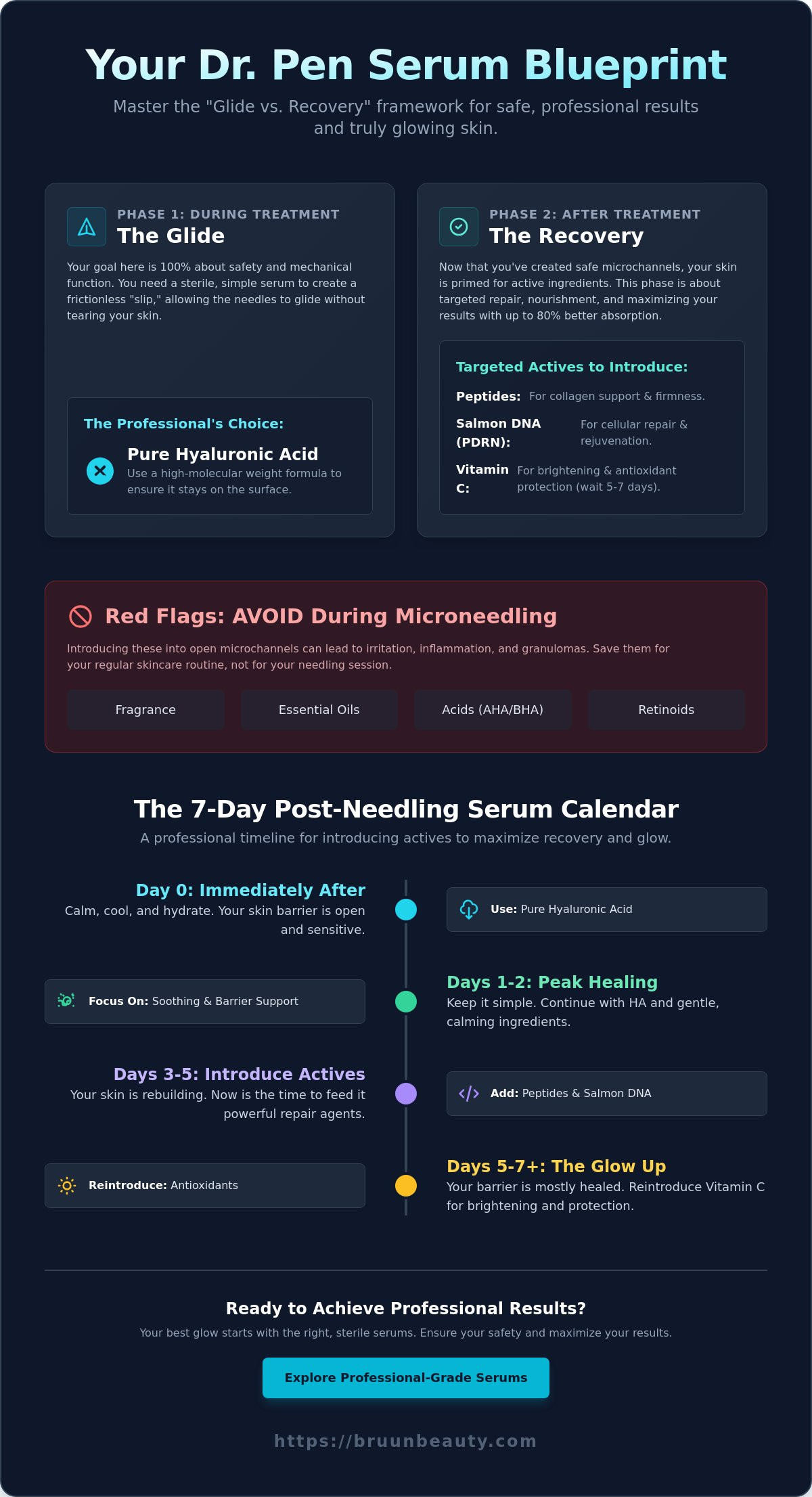
The 7-Day Post-Needling Serum Calendar
Choosing what serum to use with dr pen depends heavily on where you are in your healing journey. Your skin goes through a specific biological process of inflammation, proliferation, and remodeling. Following a structured calendar ensures you're giving your skin exactly what it needs at each stage without causing unnecessary stress. Most users find that a seven-day transition period is the perfect window to move from basic protection back to their full active routine.
- Day 0 (Procedure): Stick to pure Hyaluronic Acid only. Your microchannels are open, so your focus is 100% on hydration and creating a sterile barrier. Avoid anything with a scent or complex preservative.
- Day 1 to 2: Introduce soothing peptides and ceramides. These ingredients support the skin's barrier as it begins to close. You should still avoid all "active" acids or heavy exfoliants during these 48 hours.
- Day 3 to 5: If you don't see any lingering redness or feel heat in your skin, you can reintroduce Niacinamide or a gentle Vitamin C. These help with brightening and calming any minor post-procedure inflammation.
- Day 6 to 7: Most people can resume their normal routine, including Retinol or AHAs and BHAs. Start with lower concentrations than usual to ensure your newly revealed skin cells can handle the intensity.
Immediate Aftercare (Hours 0 to 24)
The first 24 hours are the most sensitive part of your recovery. Clean your skin using lukewarm water only; avoid harsh cleansers that might strip your natural oils. Apply a thick layer of pure HA frequently to prevent that "tight" or "sunburned" feeling that often follows a session. You should also avoid direct sun exposure and heavy makeup during this window to keep the microchannels clear and free from irritation.
Long-Term Maintenance Between Sessions
Consistency is the secret to professional results, but patience is just as important. Follow the 4-week rule: never needle more than once a month. Your skin needs those 28 days to complete its natural turnover and collagen production cycle. Between sessions, you can use "Serum Cycling" to maximize your results. This involves alternating between hydrating serums, firming peptides, and brightening agents throughout the month. Explore our curated collection of microneedling-safe serums to build a kit that supports your skin's health every single day. By timing your actives correctly, you'll see clear, nourished, glowing skin that looks better with every passing week.
Your Path to Radiant, Professional Results
Mastering your microneedling routine comes down to choosing the right ingredients for every phase of the process. By prioritizing high molecular weight hyaluronic acid for your "glide" and waiting for the perfect moment to reintroduce active ingredients, you ensure your skin stays safe and resilient. Understanding exactly what serum to use with dr pen is the difference between a safe, effective session and a frustrating setback.
You're now equipped with the same framework used by professionals to achieve a clear, nourished glow. Our dermatologist-recommended formulations are fragrance-free and sterile-compliant, making them the perfect partner for your device. We're proud to be trusted by over 50,000 home beauty experts who prioritize safety and results just like you do.
Ready to elevate your skincare game with products you can trust? Shop Professional-Grade Microneedling Serums at Bruun Beauty today. We're here to support you on your journey to the radiant, healthy skin you've always wanted. Stay glowing!
Frequently Asked Questions
Can I use Vitamin C serum with my Dr. Pen?
You should wait at least 24 to 48 hours before applying Vitamin C. While it is a fantastic antioxidant, most Vitamin C serums are highly acidic. Introducing an acid into open microchannels causes intense stinging and can lead to chemical burns or prolonged irritation. Once your skin barrier has resealed, Vitamin C is excellent for protecting newly revealed cells and enhancing your glow.
Is it safe to use a Retinol serum immediately after microneedling?
No, you should avoid retinol for at least 5 to 7 days post-treatment. Retinol is a powerful active that speeds up cell turnover, but applying it to raw skin can cause severe peeling and localized toxicity. Your skin needs time to complete the initial inflammatory phase of healing before you reintroduce such an aggressive ingredient. Stick to soothing peptides until the redness completely subsides.
How much serum should I apply during the procedure?
You should apply enough serum to ensure the pen glides effortlessly without any pulling or needle drag. Work in small sections, applying 3 to 5 drops of pure hyaluronic acid to the area you are about to needle. If the skin begins to feel tacky or dry, reapply immediately. Proper lubrication is essential for safety, so use a generous amount to keep the surface wet.
What happens if I use the wrong serum with my Dr. Pen?
Using the wrong serum can lead to persistent inflammation, chemical burns, or the formation of granulomas. When you are deciding what serum to use with dr pen, avoid anything with fragrance, alcohol, or heavy preservatives. These foreign particles can get trapped under the skin, causing the body to wall them off into hard, permanent bumps. Safety always comes first during the active needling window.
Can I use a "BB Glow" ampoule with my home microneedling kit?
BB Glow ampoules are designed for very shallow nano-needling rather than deep microneedling. These ampoules contain pigments that should only stay in the very top layer of the epidermis. If you needle them too deep, you risk uneven staining or long-term skin reactions. Always use a nano-needle cartridge and a depth of 0.25mm or less if you are experimenting with BB Glow at home.
Do I need to wash the serum off after I finish needling?
You don't need to wash off the pure hyaluronic acid used during your session. In fact, it is better to let it sit and absorb to keep the skin hydrated while the microchannels close. If you feel excess residue after an hour, you can gently pat your face with lukewarm water, but avoid using any cleansers or scrubbing motions for the first 24 hours.
Can I use a sheet mask instead of a serum during the treatment?
You should never use a sheet mask as a substitute for a glide serum during the procedure. Sheet masks are designed for topical absorption and often contain fragrances or preservatives that aren't safe for open skin. However, applying a sterile, professional-grade jelly mask or a specialized post-needling sheet mask after you finish can help cool the skin and reduce immediate redness.
What is the best serum for acne scars when using Dr. Pen?
When targeting acne scars, the best approach is using pure HA during the session and a Salmon DNA or peptide serum during recovery. These ingredients provide the building blocks your skin needs to remodel tissue. When choosing what serum to use with dr pen for texture goals, focus on formulas that promote cellular regeneration without the use of harsh exfoliants that might trigger more breakouts.
Best Serums for Microneedling: Professional Results
Salmon DNA Serum Benefits: Top 5 Science-Backed Results
Related Posts

Getting Spa Results on a Budget: Build a Smart At-Home Routine

Professional vs. At-Home Microneedling: Cost Comparison

Hydrogen Water Bottle Buying Guide: Choose the Right Size and Features

Microneedling for Men’s Skincare: What to Know in 2026

What Results to Expect After 3 Microneedling Sessions: A Realistic Guide

Creating a Yearly Microneedling Schedule: A Practical 2026 Guide

How to Choose Professional Esthetician Lighting: A Moon Lash Light Buying Guide
