

At-Home Microneedling for Darker Skin: Acne Scars and Pigmentation
Darker skin can be microneedled, but at-home microneedling for darker skin tones calls for extra caution because irritation can leave new dark marks. At-home devices should use needles no longer than 0.5 mm; longer needles belong in professional hands. Even with shorter needles, home use can carry risks, including scarring and pigmentation changes.
If you’re considering at-home microneedling for darker skin tones to address acne scars or uneven tone, it’s reasonable to weigh potential benefits against the risks. Your skin’s response to irritation, needle depth, and aftercare all matter. This guide explains pigmentation risks, how gentle care and sun protection support recovery, and when home use may not be a good fit. For deeper acne scars, professional assessment can help clarify your options.
Key Takeaways
- Darker skin can be more prone to lingering dark marks after irritation, so thoughtful technique and careful aftercare matter.
- At-home devices should use needles no longer than 0.5 mm; deeper needling is best left to professionals.
- Acne-scar concerns, a history of raised or unusually dark scars, and active skin flare-ups can affect whether microneedling is a suitable option.
- After microneedling, keep your routine gentle, pause exfoliants and strong actives, and protect your skin from sun exposure.
- Learn how Bruun Beauty’s Advanced Microneedling Serum SD - Control Salmon DNA Ampoule Serum fits into the article’s discussion of skincare products.
Is Microneedling Safe for Dark Skin?
Microneedling may be used on darker skin, but the technique, settings, and aftercare need to suit your skin. Irritation can leave new dark marks, so consider your pigmentation history and how your skin typically reacts before choosing an at-home approach.
Microneedling Options for Skin of Color
Microneedling uses tiny mechanical punctures rather than heat, which distinguishes it from heat-based procedures. Careful depth and gentle technique can help limit irritation that may trigger uneven pigmentation. Before a professional session, share your past procedures, skincare products, and typical skin reactions. Address active acne or eczema flare-ups before proceeding.
Microneedling and Pigmentation Products
If you use dark-spot products, plan when to use them rather than layering strong actives onto freshly needled skin. Pause harsh scrubs, acids, and retinoids after a session until your skin has settled and your provider advises you to restart them. Since irritation can contribute to post-procedure dark marks, discuss your current products and pigmentation history before professional microneedling.
At-Home and Professional Differences
At-home devices should use needles no longer than 0.5 mm; longer needles belong in professional hands. A professional can tailor settings, passes, and aftercare to your skin’s history and response. Microneedling creates mechanical micro-injuries, while laser procedures use light energy; radiofrequency microneedling also adds heat, which can be a concern for skin prone to pigmentation.
Preparation and Tool Hygiene
Before using a home device, cleanse your skin gently and start with a clean tool. Skip the session if you have an active acne or eczema flare-up. Sanitize the tool with 70% rubbing alcohol before use, and replace it according to the manufacturer’s instructions. Don’t use a device with damaged or visibly contaminated needles. Careful preparation helps reduce avoidable irritation and hygiene problems.
Afterward, use gentle, hydrating products and daily SPF 30+ sunscreen. Avoid sun exposure for 7 days, and wait 24 hours before applying makeup. Avoid exfoliating products, retinoids, and acids for at least 48 hours; some guidance recommends waiting 5 days before restarting retinol and acids. For microneedling products and devices, choose items suited to your routine and follow their directions.
Laser and microneedling affect the skin differently, so neither is automatically the better option for everyone. Your pigmentation history, skin reactions, and treatment settings all matter. During a professional assessment, ask how your skin type affects the approach and what may help reduce irritation. Mention any history of keloids or unusually dark scars.
Pigmentation risks for people prone to hyperpigmentation
Microneedling can trigger hyperpigmentation if irritation prompts the skin to produce more visible pigment. Consider your own pattern of dark marks: where discoloration appears, what came before it, and whether it fades or lingers.
Hyperpigmentation and Other Pigmentation Risks
New uneven patches can make it harder to tell your original concern from a post-procedure change. Before deciding on microneedling, consider whether past breakouts, friction, or cosmetic procedures left dark marks. Describe the pattern during an assessment, including the affected areas and how your skin changed over time. This context helps frame the potential pigmentation risk for your skin.
Ask how your skin type affects the procedure’s risks and what complications may look like. A clear discussion should cover expected recovery changes and what would warrant follow-up. This can help you recognize when a new mark differs from your usual skin response, rather than guessing from appearance alone.
Contraindications and Sensitive Areas
Sensitive skin may call for a gentler device approach. Silicone-tip devices or shorter needle lengths are options to discuss if your skin reacts easily. Don’t needle delicate areas based only on a general device guide: facial zones can respond differently, and pressure or repeated passes may add irritation.
If you’re prone to dark marks, consider the needle material too. Metal needles may increase the risk of pigmentation changes, so ask about the device’s tip before choosing it. A product’s design can’t guarantee a particular skin response, but knowing the contact material helps you compare options more thoughtfully.
Risks of Aggressive Needle Depth
More aggressive needling can increase irritation, which may trigger pigmentation changes in skin that marks easily. Depth should match the concern and area, not the desire for a stronger sensation. A professional can explain how the planned depth and passes relate to your skin texture and pigmentation history.
Don’t keep adjusting a device during one session to chase visible redness. Redness alone doesn’t indicate that a procedure will improve the concern, and extra passes may cause more irritation. If you’re unsure how a setting may affect your skin, pause rather than experimenting on a sensitive or visibly discolored area.
When to See a Dermatologist
See a dermatologist if you develop a new or worsening dark patch, persistent irritation, or an unexpected skin change after microneedling. Bring notes about the device, session, and products used, as these details can help explain your skin’s response.
If pigmentation is your main concern, discuss the risks and alternatives before another session. You can compare microneedling devices and supplies while keeping your skin’s reaction history central to the decision. A cautious, informed choice can help you avoid adding unnecessary irritation to skin already prone to dark marks.
Does Microneedling Work for Acne Scars?
Microneedling may improve the appearance of some acne scars and uneven texture, but results depend on the scars’ shape and depth. A professional assessment can distinguish shallow textural changes from narrow, deep ice-pick scars before an approach is chosen.
Microneedling may pose a risk of dark marks for some people with darker skin. New dark marks are the main pigment concern. If you notice lighter patches, seek medical assessment rather than continuing sessions.
What Microneedling May Improve
Shallow depressions and uneven surface texture differ from deep, narrow scars. That distinction matters because one technique may not suit every scar pattern. Assess the whole area rather than one mark in isolation: clusters of shallow indentations, isolated pits, and raised scars each call for different considerations.
Microneedling may support a smoother-looking surface, but it won’t erase every visible scar. A scar’s appearance also depends on its location, surrounding texture, and your skin’s response. Set a practical goal, such as a more even-looking cheek surface, rather than expecting every indentation to disappear.
Hyperpigmentation and Risk Reduction
Acne can leave both texture changes and discoloration, and these concerns need to be distinguished before choosing a procedure. A flat brown mark differs from an indented scar, even when both appear in the same area. A professional can assess which feature drives your concern instead of assuming needling addresses both in the same way.
Bring clear, unfiltered photos of your skin before and after past breakouts, if available. They can help show whether a spot changed in color, surface, or both. Explain too whether previous irritation left marks. This history can inform a discussion of possible pigment changes without relying on assumptions based on skin tone alone.
Choosing a Sensible Approach
Deep ice-pick scars warrant careful evaluation because their narrow shape differs from broader textural depressions. The location and pattern of scarring help determine whether microneedling is appropriate or whether to discuss another approach. Don’t judge suitability by a scar’s darkness alone: pigment and surface depth are separate features.
Active breakouts can create new marks while older scars remain, making progress hard to assess. If new acne keeps appearing, first discuss the pattern with a medical professional. Once breakouts are stable, evaluate existing texture separately to make a clearer decision about your next step.
Aftercare and avoiding active ingredients
After microneedling, keep your routine simple while your skin’s surface recovers. For darker skin, gentle cleansing, moisture, and sun protection can help limit irritation that may leave new marks.
The First Day After Microneedling
For the first 24 hours, keep makeup off and avoid sweating, saunas, and hot tubs. Heat, friction, and makeup can irritate freshly needled skin, so choose a calm day for your session. Redness and pinpoint bleeding should subside within a day. If symptoms persist or worsen, contact a medical professional rather than repeating the session.
Cleanse with a gentle cleanser and use a simple hydrating product. Avoid scrubs, cleansing brushes, and fragranced products that sting. Fine needles create small punctures, so introducing several products at once makes it harder to identify an irritation trigger. Keep your routine familiar and minimal.
Pause Strong Actives
Skip exfoliating products, retinoids, and acids for at least 48 hours after microneedling. Some guidance recommends waiting 5 days before restarting retinol or acids. These timelines vary, so use the more cautious interval if your skin remains sensitive. Don’t apply vitamin C or other potent formulas to skin that still feels hot, tender, or visibly irritated.
When your skin feels comfortable, reintroduce one active ingredient at a time. For example, restart your usual retinoid only after the pause and once visible irritation has settled. Avoid combining it with an exfoliating acid on the same evening. A gradual return helps you identify which product causes redness or discomfort.
Sun Protection and Daily Care
Wear SPF 30+ daily after a session, and avoid sun exposure for 7 days. Direct sunlight can worsen discoloration while your skin is recovering. Apply sunscreen as the final step in your morning routine, then reapply according to its directions, especially after sweating or wiping your face. A hat and shade add practical protection outdoors.
Choose gentle, hydrating skincare rather than products promising instant smoothness or quick changes to fine lines. For example, use a mild cleanser and moisturizer instead of following a scrub with a strong acid. If a product burns, stop using it and simplify your routine. Don’t pick at flaking skin, as friction may increase irritation and the risk of scarring.
When to Resume Your Routine
Wait until your skin has settled before returning to exfoliation or retinoids; the calendar alone doesn’t show how your skin is responding. After 48 hours, check for redness, tenderness, or flaking before adding anything active. If irritation continues, keep cleansing gently and seek medical advice before resuming microneedling or potent products.
Aftercare isn’t the time to pursue several goals at once. Keep your routine gentle, protect your skin daily, and make changes one at a time. This measured approach supports a smooth-looking complexion without adding avoidable irritation.
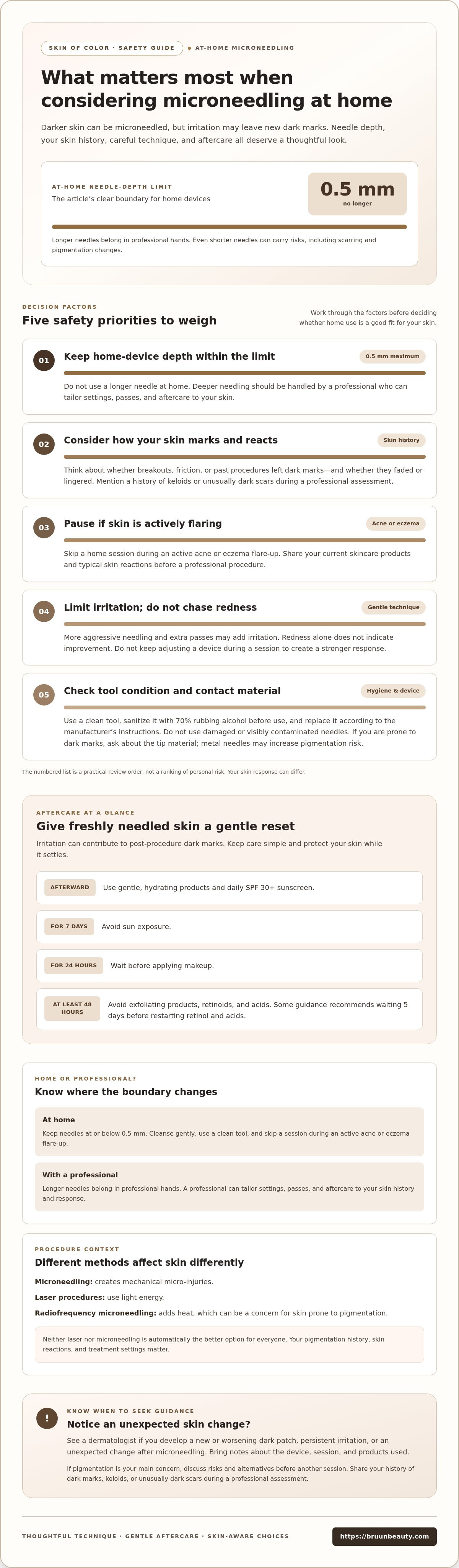
Microneedling safety for darker skin tones
For darker skin, safety depends on more than needle length. Your pigmentation history, scar response, skin condition, and recovery routine all affect how much irritation your skin may experience. A careful plan aims to improve skin texture without provoking inflammation that could leave new dark marks.
Match the Approach to Your Skin
Skin tone alone can’t predict how your skin will respond. Before a session, consider how past acne, cuts, or procedures affected your pigmentation. Tell a professional about dark marks, raised scars, and the products you use. These examples can inform decisions about depth, passes, and aftercare.
At-home devices should use needles no longer than 0.5 mm; longer needles belong in professional hands. That limit matters because deeper needling creates more injury and requires a more tailored approach. If your skin is sensitive, shorter needles or a silicone-tip device may be options to discuss with a professional.
Choose Device Features Carefully
If you’re prone to hyperpigmentation, avoid devices with metal needles, which may increase the risk of dark spots. Devices that add radiofrequency also add heat. Lingering or excessive heat can trigger negative healing reactions in skin of color, so consider heat exposure alongside needle depth.
Microneedling stimulates a skin response through tiny mechanical injuries. More passes or deeper needles don’t necessarily improve results. For at-home use, prioritize a device you can handle gently and consistently instead of adjusting settings to chase a stronger sensation. Pain or heavy irritation isn’t a useful measure of effectiveness.
Plan Sessions Around Recovery
Beginners are advised to space at-home sessions 2-4 weeks apart. Professional sessions are commonly spaced 4-6 weeks apart to allow healing and melanin stability. These schedules aren’t interchangeable: the device, needle depth, skin response, and session setting shape the recovery interval.
Pause if your skin has active acne or an eczema flare-up. A history of keloids, raised scars, white scars, or very dark scars also deserves careful assessment before proceeding. Those details can change the risk discussion even when the device uses fine needles and your skin feels calm on the day.
Use Your Skin’s Response as a Guide
Record each session’s date, device setting, and visible response. Note whether redness settles, irritation lingers, or a new dark mark appears. This simple record gives a dermatologist or other qualified professional useful details to assess your next steps.
Use a gentle routine and daily sun protection while your skin recovers. If inflammation or pigmentation changes develop, stop further sessions and seek professional advice before restarting. Careful pacing helps you make informed decisions about microneedling and your skin tone.
Bruun Beauty: Advanced Microneedling Serum SD - Control Salmon DNA Ampoule Serum
Advanced Microneedling Serum SD - Control Salmon DNA Ampoule Serum is a microneedling-focused skincare option to consider as you build your routine. Review the product details and directions before adding it. Its name alone doesn’t establish that it belongs on freshly needled skin, so keep post-session care gentle and follow the directions.
For at-home microneedling, prioritize safe technique and thoughtful aftercare over adding more products. Bruun Beauty also offers Jelly Mask Kits and BB Glow Treatment Supplies for other skincare needs. Explore the Salmon DNA ampoule serum details, and visit bruunbeauty.com if you’d like to learn more.
Make Your Next Step a Thoughtful One
Let your skin’s response guide your next steps. If you’re considering at-home microneedling for darker skin tones, weigh your pigmentation history, goals, and comfort with device use before adding a session to your routine. A cautious approach helps you make informed decisions instead of chasing quick changes.
Use this guide to decide whether home use suits your needs or whether professional assessment is a better next step. If you’re exploring tools and skincare, choose products that match your intended use and follow their directions. Bruun Beauty offers microneedling devices and skincare products to help you build a considered routine.
A clear, nourished-looking complexion starts with choices that respect your skin’s needs. Move forward at a thoughtful pace that feels comfortable for you.
Frequently Asked Questions
What Is Microneedling?
Microneedling uses fine needles to create tiny mechanical punctures in the skin. The resulting skin response is why the technique is used for concerns such as acne-scar texture and certain types of discoloration. Unlike microneedling with radiofrequency, it doesn’t add heat. The device, needle depth, and your skin’s response shape the procedure and recovery routine.
Can I Combine Microneedling With Other Treatments for Pigmentation?
Combining approaches requires careful timing: strong acids, retinoids, and exfoliants can irritate freshly needled skin. Don’t apply them immediately after a session. Follow your procedure’s recovery directions and reintroduce active products only once your skin has settled. Before a professional session, share the names of your pigmentation products so they can be considered in the plan.
Do At-Home Microneedling Devices Work?
At-home devices create mechanical micro-injuries, but they don’t offer the same depth or professional control as an in-office procedure. A shorter needle may suit a cautious home routine, while deeper acne-scar concerns warrant professional assessment. Device use alone doesn’t ensure smoother texture or fewer dark spots. Technique, hygiene, skin condition, and consistent aftercare all affect the experience.
How Do You Know if Your Skin Has a Higher Risk for Complications With Microneedling?
Your history can reveal potential risk factors. Tell a professional if cuts, acne, or earlier procedures left keloids, raised scars, white scars, very dark scars, or lasting pigmentation. Mention active eczema, current products, and reactions such as prolonged redness too. These details help assess whether microneedling is appropriate and what settings or precautions may reduce unnecessary irritation.
How Long Until You See a Difference?
Changes in acne-scar texture or discoloration are gradual, not immediate post-session effects. Redness can temporarily change how your skin looks, so don’t judge results while it’s recovering. Take photos in consistent lighting and compare them between sessions rather than day to day. Track new dark marks or persistent irritation too, as these changes matter when planning what comes next.
How Many Sessions Do You Need?
Professional recommendations depend on the concern: acne scars in dark skin types may involve 3-6 sessions, while hyperpigmentation may involve 3-5. These are course ranges, not a home-use schedule. The depth and pattern of scarring, pigmentation history, and recovery response all influence the plan. Keep sessions several weeks apart, and reassess how your skin responds before continuing.
Is At-Home Microneedling Safe for Darker Skin Tones?
At-home microneedling for darker skin tones carries risks of irritation, scarring, and new pigmentation, so it isn’t automatically a safe choice for everyone. Avoid home use over active acne or an eczema flare-up, and consider professional advice if you have a history of raised or unusually dark scars. Careful device hygiene and conservative use are essential, but they can’t eliminate every risk.
What Needle Depth Is Safe for At-Home Microneedling?
At-home devices should use needles no longer than 0.5 mm; longer needles should be used only by professionals. A shorter length doesn’t make every treatment area or skin concern suitable for home use. Don’t increase depth to chase a stronger sensation or faster change. Your skin’s sensitivity, scar history, and tendency toward pigmentation should guide whether home microneedling is appropriate.
Microneedling for Deep Wrinkles Results: What to Really Expect in 2026
Microneedling for Textured Skin: Before and After Results You Can Expect
Related Posts

Consistent Microneedling and the Long-Term Changes to Expect

Aftercare choices to lower infection risk at home after microneedling

How to Create a Relaxing At-Home Spa Day With Simple Rituals

Sunscreen Recommendations After Microneedling: How to Protect Healing Skin

Investing in my skin for the future: what deserves my budget

Post-microneedling skincare routine for masks, makeup, and recovery

Skin Peeling After Microneedling: What to Avoid and When to Resume Makeup
