

Microneedling Frequency for Anti-Aging: Sessions and Healing Time
More frequent microneedling isn’t automatically better for anti-aging. A typical starting plan includes three to four sessions spaced four weeks apart, with maintenance often scheduled six to 12 months after the initial course. Your skin also needs time to recover between appointments, so the right microneedling frequency for anti-aging balances steady progress with enough downtime.
If you’re hoping to soften fine lines or support firmer-looking skin, it’s natural to ask how often to schedule microneedling: monthly, less often, or as a series. The right timing depends on your skin’s sensitivity and goals. Treating acne scars may also call for a different interval than addressing early signs of aging.
This guide covers typical timing for anti-aging, skin tightening, acne scars, and other concerns, along with recovery between sessions. You’ll also learn how maintenance differs from an initial series and why allowing more time between treatments can be preferable to rushing into another session.
Key Takeaways
- A common starting schedule for signs of aging is three to four sessions spaced four weeks apart, followed by maintenance six to 12 months after the initial course.
- Skin tightening usually calls for a series of sessions, with the interval shaped by your skin’s response and the degree of laxity.
- Acne-scar schedules can vary: mild scars may call for four-week intervals, while severe scars may need eight weeks between sessions.
- Redness and mild swelling often settle within a few days, but your skin needs longer between appointments to recover.
- Use your skin’s sensitivity and recovery as cues when planning the next session; persistent peeling beyond 72 hours may signal that sessions are too frequent.
Microneedling Frequency: How Often Should You Get Treatments?
For signs of aging, initial sessions are commonly spaced four to six weeks apart. Your plan also depends on your concern, skin type, and how your skin responds between appointments.
Schedules for Wrinkles and Pigmentation
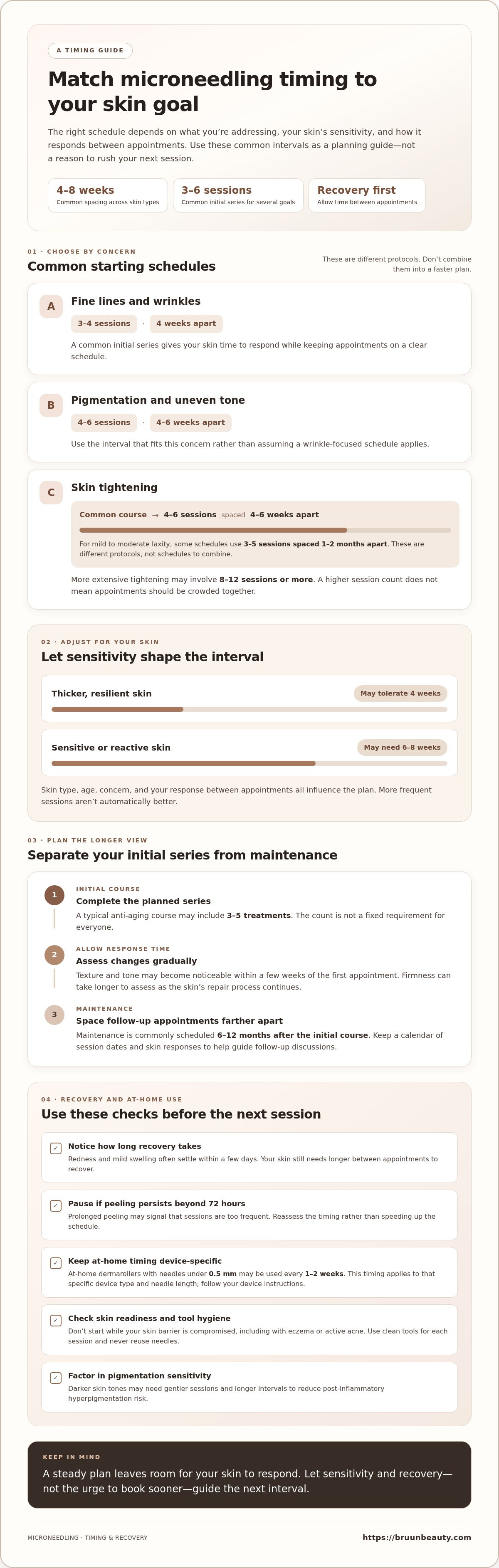
For fine lines and wrinkles, an initial series commonly includes three to four sessions spaced four weeks apart. This gives your skin time to respond while keeping the series on a clear schedule. Pigmentation and uneven tone often call for four to six sessions, spaced four to six weeks apart.
These schedules address different concerns, so don’t combine them into a faster plan. If uneven tone is your main goal, for example, use the pigmentation schedule as a discussion point rather than assuming a wrinkle-focused interval applies. Your skin’s sensitivity can also influence where you fall within the interval range.
Treatment Counts for Fine Lines
A typical anti-aging course consists of three to five treatments, while general skin rejuvenation commonly involves three to four sessions. These counts describe an initial series, not a fixed requirement for everyone. A planned series lets you assess changes over time rather than judging the outcome after one visit.
Maintenance usually follows the initial course, with appointments commonly spaced six to 12 months apart. Track your concern, session date, and skin response in a simple calendar. That record helps distinguish maintenance from the initial series and makes it easier to discuss whether your plan still matches your goal.
Frequency by Concern Depth
The interval can depend on your skin’s resilience. Thicker, resilient skin may tolerate sessions every four weeks, while sensitive or reactive skin may need six or even eight weeks between appointments. More significant signs of aging may call for three to four treatments per year, rather than the schedule used for early concerns.
Age, skin type, and the concern you want to address all influence the plan. Someone focused on early fine lines, for example, may not need the same cadence as someone addressing deeper wrinkles. More frequent appointments aren’t automatically better: leave enough time for your skin to recover.
At-Home Use and Safety
At-home dermarollers with needles under 0.5 mm may be used every one to two weeks. That timing applies to this specific device type and needle length, not every at-home device. Follow the instructions for your device, and don’t increase frequency based on a different tool’s schedule.
Risks include irritation and post-inflammatory hyperpigmentation, especially when skin is reactive. Avoid starting while your skin barrier is compromised, including with eczema or active acne; address those concerns first. Darker skin tones may need gentler sessions and longer intervals to reduce pigmentation risk. Use clean tools for each session, never reuse needles, and pause if peeling persists beyond 72 hours.
How Many Microneedling Sessions Are Needed to Tighten Skin?
Skin tightening often involves a planned series because changes in firmness develop gradually. The number of sessions depends on skin laxity, your response, and whether uneven tone is also a concern.
Gradual Skin-Tightening Results
A common skin-tightening course includes four to six initial sessions, spaced four to six weeks apart. For mild to moderate laxity, some schedules use three to five sessions spaced one to two months apart. These ranges reflect different goals and protocols, not schedules to combine.
Changes in texture and tone may become noticeable within a few weeks of the first appointment. Firmness can take longer to assess because the skin’s repair process continues after each session. Compare photos taken in similar lighting and note changes between appointments for a more useful view than an immediate check in the mirror.
Collagen Stimulation and Aging
Microneedling creates controlled micro-damage that activates the body’s repair cycle and collagen growth. Collagen supports skin structure, and its formation continues for several weeks. This gradual process explains why one session is not the same as completing a series.
For more extensive tightening, some protocols include eight to 12 sessions or more. That higher session count doesn’t mean appointments should be crowded together. A longer course gives the skin time to respond between treatments, while the session count reflects the degree of laxity and the intended goal.
Healing Capacity and Recovery
Skin sensitivity affects how much time to leave between appointments. Sensitive or reactive skin may need six or even eight weeks between sessions, while thicker, resilient skin may tolerate a four-week interval. Your skin’s response after each appointment can help show whether the planned spacing is working.
Skin health matters before starting a series. Eczema, active acne, or a compromised skin barrier should be addressed first. For darker skin tones, gentler sessions and longer intervals can reduce the risk of post-inflammatory hyperpigmentation. If uneven tone is also a goal, microneedling is commonly scheduled every four to six weeks for four to six treatments.
Keep a record of appointment dates, texture changes, and any prolonged irritation to discuss during follow-up. If you’re comparing equipment for a professional routine, browse microneedling devices and supplies alongside your treatment plan.
Frequency for acne scars and other concerns
Acne-scar schedules vary with scar severity, and the interval affects the overall length of a series. Mild scars may follow four sessions spaced four weeks apart. Moderate scars may call for five sessions spaced six weeks apart, while severe scars may involve six to eight sessions spaced eight weeks apart. These are distinct schedules to compare, not plans to combine.
A typical acne-scar course includes four to six sessions, though the severe-scar schedule may extend beyond that range. Consider the full calendar, not just the gap before your next visit: four sessions spaced four weeks apart take less time overall than a longer series with eight weeks between sessions. This helps set realistic expectations for timing.
The interval doesn’t measure how significant your concern is. A longer gap can be a deliberate part of the schedule, especially when your skin needs more recovery time. Collagen production and texture changes continue over several weeks, so your appearance shortly after one session doesn’t show the full course. Record appointment dates and changes to track the trend.
For uneven tone and hyperpigmentation, a common schedule is four to six sessions spaced four to six weeks apart. That differs from the severe acne-scar example, which uses eight-week intervals. If you have both scarring and discoloration, describe each concern separately during a consultation so the proposed schedule can account for both.
Skin response can also affect the time between sessions. Note when redness, peeling, or irritation settles after each appointment. Persistent peeling beyond 72 hours may signal that sessions are too frequent. Skin type, sensitivity, and elasticity can influence recovery, so the same interval may not suit everyone with similar-looking acne scars.
Before a consultation, prepare a brief record of the areas you want to address, any previous sessions, and how your skin responded. Note, for example, whether a previous appointment was followed by prolonged peeling or whether your skin had returned to its usual condition before the next visit. These details make it easier to discuss the schedule and course length.
Keep the plan focused on your main concern. The mild-scar example uses a four-week interval, while the moderate-scar schedule uses six weeks. Don’t shorten the gap just to finish sooner: follow the planned interval and consider your skin’s response. Consistent notes help you assess progress without expecting a major change after every session.
Healing time between sessions
Allow about a month between initial microneedling sessions so your skin has time to recover. A session creates thousands of micro-injuries, and the repair process continues for several weeks. Redness and mild swelling typically subside within a few days, but that doesn’t mean your skin is ready for another appointment.
For a general rejuvenation series, sessions are commonly spaced four to six weeks apart. This gives your skin time to recover while collagen formation continues. An eight-week gap can still fit a series, so waiting longer doesn’t automatically make treatment ineffective. The right interval depends on the procedure and your skin’s response.
Different procedures can follow different schedules. Professional Secret RF microneedling sessions typically require six to eight weeks between appointments, while RF microneedling sessions may be spaced four to eight weeks apart. These schedules don’t apply interchangeably to every microneedling method, so identify whether your plan uses RF before comparing intervals.
Your skin’s condition between appointments is a useful guide. If peeling persists beyond 72 hours, sessions may be too frequent. Note how long redness, swelling, or peeling lasts after each session, then share that timeline during a follow-up conversation. Persistent changes matter more than simply counting days on the calendar.
Protect your skin after every session. Avoid sun exposure for at least 24 hours, and wear sunscreen afterward. Keep tools clean during each session, and never reuse needles. These steps support safer care while your skin is recovering, whether your appointments are four weeks apart or follow a longer schedule.
Skincare choices also matter during recovery. Use products suited to your skin type and keep sun protection in your routine. Ingredients such as hyaluronic acid or vitamin C may nourish skin during microneedling care. Avoid introducing several new products at once, so you can better identify what your skin tolerates.
Before scheduling the next session, consider the method, your skin’s condition, and how it responded to the previous appointment. For example, a person with lingering peeling at 72 hours should not treat a standard four-week interval as an automatic booking date. A gradual series works best when the calendar leaves room for recovery between sessions.
Microneedling frequency for anti-aging
For anti-aging, an initial course often includes three to four microneedling treatments spaced four weeks apart. Maintenance is commonly scheduled every six to 12 months after the initial course. This cadence gives you a clear starting framework, while your skin type and concern help shape the interval.
Microneedling, laser resurfacing, and chemical peels work differently, so no option is inherently more effective for every anti-aging goal. The better fit depends on whether you’re focused on fine lines, texture, or another concern, as well as your skin type and recovery needs. Start a comparison with your goal, not a universal ranking.
For early signs of aging, one or two sessions every three months may suit a gradual plan. More significant signs of aging may call for three to four treatments per year. These schedules differ from the four-week spacing used in some initial series, so distinguish ongoing maintenance from a course intended to build initial improvement.
Think of the calendar in two phases. First, follow the initial series, often three to four appointments spaced four weeks apart. Then shift to maintenance, commonly every six to 12 months. If eight weeks pass between appointments, a third treatment can still remain part of the series; the interval alone doesn’t mean you must restart.
Monthly microneedling may suit people seeking gradual improvement or longer-term maintenance, but it isn’t the default for every skin type. Your skin’s sensitivity, the depth of fine lines, and the concern being addressed all influence the schedule. A plan for early fine lines, for example, differs from one for deeper wrinkles or acne scars.
Keep a simple session record with the date, the concern addressed, and how your skin responded. After the initial course, use that record to compare texture and fine lines before scheduling maintenance. If your skin remains irritated or peeling beyond 72 hours, that can signal that sessions are too frequent, rather than a reason to book sooner.
There’s no need to compress appointments to pursue faster improvement. Three to four initial sessions spaced four weeks apart provide a practical starting cadence, while six-to-12-month maintenance offers a longer-term rhythm. Keep the goal specific, such as softening the appearance of fine lines, and adjust the plan around skin type and recovery.
Bruun Beauty: Advanced Microneedling Serum SD - Control Salmon DNA Ampoule Serum
Advanced Microneedling Serum SD - Control Salmon DNA Ampoule Serum is one option to consider when building a skincare routine around your microneedling goals. Keep session timing and product choice separate: the serum doesn’t determine how often to schedule treatments. Follow your device or professional’s guidance on which products to use and when.
Bruun Beauty also offers Jelly Mask Kits and BB Glow Treatment Supplies as routine additions. Choose products based on your skincare goals and intended use, rather than assuming every item belongs in post-session care. A considered routine can support consistency without replacing appropriate spacing between appointments.
Explore Bruun Beauty’s microneedling serum and skincare products to find options for your routine.
Build a Routine Your Skin Can Follow
Turn your skincare goal into a schedule you can track. Choose one priority, such as fine lines or uneven texture, and note how your skin responds after each session. Those records can help you make thoughtful adjustments rather than adding appointments in the hope of faster changes.
A consistent microneedling frequency for anti-aging should account for both your goal and your skin’s recovery. Keep your routine focused, follow device or professional guidance, and give your skin time to respond before changing course. Choose products that suit their intended use and your established skincare routine.
A measured approach helps you make informed decisions and keep your skin goals in focus.
Frequently Asked Questions
How Often Should You Microneedle for Overall Skin Rejuvenation and Texture Improvement?
For general rejuvenation, sessions are commonly spaced four to six weeks apart, with benefits sometimes seen after three sessions. Texture changes develop gradually, so compare your skin under similar lighting rather than judging it immediately after a session. Keep notes on roughness, tone, and sensitivity to distinguish steady changes from short-term redness or dryness.
What Is the Recommended Interval Between Microneedling Sessions?
Initial sessions are commonly spaced four to six weeks apart, though an eight-week gap can still fit a series. The right interval depends on your skin’s response and the method used. RF microneedling, for example, may follow a four-to-eight-week schedule. Don’t treat a calendar reminder as automatic: consider whether your skin has returned to its usual condition.
What Post-Treatment Care Is Essential to Support Healing Between Sessions?
After a session, avoid sun exposure for at least 24 hours and wear sunscreen afterward. Keep your routine simple and choose skincare suited to your skin type. Hyaluronic acid or vitamin C may be used to nourish skin during microneedling care. Avoid introducing several unfamiliar products at once, so you can identify which products your skin tolerates.
Finding Balance: How Often Should You Schedule Your Microneedling Sessions and Why?
Balance the planned series with your skin’s recovery, rather than adding sessions whenever you want faster changes. A practical approach is to record each appointment and note when redness, swelling, or peeling settles. If peeling continues beyond 72 hours, the schedule may be too frequent. Use those observations to discuss whether the next appointment should stay on the calendar.
How Do Specific Skin Concerns Impact Treatment Scheduling?
Your main concern affects the schedule. Mild acne scars may use four-week intervals, moderate scars six weeks, and severe scars eight weeks. Uneven tone commonly involves four to six sessions spaced four to six weeks apart. Address active acne, eczema, or a compromised skin barrier before beginning microneedling.
How Does Needle Depth and Treatment Intensity Influence Recovery Time?
Needle length and session intensity affect how much stimulation your skin receives, so don’t assume every device uses the same schedule. At-home dermarollers with needles under 0.5 mm may be used every one to two weeks; that interval doesn’t apply to every device. Follow the device instructions, and never reuse needles between sessions.
How Often Should You Microneedle to Reduce Fine Lines and Wrinkles?
For fine lines and wrinkles, an initial course often includes three to four sessions spaced four weeks apart. After that course, maintenance is commonly planned every six to 12 months. Your skin type and how it responds can influence the schedule. Keep your goal specific, such as smoother-looking texture, and note changes between appointments.
What Are the Risks of Over-Treatment and How Can You Avoid Them?
Sessions scheduled too close together can leave skin irritated, and persistent peeling beyond 72 hours may signal excessive frequency. Post-inflammatory hyperpigmentation is another concern, especially when skin is more reactive. Reduce avoidable risks by allowing recovery time, using clean tools, and never reusing needles. Avoid microneedling over active acne, eczema, or a compromised skin barrier.
Dr pen speed setting for face
Microneedling for Hyperpigmentation: Professional Home Guide
Related Posts

Consistent Microneedling and the Long-Term Changes to Expect

Aftercare choices to lower infection risk at home after microneedling

How to Create a Relaxing At-Home Spa Day With Simple Rituals

Sunscreen Recommendations After Microneedling: How to Protect Healing Skin

Investing in my skin for the future: what deserves my budget

Post-microneedling skincare routine for masks, makeup, and recovery

Skin Peeling After Microneedling: What to Avoid and When to Resume Makeup
