

Dr. Pen Needle Depth Chart: The Ultimate Treatment Guide
Did you know that using the same needle depth on your forehead as your cheeks could be the difference between a radiant glow and unnecessary irritation? It's a common mistake to think one setting fits the whole face, but skin thickness varies significantly from zone to zone. You've likely felt that wave of uncertainty while staring at conflicting diagrams online, wondering if you're about to go too deep or not deep enough.
We agree that finding a reliable dr pen needle depth chart shouldn't feel like a guessing game. You deserve to feel confident and safe while practicing your skincare rituals. This guide promises to clear the confusion by providing a professional, zone-by-zone breakdown and expert tips for the best results.
We'll explore the specific settings for the latest 2026 models like the Dr. Pen M9 and explain the vital difference between cosmetic exfoliation and professional procedures. You'll walk away with a clear reference for your next session, ensuring your skin stays nourished and glowing without the worry of micro-scarring.
Key Takeaways
- Understand why skin thickness dictates your settings and how to avoid going too deep on sensitive zones like the forehead.
- Use our detailed dr pen needle depth chart to choose the right millimeter settings for professional-looking results.
- Learn how to customize your needle depth to specifically target the appearance of fine lines and large pores.
- Balance needle speed with depth to maintain a smooth glide and prevent skin dragging during your session.
- Maximize your glow by learning how to pair treatments with professional serums that benefit from an 80% increase in skin absorption.
Understanding the Dr. Pen Needle Depth Chart
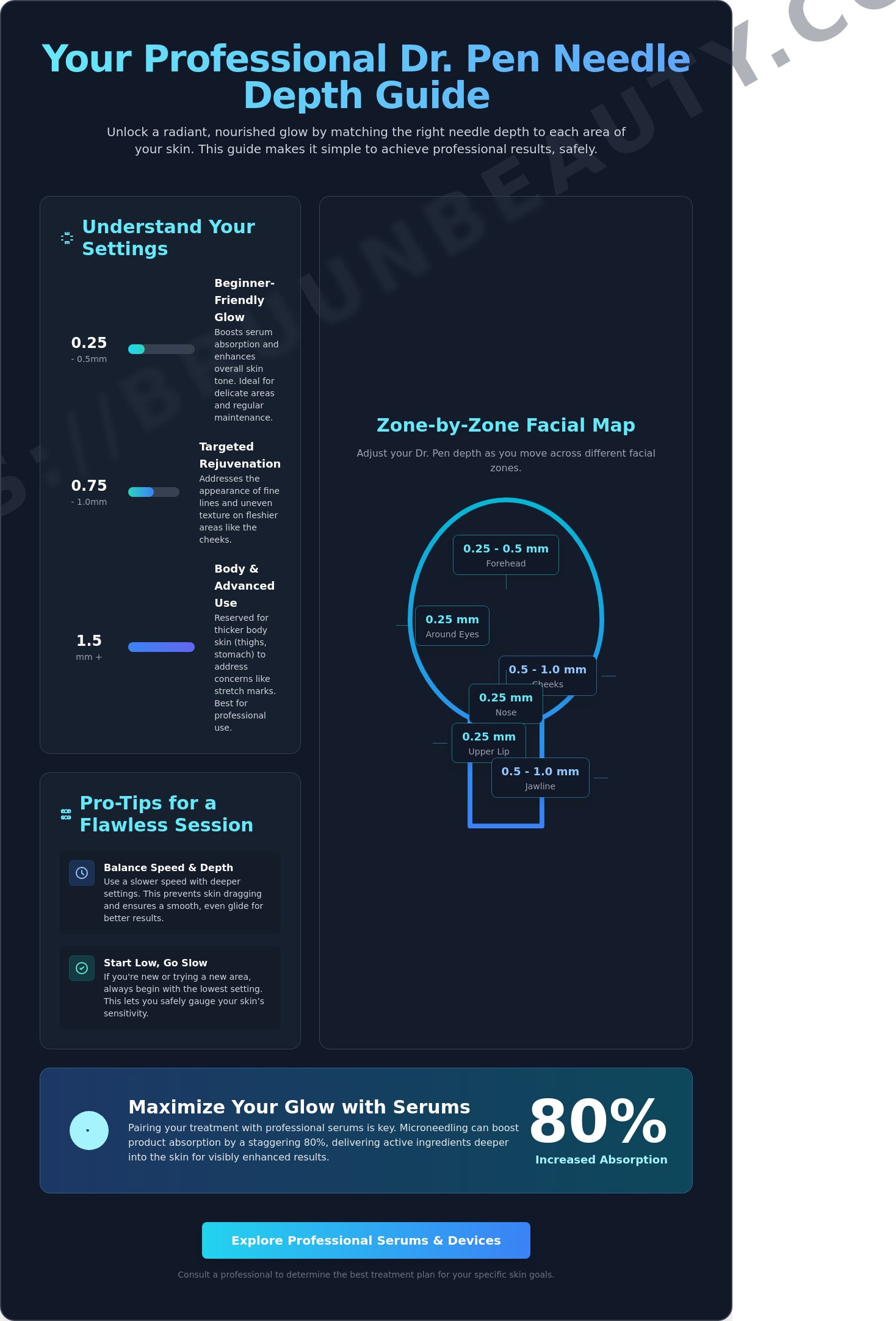
Think of your dr pen needle depth chart as a personalized roadmap for your skin. It isn't just about how deep the needles go; it's about matching the tool to your unique anatomy. Most Dr. Pen devices offer a range from 0.25mm to 2.5mm. Each millimeter serves a specific purpose in your journey toward a more radiant, refreshed complexion.
When you adjust the dial on your device, you're preparing for Collagen induction therapy (CIT). This professional technique relies on precision to achieve the best results. Shallow depths focus on maximizing the absorption of microneedling serums. Deeper settings help improve the appearance of skin texture and common signs of aging. Knowing which depth to use is the first step in mastering your at-home or professional sessions.
If it's your first time using a device, always start at the lowest recommended setting. This approach helps you gauge your skin's sensitivity without jumping into the deep end too quickly. You can always increase the depth in future sessions as you become more familiar with how your skin responds. Safety and comfort should always come first when you're working toward your skincare goals.
The Core Measurements: Millimeters Matter
- 0.25mm to 0.5mm: These are the "glow" settings. They're ideal for improving the look of skin tone and ensuring your products actually sink in. These depths are perfect for regular maintenance.
- 0.75mm to 1.0mm: These settings target the appearance of fine lines and mild texture issues. They're great for areas with a bit more "bounce" or thickness.
- 1.5mm and above: These are the heavy hitters. They're typically reserved for body skin or professional clinic settings. Using needle cartridges at this depth requires expert knowledge and caution.
Why One Size Does Not Fit All
Your face is a landscape of different thicknesses. For instance, the skin on your forehead is quite thin and rests directly over bone. Using a deep setting here can be uncomfortable and is often unnecessary for results. On the other hand, your cheeks have more fatty tissue and can accommodate slightly deeper penetration. Mature skin often becomes thinner over time, so you'll want to take a more conservative approach as the skin changes. By tailoring the depth to the specific zone, you ensure a safer experience and a more even, healthy-looking glow.
Zone-by-Zone Depth Guide for Face and Body
Your face isn't a flat canvas; it's a landscape of varying skin thicknesses and sensitivities. To get the best results without over-sensitizing your skin, you must adjust your device as you move from zone to zone. This dr pen needle depth chart serves as your primary reference for a safe and effective application. By tailoring the depth, you ensure that delicate areas stay protected while fleshier zones receive the attention they need.
The forehead is often the most sensitive area because the skin is thin and sits directly against the bone. We recommend staying between 0.25mm and 0.5mm here. This depth is the "sweet spot" for improving the look of fine lines without causing unnecessary discomfort. Similarly, the nose and upper lip lack fatty cushion and require a shallow 0.25mm setting. The upper lip is particularly prone to hyperpigmentation, so keeping the depth low helps maintain an even skin tone.
Your cheeks and jawline offer more "real estate" for rejuvenation. Because these areas are fleshier, settings between 0.5mm and 1.0mm are effective for addressing the appearance of larger pores and uneven texture. If you're working on the body, such as the thighs or stomach, you can often go deeper. Thicker skin on the body can typically handle 1.5mm to 2.5mm for addressing the look of stretch marks. However, always check the FDA guidance on microneedling devices to understand how different depths are classified for professional versus cosmetic use.
The Delicate Eye and Lip Areas
Working around the eyes requires a steady hand and a slow speed setting for maximum control. You should never use your device on the actual eyelid. Instead, focus on the "crow’s feet" area at a strict 0.25mm depth. This helps refresh the look of the orbital area without damaging the fragile skin. Since the upper lip area is sensitive, pair your shallow setting with professional-grade serums to support a healthy, hydrated glow.
Working with Fleshy Areas: Cheeks and Chin
If you're unsure if your skin can handle a deeper setting on your cheeks, try the "pinch test." Gently pinch the skin; if there's plenty of underlying tissue, you can safely move toward 0.75mm or 1.0mm. Focus on making both vertical and horizontal passes to ensure even coverage across the area. It's vital to use fresh, sharp needle cartridges for every session. Dull needles can cause "dragging," which leads to irritation rather than the smooth, clear results you're looking for.
Customizing Depth for Specific Skin Goals
Once you've mastered the basic zones, it's time to tailor your approach to your specific skin goals. Your dr pen needle depth chart is a flexible tool that changes based on what you want to see in the mirror. Whether you're chasing a "glass skin" finish or looking to soften the look of years of sun exposure; depth is your most important variable.
For those focusing on the appearance of enlarged pores, a setting of 0.5mm is usually sufficient. This depth refines the skin's surface and encourages a smoother, more polished look. If your goal is improving the look of fine lines, you might venture into the 0.5mm to 1.0mm range. This deeper reach helps encourage the skin's natural rejuvenation process in areas where the skin is thick enough to handle it, such as the outer cheeks or chin.
If you just want to revitalize dull, tired skin, you don't need to go deep at all. Nano-needling or a shallow 0.25mm setting creates microscopic pathways for your favorite microneedling serums to work their magic. This allows active ingredients like peptides or PDRN to penetrate more effectively than simple topical application. The ultimate goal for most sessions is erythema. This is a light, healthy-looking pinkness similar to a mild sunburn. You don't need to see bleeding or significant trauma to know the treatment is working.
Depth Settings for BB Glow and Nano-Needling
The BB Glow trend has taken the beauty world by storm, but it requires a very specific touch. You should use nano-cartridges or a 0.25mm setting to keep the pigment in the very upper layers of the skin. This ensures the semi-permanent foundation stays where it's supposed to for that flawless, even finish. Nano-needling is a fantastic alternative for those who want a "red-carpet" glow without any downtime. It doesn't actually puncture the skin; instead, it uses silicone or metal tips to vibrate the stratum corneum. You can find a variety of compatible tools in our skincare devices collection.
Targeting Texture and the Look of Scarring
Addressing the appearance of acne scars often requires a bit more intensity. While 1.0mm to 1.5mm is common for these concerns, we always recommend seeking professional care for deeper needs. It's often better to stay consistent at a shallower depth than to be too aggressive in a single session. Regular treatments at a safe depth produce more sustainable results than a single aggressive session that causes excessive trauma. Consistency over time is the real secret to achieving that clear, nourished look we all love.
Safety First: Adjusting Speed and Depth Like a Pro
Mastering your device involves more than just reading a dr pen needle depth chart; it requires understanding the synergy between speed and depth. While the depth dial controls how far the needles penetrate, the speed setting determines how many micro-channels are created per second. Getting this balance right is the secret to a smooth glide and professional-looking results without unnecessary downtime.
When you move into deeper settings, such as 0.75mm or 1.0mm on the cheeks, you should increase the speed of your device. Higher speeds allow the needles to enter and exit the skin rapidly as you move the pen across your face. If the speed is too low while the needles are deep, you might experience "needle drag," where the pins pull or scratch the skin's surface. If you ever feel a dragging or pulling sensation, your first step should be to either reduce the depth or increase the speed setting.
For beginners or when working on delicate areas like the bridge of the nose, lower speeds are much safer. They provide you with more control and allow you to be precise in tight spaces. Regardless of the speed, always use your free hand to keep the skin taut. This ensures the needles penetrate at a perfect 90-degree angle, leading to more uniform results and a more comfortable experience for your skin.
Reading the Skin: When to Stop
Your skin will tell you exactly when it has had enough. You're looking for a uniform, healthy pinkness across the treated area. If the skin begins to turn white, a phenomenon known as blanching, it's a sign that you're pressing too hard or the setting is too deep for that specific zone. Stop immediately if you see excessive redness or experience sharp, stinging pain that feels different from the normal "prickly" sensation. Safety always trumps aggressive settings when you're working toward long-term skin health.
The Importance of Sharp, Sterile Cartridges
Using a fresh tip for every single session is a non-negotiable safety rule. You should never reuse your Dr. Pen cartridges. After just one use, the microscopic tips of the needles become dull or even hooked, which can cause trauma and uneven texture. Before you begin, quickly inspect your cartridge for any bent pins. Once your session is finished, dispose of the cartridge in a proper sharps container to keep yourself and others safe. Ready to start your next session with the right supplies? Shop professional microneedling serums to pair with your fresh cartridges.
Post-Treatment Success and Professional Pairings
You've followed your dr pen needle depth chart and completed your session with precision. Now comes the most rewarding part of the process. Immediately after needling, your skin's absorption rate increases by up to 80%. This window of opportunity allows professional-grade boosters to penetrate deeply, providing your skin with the nourishment it needs to look its best. Using the right products now can significantly enhance your results.
However, this increased permeability means you must be very selective about what you apply. Avoid active ingredients like Vitamin C, Retinol, or exfoliating acids for at least 48 hours after your session. These ingredients are too aggressive for freshly needled skin and can cause irritation. Instead, focus on clean, hydrating formulas that support your skin's natural barrier while it recovers from the treatment.
Seal in your hard work with a cooling mask to reduce the appearance of temporary redness. A simple, focused aftercare routine is the secret to that refreshed, luminous look. By keeping the skin hydrated and protected, you ensure that the rejuvenation process happens smoothly and comfortably.
The Power of Salmon DNA and PDRN
For a truly vitalizing experience, we recommend using the SD Control Salmon DNA Ampoule. This serum is a K-beauty favorite because it provides essential "slip" for your pen while delivering refreshing nutrients directly into the micro-channels. Applying the serum during the treatment helps the device glide effortlessly across the skin. PDRN is highly regarded for achieving a "glass skin" look without the irritation often associated with other potent serums.
Soothing Aftercare with Jelly Masks
Once your needling is complete, your top priority is calming the skin and locking in moisture. Applying a professional jelly mask creates an occlusive seal over the face. This seal physically prevents moisture from escaping and helps drive your serums even deeper into the skin. Choose a mask with hyaluronic acid or aloe to provide instant comfort and hydration. After your mask, keep your routine simple: cleanse gently, hydrate well, and apply SPF religiously to protect your glowing results from the sun.
Ready to Master Your Radiant Results?
Mastering your skincare routine starts with precision and the right tools. You've learned how to navigate the dr pen needle depth chart like a professional, ensuring every session is tailored to your skin's unique thickness and goals. By balancing device speed with needle depth and prioritizing high-quality aftercare, you're well on your way to achieving that clear, nourished complexion you've been working toward.
At BRÜUN, we're here to support your journey with the same professional-grade inventory used by top-tier estheticians. We offer a curated selection of top-rated K-beauty serums and boosters to pair with your device for maximum impact. Our US-based team provides fast shipping from Miami and Los Angeles so you don't have to wait to start your transformation. Ready to take the next step?
Shop Professional Dr. Pen Devices and Cartridges at BRÜUN and discover the difference that expert-level equipment makes for your skin. We can't wait to see your glowing results.
Frequently Asked Questions
Is a 0.5mm needle depth safe for beginners at home?
Yes, a 0.5mm setting is generally safe for beginners when you follow a professional dr pen needle depth chart. This depth is ideal for improving the look of skin tone and maximizing serum absorption without being too aggressive. We recommend starting on the fleshier part of your cheeks to build confidence. Always move the device in a steady, controlled motion to ensure even coverage across the skin.
How often can I use my Dr. Pen at a 1.0mm depth?
You should wait at least 4 to 6 weeks between sessions when using a 1.0mm needle depth. This timeframe allows your skin to fully complete its natural rejuvenation process and build a healthy barrier. Rushing into another session too soon can lead to unnecessary sensitivity and redness. Patience is key to achieving that clear, nourished glow that lasts between your monthly professional-grade sessions.
Will a deeper needle setting give me faster results for fine lines?
Not necessarily; consistency and safety are more important than pushing for maximum depth. While a deeper setting can target the look of fine lines, it also requires more downtime. Sticking to a moderate setting on your dr pen needle depth chart every month often yields better results than one aggressive session. Your skin benefits most from regular, gentle encouragement rather than significant trauma.
What speed should I use for different needle depths on my Dr. Pen?
You should adjust your speed to match your depth for a smooth, safe glide. For shallow settings like 0.25mm, a lower speed provides better precision in delicate areas. If you increase the depth to 1.0mm, a higher speed helps the needles enter and exit the skin rapidly. This prevents the needles from pulling or scratching, which ensures you get professional results without skin dragging.
Do I need to numb my skin before using a 0.5mm setting?
Most people find a 0.5mm setting very tolerable without numbing, as it feels like a light, prickly sensation. However, if you have sensitive skin or are working on the upper lip, a topical numbing cream can make the session more comfortable. Always make sure your skin is completely clean and dry before you begin. If the sensation feels too intense, you can always lower the depth dial on your device.
Can I use the same needle depth for my face and my neck?
No, you should always adjust your settings because the skin on your neck is much thinner than on your face. While your cheeks might handle a 1.0mm depth, your neck usually requires a shallower 0.25mm or 0.5mm setting. Using a depth that's too high on the neck can cause irritation and discomfort. Always treat the neck with extra care to maintain a smooth, even complexion across both areas.
Dr. Pen vs. Dermapen: Which Microneedling Device is Best?
How to Use Dr. Pen at Home: A Safe Step-by-Step Guide
Related Posts

How Many Times Can You Use a Dr. Pen Cartridge? The Single-Use Answer

Best Dr. Pen Needle for Fine Lines: Cartridge Guide

Calming Skincare for Post-Procedure Skin: How to Choose the Right Routine

Does At-Home Microneedling Hurt? What to Expect

Best Korean Ampoule for Mature Skin: How to Choose in 2026

Botanical Stem Cell Serum for Anti-Aging: What to Know

Skincare Ingredients to Avoid After Microneedling: A Practical Checklist
