

Benefits of LED Light Therapy for the Face, Plus Safety
A face mask’s color matters: different LED wavelengths are used for different skincare goals. The benefits of LED light therapy for your face may include supporting clearer-looking skin with blue light and softening the appearance of fine lines with red light. LED therapy uses specific wavelengths and does not use ultraviolet light.
It’s understandable to wonder whether an LED mask can make a visible difference and how it fits into your routine. Results depend on the light used and consistent sessions, so one treatment may not show what to expect over time.
This guide explains how LED light therapy works and what red, blue, and other light colors may do for concerns such as blemishes and uneven-looking tone. You’ll also learn what to expect from professional sessions and at-home masks, and why regular use matters when building a routine.
Key Takeaways
- Match the light wavelength to your skincare goal instead of assuming every LED color works the same way.
- Compare in-office and at-home routines by their session schedules and the device’s treatment protocol.
- Learn how skin cells absorb light and why that interaction may support a smoother-looking complexion over time.
- See how LED masks may fit into a cosmetic routine focused on visible tone and texture.
- Explore how complementary skincare products can support your routine alongside LED use.
What Is LED Light Therapy for the Face?
LED facial sessions use light-emitting diodes to direct specific wavelengths toward the skin. The procedure uses visible light, not ultraviolet light, and wavelength choice depends on your skincare goals.
Choosing Wavelengths for Skin Concerns
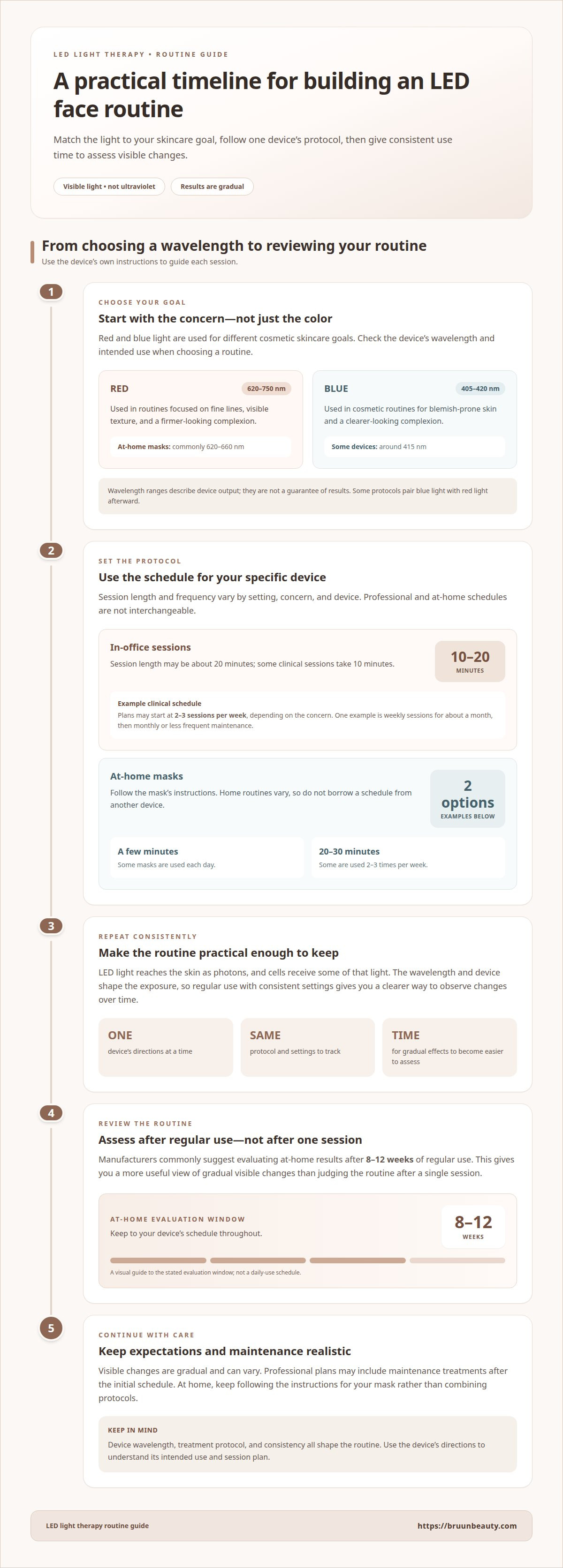
Red and blue LED light interact with skin differently, so the wavelength should match your goal. Red light for skin is described at 620 to 750 nanometers, while blue light uses 405 to 420 nanometers. At-home masks commonly use red light between 620 and 660 nm; blue devices for blemish-prone skin often use around 415 nm.
To weigh the potential cosmetic benefits of LED light therapy, start with your main concern. Red light may support a firmer-looking complexion, while blue light is used for blemish-prone skin.
Blue Light for Blemish-Prone Skin
Blue LED light is used to address the appearance of surface-level blemishes. In cosmetic skincare, it is used on blemish-prone skin and may help your complexion look clearer. It does not change acne-associated bacteria or sebaceous gland activity.
Blue light may be worth considering when visible blemishes and excess oil are your main concerns. Device wavelengths vary, so choose a device based on its output and intended cosmetic use. Some protocols pair blue light with red light afterward rather than relying on blue wavelengths alone.
Red Light and Skin Aging
Red LED light is used for cosmetic concerns such as fine lines and changes in the appearance of skin firmness. It reaches the epidermis, the outermost skin layer, and is commonly used in skincare routines focused on a smoother-looking complexion.
Red light therapy for skin uses wavelengths from 620 to 750 nanometers, though many at-home masks use the narrower 620 to 660 nm range. These figures describe different device ranges, not a guarantee of results. Red light may support a firmer-looking complexion over time. One of the cosmetic benefits of LED light therapy for the face is its gradual role in routines focused on visible signs of aging.
LED Light Therapy Treatment Schedules and Duration
LED routines depend on the device, treatment setting, and skin concern. In-office sessions commonly last about 20 minutes, while some clinical sessions take 10 minutes. At home, follow the mask or device instructions rather than borrowing a schedule from another routine.
In-Office and At-Home Schedules
Clinical plans may start with sessions two to three times per week, depending on the concern. A typical plan might involve weekly sessions for about a month, followed by monthly or less frequent maintenance. These examples show why treatment frequency varies across dermatology settings and devices.
At-home mask schedules differ. Some masks are used for a few minutes each day; others are used for 20 to 30 minutes, two to three times per week. Manufacturers commonly suggest evaluating results after 8 to 12 weeks of regular use. That timeline helps you assess gradual effects rather than judging the routine after one session.
Protocols and Consistency
For estheticians, the device’s treatment protocol guides session length, frequency, and how light is applied. Consistent settings make sessions easier to track and help clients understand what their routine involves. Clear explanations also set realistic expectations: multiple sessions may be needed, followed by maintenance treatments.
At home, consistency means following one device’s instructions over time, not combining schedules from different masks. A mask used for a few minutes daily has a different protocol from one used for 20 to 30 minutes several times weekly. Keep the routine practical enough to repeat.
- In-office: Sessions may last 10 to 20 minutes, with frequency shaped by the treatment plan.
- At home: Mask routines range from a few minutes daily to 20 to 30 minutes, two to three times weekly.
- Evaluation: Regular use over 8 to 12 weeks gives a clearer view of visible changes.
LED treatment effects develop through repeated sessions, so the schedule matters as much as the appointment itself. At home, follow the device instructions and use it consistently. In a professional setting, the esthetician follows the device protocol and explains the planned schedule. This makes the routine easier to understand and assess against your skincare goals.
How LED Light Interacts With Skin Over Time
LED devices send light particles, called photons, toward the skin. Skin cells receive some of that light. The colors and wavelengths a device emits shape the light exposure, so red and blue light do not serve identical skincare goals.
LED devices use different wavelengths, and the light they deliver depends on the device. These differences are worth understanding when you choose a mask or plan a routine. The color setting alone does not tell you what visible results to expect after one session.
Red light is commonly included in LED skincare devices for routines focused on the appearance of skin texture and fine lines. Results can vary, and any visible changes are gradual rather than instant. Your device’s instructions can help you understand its intended use and how to follow its routine.
Repeated sessions matter because a routine takes time to assess. At-home masks and professional devices differ in their wavelengths and protocols, so their schedules are not interchangeable. Following one device’s directions consistently gives you a clearer way to observe changes in texture and appearance.
Blue light offers a different example of targeted use. It is commonly included in LED devices designed for blemish-prone skincare routines. Device features and instructions vary, so avoid assuming that every blue-light setting or mask is intended to work in the same way.
LED devices are noninvasive and do not require downtime. Follow the specific device instructions for each session. A device’s design and protocol shape how light reaches the skin, so don’t assume one mask’s routine applies to another.
LED development also provides context for how the technology moved into skincare. NASA further developed LEDs for clinical applications in the 1990s, while researchers explored how cells respond to light. Today, the practical question is how a device’s colors, wavelength, and repeated use align with your skincare goals.
For anti-aging goals, track gradual changes in smoothness and the appearance of fine lines rather than expecting an overnight shift. Skin texture can change over time, and LED sessions are one part of a broader skincare routine. Consistent use and an appropriate device protocol make progress easier to assess.
Potential LED Light Therapy Benefits for Blemish-Prone Skin and Fine Lines
Blue LED light is used in facial routines focused on the look of blemish-prone skin, while red light is associated with the appearance of fine lines. Both are noninvasive options, but their cosmetic focuses differ. Choose based on your main concern, not the mask’s color or marketing language.
Blue light can be part of a routine for skin with visible blemishes and excess shine. It offers a way to focus your facial routine on the appearance of surface blemishes, though results vary from person to person and across skin concerns.
Some devices use blue light around 415 nm, a wavelength commonly associated with blemish-prone skin. Others combine blue and red light; red light may be used after blue in certain protocols. Follow the device instructions for sequencing, since colors and schedules vary. LED light is a cosmetic option for your routine, not a substitute for understanding persistent skin concerns.
Red light has a different cosmetic focus: the appearance of fine lines and skin firmness. It is used in routines designed to support a smoother-looking complexion. Changes in appearance, if any, are gradual rather than immediate after one session.
Red LED light is also associated with the appearance of skin flexibility. For example, someone focused on early fine lines might choose a red-light routine, while someone focused on surface blemishes might consider blue. The best fit depends on the concern, wavelength, and device protocol, not on one color being more powerful overall.
LED light therapy is a noninvasive cosmetic option used in facial routines to focus on visible concerns such as blemishes or fine lines. Keep your goal specific: track changes in one area, such as forehead lines or cheek texture, over consistent sessions. This helps you assess appearance without treating the device as a medical solution.
Keep your goal specific: blue light for the appearance of blemish-prone skin, or red light for a smoother-looking appearance. If your routine targets both concerns, a device with multiple colors may seem convenient, but follow its instructions. Wavelengths, session frequency, and consistent use all affect how the routine fits your skincare plan.
Cosmetic Benefits of LED Face Masks
LED masks may support cosmetic goals such as smoother-looking texture, brighter-looking tone, and less visible redness. Each color serves a different purpose, so match the mask’s light to the appearance you want to focus on.
Green light uses wavelengths from 495 to 570 nanometers. It may help brighten the look of uneven tone by supporting a more balanced-looking complexion. For example, if uneven-looking tone is your concern, green light offers a different cosmetic focus from red or blue. Visible changes depend on consistent use and the device’s directions.
Red light is associated with collagen support and a smoother appearance, while some masks also use near-infrared light around 830 nm. These options can suit routines focused on fine lines or overall texture. They don’t make every mask equivalent: compare the wavelengths listed for your device with your cosmetic goal.
LED is also used in skincare settings, including facials. Yellow or amber light may suit routines focused on a more even-looking complexion. Choose a home device based on its listed wavelengths and intended cosmetic use, and follow the device’s directions.
For a cosmetic routine, define the visible goal: a more even-looking tone, softer-looking lines, or a smoother surface. This keeps expectations focused on appearance and helps you choose an LED mask that fits your skincare goals.
Make your evaluation specific. Note the area you’re focusing on, such as cheek redness or forehead texture, then observe how it looks over repeated sessions. Use the same lighting for comparison photos. Changes in brightness or camera angle can make skin tone look different even when your routine stays the same.
Choose by wavelength and intended cosmetic use, not by the number of colors alone. A mask with green light may appeal for uneven-looking tone, while red light may suit a smoother-skin goal. The clearest takeaway is to identify one visible concern first, then follow the device’s instructions consistently.
Bruun Beauty
Bruun Beauty’s skincare products can complement an LED-light routine. When comparing cosmetic goals, consider how each product fits into your routine rather than expecting one product to do another’s job. LED light and topical skincare serve different roles, so keep your goals clear.
For a routine that includes microneedling, Advanced Microneedling Serum SD - Control Salmon DNA Ampoule Serum is one product to consider. It is a topical cosmetic skincare product, not an LED device, so it does not emit light or replace a light-based session. Keep that distinction clear when choosing products for each step.
Jelly Mask Kits can complement a skincare routine when you want to include a mask step. They don’t provide LED wavelengths, so treat them as a separate part of your routine, not an alternative to a light-based device. Choose products according to your preferred steps and skincare goals.
For professionals and advanced at-home skincare enthusiasts exploring complexion-focused routines, BB Glow Treatment Supplies offer another distinct category. They are separate from LED light therapy, which uses light exposure. Understanding the difference helps you avoid treating unlike approaches as interchangeable and keeps expectations focused on each product’s intended role.
A practical plan starts with your main goal, such as a smoother-looking appearance or a routine that includes a mask. Then consider which skincare steps fit alongside your LED schedule. Keep product roles distinct, follow the relevant directions, and avoid adding several new steps at once if you want to understand how your routine feels.
Bruun Beauty’s products can complement skincare routines without replacing an LED device or its instructions. Estheticians can also distinguish product categories when explaining a routine to clients: light-based sessions are one step, while serums, masks, and BB Glow supplies are separate products. That simple distinction makes the plan easier to follow.
If you’re exploring ways to shape your skincare routine alongside LED use, consider Bruun Beauty’s complementary product categories. Choose steps that suit your goals and keep each product’s role clear. To explore the range, contact Bruun Beauty with your questions.
Frequently Asked Questions
What changes can you realistically expect?
Visible changes depend on your starting point, device, and routine. Before beginning, choose one feature to assess, such as cheek tone or crow’s feet, and note its appearance. Avoid judging unrelated concerns together. A cosmetic mask can be part of your skincare routine, but it can’t promise a particular change.
What do LED face masks do for your skin?
An LED face mask provides a light-based step in a skincare routine. Its purpose depends on the device’s design and instructions, so check which colors it offers and how the manufacturer directs their use. Treat the mask as one cosmetic tool, not an all-in-one routine. Cleanse and moisturize according to your usual product directions, without assuming the mask replaces either step.
What is the optimal number of treatments for loose skin and crow’s feet?
There’s no single treatment count that applies to both concerns. Loose-looking skin and crow’s feet are different cosmetic goals, and device directions vary. Follow the manufacturer’s schedule rather than increasing sessions to target one area. Keep the plan focused on appearance, and use the mask as directed for cosmetic skincare.
How much red light should you use at home?
Use the timing and frequency stated for your specific mask; there isn’t one exposure amount that suits every device. Don’t extend sessions or combine settings in pursuit of faster changes. Before each use, review the device instructions and cautions, including guidance on skincare products used alongside it. Use the mask as directed for cosmetic skincare.
What are the benefits of LED light therapy for facial skin?
People use facial LED routines to support cosmetic goals such as a more even-looking tone, smoother-looking texture, or less noticeable fine lines. The right goal depends on the light options and intended use of the mask. Choose one priority before starting, and keep other routine changes steady so you can assess the mask’s place in your skincare plan.
How does red LED light therapy affect collagen and wrinkles?
Red LED routines are used with the cosmetic aim of improving the appearance of fine lines and skin firmness. The visible effect, if any, can’t be predicted from color alone; device design and consistent use matter. Keep your goal realistic and assess your facial appearance as a whole, rather than expecting a mask to erase wrinkles or create a specific result.
Does blue LED light therapy help blemish-prone skin, and how?
Blue LED is used in cosmetic routines for blemish-prone skin, but it shouldn’t be described as a guaranteed solution. Follow the device’s directions for its intended use, and keep the rest of your routine appropriate for your skin. A cosmetic mask is one part of an appearance-focused skincare routine.
What cosmetic goals can facial LED light therapy support?
A cosmetic LED mask is intended for skincare and appearance-focused routines. Its role depends on the device’s design and instructions. Follow the manufacturer’s directions for use, and choose a cosmetic goal that matches the mask’s intended use. Keep your routine focused on appearance and assess how the mask fits into your skincare plan.
Starting Microneedling in Your 30s: How It Works and Helps
Microneedling for Smoker's Lines: Is It Right for You
Related Posts

Do Chin Sculpting Masks Work for a More Defined Jawline?

Can You Microneedle Your Lips, and How Long Do Results Last?

How Often Can You Use a Hydrojelly Mask? Set a Routine

Skin Purging After Microneedling: How Long Does It Last

Microneedling for Smoker's Lines: Is It Right for You

Starting Microneedling in Your 30s: How It Works and Helps
