

Vitamin C and Microneedling: Safety and Best Practices
Applying Vitamin C immediately after microneedling is one of the fastest ways to turn a professional glow into a painful, red flare-up. You should wait at least 24 to 72 hours before applying Vitamin C to freshly treated skin. While you might wonder, can you use vitamin c with microneedling right away to boost results, doing so often leads to intense stinging, redness, or even permanent barrier damage while your micro-channels are still open.
It's completely understandable to feel frustrated when different estheticians give conflicting advice about post-treatment actives. You want that lit from within glow, but the fear of causing unexpected irritation or granulomas is enough to make anyone hesitant. You deserve a clear path to results that doesn't involve guesswork or stinging skin.
This guide will show you exactly how to safely incorporate this powerful antioxidant into your routine without the risk. We'll walk through an expert-backed 72 hour protocol and recommend the best professional-grade products to help you achieve a brighter, more even skin tone without the inflammation.
Key Takeaways
- Learn why the answer to "can you use vitamin c with microneedling" involves a mandatory 24 to 72-hour waiting period to protect your skin barrier.
- Understand how different forms of Vitamin C, from acidic L-ascorbic to stable Sodium Ascorbyl Phosphate, affect your post-needling recovery.
- Identify the best soothing alternatives like Salmon DNA (PDRN) and Hyaluronic Acid to nourish your skin while micro-channels are open.
- Follow a clear 72-hour timeline that guides you from immediate hydration to the safe reintroduction of active brightening ingredients.
- Master professional best practices for needle depth and device care to achieve a radiant glow without the risk of granulomas or redness.
Can You Use Vitamin C with Microneedling? The Direct Answer
The short answer is no; you shouldn't use traditional Vitamin C (L-ascorbic acid) during or immediately after your treatment. When you perform Collagen induction therapy (microneedling), your device creates thousands of tiny micro-channels. These channels are designed to trigger natural regeneration, but they also act as open pathways to the deeper layers of your dermis.
Pure Vitamin C is highly acidic, usually sitting at a pH between 2.5 and 3.5. While this acidity is great for exfoliating the surface, it's far too harsh for the "raw" tissue inside those micro-channels. If you've ever wondered, can you use vitamin c with microneedling to speed up results, the reality is that it often does the opposite. Applying it too soon can cause severe stinging and may even lead to granulomas, which are small bumps formed when the immune system tries to wall off a foreign substance.
There is a slight exception for certain non-acidic Vitamin C derivatives. These stable forms are much gentler and may be used once the skin barrier has begun to close, usually after 24 to 48 hours. However, for traditional serums, patience is your best friend to ensure you get that glowing result without the damage.
Why the 24-Hour Rule is Non-Negotiable
Your skin's epidermal barrier is its primary defense system. Microneedling temporarily "disarms" this barrier to allow for professional-grade serums to work their magic. During the first 24 hours, your skin is in a high-alert inflammatory state. This is a natural, healthy part of the process where your body begins to produce new collagen and elastin.
If you push active acids like L-ascorbic acid into the skin during this window, you risk triggering a "foreign body" response. Instead of healthy rejuvenation, your skin might react with chronic inflammation or extreme sensitivity. It's best to stick to sterile, hydrating ingredients for the first full day to let the initial healing phase conclude safely.
The Difference Between Brightening and Irritating
Under normal circumstances, Vitamin C works on the skin's surface to neutralize free radicals and brighten the complexion. When those same molecules reach the dermis through open channels, they become irritants rather than antioxidants. You'll know you've applied an active too early if you experience persistent redness, intense heat, or swelling that lasts longer than the typical post-needling "sunburn" feel.
Choosing a professional device from a trusted microneedling collection ensures precision, but even the best tech can't protect you from the wrong chemistry. The golden window for reintroducing potent active ingredients is typically 48 to 72 hours post-treatment.
Understanding Vitamin C Forms: Not All Serums Are Equal
Most people think of Vitamin C as a single ingredient, but it actually comes in several chemical variations. If you are wondering, "can you use vitamin c with microneedling," the answer changes based on whether you are using a pure acid or a gentle derivative. Knowing the difference helps you avoid a painful mistake while your skin is in its most vulnerable state.
L-ascorbic Acid is the pure, most potent form found in many popular serums. While it's great for daily brightening, it's also highly volatile and acidic. This combination makes it a poor choice for skin that has just been needled. It's simply too harsh for open micro-channels.
Derivatives like Sodium Ascorbyl Phosphate (SAP) and Magnesium Ascorbyl Phosphate (MAP) are water-soluble and much more stable. They don't require an acidic environment to work, making them far gentler on sensitive or recovering skin. These are the forms you'll often find in professional-grade products designed for post-procedure care.
THD Ascorbate is another advanced option. Since it's oil-soluble, it can penetrate the skin without the typical "sting" of L-ascorbic acid. It's often the preferred choice for high-end formulations where comfort and results are equally important. Choosing the right form is the first step toward a safe, glowing recovery.
The pH Factor: Why Acidity Matters for Open Channels
Your skin's surface naturally sits at a pH of around 5.5, which is slightly acidic. To get L-ascorbic acid through that barrier, manufacturers lower the serum's pH to around 2.5 or 3.5. This low pH is what causes that familiar tingling sensation on healthy skin. Following Microneedling Aftercare Guidelines ensures you don't apply these low-pH serums directly into the deeper layers of your skin.
When you create micro-channels, you bypass the skin's natural buffering system. If an acidic serum reaches the dermis, it can cause immediate irritation or even chemical burns. Using non-acidic derivatives is the only way to introduce Vitamin C if you are still within that early 24 to 48-hour healing window.
Stability and Oxidation Risks
Vitamin C is extremely sensitive to light and oxygen. If your serum has turned a dark orange or brown color, it has oxidized. Using oxidized Vitamin C can actually increase free radical damage, which is the exact opposite of what you want after a treatment. Professional-grade microneedling serums are formulated to stay stable and active for longer periods.
When you choose high-quality products from a trusted microneedling collection, you are getting a formula designed for safety. These products often use airtight, opaque packaging to prevent light from degrading the ingredients. Always check the color of your serum before applying it to ensure it's still fresh and effective for your skin.
What to Use Instead: The Best Post-Microneedling Serums
While the answer to "can you use vitamin c with microneedling" is a firm "no" for the first 24 hours, your skin still needs high-quality nourishment. Instead of reaching for acidic actives that cause irritation, focus on ingredients that support the skin's natural repair cycle. The goal is to provide hydration and the essential building blocks your skin can use immediately without triggering a negative response.
Hyaluronic acid is the ultimate hydration hero for immediate post-care. It holds 1,000 times its weight in water, helping to soothe and plump the skin while those micro-channels are still open. For the best results, use a sterile, pure hyaluronic acid serum that is free from fragrances or harsh preservatives that might cause stinging or redness.
Ceramides are also essential for rebuilding the lipid barrier after your Dr. Pen session. They act like the "mortar" between your skin cells, locking in moisture and keeping environmental irritants out. By focusing on these gentle, supportive ingredients, you ensure your skin stays calm and nourished during its most sensitive phase.
The Power of Salmon DNA (PDRN)
In the professional K-beauty world, SD Control Salmon DNA Ampoules are considered the gold standard for estheticians. PDRN (Polydeoxyribonucleotide) consists of DNA fragments that mimic human DNA, providing a bio-compatible boost to skin vitality. Unlike the acidic bite of Vitamin C, PDRN feels incredibly soothing and supportive on freshly needled skin.
PDRN is bio-compatible and ideal for use during the needling process. It works by supporting the skin's natural regeneration without altering the pH of the dermis. This makes it a much safer choice for immediate use than any Vitamin C serum, providing the deep nourishment your skin craves without the risk of an inflammatory reaction.
Peptides and Growth Factors
Peptides are essential building blocks that signal your skin to produce more collagen. They "talk" to your cells to maximize the effects of your needles and cartridges. Because peptides are non-acidic and stable, they are much safer than acids for deep dermal delivery immediately after a treatment.
The synergy between microneedling and signal peptides helps you achieve a firm, youthful look. While Vitamin C focuses on surface brightening, peptides work from the inside out to support structural integrity. Integrating these into your routine ensures you get professional results while maintaining a healthy, resilient skin barrier.
The 72-Hour Timeline: When to Reintroduce Vitamin C
Timing is everything when you are looking for that post-treatment glow. While you might still be asking, can you use vitamin c with microneedling on the day of your session, the answer remains a strict wait. Following a structured 72-hour timeline ensures you get the brightening benefits without the stinging setbacks or long-term irritation.
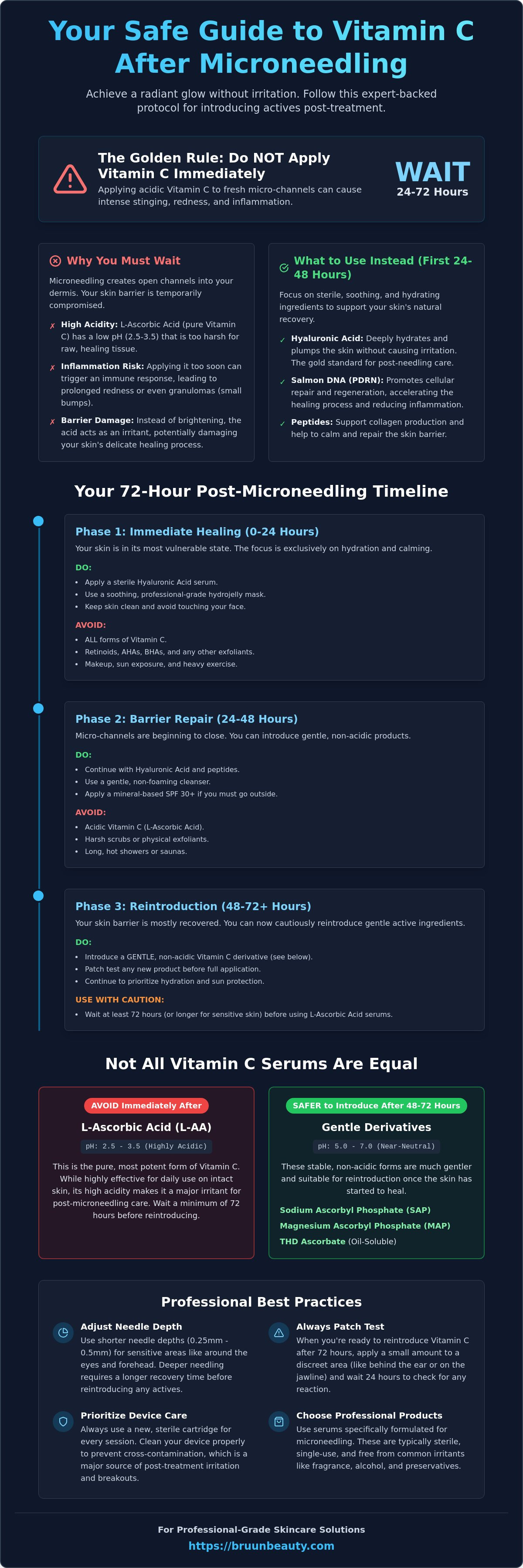
- Day 0 (Treatment Day): Your micro-channels are wide open. Use only sterile Hyaluronic Acid or PDRN to keep the skin hydrated. Avoid all acids, including every form of Vitamin C, to prevent deep-tissue irritation.
- Day 1 (24 Hours Later): Your skin is likely still pink and feeling tight. Focus on hydration and barrier support with a professional jelly mask to cool the skin and lock in moisture.
- Day 2 (48 Hours Later): If your skin no longer feels hot and the redness has mostly faded, you may introduce a gentle Vitamin C derivative like Sodium Ascorbyl Phosphate. This allows you to start the brightening process without the harshness of pure acids.
- Day 3 (72 Hours Later): For most users, the skin barrier has sufficiently sealed by this point. You can usually return to your standard L-ascorbic acid routine if your skin feels normal and resilient.
Monitoring Your Skin’s Response
Every skin type heals at a different pace. Before jumping back into your full-strength actives, try the "Patch Test" method on a small area of your jawline. If you feel intense stinging that lasts more than a few seconds, your barrier is still too compromised for actives. It is better to wait an extra day than to rush the process. Remember, collagen induction takes weeks to show full results, so there is no need to hurry the first 72 hours.
The Role of Sun Protection
Vitamin C and SPF are the ultimate power duo once your skin has closed. Freshly needled skin has an increased photosensitivity, making it more prone to UV damage. Applying Vitamin C during the recovery phase actually boosts the efficacy of your sunscreen by providing an extra layer of antioxidant protection against free radicals. Just ensure you aren't applying it until that 48 to 72-hour window has passed to avoid unnecessary inflammation.
Ready to upgrade your post-care routine for better results? Explore our professional microneedling supplies to find the perfect serums and masks for every stage of your healing journey.
Pro Tips for a Safe, Glowing Microneedling Routine
Achieving a professional glow requires more than just knowing when to apply your serums. It's about the synergy between your tools, your technique, and your timing. While the question of can you use vitamin c with microneedling often focuses on the "when," the "how" is just as vital for protecting your skin's health and ensuring you see the best results.
Start by ensuring your equipment is up to the task. Always use a clean, professional device like those found in the BRÜUN collection to maintain precision and safety. You should also consider pairing your treatment with K-beauty products that are specifically formulated to soothe and nourish sensitive, post-procedure skin. These specialized formulas often contain the calming extracts your barrier needs to recover quickly.
Choosing the Right Needle Depth
The depth of your treatment directly impacts how long you must wait before reintroducing actives. Deeper clinical treatments, such as those reaching 1.0mm or 1.5mm, create more significant channels that require a full 72-hour recovery period before Vitamin C is safe. If you plan on using your brightening serums sooner, consider starting with a lower needle depth of 0.25mm to 0.5mm to keep the irritation minimal.
For at-home enthusiasts, 0.25mm is often the sweet spot. This depth is shallow enough to minimize downtime while still allowing for enhanced product absorption. By keeping your treatments conservative, you reduce the risk of the deep-tissue irritation we discussed in earlier sections. If you're wondering can you use vitamin c with microneedling at these shallower depths, you may find your skin is ready for gentle derivatives in as little as 48 hours.
The BRÜUN Professional Advantage
Quality control is non-negotiable when you are puncturing the skin barrier. We ship all our orders directly from Miami and Los Angeles to ensure you receive professional-grade gear as quickly as possible. This speed is crucial for professionals who need to restock their clinics without delay and for enthusiasts who want to maintain their routine.
Beyond the devices themselves, the importance of using high-quality, sterile cartridges cannot be overstated. Each needle must be sharp and properly manufactured to avoid tearing the skin or causing unnecessary trauma. Using inferior tools increases the risk of inflammation, regardless of how long you wait to apply your Vitamin C.
Consulting with an esthetician friend can also help you customize your ingredient "cocktail" for your specific skin goals. Whether you want to focus on pigmentation or texture, a tailored approach always yields better results. You are well on your way to achieving that clear, nourished, and glowing K-beauty skin you've been dreaming of!
Your Path to a Radiant Post-Needling Glow
Achieving a professional-level skin transformation requires a careful balance of advanced technique and patient aftercare. You now know that while the answer to can you use vitamin c with microneedling is a firm "not yet" for the first 24 to 72 hours, the wait is essential for your skin's health. By prioritizing sterile hydration like Salmon DNA and Hyaluronic Acid during the initial healing phase, you protect your barrier and set the stage for long term brightness.
Once those micro-channels have safely closed, your skin will be ready to absorb the benefits of your favorite antioxidants with much greater efficacy. We are here to support your journey with a professional-grade K-beauty inventory and tools that deliver clinic-level results. BRÜUN is trusted by licensed estheticians nationwide, and we ensure your gear arrives quickly with US-based shipping from our hubs in Miami and Los Angeles.
Shop Professional Microneedling Devices and Serums at BRÜUN today to start your journey toward clear, nourished, and glowing skin. You have the knowledge; now it's time to let your skin truly shine.
Frequently Asked Questions
Can I use Vitamin C before microneedling?
Yes, you can use Vitamin C in the days leading up to your treatment to strengthen your skin and build an antioxidant reservoir. However, you should stop using it at least 24 hours before your session. This ensures your skin isn't sensitized or irritated before the needles touch your face. Pre-treating your skin helps it stay resilient, but skipping that final day is vital for a comfortable and safe procedure.
What happens if I use Vitamin C too early after needling?
If you apply Vitamin C to open micro-channels too early, it can cause intense stinging, prolonged redness, and "hot spots." In rare cases, this irritation leads to granulomas, which are small bumps formed by your immune system to wall off irritating substances. If you've wondered, "can you use vitamin c with microneedling" immediately after, these risks are the primary reason to wait. Wash it off with cool water if burning occurs.
Is there a specific Vitamin C serum you recommend for post-care?
We recommend waiting until at least Day 3 to reintroduce any Vitamin C into your routine. When you do, look for a stable, non-acidic derivative like Sodium Ascorbyl Phosphate or a professional-grade K-beauty serum. These formulations are much gentler than pure acids. Avoid DIY Vitamin C serums at all costs, as their pH levels are often unstable and far too harsh for skin that is still in the recovery phase.
Can I use a Vitamin C sheet mask instead?
It's best to avoid Vitamin C sheet masks during the initial healing phase because they often contain high concentrations of preservatives and fragrances. These additives can be just as irritating as the Vitamin C itself. Instead, use a cooling jelly mask immediately after your treatment. These masks soothe the skin and lock in moisture without the risk of an acid-induced reaction or unnecessary dermal irritation.
Should I use Vitamin C if I see pinpoint bleeding?
You should absolutely avoid Vitamin C if you see pinpoint bleeding during or after your session. Pinpoint bleeding is a clear sign that the needles have reached the dermis. In this state, you must stick strictly to sterile Hyaluronic Acid or PDRN serums. Introducing an acidic active like Vitamin C into the bloodstream through these openings is a recipe for severe inflammation and will significantly compromise your skin's recovery process.
How long after microneedling can I use my regular skincare?
Most people can return to their full skincare routine, including Retinol and L-ascorbic acid, about 72 hours after treatment. However, you should always listen to your skin's unique needs. If your face still feels tight or you notice any peeling, wait another 24 hours before using actives. Focus on ceramides and deep hydration until your barrier feels fully restored and resilient enough to handle your standard daily products.
Best Peptide Serum for Microneedling: Professional Guide
Maximize Microneedling Results with Exosome Serums
Related Posts

Alternating Microneedling and Chemical Peels: Complete Protocol Guide (2026)

How to Combine Microneedling with Other Treatments for Radiant Skin

Microneedling Healing Process Day by Day: Your 2026 Recovery Guide

How to Speed Up Healing After Microneedling: A Professional Recovery Guide

Can I Use Retinol After Microneedling? The Esthetician’s Guide to Safe Timing

Jelly Mask After Microneedling: The Ultimate Guide to Post-Procedure Recovery

When Can I Wear Makeup After Microneedling? A Complete Recovery Guide
