

Microneedling Scalp Side Effects: Risks and Safety
Deeper needles don’t automatically mean better scalp results, and they can increase the risk of irritation or injury. Common microneedling scalp side effects include temporary redness, tenderness, mild swelling, and pinpoint bleeding, but worsening symptoms deserve attention.
It can be hard to tell a short-lived reaction from a warning sign, especially when advice about at-home devices, repeat sessions, and aftercare conflicts. This guide explains which reactions may occur, which symptoms call for medical guidance, and how device choice and technique can affect risk.
You’ll also learn why you shouldn’t assume a facial skincare product is suitable for scalp use, especially around a needling procedure. Use this information to make a more informed decision, not to assume that deeper or more frequent microneedling is always better.
Key Takeaways
- Microneedling scalp side effects vary. Learn to distinguish short-lived reactions from symptoms that need professional attention.
- Rollers, stamps, and motorized pens work differently. Needle length and pressure can affect how they contact the scalp.
- When comparing at-home and professional approaches, consider training, hygiene, device control, and access to an assessment.
- Reduce avoidable risks by reviewing your suitability, following device instructions, using clean equipment, and monitoring your scalp afterward.
- Keep scalp-specific guidance separate from facial skincare products. Bruun Beauty's facial microneedling products are for skincare routines, not scalp use.
Microneedling Scalp Side Effects: Which Reactions Can Occur?
Scalp reactions to microneedling can vary. Redness, tenderness, mild swelling, and pinpoint bleeding have been reported after scalp procedures. However, general information about facial microneedling does not automatically establish what you’ll experience on your scalp.
Your reaction may depend on the device, the technique, and your individual skin response. Rather than expecting a particular reaction or recovery schedule, pay attention to whether symptoms settle or get worse.
Microneedling is also called collagen induction therapy. A general overview of collagen induction therapy can explain the procedure, but it is not a substitute for scalp-specific medical guidance or evidence about possible reactions.
What short-term scalp reactions may happen?
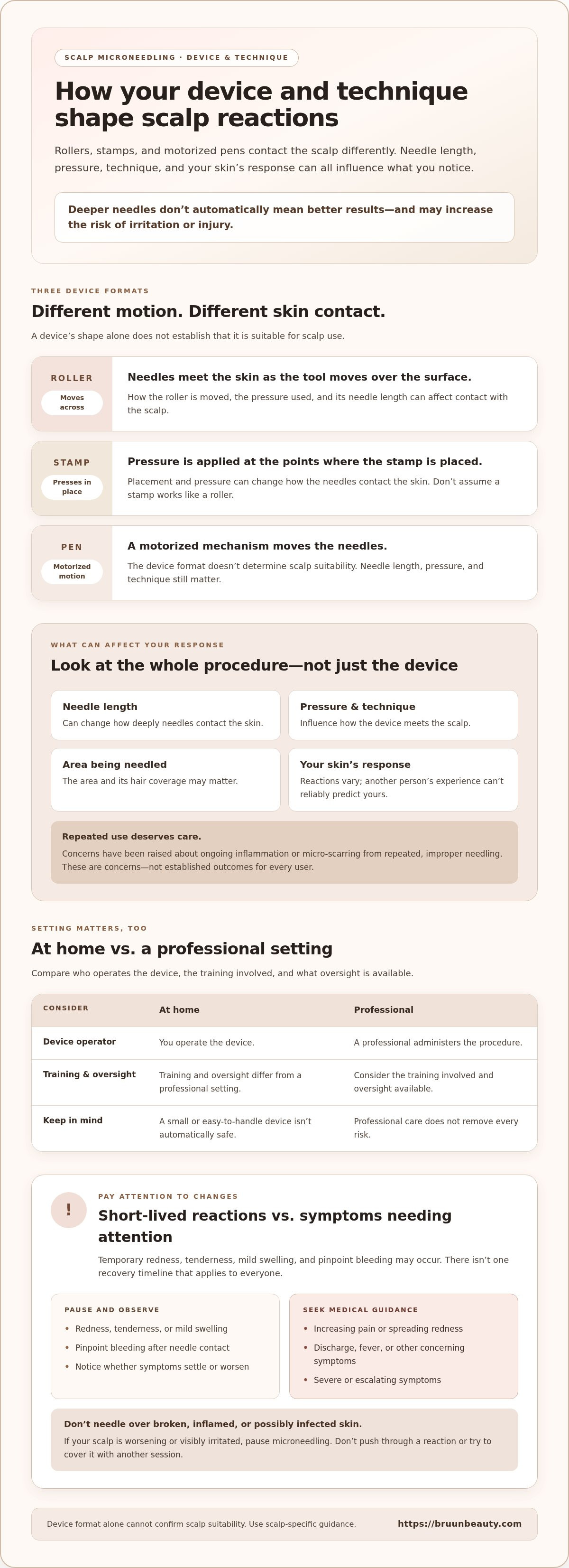
After scalp microneedling, you may notice temporary redness, tenderness, or mild swelling in the areas that received needle contact. Pinpoint bleeding can also occur. These local reactions don’t confirm that a procedure was performed safely or guarantee a particular result.
How noticeable or persistent a reaction is can depend on the device, pressure, technique, and your skin’s response. There isn’t one timeline that applies to everyone. Avoid using descriptions of facial microneedling to predict scalp effects, since the body area and procedure details may differ.
Which symptoms should prompt medical advice?
Watch for changes that worsen instead of settling. Seek professional medical assessment for increasing pain, spreading redness, discharge, fever, or other symptoms that concern you. These signs don’t confirm a specific complication, but they deserve attention rather than another session.
- Pause microneedling if your scalp is worsening or visibly irritated.
- Don’t needle over broken, inflamed, or possibly infected skin.
- Get medical guidance if symptoms are severe, spreading, or accompanied by fever.
Don’t push through a reaction or try to cover it with more needling. Pausing gives you time to observe the change and decide whether professional advice is needed. If symptoms are escalating, seek prompt medical assessment instead of waiting for a routine session or relying on product claims.
If you’re also exploring facial microneedling, BRÜUN’s microneedling collection is for skincare routines, not scalp-use guidance. Keep scalp decisions separate and use products only as directed for their intended use.
Why Scalp Microneedling Side Effects Depend on Device and Technique
Microneedling devices don’t all contact skin in the same way. A roller moves across the surface, a stamp presses into selected spots, and a pen-shaped device uses a motorized motion. Design, needle length, pressure, and technique can all affect how the scalp responds, so one person’s experience can’t reliably predict yours.
Device design and technique influence how needles contact the skin, but neither alone establishes that a device is suitable for your scalp. The FDA describes rollers, stamp-style products, and pen-shaped devices as distinct microneedling formats. Its guidance discusses device risks generally, not a complete set of scalp-specific risks. Review the FDA’s microneedling device information for background, but don’t treat a device’s shape as proof that it is safe for a particular use.
How do microneedling devices differ?
A roller’s needles meet the skin as the tool moves. A stamp applies pressure at the points where it is placed, while a pen-shaped device moves needles through a motorized mechanism. Needle length and pressure can change how deeply the needles contact skin. Don’t assume the devices are interchangeable or choose settings based on someone else’s routine.
Scalp suitability is a separate question from device format. Hair coverage, the area being needled, the user’s technique, and the device’s intended use may all matter. At-home use also differs from a professionally administered procedure in training and oversight. Professional care doesn’t remove every risk, and a small device used at home isn’t automatically simple or safe.
Why can repeated use raise questions?
The American Hair Loss Association has raised concerns that repeated, improper scalp needling could contribute to ongoing inflammation or micro-scarring. These concerns warrant care, but they shouldn’t be presented as established outcomes for every user. A concern about repeated trauma is not the same as strong, directly relevant evidence that microneedling inevitably causes permanent damage.
FDA microneedling guidance outlines general device considerations and risks, but it doesn’t provide a complete account of long-term scalp outcomes from repeated use. That gap calls for caution, not certainty. If you’re weighing a repeated routine, consider cumulative exposure and seek scalp-specific medical guidance rather than assuming more sessions will be more effective.
Keep your purpose clear, too. BRÜUN’s microneedling skincare products are for skincare routines, not scalp-use recommendations. If facial microneedling is also of interest, explore that category separately and base scalp decisions on guidance specific to your situation.
At-Home vs. Professional Scalp Microneedling: How to Assess the Risks
At-home and professional microneedling differ in who operates the device, the training involved, and the oversight available. Neither setting removes every risk. A professional procedure is not automatically risk-free, and using a device at home isn’t automatically safe just because it is small or easy to handle.
What changes between home and professional settings?
This comparison highlights practical differences. It isn’t a guarantee of safety or a substitute for scalp-specific medical guidance.
| Factor | At home | Professional setting |
|---|---|---|
| Training | You operate the device and control your own technique. | A trained provider operates the device; training and experience can vary. |
| Hygiene | You’re responsible for following the device maker’s hygiene instructions. | Staff manage hygiene practices in the setting, though this doesn’t eliminate risk. |
| Device control | You select and handle the device yourself. | A provider controls the device during the procedure. |
| Assessment | Access to an in-person professional assessment isn’t built into home use. | You may be able to discuss suitability and risks with the provider. |
The FDA advises people considering microneedling to choose a specially trained provider and discuss candidacy, benefits, and risks. This is general device-safety guidance, not a scalp-specific guarantee or a claim that a particular provider is right for you. Review the FDA’s microneedling device guidance for broader context.
At home, you’re responsible for handling the device and following the manufacturer’s instructions. In a professional setting, training and oversight may shape how the procedure is carried out, but they can’t make every reaction predictable. Your microneedling scalp side effects may depend on the device, technique, and individual response.
Do hair-loss claims prove scalp microneedling is safe?
No. Claims about possible hair effects don’t establish that a procedure is safe for every scalp or that repeated use is appropriate. Evidence about potential outcomes and evidence about adverse effects answer different questions. Study findings may involve specific methods or groups, so they don’t automatically apply to every device, user, or routine.
The American Hair Loss Association has raised concerns about repeated, improper needling and possible long-term scalp effects. Consider those concerns carefully, but don’t treat them as proof that permanent harm is inevitable. General FDA device guidance also doesn’t settle every question about repeated scalp use.
More pressure, greater depth, or more frequent sessions don’t necessarily mean better results. If you’re considering a routine, prioritize suitability and professional guidance over claims that “stronger” is better. For facial skincare, you can explore BRÜUN’s microneedling skincare products separately. They aren’t scalp products.
How to Reduce Risk Before and After Scalp Microneedling
A cautious plan starts before you pick up a device and continues as you monitor your scalp afterward. Consider whether microneedling is appropriate for you, understand the device, follow its instructions, and pause if your skin becomes more irritated or symptoms worsen.
FDA microneedling guidance emphasizes trained providers and proper device use, but it addresses microneedling generally, not every scalp-specific question. Use it as broad safety context, not as a personal assessment.
What should you consider before microneedling?
Before starting, discuss your personal suitability and risks with a qualified healthcare professional, especially if you have a scalp condition, open or irritated skin, or a health factor or medication that may affect bleeding or skin recovery. Don’t assume advice for facial microneedling applies to your scalp.
Read the device instructions before use. Don’t choose needle depth or session frequency based on online routines or claims that more intense use works better.
- Review suitability. Consider your current scalp condition and health history, and raise questions with a healthcare professional before proceeding.
- Understand the device. Identify how it is designed to contact skin and what its manufacturer says about intended use. Don’t assume a roller, stamp, or pen is interchangeable with another format.
- Follow the instructions. Use the device only as directed. Keep equipment clean according to the manufacturer’s guidance, and don’t invent a cleaning method or schedule.
- Monitor your scalp. Pay attention to how the skin looks and feels afterward. Note when symptoms begin and whether they settle, stay the same, or worsen.
What should you do if a reaction develops?
If symptoms worsen or look concerning, stop further needling. Increasing pain, spreading redness, discharge, or fever calls for prompt medical advice. These signs don’t confirm a specific problem, but a professional can assess them and advise you on what to do next.
Don’t needle over visibly irritated or open skin, and don’t use another session to see whether symptoms improve. When a reaction is significant or getting worse, don’t substitute a home remedy or product for medical assessment. If you’re unsure, pause and seek professional guidance before considering microneedling again.
Keep scalp-specific decisions separate from facial skincare. BRÜUN’s facial microneedling products are for skincare routines, not scalp use. Don’t apply them to your scalp based on general product marketing or routine advice.
A Safer Next Step: Choose Scalp Guidance Separately From Facial Microneedling Products
Keep two decisions separate: whether scalp microneedling is appropriate for you, and which products belong in a facial skincare routine. A product marketed for facial microneedling doesn’t become suitable for scalp use simply because both involve skin. Product claims also can’t assess your scalp or personal health history.
How should you think about topical products and scalp use?
Follow the product label and directions. If a product is described for skincare routines or facial use, don’t assume you can apply it to the scalp, especially around a microneedling procedure. Needling can change how skin responds to topical products, so don’t base scalp application on facial routines or promotional language.
BRÜUN’s facial microneedling products are for skincare routines, not scalp use. The collection may be relevant if you’re exploring facial skincare, but it shouldn’t guide decisions about what to put on your scalp. Keep product use within its stated directions, and seek scalp-specific guidance for questions about scalp procedures or products.
Use the same care with general online advice. Another person’s routine may involve a different device, skin response, or product. Similar ingredients or a familiar device format don’t establish that the routine is appropriate for your scalp.
When is it time to pause and get individualized guidance?
Pause microneedling and seek professional medical guidance if symptoms persist, worsen, or concern you. Increasing discomfort, spreading redness, discharge, or fever are reasons to get assessed rather than continue a routine. Don’t try to determine the cause from a product description or online discussion.
Online information can explain general considerations, but it can’t examine your scalp or account for your medical history, medications, or the device and technique involved. Share those details with a qualified healthcare professional for guidance relevant to your situation. Until you have direction, avoid needling irritated or visibly affected skin.
The practical takeaway is simple: use scalp-specific medical guidance for scalp decisions, and keep facial skincare products within their labeled use. That lets you explore facial routines without assuming they answer questions about microneedling scalp side effects.
Make Your Next Step a Thoughtful One
When considering microneedling scalp side effects, start with your own scalp, health history, and comfort level, not a promise attached to a device or product. If you’re unsure, pause and get individualized medical guidance before deciding whether to proceed.
Keep facial skincare as a separate interest. Bruun Beauty offers microneedling serums and specialized devices for skincare routines. Its 35 ml Salmon DNA ampoule is made in South Korea. These products are for facial skincare, not scalp use, so follow their stated directions and don’t use them to guide scalp care.
Make your next step an informed one: get scalp-specific guidance for scalp decisions, and explore Bruun Beauty’s facial microneedling collection for your skincare routine.
Frequently Asked Questions
Is scalp microneedling supposed to cause bleeding?
Small pinpoint bleeding may occur, depending on the device and technique, but it isn’t a measure of success. Don’t press harder or repeat passes to make bleeding happen. If bleeding is heavy or doesn’t stop, pause and seek medical advice. Note what happened and which device you used.
How long can redness or tenderness last after scalp microneedling?
There isn’t one reliable scalp-specific timeline that applies to everyone. Reactions may vary with the device, technique, and your individual response. Avoid another session while your scalp remains irritated. If redness or tenderness persists, worsens, or concerns you, contact a qualified healthcare professional and describe when it began and whether it has changed.
Can scalp microneedling cause an infection?
Yes. Infection is a recognized risk if tools aren’t cleaned or used properly, according to general FDA guidance. Follow the device maker’s directions and don’t improvise cleaning steps. If you notice increasing redness, discharge, or fever after needling, stop and seek medical advice rather than trying another session.
What happens if my scalp becomes more painful or swollen after microneedling?
Stop needling and seek medical advice if pain or swelling worsens, particularly with spreading redness, discharge, or fever. An article can’t determine the cause. Before speaking with a healthcare professional, note when the reaction started, which device and technique you used, and whether symptoms are changing.
Is at-home scalp microneedling safer than professional microneedling?
Neither setting is automatically safer for everyone. At home, you manage the device and its use; professional care may offer trained oversight, but it doesn’t remove all risk. The FDA’s general guidance recommends discussing suitability and risks with a specially trained provider. It doesn’t establish a scalp-specific safety comparison.
Can I use a facial microneedling serum on my scalp?
Don’t assume a facial skincare serum is suitable for your scalp. Check the label and use it only as directed; facial use doesn’t establish scalp suitability, especially around needling. BRÜUN’s facial microneedling products are for skincare routines, not scalp use or a way to address scalp reactions.
Nano Infusion at Home: A Clear, Skin-Smart Guide for 2026
At-Home Facial for Glowing Skin: Step-by-Step Routine
Related Posts

Consistent Microneedling and the Long-Term Changes to Expect

Aftercare choices to lower infection risk at home after microneedling

How to Create a Relaxing At-Home Spa Day With Simple Rituals

Sunscreen Recommendations After Microneedling: How to Protect Healing Skin

Investing in my skin for the future: what deserves my budget

Post-microneedling skincare routine for masks, makeup, and recovery

Skin Peeling After Microneedling: What to Avoid and When to Resume Makeup
