

Microneedling for Hair Loss at Home: What to Know
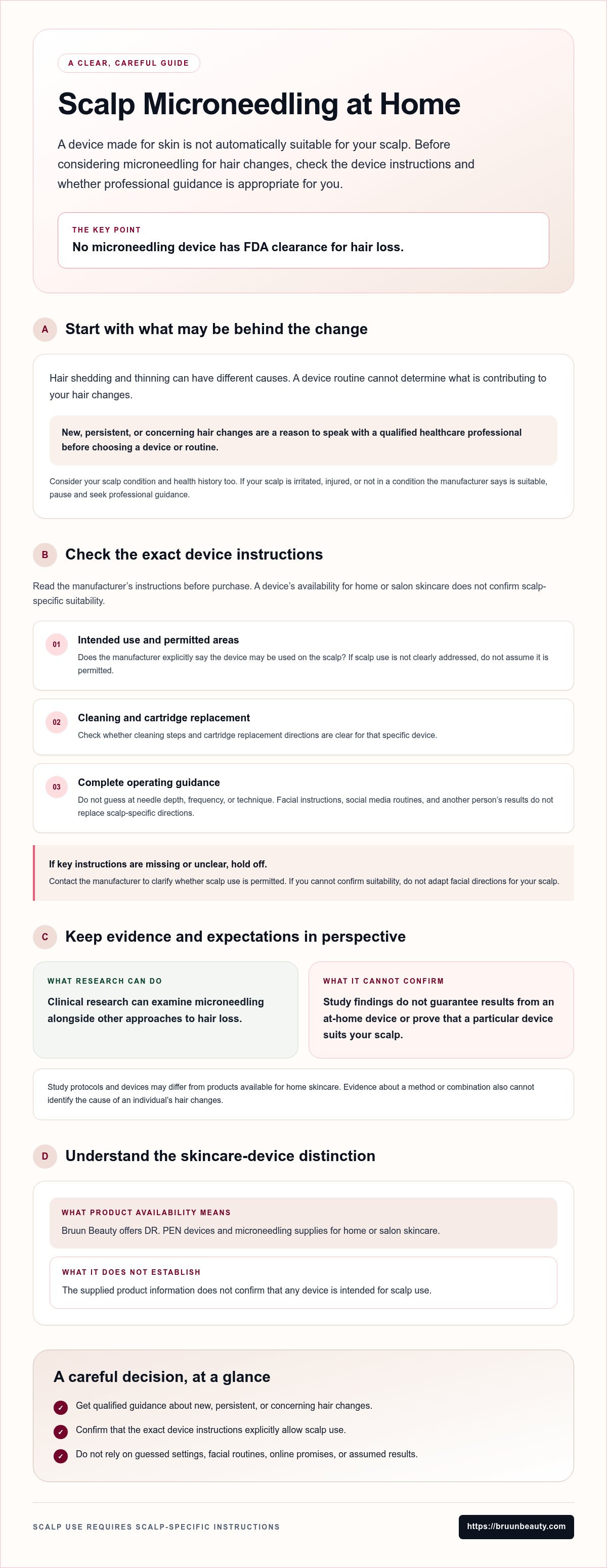
A device made for skin isn’t automatically suitable for your scalp. If you’re considering microneedling for hair loss at home, first check whether the specific device is intended for scalp use and whether it fits your situation. No microneedling device has FDA clearance for hair loss.
When you notice changes in your hair, it’s natural to look for a practical option. But scalp microneedling isn’t a guaranteed route to fuller-looking hair, and a device being available for home use doesn’t confirm that its manufacturer approves scalp use.
This guide explains what at-home microneedling may and may not offer, what to check in a device’s instructions, and why the cause of your hair changes matters. It also covers questions to raise with a qualified healthcare professional before deciding whether to proceed.
Key Takeaways
- Before considering microneedling for hair loss at home, clarify what may be contributing to your hair changes and whether scalp microneedling is appropriate for you.
- Ask a qualified healthcare professional about new, persistent, or concerning hair changes before choosing a device or routine.
- Check the exact manufacturer instructions for approved use areas. Don’t assume a device intended for skincare is suitable for the scalp.
- Separate possible benefits from proven outcomes, and be cautious of online routines or promises that go beyond the available evidence.
- Bruun Beauty offers DR. PEN devices and microneedling supplies for home or salon skincare, but its product information does not confirm scalp-specific suitability.
What Is Microneedling for Hair Loss at Home?
Microneedling uses a device with fine needles to make small punctures in the skin. Microneedling for hair loss at home means using such a device on the scalp in the hope of supporting hair growth. Results aren’t guaranteed, and not every device is intended for scalp use.
The basic technology is described in Microneedles, but a general explanation doesn’t establish whether a particular device is suitable for your scalp. Hair shedding and thinning can have different causes, and a device routine can’t determine what’s behind your hair changes.
How does scalp microneedling differ from facial microneedling?
Your scalp and face are different areas, and device instructions may limit where a product can be used. Don’t transfer facial needle depths, movement patterns, or serum steps to your scalp. Check the manufacturer’s instructions for permitted areas. If scalp use isn’t clearly addressed, contact the manufacturer before considering the device.
What can readers reasonably expect to learn from the evidence?
Clinical research has examined microneedling alongside other approaches to hair loss, but findings about a method or combination don’t confirm that an at-home device will produce the same outcome. Study protocols and devices may differ from products available for home skincare, and research doesn’t identify the cause of an individual’s hair changes.
Evidence can suggest whether microneedling merits further study, but it can’t guarantee results or establish that a particular at-home device is suitable for your scalp. If your hair changes are new, persistent, or concerning, ask a qualified healthcare professional rather than relying on an online routine.
Why shouldn’t you assume devices are interchangeable?
A facial device’s availability for home or salon skincare doesn’t confirm scalp-specific suitability. Bruun Beauty offers microneedling devices and supplies, but its supplied product information doesn’t establish that any device is intended for scalp use. Start with the product instructions, not a social media routine or a device’s general category.
What Should You Check Before Using a Microneedling Device on Your Scalp?
Before trying microneedling for hair loss at home, check two things: whether your hair changes call for professional guidance, and whether the specific device is intended for scalp use. A routine from a facial skincare video can’t fill in instructions the manufacturer hasn’t provided.
New, persistent, or concerning hair changes are a reason to speak with a qualified healthcare professional. Hair shedding and thinning can have different causes, and microneedling shouldn’t replace looking into what may be contributing to yours. For an overview of potential concerns around home use, read Cleveland Clinic’s guidance on microneedling safety.
Is at-home scalp microneedling suitable for everyone?
Suitability depends on you, your scalp, and the device’s instructions. Pause and seek professional guidance if your scalp is irritated, injured, or otherwise not in a condition the manufacturer says is suitable for use. Ask for advice as well if you’re unsure whether your health history or current scalp concerns affect whether you should proceed.
There’s no universal depth, schedule, or technique that applies to every person and device. If you can’t confirm whether the tool is intended for your scalp, hold off rather than adapting facial directions or copying an online routine.
How should you assess a device before buying?
Read the instructions before you purchase, not just the product description. Look for clear information about intended use, permitted areas, cleaning, cartridge replacement, and operation. If scalp use isn’t explicitly addressed, ask the manufacturer whether it’s permitted. Don’t infer suitability from a device’s appearance, category, or someone else’s results.
- Intended use: Does the manufacturer specifically allow use on the scalp?
- Care instructions: Can you follow the stated cleaning steps?
- Replacement parts: Are cartridge replacement directions clear for that device?
- Operating guidance: Are the instructions complete for the intended area and use?
Skip a device if key instructions are missing or unclear. Don’t guess at needle depth, frequency, or technique. Bruun Beauty’s microneedling device and supply selection can help you review available skincare categories, but the supplied product information doesn’t confirm scalp-specific suitability. Check the manufacturer’s instructions and seek qualified guidance before considering scalp use.
At-Home Microneedling: Benefits and Misconceptions
At-home microneedling may appeal if you want to explore a hands-on scalp routine. But a product description or personal account isn’t proof that a device will improve hair growth. Separate what makes a routine appealing from what evidence can establish and what the manufacturer permits.
| Potential appeal | Evidence limitation | Practical safety consideration |
|---|---|---|
| You can explore a device-based routine at home. | Evidence limitation: A device claim or anecdote doesn’t establish a guaranteed hair outcome or predict how you’ll respond. | Confirm that the manufacturer permits scalp use before considering the device. |
| Microneedling has been studied in connection with hair concerns. | Evidence limitation: Findings from a study apply to the method and conditions studied. They don’t automatically apply to every home device or routine. | Don’t assume a facial skincare protocol is suitable for your scalp. |
| You may see online routines that promise faster results with frequent or intensive use. | Evidence limitation: More frequent or intense use isn’t proof of better results. | Don’t increase use or improvise technique beyond the exact manufacturer instructions. |
Evidence finding versus product claim: A product claim describes what a seller says its device can do. A verified evidence finding describes what research supports under the conditions studied.
Can microneedling guarantee hair growth?
No. Microneedling for hair loss at home shouldn’t be presented as a guaranteed way to get a particular result. Individual outcomes can vary, and hair changes can have different underlying causes. A product page, routine, or before-and-after image can’t predict your personal outcome or explain why your hair is changing.
Be cautious of promises tied to a precise result or schedule. If you’re concerned about shedding or thinning, keep investigating the cause with a qualified healthcare professional rather than relying on a device routine alone.
Does a skincare microneedling device automatically suit the scalp?
No. A device sold for home or salon skincare isn’t automatically approved or intended for scalp use. Bruun Beauty’s microneedling device collection is a category resource, not confirmation that a particular device suits your scalp. Ask the manufacturer about the exact device and its intended use before deciding.
How to Make a Safer, More Informed Decision at Home
Use a decision sequence, not an online routine, to assess microneedling for hair loss at home. First, consider what concerns you about your hair changes. Seek guidance if needed, verify that the exact device is intended for scalp use, and read its instructions. Proceed only if those checks support your intended use.
What should a cautious pre-use checklist include?
Before using a device, make sure its instructions clearly cover the area and use you have in mind. Review the manufacturer’s guidance for cleaning, handling, operation, and replacement components. If important steps are unclear, contact the manufacturer instead of filling in the gaps with a video or advice written for a different device.
- Confirm intended use: Look for explicit instructions about scalp use, not just general skincare use.
- Review care steps: Check how the manufacturer says to clean and handle the device.
- Check replacement parts: Read the directions for compatible components and when to replace them. Bruun Beauty’s replacement microneedling cartridges are a supply category; follow the specific device manufacturer’s instructions for selection and use.
- Avoid sharing: Don’t share a device or its components unless the manufacturer explicitly permits it.
Follow the instructions for your exact model. Don’t borrow a needle depth, schedule, or technique from a facial routine, a different device, or a social media post. If the manufacturer’s directions don’t clearly support your intended use, pause.
When should you ask a professional before proceeding?
Ask a qualified healthcare professional about hair changes that are new, persistent, or worrying. You can also ask whether your personal circumstances make scalp microneedling suitable and what other approaches may be worth discussing. This conversation can help you make a decision without guessing at the cause or relying on a device to explain your symptoms.
If you’ve started using a device and are unsure whether to continue, stop and seek qualified guidance. Don’t restart or change how you use it until you’ve checked the manufacturer’s directions and received advice appropriate to your concern.
How Bruun Beauty’s Microneedling Range Fits Into Your Research
Shopping for microneedling equipment and deciding whether to use it on your scalp are separate questions. Bruun Beauty sells DR. PEN microneedling devices and supplies for home or salon skincare routines. The available product information doesn’t confirm that any listed device is specifically suitable for scalp use.
What can you browse in a microneedling collection?
A collection page can help you review available product categories, but it can’t replace the instructions for a particular device. As you browse, distinguish between what the retailer lists and what the manufacturer says about intended use. A device’s presence in a skincare collection isn’t evidence that its instructions permit scalp use.
For microneedling for hair loss at home, that distinction matters. Don’t infer scalp suitability from a product image, general home-use description, or a routine you saw online. Check the instructions for the exact device you’re considering, and contact its manufacturer if they don’t clearly address your intended use.
What is a sensible next step if you are still unsure?
Write down your questions before deciding: Does the manufacturer explicitly permit scalp use? What does it say about operation and care? Are your hair changes new, persistent, or worrying enough to discuss with a qualified healthcare professional first? A healthcare professional can help you consider your concerns and other options without relying on a device to identify the cause.
If the device instructions don’t match your intended use, or you can’t get a clear answer, pause rather than adapting a facial skincare routine. Bruun Beauty’s product information is a starting point for browsing categories, not a substitute for manufacturer guidance or professional advice. A careful decision begins with those checks, not a promise of results.
Once you’ve reviewed the guidance and considered your next step, you can browse the microneedling collection to see the available device and supply categories.
Make Your Next Step an Informed One
Microneedling for hair loss at home deserves a suitability check before it becomes part of your routine. The device’s intended use, its manufacturer instructions, and your reason for noticing hair changes matter more than a popular online technique. No at-home routine can promise a particular outcome.
Keep your next step grounded: discuss new, persistent, or concerning hair changes with a qualified healthcare professional, and confirm scalp use with the device manufacturer. Don’t transfer facial steps to your scalp. If instructions or answers are unclear, pause rather than guess. Browsing for a product and deciding whether it fits your needs are separate steps.
Bruun Beauty offers DR. PEN microneedling devices for home or salon skincare, but its product information doesn’t confirm scalp-specific suitability. The company ships from warehouses in Miami and Los Angeles.
Take your time and choose based on clear instructions and qualified guidance, not someone else’s promise. A thoughtful next step is progress, too.
Frequently Asked Questions
Can you use microneedling for hair loss at home?
Possibly, but consider it only if the manufacturer’s instructions explicitly allow the specific device for scalp use. Your circumstances matter too, so ask a qualified professional if you’re unsure. Bruun Beauty sells DR. PEN devices for home or salon skincare, but its supplied product information doesn’t confirm scalp-specific use.
Is microneedling at home safe for your scalp?
Safety depends on the device’s stated use, its instructions, and your situation. Don’t use it on an area the manufacturer doesn’t specify. If your scalp is irritated or you’re concerned about hair changes, pause and seek qualified professional guidance before deciding whether to proceed.
Can microneedling guarantee hair growth?
No. A device or routine shouldn’t promise a particular hair outcome. Research findings don’t guarantee the same result for everyone, and hair changes can have different causes. Be cautious of dramatic before-and-after claims or precise timelines. Discuss concerning changes with a qualified healthcare professional rather than relying on product claims.
How often should you microneedle your scalp at home?
The information provided here doesn’t establish a schedule for scalp use. Don’t copy a social media routine or transfer facial-use directions to your scalp. Follow the exact instructions for your device. If they don’t address scalp use, or you’re unsure how they apply, pause and ask a qualified professional.
What should you check before buying a scalp microneedling device?
Confirm that the manufacturer explicitly identifies the device for scalp use. Review the instructions for operation, cleaning, handling, and replacement components. A skincare device isn’t automatically suitable for the scalp. If intended use is unclear, ask the manufacturer. If your personal suitability is uncertain, consult a qualified professional before deciding.
Should you ask a dermatologist about hair loss before trying microneedling?
Consider professional guidance if your hair changes are new, persistent, or concerning. A dermatologist or other qualified healthcare professional can discuss possible causes and options for your situation. This article can’t identify why your hair is changing, and a home skincare device shouldn’t replace an individual assessment. Getting advice first supports an informed decision.
How to Get a Glass Skin Facial at Home in 2026
How to Make Microneedling Less Painful: A Practical Guide
Related Posts

Nano Infusion at Home: A Clear, Skin-Smart Guide for 2026

How Does a Hydradermabrasion Machine Work? A Clear, Step-by-Step Guide

What Not to Do After Microneedling: Aftercare Guide

Can I Use a Sheet Mask After Microneedling? What to Know First

Getting Spa Results on a Budget: Build a Smart At-Home Routine

Professional vs. At-Home Microneedling: Cost Comparison

Hydrogen Water Bottle Buying Guide: Choose the Right Size and Features
