

Microneedling for Chest Sun Damage: Potential Benefits and Care
If you’re considering treating sun damage on your chest with microneedling, it may gradually improve uneven tone, texture, and fine lines, but it won’t instantly remove spots. Gentle skincare and consistent sun protection help care for your skin before and after a session.
Key Takeaways
- Microneedling can support gradual improvements in uneven tone, rough texture, and fine lines, but it doesn’t guarantee sun spot removal.
- Skin tone and concerns matter: discuss melasma, past pigment changes, medications, and skin reactions before a session.
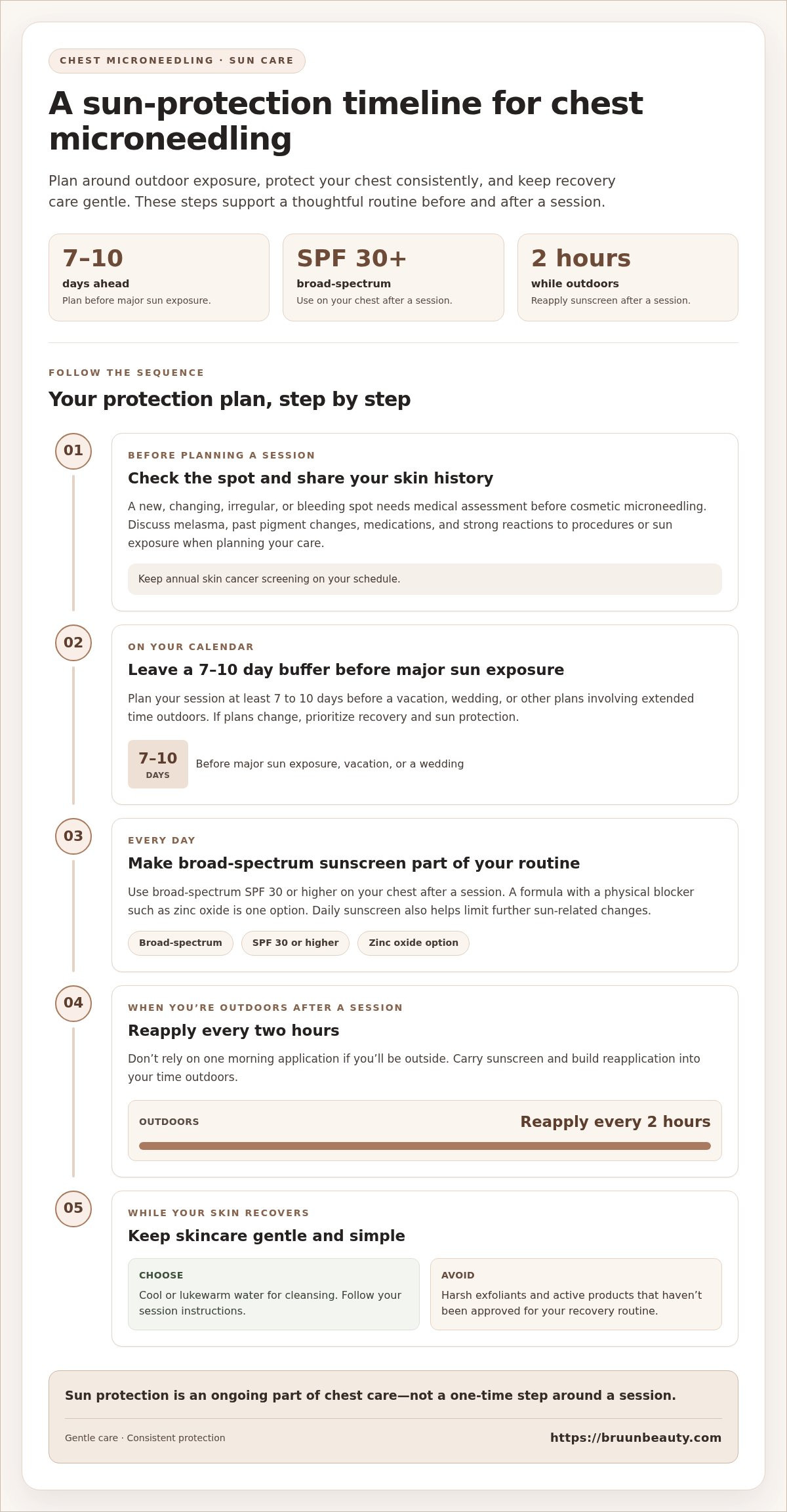
- Protect your chest with broad-spectrum SPF 30 or higher, and reapply every two hours when outdoors.
- Keep post-session care gentle: cleanse with cool or lukewarm water and avoid harsh exfoliants and unapproved active products while skin recovers.
- Learn how collagen stimulation works and where a microneedling serum may fit into a carefully planned routine.
Can microneedling help with sun damage?
Microneedling may gradually improve uneven tone, rough texture, and fine lines on the chest by supporting collagen production and skin renewal. Suitability depends on the mark’s appearance, your skin’s response to inflammation, and whether medical evaluation is needed first.
Suitability by Concern and Skin Tone
Suitability depends on matching microneedling to your concern and your skin’s response to inflammation. It may promote turnover of pigmented cells, softening discoloration, while collagen stimulation may gradually improve texture and fine lines. Microneedling is used across Fitzpatrick skin types I to VI, but post-inflammatory hyperpigmentation remains possible, especially in sensitive or darker skin.
For wrinkles or mild laxity, collagen support may improve the chest’s appearance over time. Deep, raised scars are less likely to respond well. Discuss any history of melasma, post-inflammatory hyperpigmentation, medication use, or strong reactions to procedures or sun exposure when planning settings and aftercare.
Comparing Microneedling with Other Options
Microneedling creates controlled micro-injuries without removing the skin’s top layer. IPL and chemical peels work differently. Laser resurfacing uses focused light to remove damaged outer layers and stimulate collagen deeper in the skin. The right comparison for you depends on pigmentation, texture, and how much downtime you can accept.
Laser resurfacing is generally described as best suited to light to medium skin tones, depending on the laser. Microneedling may be considered across Fitzpatrick types I to VI, although the risk of pigment changes still matters. Microneedling and laser resurfacing may also be used in alternating sessions over time.
Professional, At-Home, and Radiofrequency Options
Professional microneedling allows settings and aftercare to be tailored to the chest. SkinPen is one professional microneedling option, and suitability depends on your concern and an individualized approach. At-home devices aren’t equivalent to professional sessions, since settings and aftercare need careful selection.
Radiofrequency microneedling adds energy to needle-based procedures. Its suitability for chest sun damage depends on the concern and skin assessment, and it isn’t automatically a better choice for surface discoloration. When treating sun damage on your chest with microneedling, discuss device type and goals during planning.
Risks, Sessions, and Cost
Risks include temporary redness, sensitivity, and post-inflammatory hyperpigmentation. Scarring is also a concern if the skin is injured or aftercare is unsuitable. A new, changing, irregular, or bleeding spot needs medical assessment before cosmetic microneedling. Keep annual skin cancer screening on your schedule.
There’s no universal session count for sun-damaged chest skin. Sessions are usually spaced 4 to 6 weeks apart, with the plan guided by skin response and goals. In the United States, professional session costs vary with the area, number of sessions, and technology used.
Microneedling may support gradual changes, but it doesn’t guarantee sun spot removal. At-home use differs from professional care, particularly in how settings and aftercare are selected.
Sun protection before and after treatment
Sun protection matters before and after a microneedling session because ultraviolet exposure can add irritation and pigment concerns during recovery. A consistent routine also helps limit further sun-related changes to chest skin, including uneven pigmentation and visible fine lines.
Choose Broad-Spectrum SPF After Your Session
After microneedling, use broad-spectrum sunscreen with SPF 30 or higher. Broad-spectrum protection covers UVA and UVB exposure, making it a practical choice for your chest. Choose a formula with a physical blocker such as zinc oxide, then apply it to the exposed area as part of your morning skincare routine.
Reapply sunscreen every two hours while outdoors after microneedling. If you spend the afternoon outside, build reapplication into your routine rather than relying on one morning application. Daily broad-spectrum sunscreen also supports long-term chest care on days without planned outdoor activities.
Keep skincare simple while your skin recovers. Follow your session’s instructions, and don’t add unapproved products to freshly needled skin. Sunscreen supports your protection plan, but it doesn’t replace gentle care or limiting further UV exposure during recovery.
Plan Around Sun Exposure
Look at your calendar before scheduling a session. Plan microneedling at least 7 to 10 days before major sun exposure, a vacation, or a wedding. This gives you space between the procedure and plans that involve extended outdoor time. If plans change, prioritize recovery and sun protection rather than seeking additional exposure.
Before your appointment, make daily broad-spectrum sunscreen part of your skincare routine. Limiting direct sun exposure also reduces added stress while your skin recovers. Continue this approach afterward, when treated skin may be more prone to irritation or pigment concerns.
Make sun protection easy to follow: keep sunscreen with your morning skincare and carry it outdoors. Reapply every two hours outside. If a vacation or outdoor celebration is approaching, use the 7 to 10 day scheduling window to avoid a session just before those plans.
Keep Protection Part of Your Routine
Microneedling doesn’t replace everyday sun care. Continue daily broad-spectrum sunscreen, and use SPF 30 or higher after a session. A thoughtful microneedling routine pairs skincare choices with a clear sun-protection plan.
Protect your chest daily, reapply sunscreen every two hours outdoors after a session, and plan around major sun exposure. These practical habits support comfortable recovery and help reduce further sun-related pigmentation changes.
How microneedling stimulates collagen and elastin
Microneedling uses controlled micro-injuries to prompt a skin-repair response. On the chest, that response may support gradual improvements in fine lines, uneven texture, and the appearance of sun-damaged skin.
Collagen and Elastin Production
Ultra-fine needles create tiny channels that activate the skin’s natural repair process. As skin responds, collagen and elastin production increases. These proteins help support firmness and flexibility, which matters when sun exposure has left your chest looking less smooth or resilient.
Collagen provides structural support, while elastin helps skin stretch and return toward its shape. Their production may support smoother-looking texture and soften the appearance of fine lines over time. Microneedling doesn’t remove the skin’s top layer, so the aim is gradual renewal, not an immediate surface change.
The response also involves new cell growth. For uneven tone, turnover of pigmented cells may contribute to gradual improvement in the appearance of discoloration. Collagen production addresses a different concern: it may support texture and fine lines, but it doesn’t guarantee every sun spot will fade.
Collagen and Elastin Remodeling
Remodeling describes how skin reorganizes and matures collagen and elastin after the initial repair response. This matters because visible changes develop over time, not during the microneedling pass itself. Your chest’s texture and fine lines may improve gradually as the process continues.
Improvement from microneedling for sun-damaged skin is gradual over 4-6 weeks. A subtle glow and improved smoothness may appear within the first couple of weeks, while collagen remodeling continues beyond that early change. These are different stages, so an early glow doesn’t represent the full course of visible improvement.
Sessions are usually scheduled 4 to 6 weeks apart, depending on treatment goals. That interval gives the skin time to respond before another session adds controlled stimulation. There’s no universal session count for sun damage; the plan reflects your skin response, concerns, and desired outcome.
Keep expectations tied to the concern you want to address. Microneedling may gradually improve texture and fine lines by supporting collagen and elastin, while uneven pigmentation can respond differently. Results depend on your skin’s response, and sun protection remains important for maintaining your chest’s appearance between sessions.
For example, if rough texture is your main concern, track how smooth the area feels. If fine lines are your focus, observe their appearance over several weeks. Compare the same area under similar lighting to notice gradual changes without mistaking temporary redness for lasting improvement.
How microneedling works
Microneedling uses ultra-fine needles to create thousands of controlled micro-channels in the skin. These tiny channels trigger a repair response without removing the skin’s top layer. On the chest, that response may support gradual changes in uneven texture, fine lines, and the appearance of sun spots.
During a professional session, a practitioner moves a needling device across the selected area. The needles create controlled micro-injuries, prompting the skin’s natural renewal process. Settings and aftercare should reflect your skin and treatment goals, rather than follow one routine for every chest.
The channels are temporary, but they prompt activity beneath the surface. As skin responds, new cell growth and collagen production may support smoother-looking texture and soften the appearance of wrinkles. This takes time; a session’s immediate effect isn’t the final aesthetic result.
Microneedling can also change how topical products pass through the skin. One physician reports topical serum absorption after microneedling was 340% higher than in normal skin. That figure describes increased absorption, not a guarantee of better results or a reason to apply any product during treatment.
For sun spots and hyperpigmentation, skin renewal may help pigmented cells turn over gradually. Discoloration can respond differently from roughness or fine lines, so assess each concern separately. Microneedling doesn’t guarantee spot removal, and unusual changes in a spot need medical assessment before cosmetic procedures.
After a session, redness, sensitivity, dryness, or mild swelling may occur for several days. Follow your session’s aftercare instructions, cleanse with cool or lukewarm water, and avoid harsh exfoliation or unapproved active products while your skin recovers. These steps support the repair response without adding unnecessary irritation.
Because temporary channels can increase product absorption, use only products approved for your session and recovery routine. Retinols, AHAs, and vitamin C are commonly paused for 3 to 5 days after treatment unless your provider clears them. Avoid assuming a product is suitable simply because it works in your usual skincare routine.
Controlled micro-injuries are intended to prompt renewal, not strip away damaged skin. Visible changes may develop gradually as your skin responds, and multiple sessions may be planned according to your goals and skin’s response. Consistent sun protection remains important because ongoing exposure can contribute to further pigmentation and fine lines.
Hydration and skincare after microneedling
After microneedling, your chest may feel dry, tight, sensitive, or warm as it recovers. Temporary redness, mild swelling, dryness, and flaking may occur for several days. A simple routine helps avoid friction and irritating ingredients while your skin responds to the needles.
Keep the Routine Gentle
Start with your session’s aftercare instructions, which account for your skin tone, treatment settings, and concerns. Cleanse gently and pat the area dry instead of rubbing it with a towel. A plain, fragrance-free moisturizer may ease tightness; apply it with clean hands and light pressure.
Skip scrubs, cleansing brushes, and rough washcloths while your skin feels sensitive. They can add friction to an area already responding to the needle channels. If a product stings or increases redness, stop using it and follow your aftercare directions.
Pause Strong Actives During Recovery
Retinoids, alpha hydroxy acids, vitamin C, and other potent products can irritate freshly treated skin. Avoid them for 3 to 5 days after microneedling unless your provider clears them sooner. Don’t use that pause as a reason to test a new serum; keep the routine familiar and uncomplicated.
Also avoid harsh exfoliation and skincare products that weren’t approved for post-session use. A product that feels comfortable on your face may still bother your chest, especially if the area is tender. Resume your regular routine gradually, following session-specific directions instead of layering several active ingredients at once.
Hydrate Without Overloading Skin
Choose a lightweight moisturizer that feels comfortable, then reapply if dryness returns and your aftercare plan allows. You don’t need a complicated stack of products for comfort. For example, use one gentle cleanser and one moisturizer instead of combining a scrub, exfoliating toner, and scented lotion.
Wash your hands before applying skincare, and don’t pick at flakes. Let dry patches shed naturally rather than pulling them away. If irritation worsens, swelling increases, or discomfort concerns you, contact the professional who performed the session for guidance.
Wait Before Applying Makeup
Wait 24 to 48 hours after microneedling before applying foundation or concealer to the chest. Makeup can rub against sensitive skin, and clothing can create additional friction. If an event is coming up, plan ahead so your skin has time to recover before you apply body makeup.
For a simple post-session routine, follow your provider’s instructions, cleanse gently, moisturize, and avoid unapproved active products. Limit sun exposure as your skin recovers, and return to your usual products only when they feel comfortable and fit your aftercare plan.
Bruun Beauty: Advanced Microneedling Serum SD - Control Salmon DNA Ampoule Serum
Advanced Microneedling Serum SD - Control Salmon DNA Ampoule Serum is an option to explore as part of your microneedling skincare routine. Its name identifies Salmon DNA as a featured ingredient, but don’t assume every serum is suitable for use during needling or on freshly needled skin.
Follow the product directions and the aftercare plan for your session. If you’re selecting skincare for home use, keep your routine gentle while your chest recovers, and introduce products only when they fit your provider’s guidance. You can explore the Salmon DNA ampoule serum as part of your skincare research.
Bruun Beauty offers skincare products, including serums and masks, through its online store.
Choose Your Next Skincare Step With Care
If microneedling is part of your plan for chest sun damage, first decide what you want to address: uneven tone, texture, or fine lines. A clear priority can make discussions about treatment settings, recovery, and realistic goals more focused.
Think of your skincare routine as part of the plan, not an afterthought. Keep sun protection consistent and give your skin time to respond between sessions. If you’re unsure whether a changing spot is cosmetic, arrange medical evaluation before pursuing an aesthetic procedure.
For licensed estheticians and advanced skincare enthusiasts, careful product selection and session-specific aftercare support a considered approach. Choose products for their intended use, and follow your procedure’s directions rather than assuming every serum belongs in a microneedling routine.
Move forward at a pace that keeps your skin’s needs at the center. A thoughtful plan can help you pursue smoother-looking, nourished skin without rushing the process.
Frequently Asked Questions
What does sun damage look like on the skin?
Sun damage on the chest can appear as brown spots, uneven pigmentation, rough texture, or fine lines. These changes may show up together or separately, so note what you see rather than assuming every mark has the same cause. A new, changing, irregular, or bleeding spot needs medical assessment before cosmetic microneedling.
Can I have microneedling if I have melasma or hyperpigmentation?
Melasma or a history of hyperpigmentation calls for careful medical discussion before microneedling. Procedure-related inflammation may trigger post-inflammatory hyperpigmentation, especially in sensitive or darker skin. Tell the professional about past pigment changes, medications, and reactions to procedures or sun exposure. This information helps shape the decision and aftercare approach.
Does microneedling remove sun spots?
Microneedling doesn’t guarantee removal of sun spots. It may promote turnover of pigmented cells, gradually softening the appearance of discoloration, but spots can respond differently from rough texture or fine lines. Keep expectations focused on gradual changes in overall tone, and have any new, changing, irregular, or bleeding spot medically assessed first.
How much downtime should I plan for?
Plan for redness that may last 1-3 days after microneedling for sun-damaged skin. Mild swelling, sensitivity, dryness, or flaking can also occur during recovery. If you have a special event, factor in the possibility of visible redness and avoid scheduling immediately before it. Follow your session-specific aftercare rather than covering irritated skin with makeup too soon.
Should I avoid the sun after microneedling?
Limit sun exposure while your skin recovers, and use broad-spectrum SPF 30 or higher after microneedling. Reapply every two hours when outdoors. For example, bring sunscreen along for an outdoor lunch instead of relying only on your morning application. Plan sessions at least 7 to 10 days before a vacation or another event involving major sun exposure.
Can microneedling improve sun damage on the chest, including brown spots and fine lines?
Microneedling may gradually improve the appearance of chest discoloration, fine lines, and uneven texture by supporting skin renewal and collagen production. Brown spots don’t necessarily respond like fine lines, so consider each concern separately when discussing goals. Note the specific area and change you want to address, such as roughness beside visible discoloration.
What is the recovery time and aftercare for microneedling on the chest?
Redness can last 1-3 days, while dryness, sensitivity, or flaking may occur for several days. Cleanse with cool or lukewarm water, keep your routine gentle, and avoid unapproved active products. Retinols, AHAs, and vitamin C are generally paused for 3 to 5 days unless your provider clears them. Wait 24 to 48 hours before applying foundation or concealer.
Who should avoid microneedling or get medical clearance before treatment?
Get medical assessment before cosmetic microneedling if a pigmented spot is new, changing, irregular, or bleeding. Postpone a session if your chest is sunburned or actively irritated after sun exposure. Discuss melasma, prior post-inflammatory hyperpigmentation, medications, and past reactions to procedures. Keep annual skin cancer screening on your calendar, especially when monitoring spots over time.
Related Posts

Consistent Microneedling and the Long-Term Changes to Expect

Aftercare choices to lower infection risk at home after microneedling

How to Create a Relaxing At-Home Spa Day With Simple Rituals

Sunscreen Recommendations After Microneedling: How to Protect Healing Skin

Investing in my skin for the future: what deserves my budget

Post-microneedling skincare routine for masks, makeup, and recovery
