

How to Clean Dr. Pen: Essential Maintenance Guide
Would you ever trust a spa that didn't prioritize medical-grade sanitation before touching your skin? To properly learn how to clean dr pen equipment, you must disinfect the reusable pen body with a high-level disinfectant and use a 75% isopropyl alcohol solution to sterilize cartridges before use. This dual-phase approach ensures your microneedling sessions are safe, hygienic, and free from the risk of cross-contamination.
We know you want that professional, clinic-clean feeling without the stress of potential skin issues or infections. It's easy to get confused between cleaning the device and handling the single-use needles, but getting it right is the key to a healthy, nourished glow. This guide provides a clear, repeatable protocol to help you maintain your beauty tech just like a knowledgeable esthetician would.
You're about to discover the specific cleaning agents that are safe for your device, the "why" behind the FDA's Class II medical device standards, and how to protect your investment for the long term. We'll walk through the essential steps to make every session effective, professional, and completely worry-free.
Key Takeaways
- Understand why professional-grade sterilization is vital for protecting the microchannels created during your microneedling session.
- Master the exact protocol for how to clean dr pen cartridges using a 75% isopropyl alcohol soak to ensure a hygienic treatment.
- Learn the safe way to disinfect your device body with 70% alcohol wipes to maintain your equipment without damaging the internal motor.
- Follow proper disposal techniques for used needles and clinical waste to keep your workspace professional and puncture-proof.
- Discover how a sterile environment allows your skin to focus on collagen induction when paired with premium serums like Salmon DNA or peptides.
Why Sterilization is the Most Critical Step in Your Microneedling Routine
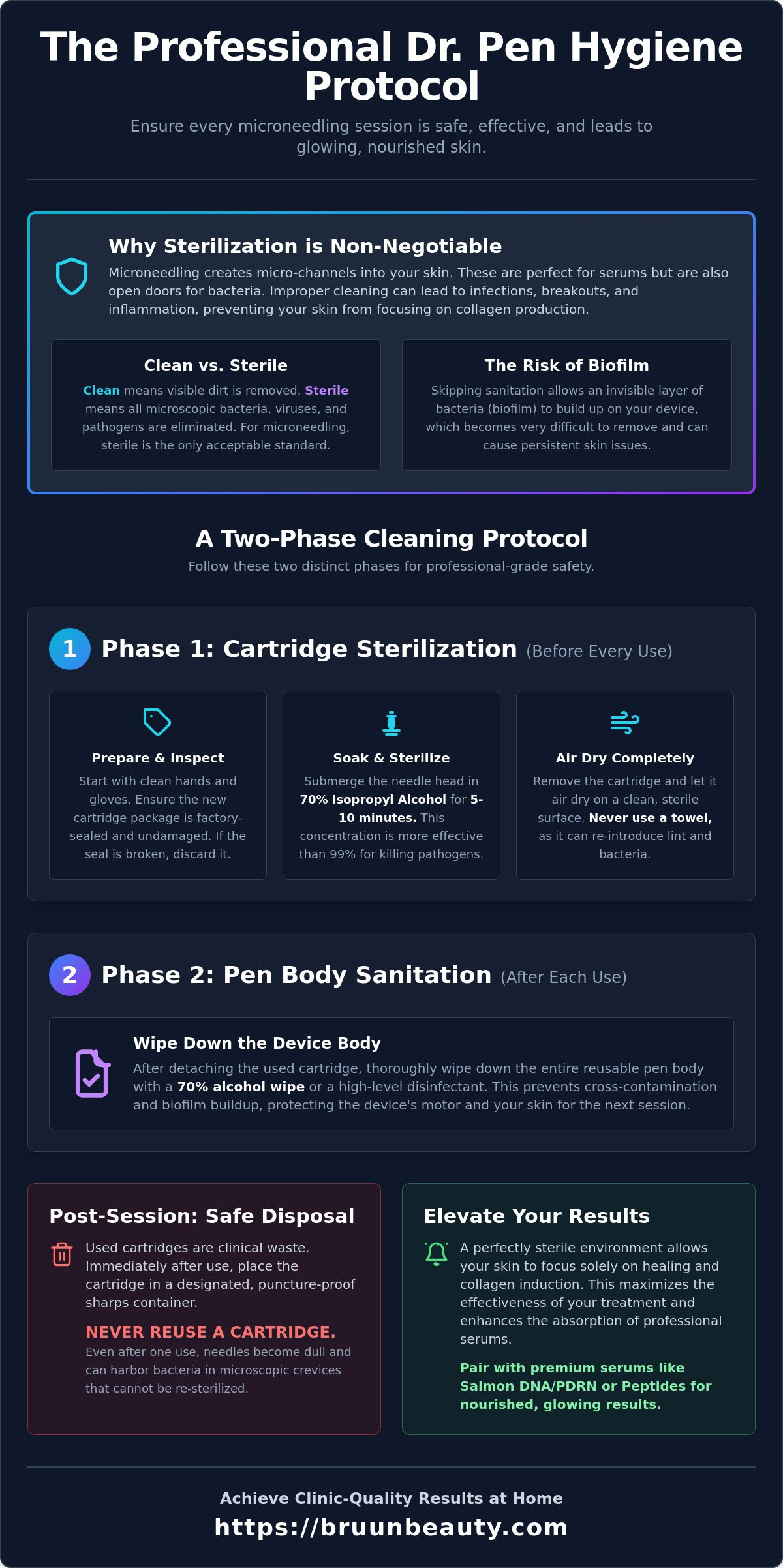
Sterilization isn't just a fancy word for washing your hands or rinsing off a tool; it's the rigorous process of making a surface completely free from all bacteria, viruses, and microorganisms. When you're learning how to clean dr pen devices, you're essentially preparing a medical-grade environment in your own space. Safety comes first. Without a sterile foundation, you're risking the health of your skin for a temporary beauty goal.
During Collagen induction therapy, your device creates thousands of tiny, controlled punctures in the skin. These microchannels are fantastic for serum absorption, but they also act as direct, wide-open pathways for pathogens to enter your body. If your equipment isn't sterile, you're essentially inviting bacteria into the deeper layers of your dermis. This is why estheticians are so focused on hygiene; it's the only way to ensure the process remains safe and effective.
There's a massive difference between "clean" and "sterile" that every user should understand. Clean means you've removed visible dirt, oils, or skin cells. Sterile means the surface is microscopically safe. For glowing, nourished skin, high-level hygiene is never optional. It's the professional standard that separates a successful treatment from one that causes unnecessary complications.
The Risks of Improper Device Hygiene
Skipping steps in your sanitation routine can lead to secondary infections or unwanted skin reactions like persistent breakouts and redness. A major concern is "biofilm" buildup on multi-use device bodies. Biofilm is a thin, invisible layer of bacteria that sticks to surfaces and becomes very difficult to remove over time. Poor hygiene doesn't just ruin your results; it can lead to prolonged downtime and inflammation that takes weeks to settle. You want your skin to focus on renewal, not fighting off a preventable infection.
Sterilization vs. Sanitation: Knowing the Difference
Sanitation refers to reducing the number of bacteria on the pen body. Since the device body doesn't touch the open microchannels directly, a high-level disinfectant is usually sufficient for this part. You can find professional-grade Dr. Pen devices that are designed with sleek casings to make this sanitation process quick and effective. Always wipe down the entire pen body after every single use to prevent cross-contamination.
Sterilization is the complete elimination of all life on your microneedling cartridges. This is why you can never truly "clean" a used needle back to a sterile state. Once a needle has been used, it must be disposed of properly. The microscopic structure of the needle tip changes after use, and bacteria can hide in tiny crevices that alcohol simply cannot reach. Always start every session with a fresh, factory-sealed cartridge to maintain the highest safety standards.
Step-by-Step: How to Sterilize Your Dr. Pen Cartridges Before Use
Before you even touch your device, your environment must be pristine. Start by washing your hands thoroughly with antimicrobial soap and putting on a pair of fresh surgical gloves. Even with gloves on, you should never touch the needles with your fingers. This prevents the transfer of oils or any lingering contaminants to the sterile surface. Check your microneedling cartridge packaging for any punctures or breaks in the seal. If the seal is compromised, the needles are no longer sterile and should be discarded immediately.
To begin the sterilization process, submerge the needle head in a small, clean container filled with 70% Isopropyl alcohol. Let it soak for 5 to 10 minutes. This duration is vital because a quick dip isn't enough to neutralize resilient pathogens. Once the time is up, remove the cartridge and allow it to air dry completely on a clean surface. Never use a towel or cloth to dry the needles, as this can introduce lint or bacteria. Attaching a dry cartridge also ensures that no liquid enters the internal motor of your Dr. Pen device.
Selecting the Right Sterilization Agent
You might think that 99% alcohol is better, but 70% Isopropyl alcohol is actually the industry gold standard. The higher water content in the 70% solution slows down evaporation, allowing the alcohol to penetrate cell walls and destroy bacteria more effectively. 99% alcohol often evaporates too quickly to complete the job. Avoid using boiling water or harsh household bleach. Boiling water can warp delicate plastic components, while bleach is far too corrosive for the fine stainless steel needles. Stick to the professional choice for a safe, predictable result.
The Single-Use Rule: Why You Must Never Reuse Cartridges
It can be tempting to try and figure out how to clean dr pen needles for a second round, but cartridges are strictly single-use. According to FDA safety guidelines for microneedling, these components must be disposed of after one session to prevent infection. After just one use, needles become dull and can develop microscopic "hooks" that tear the skin rather than piercing it cleanly. These hooks cause unnecessary trauma and scarring. Additionally, it's impossible to clean the internal housing of a used cartridge where blood or skin cells may have collected. Always keep a fresh supply of replacement needles on hand so you're never tempted to compromise your safety.
If you're looking to upgrade your setup, exploring our professional-grade Dr. Pen collection is a great way to ensure you have the latest in safety and precision technology.
Sanitation Protocol for the Dr. Pen Device Body
While the needle is the only part that enters the skin, the device body is the engine behind your results. If you don't follow a strict protocol for how to clean dr pen equipment, you risk transferring bacteria from the casing to your face during the procedure. Always start by removing the battery or unplugging the device. This simple step prevents electrical shorts and keeps you safe while you work.
Use a professional-grade disinfectant wipe or a soft cloth dampened with 70% alcohol to wipe the entire casing. Pay special attention to the "collar" where the cartridge attaches. This area is a magnet for serum and skin cells that can migrate during clinical microneedling procedures. To reach the tiny crevices, use a dry cotton swab to clean the internal threading where the cartridge locks into place. Ensure the device is 100% dry before reinserting the battery or powering it back on.
Protecting the Motor and Electronics
It's vital to remember that you should never submerge your microneedling pen in liquid. These are precision instruments with sensitive internal electronics. If alcohol or serum seeps into the motor housing, it can cause the device to stall or fail prematurely. For professional treatments, we recommend using a disposable protective sleeve or "clip cord cover." This provides an extra barrier against fluids, keeping your device in peak condition for years.
Deep Cleaning the Adjustment Dial
The adjustment dial is another area where product buildup often hides. Numbing creams and glide serums can easily get trapped in the grooves of the dial, making it difficult to rotate. To clean this area, rotate the dial through its full range of motion while wiping it down with your disinfectant cloth. This ensures you're reaching every hidden crevice. You should sanitize the device body both before and after every session to maintain a truly professional hygiene standard. If you need a fresh supply of needles-cartridges for your next session, always check your inventory before you begin.
Post-Session Care: Disposal and Workplace Cleanup
Your microneedling session might be finished, but the sanitation process is only halfway complete. Learning how to clean dr pen equipment properly includes a rigorous post-session protocol to keep your environment safe and ready for your next procedure. Start by carefully detaching the used cartridge while still wearing your gloves. Since this component has been in contact with microchannels and skin fluids, it is considered biohazardous waste and must be handled with extreme care.
Immediately place the used cartridge into a puncture-proof sharps container. Do not set it down on your counter or toss it into a standard waste bin where it could accidentally poke someone. Once the needles are secured, dispose of all used cotton pads, gloves, and wipes in a lidded waste bin. This prevents any potential pathogens from being exposed to the air or other surfaces in your room.
Sanitize the entire surface where your equipment was placed using a hospital-grade disinfectant. Even if you used a barrier, this step is vital for maintaining a professional hygiene standard. Perform a final wipe-down of the pen body with 70% alcohol before storing it. Keeping your device in its original case protects it from dust and moisture, ensuring it stays in peak condition for your next glowing skin transformation.
Safe Sharps Disposal at Home
You should never throw used needle cartridges in the regular trash. This is a major safety hazard for household members and sanitation workers. If you don't have a professional sharps container, you can create a DIY version using a heavy-duty, puncture-proof plastic bottle with a screw-top lid, such as an empty laundry detergent container. Label it clearly as "Biohazard" or "Sharps" and tape the lid shut when it's full. Check your local US regulations for medical waste disposal, as many states have specific drop-off locations at pharmacies or hospitals.
Maintaining Your Workspace Hygiene
To make your cleanup even faster, try using disposable barrier films on your work surface before you begin. This allows you to simply peel away the film and any spills once you're done. Hand hygiene is also critical after the session is complete; wash your hands with warm water and soap for at least 20 seconds after removing your final pair of gloves. Storing your skincare devices in a cool, dry, and dust-free environment is the best way to extend their lifespan.
Ready to maintain your professional results? Ensure you always have a fresh supply of safety-sealed needles by browsing our microneedling collection today.
Elevating Your Results with Sterile Technique and Premium Serums
You've mastered the technical steps of how to clean dr pen equipment, but the real reward comes from the results you achieve on your skin. A sterile environment is the foundation for successful collagen induction. When your skin isn't busy fighting off bacteria from a poorly maintained tool, it can dedicate all its energy to the renewal process. This focus is what leads to that coveted, healthy glow we all love.
Professional results start with professional-grade hygiene. Using a sterile technique ensures that every microchannel you create serves as a clean pathway for nutrients rather than a door for pathogens. By following a strict protocol for how to clean dr pen devices and using fresh cartridges, you're setting the stage for a safe and effective transformation. It's the difference between a simple at-home routine and a clinic-quality procedure.
Choosing the Right Sterile Glide
A "glide" is the lubricant you use to help the needles move smoothly across your skin. Pure Hyaluronic Acid is the preferred choice because it provides excellent slip without clogging the microchannels. You must avoid products with synthetic fragrances, dyes, or harsh preservatives. These can cause intense irritation or adverse reactions when delivered deep into the dermis.
For those looking to maximize their vitality, Salmon DNA (PDRN) is an industry favorite. These Salmon DNA ampoules support the skin's natural ability to refresh itself after needling. PDRN is known for its incredible synergy with microneedling, helping to maintain a nourished and vitalized appearance throughout the recovery phase.
Post-Needling Recovery and Hygiene
The work doesn't end when you turn off the device. Follow the "24-hour rule" religiously: don't touch your face, avoid applying makeup, and skip the gym. Your microchannels stay open for several hours, making your skin vulnerable to anything on your fingertips or in the air. We recommend using a fresh, clean pillowcase the night of your session to prevent bacteria transfer while you sleep.
To give your skin a soothing finish, consider pairing your procedure with professional jelly masks. These masks help cool the skin and lock in moisture, providing a calming end to your session. By combining a sterile technique with high-quality post-care, you'll ensure your skin remains clear, nourished, and glowing. Remember, your beauty tech is an investment in your confidence, so treat it with the care it deserves.
Master the Art of Professional-Grade Skin Safety
Knowing how to clean dr pen equipment is just as important as the microneedling technique itself. By prioritizing a dual-phase sanitation protocol and strictly adhering to the single-use cartridge rule, you protect your skin's health while maximizing the effectiveness of every session. You now understand that a pristine environment allows your skin to focus entirely on renewal rather than fighting off external pathogens.
At BRÜUN, we provide the professional-grade inventory trusted by estheticians and beauty enthusiasts across the country. Our 5-star rated microneedling serums and devices are shipped directly from our hubs in Los Angeles and Miami, ensuring you receive high-quality tools with fast, US-based shipping. Whether you're a licensed pro or an advanced at-home user, we're here to support your results-driven routine with equipment that meets the highest standards.
Ready for your next glow-up? Shop our professional Dr. Pen collection and sterile cartridges here. You're now equipped with the knowledge and confidence to maintain a clinic-clean workspace for every treatment. We can't wait to see your journey toward clear, nourished, and glowing skin.
Frequently Asked Questions
Can I reuse my Dr. Pen needles if I soak them in alcohol?
No, you must never reuse cartridges. Needles develop microscopic hooks after one use that can tear your skin. Since the internal housing cannot be fully sterilized, reuse increases the risk of cross-contamination. Always start with a fresh, factory-sealed cartridge to maintain professional hygiene standards and protect your skin.
What happens if I don't clean my microneedling pen?
Skipping sanitation increases the risk of persistent redness and skin reactions. When you don't learn how to clean dr pen equipment, bacteria from the casing can migrate into microchannels. This leads to unnecessary downtime. Additionally, dried serum can clog the motor, significantly shortening the lifespan of your device.
Is 99% alcohol better than 70% for sterilizing needles?
70% isopropyl alcohol is the industry gold standard because its water content slows evaporation. This allows the alcohol to penetrate and destroy pathogens effectively. A 99% solution often evaporates too quickly to complete the sterilization process. For maximum safety, submerge your needle head in 70% alcohol for 5 to 10 minutes.
How do I clean the Dr. Pen if serum gets inside the device?
If serum enters the device, unplug it or remove the battery immediately. Use a dry cotton swab to gently clean the internal threading and collar area. Never submerge the pen in liquid or spray cleaners directly on the motor housing. Keeping the internal components dry is essential for long-term device performance.
Do I need to sterilize the cartridge if it comes in a sealed bag?
It is a professional best practice to soak even sealed cartridges in 75% isopropyl alcohol for 5 to 10 minutes. While factory-sealed, this extra step ensures total sterility before the needles touch your skin. Once the soak is finished, let the cartridge air dry completely on a clean surface before attaching it.
How often should I sanitize the body of my microneedling device?
Sanitize the body of your device before and after every single session. A quick wipe with 70% alcohol removes oils and skin cells that collect during the procedure. Following this protocol for how to clean dr pen casing prevents biofilm and ensures your equipment remains "clinic-clean," protecting your skin and your investment.
Can I use a UV sterilizer for my Dr. Pen cartridges?
UV sterilizers aren't recommended as a primary method for cartridges. UV light only reaches the surface and cannot penetrate the internal spring or needle housing. An alcohol soak is the only way to ensure every part of the cartridge is sterilized. Use UV only as a secondary, optional hygiene step.
Where can I safely dispose of my used microneedling needles?
Dispose of used needles in a puncture-proof sharps container or a heavy-duty plastic bottle with a screw-top lid. Never toss cartridges into regular trash, as they pose a hazard to others. Check your local US regulations for medical waste drop-off sites at pharmacies or community centers to ensure safe disposal.
The Ultimate Buying Guide to Professional Hydrodermabrasion Machines in 2026
Dr. Pen Settings for Stretch Marks: A Step-by-Step Guide
Related Posts

Can I Use a Sheet Mask After Microneedling? What to Know First

Getting Spa Results on a Budget: Build a Smart At-Home Routine

Professional vs. At-Home Microneedling: Cost Comparison

Hydrogen Water Bottle Buying Guide: Choose the Right Size and Features

Microneedling for Men’s Skincare: What to Know in 2026

What Results to Expect After 3 Microneedling Sessions: A Realistic Guide

Creating a Yearly Microneedling Schedule: A Practical 2026 Guide
