

How Often Should You Microneedle? The Ultimate 2026 Guide to Safe Frequency
If you think microneedling every week will fast-track your results, you might actually be stalling your skin's natural ability to renew itself. To see real changes in texture and tone, you must respect the biological "collagen window" where your skin does its best work. Knowing exactly how often should you microneedle depends entirely on whether you're using a shallow cosmetic depth of 0.3 mm or a deeper professional pen setting.
It's completely normal to feel frustrated by slow progress or confused by conflicting advice between traditional dermarollers and advanced electric pens. You want that professional-grade glow without the fear of causing permanent scarring or thinning your skin barrier. This guide provides a safe, clear schedule tailored to your specific skin concerns, ensuring you get the most collagen production out of every session.
We'll explore the latest 2026 safety standards for needle depths and show you how to pair your routine with PDRN serums or salmon DNA for faster recovery. From managing the appearance of acne scars to refreshing your overall complexion, you'll walk away with a personalized timeline for your healthiest, most radiant skin yet.
Key Takeaways
- Understand the three stages of skin recovery and why giving your skin time to "remodel" is the secret to long-term collagen production.
- Learn exactly how often should you microneedle based on needle depth, from shallow 0.25 mm cosmetic prep to deeper professional sessions.
- Build a custom treatment plan that shifts from an intensive loading phase to a sustainable maintenance schedule for lasting texture improvement.
- Maximize your results by using sterile PDRN serums and soothing jelly masks during the "golden hour" immediately following your treatment.
- Protect your skin barrier by identifying the difference between healthy post-needling redness and the signs of chronic over-stimulation.
The Science of Skin Recovery: Why You Can’t Microneedle Every Day
Understanding the biological "collagen window" is the key to unlocking a radiant, youthful complexion. Your skin isn't a surface you can simply polish every morning; it is a living organ that requires specific intervals to rebuild its structural proteins. When you ask yourself how often should you microneedle, you have to look at the three-phase recovery cycle that starts the second those needles touch your skin. If you disrupt this cycle by needling too frequently, you risk causing chronic inflammation instead of the healthy glow you're after.
Microneedling, scientifically known as Collagen induction therapy, works by creating micro-channels that trigger a cascade of growth factors. While shallow needling (under 0.3 mm) is excellent for boosting product absorption, deeper professional-grade sessions with Dr. Pen devices aim to reach the dermis to stimulate fibroblasts. These fibroblasts are the "worker bees" of your skin, and they need time to build new tissue. Needling every day prevents them from finishing their work, which can lead to a weakened skin barrier and long-term sensitivity.
Phase 1: The Inflammatory Response
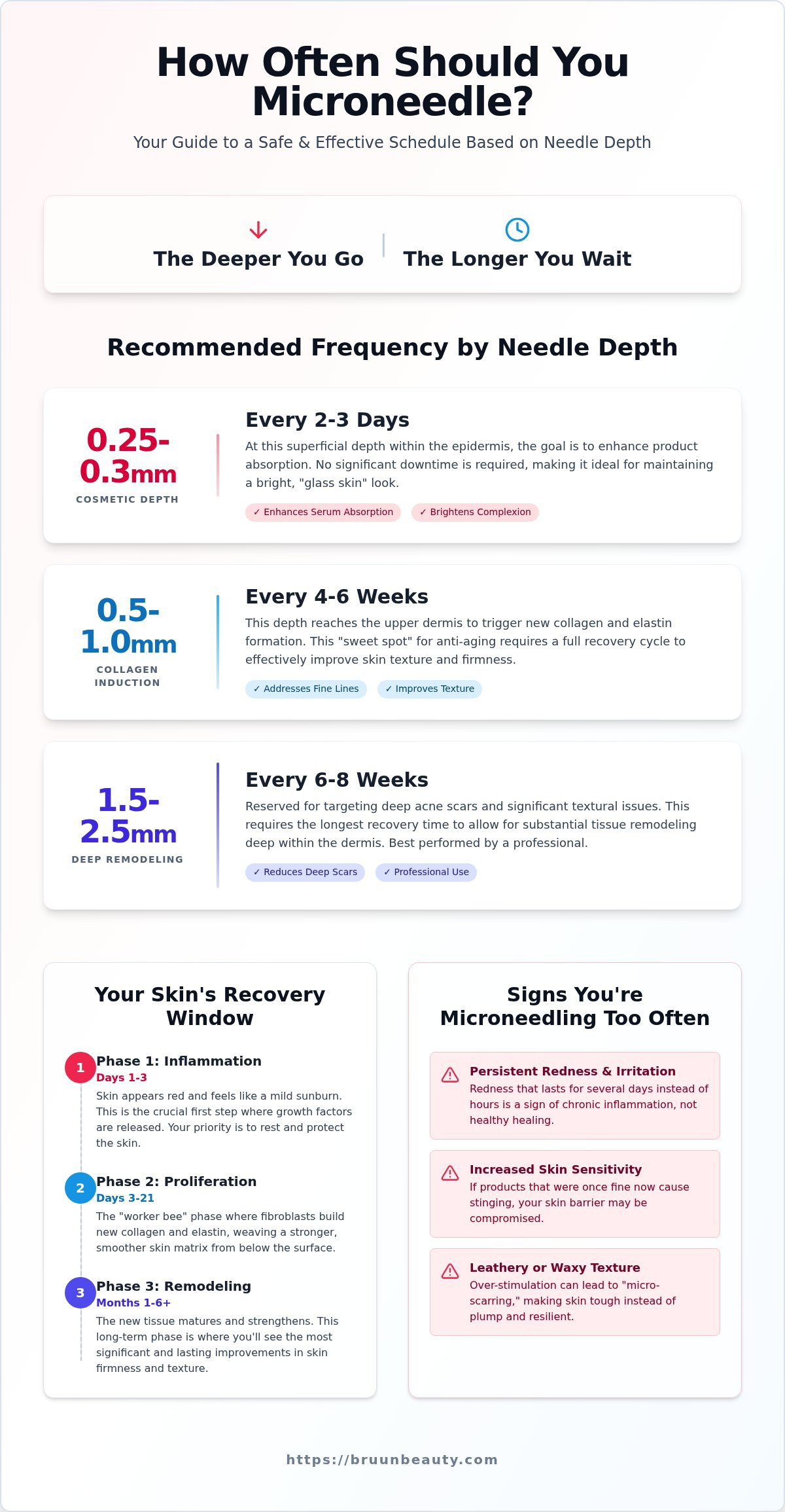
This phase begins immediately and lasts roughly one to three days. Your skin will likely look red or feel like a mild sunburn, which is a natural signal that your body is rushing blood and nutrients to the site of the "controlled injury." The inflammatory response acts as the essential catalyst for releasing the growth factors needed for new tissue. You must give your skin at least 48 to 72 hours of complete rest during this time to let the initial swelling subside and allow the micro-channels to close safely.
Phase 2 & 3: Proliferation and Remodeling
Between days 3 and 21, your skin enters the proliferation phase. This is when new collagen and elastin fibers are woven into the skin matrix to improve firmness and texture. However, the final remodeling phase is much slower and can continue for months or even up to two years. Skipping this window by needling too soon can cause "micro-scarring," where the skin becomes tough or "leathery" rather than bouncy and resilient.
Age plays a significant role in determining how often should you microneedle. If you are over 40, your cellular turnover naturally slows down, meaning your recovery windows may need to be five to six weeks instead of the standard four. Giving your skin that extra time ensures you are maximizing collagen production without overtaxing your skin's limited resources. By respecting these biological stages, you ensure every session moves you closer to your goal of clear, nourished, and glowing skin.
Choosing Your Frequency Based on Needle Depth
The golden rule for your schedule is simple: the deeper you go, the longer you wait. Your skin's recovery time is directly tied to the depth of the micro-channels you create. Using a Dr. Pen dermapen device allows for precise control, making it easier to switch between light maintenance and deeper structural work. While microneedling can address a variety of skin concerns, each goal requires a specific needle length and a corresponding rest period. Understanding how often should you microneedle starts with identifying whether you're performing a cosmetic refresh or a professional-grade remodeling session.
Cosmetic Depth (0.25mm - 0.3mm)
Needles at this depth stay within the epidermis, the outermost layer of your skin. In the US, the FDA classifies devices with needles 0.3 mm or less as cosmetic tools. Because you aren't reaching the dermis where collagen is produced, you don't need a full month of recovery. You can safely use this depth 2-3 times per week to enhance the absorption of your favorite serums. This is primarily about brightening and improving skin texture without significant downtime. It's the perfect way to maintain a "glass skin" look between more intensive sessions.
Collagen Induction Depth (0.5mm - 1.0mm)
When people ask how often should you microneedle for anti-aging, this is usually the range we discuss. This depth reaches the upper dermis to trigger the proliferation phase where new tissue forms. For most advanced at-home users, every 3-4 weeks is the ideal "sweet spot." It gives your skin enough time to weave those new collagen fibers without causing chronic irritation. If you're looking to refine your kit, explore our professional-grade microneedling tools to ensure you have the right needle cartridges for this goal.
Deep Remodeling Depth (1.5mm - 2.5mm)
This range is reserved for deep acne scars and stretch marks. Because the injury is deeper, the remodeling phase is much more intense. You should only perform these sessions every 6-8 weeks to avoid damaging the skin's integrity. Depths of 1.5mm and above are regulated as Class II medical devices because they significantly affect the skin's structure. Following the 2025 FDA safety communication, it's more important than ever to respect these longer recovery windows. Using these lengths too frequently can lead to a leathery skin texture rather than a smooth, youthful one.
Customizing Your Schedule for Specific Skin Goals
You can't address every skin concern simultaneously. Effective microneedling requires a strategic approach that prioritizes your primary goal first. When determining how often should you microneedle, consider your skin's current state and its reactivity. A "Loading Phase" usually involves a series of 3 to 6 treatments spaced according to needle depth to jumpstart collagen production. This initial phase creates a cumulative effect, building a foundation for smoother, firmer skin over several months.
Once you achieve your desired results, you'll shift into a "Maintenance Phase" where sessions are spaced further apart, typically every 8 to 12 weeks, to preserve your glowing skin. Consistency over six months will always yield better results than high intensity over six weeks. Rushing the process often leads to a compromised skin barrier and chronic inflammation. By allowing the skin to fully exit the remodeling phase before the next session, you ensure the new tissue is strong and resilient.
If you have sensitive skin or reactive conditions, it's wise to extend your recovery window by an additional 7 to 10 days. This methodical approach ensures your skin stays nourished and healthy throughout the transformation. In 2026, the trend has shifted toward "tweakments" and regenerative aesthetics, focusing on natural results through steady, long-term care. Taking these extra recovery days prevents the "over-needling trap" and keeps your complexion calm and radiant.
Managing Acne Scars and Texture
To improve the appearance of acne scars, commit to a long-term plan rather than a quick fix. While you might want to needle frequently, a 6-week interval is superior for deep scar tissue remodeling. This longer break allows the remodeling phase to fully mature, weaving stronger collagen fibers into the skin matrix. Using a professional microneedling collection ensures you have sterile, high-quality tools for these deeper sessions. You can typically expect to see visible changes in texture after 3 to 5 consistent sessions, as the dermal layers gradually become more uniform.
Achieving the 'Glass Skin' Glow
If your goal is the coveted K-beauty "glass skin" look, your schedule will look quite different. You can use shallow depths of 0.25 mm more frequently, about 2 to 3 times per week, to create temporary micro-channels for serum absorption. This effect focuses on brightening the epidermis rather than deep structural changes. Pairing these frequent, shallow sessions with nutrient-dense serums like Salmon DNA or PDRN ampoules provides an immediate boost in radiance. Just remember to pause these light sessions for at least a week before and after any deeper monthly treatments to avoid over-stimulating the skin.
The BRÜUN Recovery Protocol: Maximizing Results Between Sessions
The work you do in your bathroom mirror over the next few days is just as vital as the session itself. While knowing how often should you microneedle helps you plan your year, your daily recovery protocol determines how much of that new collagen actually sticks. Think of your skin as a construction site. The microneedling session is the groundbreaking, but the recovery phase is when the actual building happens. During the "Golden Hour" immediately following your treatment, your skin's micro-channels are wide open and ready to absorb high-performance ingredients.
Stacking the right ingredients can significantly shorten your downtime and enhance your results. Hyaluronic acid provides immediate hydration, while peptides act as messengers to tell your skin to stay firm and resilient. Adding PDRN into the mix provides the raw materials needed for cellular repair. Using an occlusive layer, like a specialized mask, seals these nutrients in and prevents trans-epidermal water loss. This process speeds up the visible recovery, helping you return to your normal routine with a refreshed, glowing complexion.
The Power of Salmon DNA (PDRN)
One of the most exciting breakthroughs in regenerative aesthetics is the use of Polynucleotides, often called PDRN. The SD Control Salmon DNA Ampoule is a recovery powerhouse that mimics human DNA to support rapid cellular repair. It works by providing a template for your skin cells to follow, ensuring the new tissue is healthy and strong. For the best results, apply this ampoule twice daily for at least seven days after your session. This keeps your skin in a constant state of repair during the critical proliferation phase.
Soothing Post-Needle Inflammation
Immediately after your session, your skin will likely feel tight, warm, and slightly sensitive. Applying soothing jelly masks is the perfect way to calm this initial inflammatory response. Look for masks infused with Centella Asiatica, Calendula, or Hyaluronic Acid to provide deep hydration and reduce redness. Centella is particularly effective at supporting the skin barrier, while Calendula offers gentle soothing properties. Cooling the skin immediately after needling constricts blood vessels and significantly reduces your overall downtime, leaving you with clear, nourished, glowing skin.
Signs You Are Microneedling Too Often (and How to Pivot)
It is easy to fall into the "Over-Needling Trap" when you are chasing fast results. You might think that more frequent sessions will lead to quicker improvements, but the opposite is often true. If you don't allow your skin to complete the remodeling phase discussed earlier, you risk causing chronic barrier damage. Determining how often should you microneedle isn't just about following a calendar. It is about listening to the physical signals your skin sends you every day.
More is not always better. When you needle too frequently, you create a state of permanent inflammation that breaks down collagen rather than building it. This leads to a leathery texture and a weakened defense against environmental stressors. If you notice your skin looks "off" despite your best efforts, it's time to pause and reassess your schedule to prioritize skin health over intensity.
The Red Flags of Barrier Damage
Healthy erythema, or the pinkish glow after a session, should typically fade within 48 to 72 hours. If your redness persists for a week or more, your skin is struggling to recover. You might also notice a "shiny" appearance on your forehead or cheeks, yet the skin feels uncomfortably dry or tight to the touch. This is a classic sign of a compromised lipid barrier. Watch out for these specific symptoms:
- Stinging or burning: Your usual Korean beauty products or gentle moisturizers suddenly cause a sharp prickling sensation.
- Increased breakouts: A damaged barrier allows bacteria to enter more easily, leading to "stress acne" or small white bumps.
- Extreme sensitivity: Your face feels hot or itchy when exposed to light wind, sun, or even a warm shower.
The 14-Day Reset Plan
If you recognize these red flags, you must pivot immediately. Stop all "actives" for at least 14 days. This includes retinol, AHAs, BHAs, and certainly any further microneedling sessions. Your goal during this window is to support the skin's natural defenses without adding more stress. Focus on products rich in ceramides and fatty acids to help rebuild the lipid layer. This reset allows your skin to exit the cycle of chronic inflammation and return to a balanced state.
Once your skin no longer stings and the persistent redness has faded, you can slowly reintroduce your routine. Start with a very shallow cosmetic depth and wait at least four weeks before attempting a deeper session with your professional microneedling tools. If your symptoms persist beyond two weeks of rest, consult a licensed esthetician to help guide your recovery. Remember, a patient approach is the only way to achieve that lasting, professional-grade glow.
Your Path to Resilient, Glowing Skin
Achieving a professional-grade glow isn't about how many sessions you fit into a single month. It is about respecting your skin's biological clock and giving those fibroblasts the time they need to rebuild. By understanding how often should you microneedle based on your specific needle depth and skin goals, you avoid the trap of chronic inflammation and barrier damage.
Focus on a steady routine that prioritizes recovery just as much as the treatment itself. We have explored how stacking PDRN serums and soothing jelly masks transforms your results during the critical proliferation phase. BRÜUN supports your journey with professional-grade inventory trusted by estheticians. Our 5-star rated Salmon DNA recovery serums arrive quickly thanks to fast US shipping from our Miami and Los Angeles hubs.
You are now equipped with the knowledge to navigate your skincare routine with confidence. We can't wait to see your clear, nourished, and glowing skin take center stage.
Frequently Asked Questions
Can I microneedle every week at home?
Determining how often should you microneedle at home depends on your needle depth. You can only needle every week if you use a very shallow cosmetic depth of 0.25 mm. This depth is designed for product absorption rather than deep collagen induction. If you use deeper settings to improve skin texture, you must wait at least 4 weeks. Needling too often prevents your skin from finishing its remodeling phase, which can lead to a compromised barrier.
How many sessions of microneedling are needed for acne scars?
Most people see a visible improvement in the appearance of acne scars after 3 to 6 sessions. These treatments should be spaced 4 to 6 weeks apart to allow for deep tissue remodeling. Because scar tissue is more stubborn than standard fine lines, patience is your best friend. You'll likely notice the most significant changes about three months after your final session once the new collagen has fully matured and settled.
Can I microneedle after getting Botox or fillers?
You should wait at least 14 days after receiving Botox or dermal fillers before your next microneedling session. This waiting period ensures that the injectables have fully settled into the tissue and won't be displaced by the pressure or inflammation of the needling process. Always inform your provider about recent cosmetic injections. This ensures your schedule is safe and effective for your specific goals without risking your results.
What is the difference between a derma roller and a Dr. Pen?
A derma roller is a manual tool that rolls needles across the skin, often creating wider, angled injuries as the needles enter and exit. In contrast, a Dr. Pen is an automated electric device that provides vertical needle entry. This vertical motion is much more precise and causes less unnecessary trauma to the skin surface. Dr. Pen devices also allow you to adjust the needle depth mid-session for different facial areas.
Does microneedling hurt, and should I use numbing cream?
The sensation depends entirely on the needle depth you choose. Shallow cosmetic needling usually feels like light sandpaper and doesn't require numbing. For depths of 0.5 mm or greater, many people apply a topical numbing cream 20 minutes before the session for a more comfortable experience. If you are wondering how often should you microneedle with deeper settings, remember that comfort and safety go hand-in-hand with proper recovery and professional tools.
What should I avoid doing immediately after a microneedling session?
Avoid direct sunlight, heavy exercise, and makeup for at least 24 to 48 hours after your session. You should also skip active ingredients like retinol, vitamin C, or exfoliating acids during this initial window. Your skin's micro-channels are open, making it highly sensitive to irritation. Stick to gentle cleansers and hydrating serums like PDRN to support your skin's natural repair process without causing unnecessary stress or inflammation.
Is it normal for my skin to peel after microneedling?
Light peeling or flaking is a very common part of the recovery process, typically occurring between days 3 and 5. This happens as your cellular turnover increases and old skin cells make way for new tissue. Don't pick at any flakes, as this can cause irritation or scarring. Instead, keep the area well-hydrated with a nourishing serum or a soothing jelly mask to maintain a healthy, protected barrier while you peel.
Can I microneedle if I have active acne?
You should never microneedle directly over active acne, especially inflammatory or cystic breakouts. Doing so can spread bacteria across your face and lead to further congestion or infection. If you have a few isolated spots, you can work around them carefully. However, if you have a widespread flare-up, it is best to wait until your skin has calmed down before starting your next session to ensure safe, professional-grade results.
7 Signs You Are Over-Microneedling Your Face: A Recovery Guide for 2026
PDRN vs. Hyaluronic Acid: Which Skin Booster is Right for Your Routine?
Related Posts

Getting Spa Results on a Budget: Build a Smart At-Home Routine

Professional vs. At-Home Microneedling: Cost Comparison

Hydrogen Water Bottle Buying Guide: Choose the Right Size and Features

Microneedling for Men’s Skincare: What to Know in 2026

What Results to Expect After 3 Microneedling Sessions: A Realistic Guide

Creating a Yearly Microneedling Schedule: A Practical 2026 Guide

How to Choose Professional Esthetician Lighting: A Moon Lash Light Buying Guide
