

Does At-Home Microneedling Hurt? What to Expect
What if the best answer to “does at-home microneedling hurt” is that comfort depends on more than the device alone? You may feel prickling, scratching, or pressure, but the sensation can vary with the device, your technique, the area involved, and your skin’s sensitivity.
It makes sense to want a clear idea of what to expect before you begin, especially when device settings and instructions can feel confusing. At-home microneedling isn’t the same experience as professional care, so another person’s pain rating may not predict yours.
This guide explains which sensations you might notice and why they vary, what to check in your device instructions, and when discomfort is a reason to stop and seek professional advice. You’ll also find a comparison of at-home and professional care to help you decide what feels right for your skin.
Key Takeaways
- Does at-home microneedling hurt? Your experience can vary, so don’t assume the process will be pain-free.
- Before you begin, check your specific device’s instructions for use, cleaning, and compatible products.
- Consider your skin’s current condition, and pause if you’re unsure whether it’s a suitable time to use the device.
- Compare the guidance and process involved in at-home and professional care before deciding which option fits your needs.
- Keep expectations realistic, and seek professional advice if you’re uncertain about using a device or how your skin is responding.
Does at-home microneedling hurt? A realistic answer
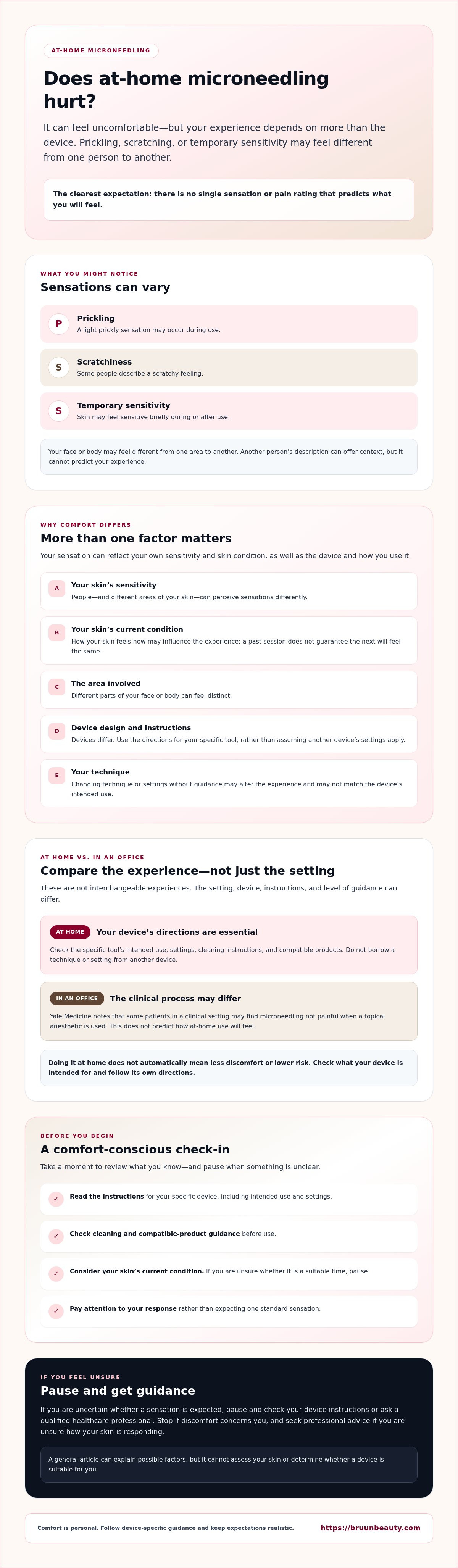
Does at-home microneedling hurt? It can feel uncomfortable, so it shouldn’t be described as pain-free. Some people notice prickling, scratching, or temporary skin sensitivity during or after use. Others may experience it differently.
Microneedling involves a device moving small needles against the skin. The process is also known as collagen induction therapy, but that overview can’t predict how a particular at-home device will feel on your skin. Device design, its instructions, your technique, the area involved, and your skin’s current condition can all affect the experience.
Think of descriptions of sensation as possibilities, not a promise or a diagnosis. This section can help explain what may affect comfort, but it can’t assess your skin or determine whether microneedling is suitable for you. If you’re comparing tools, review the microneedling product selection alongside each device’s instructions.
What can at-home microneedling feel like?
You might notice light prickling, a scratchy feeling, or sensitivity that lasts briefly after use. The sensation may vary across different parts of your face or body, and another person’s description may not match yours. Don’t use someone else’s pain rating as a guide to what you should feel.
Pay attention to your own response rather than expecting one standard sensation. If you’re uncertain whether what you feel is expected, pause and check the device instructions or ask a qualified healthcare professional for guidance.
Why is there no single answer about discomfort?
Your personal sensitivity can shape how you perceive a sensation. The area being treated may matter as well, since different parts of your skin can feel different. Your skin’s condition can also change over time, so a past experience doesn’t guarantee the next session will feel the same.
Technique and device design add more variables. Follow the instructions for your specific device, including guidance on intended use, rather than borrowing settings or methods from another tool or a general online tutorial. An article can explain possible factors, but it can’t assess your skin, confirm a device is right for you, or replace individualized professional advice.
Why at-home microneedling may feel different from person to person
Two people can use similar devices and describe very different experiences. Skin sensitivity, the area involved, device design, and technique can all affect how microneedling feels. Perceived discomfort depends on your individual sensitivity and skin condition, as well as the device and how you use it.
How skin sensitivity and the area can affect the experience
Your sensitivity may differ from someone else’s, and even different areas of your face can feel distinct. Another person’s account can offer context, but it can’t predict what you’ll feel. Your skin’s condition at the time may also influence your experience.
If you have concerns about your skin or aren’t sure whether microneedling is appropriate for you, ask a qualified healthcare professional. A general article can’t evaluate your skin or provide personal medical guidance.
How device instructions and technique affect comfort
Devices can differ in design and directions for use, so don’t assume one tool’s settings or technique apply to another. Follow the instructions supplied with your specific device. Changing settings or technique without guidance can alter the experience and may not align with the device’s intended use.
Yale Medicine discusses microneedling in a clinical setting and notes that microneedling is not painful for some patients when a topical anesthetic is used. That description isn’t a promise about at-home use, where the device, directions, and circumstances may differ.
If you’re comparing devices, review the DR. PEN device selection and check the instructions for each option before deciding. Product information can help you compare devices, but it can’t determine whether one is suitable for your skin. You can also browse the microneedling selection as you consider your comfort and whether you need personal guidance.
At-home vs. in-office microneedling: what should you compare?
At-home and in-office microneedling aren’t interchangeable experiences. The setting, device, instructions, and level of guidance can differ, so doing it at home doesn’t automatically mean less discomfort or lower risk. Before deciding, check what your device is intended for and follow its specific directions.
| What to compare | At home | In an office |
|---|---|---|
| Setting | You manage the process in your own space. | A qualified provider manages the procedure in a professional setting. |
| Guidance | You’re responsible for understanding and following the device instructions. | You can discuss your questions and suitability with the provider. |
| Device instructions | Use the directions supplied for that specific device. Don’t assume instructions transfer between models. | The provider selects and uses equipment according to the procedure they offer. |
| Who manages the process | You handle preparation, use, and aftercare directions. | The provider manages the procedure and explains their aftercare guidance. |
What changes when you microneedle at home?
At home, you’re responsible for reading the complete instructions and staying within the device’s intended use. Online articles and videos can offer general context, but they can’t assess your skin or replace hands-on professional guidance. Don’t assume a consumer device works like professional equipment or creates the same experience.
The FDA explains that microneedling devices and cosmetic tools can differ in intended use and potential risks. Review its FDA information on microneedling risks, then check the directions for the exact device you’re considering. For a side-by-side look at options, browse the DR. PEN device selection and review each device’s instructions before choosing.
When is professional guidance worth considering?
If you’re unsure whether microneedling is appropriate for your skin, ask a qualified skincare or medical professional before proceeding. Professional input is also a sensible next step if you notice a persistent, unexpected, or concerning reaction. That doesn’t mean everyone needs an in-office procedure. It gives you a way to get advice tailored to your situation.
How to make an informed, comfort-conscious decision before starting
Preparation can help you avoid guesswork. Before using a device, check its intended use, read the product-specific directions, and decide in advance to stop if the sensation or your skin’s response concerns you.
What should you check before using a microneedling device?
Use this checklist to make a considered choice, not to replace device instructions or professional advice:
- Read the official instructions. Confirm that the device is intended for your planned use. Review the manufacturer’s warnings, restrictions, and directions.
- Check cleaning and component guidance. Follow the cleaning directions for your specific device. If it uses needles or cartridges, verify which components are compatible instead of assuming they fit across devices.
- Review product compatibility. Check the device instructions for guidance on products used with it. Don’t assume a serum or other skincare product is suitable just because it’s marketed for microneedling.
- Consider your skin and expectations. If you have concerns about your skin’s current condition or suitability, pause and ask a qualified professional. Don’t expect at-home use to feel the same as an in-office procedure.
If you need to identify compatible components, review the product information in the needles and cartridges collection and confirm compatibility with your device’s official directions.
What should you do if the experience feels wrong?
Don’t push through pain or dismiss a skin response that worries you. Stop using the device and contact a qualified healthcare or skincare professional for guidance tailored to your circumstances. This article can’t determine what’s causing a sensation or assess your skin remotely.
There isn’t one universal comfort threshold. If you’re still asking, “does at-home microneedling hurt?” use the answer as a reminder to check your own comfort, not as a reason to continue despite concern. Pausing is a reasonable choice when you’re unsure.
Choosing microneedling products with clear guidance and realistic expectations
Choose supplies based on the device you own, not on a promise that a product will make microneedling comfortable. Keep the key points in mind: sensations differ, instructions are specific to each device, and at-home use may not feel like an in-office procedure. Product information can help you compare options, but it can’t assess your skin or replace professional advice.
What to look for in at-home microneedling supplies
Before buying needles, cartridges, or a device, confirm that each item is compatible with your exact model. Check the device maker’s stated requirements and directions rather than assuming components are interchangeable. If the instructions don’t clearly answer a compatibility question, contact the manufacturer or ask a qualified professional before using the component.
Bruun Beauty offers DR. PEN microneedling devices, needles and cartridges, and microneedling serums. These categories can help you compare supplies, but a product listing doesn’t replace the instructions for your specific device. Check product details and device directions before making a choice, especially if you’re unsure how a component is intended to be used.
How to take your next step without pressure
If you’re still wondering, “does at-home microneedling hurt?” keep your expectations realistic: there’s no single sensation that applies to everyone. Review the device instructions, consider whether you’re comfortable following them, and pause if you have questions about suitability or your skin’s response. Buying a device doesn’t commit you to using it.
Exploring products can be a practical next step if you’re ready to compare categories and product information. It won’t tell you what your personal experience will feel like, and no product can guarantee comfort or a particular outcome. If you need advice about your skin or whether to proceed, seek guidance from a qualified professional.
Make your next step with confidence
So, does at-home microneedling hurt? It can feel uncomfortable, and your experience depends on your skin, the device, and how you use it. There’s no single sensation that applies to everyone, so another person’s experience can’t guarantee what yours will be.
Before deciding, read the instructions for your exact device, confirm that any needles or cartridges are compatible, and check its cleaning and product-use directions. If you’re unsure whether microneedling is right for your skin, or a reaction concerns you, pause and seek qualified professional guidance rather than pushing ahead.
Browsing products can help you compare options, but it can’t replace device instructions or personal advice. Bruun Beauty is a US-based online retailer shipping from warehouses in Miami and Los Angeles.
Take your time, stay attentive to your skin, and choose the approach that feels informed and comfortable for you.
Frequently Asked Questions
Does at-home microneedling hurt the first time?
Your first experience may feel uncomfortable, but another person’s description can’t predict yours. You might notice prickling, scratching, or temporary sensitivity, depending on your skin, device, technique, and the area involved. Read your specific device instructions first, and ask a qualified professional if you’re unsure whether it’s suitable for you.
Is at-home microneedling supposed to hurt?
At-home microneedling shouldn’t be assumed to feel pain-free, and you don’t need to push through pain. Sensations vary, so there’s no single experience everyone should expect. Follow your device’s instructions and pay attention to your skin’s response. If the experience feels too painful or concerns you, stop using the device and seek qualified guidance.
What does at-home microneedling feel like?
People may describe prickling, scratching, pressure, or temporary sensitivity, but no sensation is guaranteed. Your experience can differ across areas and from one session to another. Device design and technique may also affect how it feels. Treat other people’s descriptions as general context, not a standard you need to match, and follow your device’s directions.
Can you use numbing cream before at-home microneedling?
Don’t assume numbing cream is appropriate for your device or skin. Check the device maker’s instructions and ask a qualified healthcare professional before combining a numbing product with at-home microneedling. Guidance depends on the product and your circumstances. Avoid online tips for application or timing, and don’t use numbing cream to push through discomfort that concerns you.
Does at-home microneedling hurt more than in-office microneedling?
There’s no reliable one-to-one comparison because devices, techniques, and guidance can differ. In an office, a provider manages the procedure and explains what to expect; at home, you follow the device’s directions yourself. Your sensitivity matters, too. Compare the setting, instructions, and who manages the process rather than assuming one option will feel easier.
What should I do if at-home microneedling feels too painful?
Stop using the device instead of pushing through pain. Check its instructions, then contact a qualified healthcare or skincare professional for advice tailored to your situation, especially if your skin’s response persists or concerns you. A general article can’t assess the cause or predict what will happen. Don’t resume use until you understand the guidance relevant to you.
Can skincare products affect how at-home microneedling feels?
Products may affect how your skin feels, but compatibility depends on the product and device directions. Don’t assume a serum is suitable just because it’s marketed for skincare or microneedling. Check the official instructions for product guidance, and ask a qualified professional if you’re uncertain. Avoid adding products based only on general online recommendations.
Ready to compare devices and skincare supplies? Explore Bruun Beauty’s microneedling products, and check each product’s information alongside the instructions for your specific device.
Best Korean Ampoule for Mature Skin: How to Choose in 2026
Calming Skincare for Post-Procedure Skin: How to Choose the Right Routine
Related Posts

Consistent Microneedling and the Long-Term Changes to Expect

Aftercare choices to lower infection risk at home after microneedling

How to Create a Relaxing At-Home Spa Day With Simple Rituals

Sunscreen Recommendations After Microneedling: How to Protect Healing Skin

Investing in my skin for the future: what deserves my budget

Post-microneedling skincare routine for masks, makeup, and recovery

Skin Peeling After Microneedling: What to Avoid and When to Resume Makeup
