

Best Dr. Pen Needle for Fine Lines: Cartridge Guide
The highest pin count isn’t automatically the right choice. What dr pen needle for fine lines suits your setup depends first on your exact device model and the cartridges it supports. Cartridge configuration and needle depth are separate considerations, so use the manufacturer’s instructions rather than guessing.
This guide shows you how to compare cartridge labels, confirm device compatibility, and decide whether at-home microneedling is appropriate for you. You’ll also learn why the area you have in mind matters, especially when considering delicate facial skin.
Key Takeaways
- Start with your device model and compatible cartridges when choosing a Dr. Pen needle for fine-line concerns. Pin count alone isn’t enough.
- Compare cartridge configuration, device fit, and adjustable needle depth as separate details.
- Use the cartridge label and manufacturer instructions to guide your selection instead of judging by appearance.
- A compatible cartridge doesn’t make every at-home microneedling approach suitable for every person or facial area.
- Build a considered setup by confirming device compatibility first, then reviewing relevant supplies, such as microneedling serums.
What Dr. Pen needle is best for fine lines? Start with the right selection factors
There isn’t one Dr. Pen cartridge that suits every fine-line concern. Start by checking whether the cartridge fits your specific device. Then review its label, the manufacturer’s instructions, and your own skin context before making a decision.
A Dr. Pen needle cartridge is the replaceable component that attaches to a compatible microneedling device. Its configuration describes the cartridge itself. Needle depth is a separate setting on devices that allow adjustment, so don’t assume that a cartridge labeled for a skin concern dictates a particular depth or use.
In short: check model compatibility and official instructions before relying on a fine-line label. “For fine lines” describes a general skincare goal, not a universal, device-specific cartridge recommendation. For background on the procedure, see Collagen induction therapy (microneedling).
Does one Dr. Pen cartridge work best for every fine-line concern?
No. Fine lines may be a shared concern, but that doesn’t make every cartridge interchangeable or appropriate for every user. Pin configuration and device compatibility are separate details, and neither guarantees a particular result. Begin with your Dr. Pen model and compare it with the cartridge’s documented compatibility instead of choosing based on the phrase “for fine lines” alone.
If you’re deciding what dr pen needle for fine lines to select, follow a consistent order: identify your device model, confirm cartridge compatibility, read the cartridge’s stated information, and follow the device instructions. Compare available cartridge details against your model’s documentation. Don’t turn a general concern label into a recommendation that the manufacturer hasn’t made.
Why do facial area and skin context matter?
Your face isn’t uniform. Different areas can vary in sensitivity, so an approach used on one part of the face shouldn’t automatically carry over to another. The eye area is especially delicate, making it a poor place to guess based only on a cartridge name or pin count.
Consider your skin and the area involved before deciding whether microneedling is appropriate for you. Follow your device’s instructions, and seek guidance from a qualified professional for individual decisions, especially if you’re unsure about use near a sensitive area. A cartridge choice alone can’t determine whether a procedure is suitable for your skin.
Dr. Pen cartridge types and needle depth: what to compare for fine lines
A cartridge label and a depth setting tell you different things. Cartridge configuration describes the component; depth describes how far the needles extend. Keep those details separate as you compare options. A fine-line label alone doesn’t establish a recommended pin count or depth.
| What you’re comparing | What it tells you | What to verify |
|---|---|---|
| Pin configuration | The cartridge’s listed needle arrangement | Its meaning and intended use in current product documentation |
| Cartridge compatibility | Which device model the component is designed to fit | The exact model or compatible device family stated by the manufacturer |
| Needle depth | The extension setting on a device with adjustable depth | How your model defines and instructs you to use that setting |
What does needle depth mean on a Dr. Pen device?
Needle depth refers to how far the needles extend from the cartridge during use. It’s a device setting, not a description of the cartridge’s pin configuration. A cartridge may fit a device, but depth selection still depends on that model’s instructions and the intended use.
Don’t apply a depth range from a different Dr. Pen model as if the settings were interchangeable. For general context about microneedling and fine lines, Cleveland Clinic provides an overview of Microneedling for fine lines. Use your own device’s guidance for its settings.
How should you read a cartridge label?
Start with the device model or compatible model family printed on the packaging or in the product documentation. Then note the cartridge identifier and any configuration terms. If a label uses unfamiliar wording, check the manufacturer’s documentation before interpreting it. Don’t assume a number or abbreviation means the same thing across models.
As you consider what dr pen needle for fine lines may suit your setup, compare the cartridge details with your device instructions rather than relying on a general recommendation. You can review microneedling needles and cartridges alongside the microneedling collection for related devices and supplies.
How to compare Dr. Pen needles for fine lines without guessing
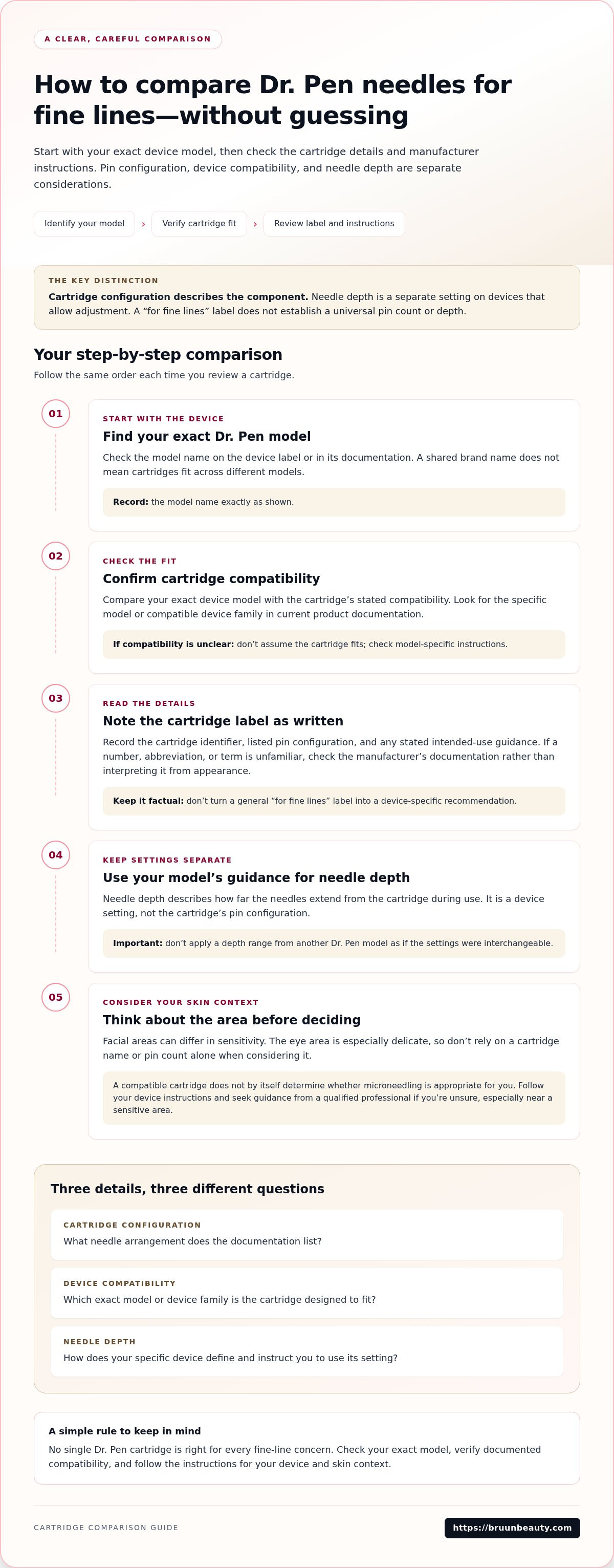
Use the same sequence whenever you compare cartridges: identify your exact device model, confirm the cartridge matches it, read the cartridge labeling, and review the manufacturer’s intended-use guidance. This makes it easier to separate documented product details from assumptions based on pin count or a general fine-line goal.
Which Dr. Pen model do you have?
Find the model name on the device label or in its documentation. Then compare that exact model with the cartridge’s listed compatibility. You can browse Dr. Pen microneedling devices while identifying device options, but don’t assume cartridges fit across models just because they share a brand name.
What should a useful cartridge comparison include?
Record only details supported by current product documentation. If a configuration term or intended use isn’t explained, leave it uninterpreted rather than guessing based on the number or wording on the package.
| Comparison detail | What to record | What to do if it’s unclear |
|---|---|---|
| Model match | The device model or model family named in the documentation | Don’t assume compatibility; look for model-specific instructions |
| Verified configuration | The cartridge description exactly as documented | Don’t infer pin arrangement or function from an unexplained label |
| Manufacturer guidance | Stated intended use and relevant device instructions | Omit unsupported recommendations about skin concerns or settings |
Needle count alone doesn’t establish whether a cartridge suits your fine-line goal. It won’t tell you which models accept the cartridge or what the manufacturer says it’s intended for. To understand the broader process, read this overview of microneedling’s effects on skin. Use your device’s documentation for model-specific decisions.
If you’re still asking what dr pen needle for fine lines to choose, compare verified fit and instructions before weighing a concern-based label. Once you’ve identified your model, explore the microneedling collection for related devices and supplies for a considered setup.
Fine-line microneedling safety: when not to rely on a cartridge shortcut
A compatible cartridge is only one part of a considered setup. Compatibility doesn’t automatically make microneedling appropriate for every person, skin concern, or facial area. Product availability also isn’t a recommendation for personal use.
Is at-home microneedling automatically suitable for fine lines?
No. Your experience with the device, your skin context, and the manufacturer’s directions all matter. A cartridge label describes a component, but it can’t assess whether using the device makes sense for you. That’s why the question “what dr pen needle for fine lines” doesn’t have a useful answer without considering more than the cartridge itself.
Before making a decision, read the instructions for your exact device and cartridge. If you’re unfamiliar with the device, unsure how the manufacturer describes its intended use, or have personal skin concerns, pause and seek guidance from a qualified professional. This general information can help you compare product details, but it can’t replace advice based on your individual circumstances.
Keep the decision practical:
- Check the exact model and its manufacturer instructions.
- Confirm that the cartridge is listed as compatible with that model.
- Consider your familiarity with the device and whether professional guidance is appropriate.
Don’t let a fine-line label or a higher pin count make the decision for you. Those details don’t establish individual suitability or promise a particular appearance.
Why should you be cautious around the eye area?
The skin around your eyes is delicate, so don’t assume that a cartridge or approach used elsewhere on the face is suitable there too. Avoid choosing an under-eye cartridge, setting, or technique based only on general advice or a product label.
Follow the instructions for your specific device, including any guidance about facial areas. If the directions don’t resolve your question, consult a qualified professional before deciding. That’s a more considered step than guessing, especially when deciding how to approach a delicate area.
For a more considered setup, browse the microneedling devices and supplies.
Choose compatible Dr. Pen needles and build a considered microneedling setup
A careful cartridge choice follows a clear order: identify your Dr. Pen model, verify that the cartridge fits, understand its documented configuration, and follow the device instructions. This keeps the decision grounded in product information rather than a fine-line label or an assumption about pin count.
What should you have clear before choosing a cartridge?
Before you compare options, make sure you can answer these questions:
- What exact Dr. Pen model do you have? Find the model name on the device or in its documentation.
- Which cartridge options does the manufacturer list for that model? Check the compatibility details, not just the brand name.
- What does the cartridge description mean? Use current product information to understand its configuration and stated intended use.
- Where are the instructions for your device? Keep them available when reviewing settings and use guidance.
If a technical detail is unclear, don’t fill the gap with an assumption. A cartridge description can help you compare components, but it doesn’t replace device-specific directions or establish which option is right for every person. So, what dr pen needle for fine lines should you consider? Start with verified model compatibility and instructions, then weigh the documented cartridge details.
Where can you browse Dr. Pen microneedling supplies?
A considered setup can include a compatible device, a cartridge matched to that model, and relevant skincare supplies. Microneedling serums are a related category, but a product’s place in a skincare routine doesn’t by itself establish whether or how to use it with a device. Follow the device and product instructions.
For example, you can review the ingredients and product information for this microneedling serum as you consider your supplies. Keep the decision practical: model first, cartridge compatibility next, then labeling and manufacturer guidance. That sequence helps you compare options without relying on one cartridge label to answer every question.
Choose your Dr. Pen setup with confidence
The right cartridge isn’t determined by a fine-line label alone. Start with your exact device model, verify cartridge compatibility, understand the documented configuration, and follow the manufacturer’s instructions. Needle configuration and depth are separate considerations, so don’t choose either by assumption.
If you’re still asking what dr pen needle for fine lines to consider, let model-specific compatibility guide your comparison before weighing the cartridge’s stated use. Your experience, skin context, and the area you have in mind also matter. For personal questions about suitability, seek guidance from a qualified professional.
Bruun Beauty offers Dr. Pen microneedling devices and skincare supplies for individual customers and beauty professionals, with shipping from warehouses in Miami and Los Angeles. Browse the collection to explore options for a considered setup.
When you pair a compatible device with clear product information and careful attention to instructions, you can make your next choice with greater confidence.
Frequently Asked Questions
What Dr. Pen needle is best for fine lines?
There isn’t one universal cartridge for fine lines. The right choice depends first on your exact device model and the cartridges its manufacturer supports. Compare the documented configuration and intended use, then follow the device instructions. A fine-line label or pin count alone can’t establish individual suitability or guarantee a particular result.
Does needle count determine which Dr. Pen cartridge is right for fine lines?
No. Needle count describes one cartridge feature, but it doesn’t confirm device compatibility, explain every label term, or determine whether a cartridge suits your circumstances. Compare the model match, verified configuration, and manufacturer guidance together. If product information doesn’t explain a technical detail, don’t guess from the number. Refer to the device and cartridge documentation.
What needle depth should you use for fine lines with Dr. Pen?
There isn’t one depth setting that applies to every Dr. Pen model or user. Depth is a device setting, separate from cartridge configuration, and the appropriate choice depends on the instructions for your specific model and your use context. Don’t apply a setting from another device. Review the manufacturer’s directions, and seek qualified professional guidance if you’re unsure.
Can you use any Dr. Pen cartridge with any Dr. Pen model?
No. Don’t assume cartridges fit every Dr. Pen device. Match the model name on your device with the compatible models stated in the cartridge’s current product information. If the match isn’t clear, pause rather than relying on a similar brand name or appearance. Use the manufacturer’s documentation as your reference for compatibility.
Is at-home microneedling suitable for fine lines around the eyes?
It isn’t automatically suitable for everyone or every facial area. The skin around the eyes is delicate, so don’t assume that a cartridge or approach for another area applies there. Read your device’s instructions, including any guidance about facial areas. If you’re uncertain or have personal concerns, consult a qualified professional before deciding whether at-home use is appropriate.
How do you know if a Dr. Pen cartridge is compatible?
Check the exact model name on your device label or in its instructions, then compare it with the models named in the cartridge documentation. Review the cartridge identifier and any stated configuration or intended use without inferring meanings the manufacturer doesn’t explain. If key information is unclear, don’t assume compatibility. Rely on current product and device documentation.
Calming Skincare for Post-Procedure Skin: How to Choose the Right Routine
How Many Times Can You Use a Dr. Pen Cartridge? The Single-Use Answer
Related Posts

Consistent Microneedling and the Long-Term Changes to Expect

Aftercare choices to lower infection risk at home after microneedling

How to Create a Relaxing At-Home Spa Day With Simple Rituals

Sunscreen Recommendations After Microneedling: How to Protect Healing Skin

Investing in my skin for the future: what deserves my budget

Post-microneedling skincare routine for masks, makeup, and recovery

Skin Peeling After Microneedling: What to Avoid and When to Resume Makeup
