

5 Microneedling Serum Mistakes to Avoid for Better Results
What if the very serum you're using to achieve glass skin is actually the reason your redness won't fade? Common microneedling serum mistakes include using irritating actives like Vitamin C too early or applying non-sterile products that can lead to a rough, "orange peel" texture. By choosing the right formulas, you ensure your skin stays nourished and safe while achieving professional-level results.
It's normal to feel protective of your skin, especially since about 58% of consumers now prefer non-surgical procedures like microneedling for their anti-aging results. You've likely seen others deal with lingering irritation or wasted money on products that don't work, and you want to ensure your investment leads to a clear, K-beauty glow. You deserve a routine that delivers professional-level support without the stress.
This guide will show you exactly how to identify the errors that might be sabotaging your results. We'll explain the specific ingredients to avoid and provide clear instructions on how to keep your skin safe and supported throughout the entire process.
Key Takeaways
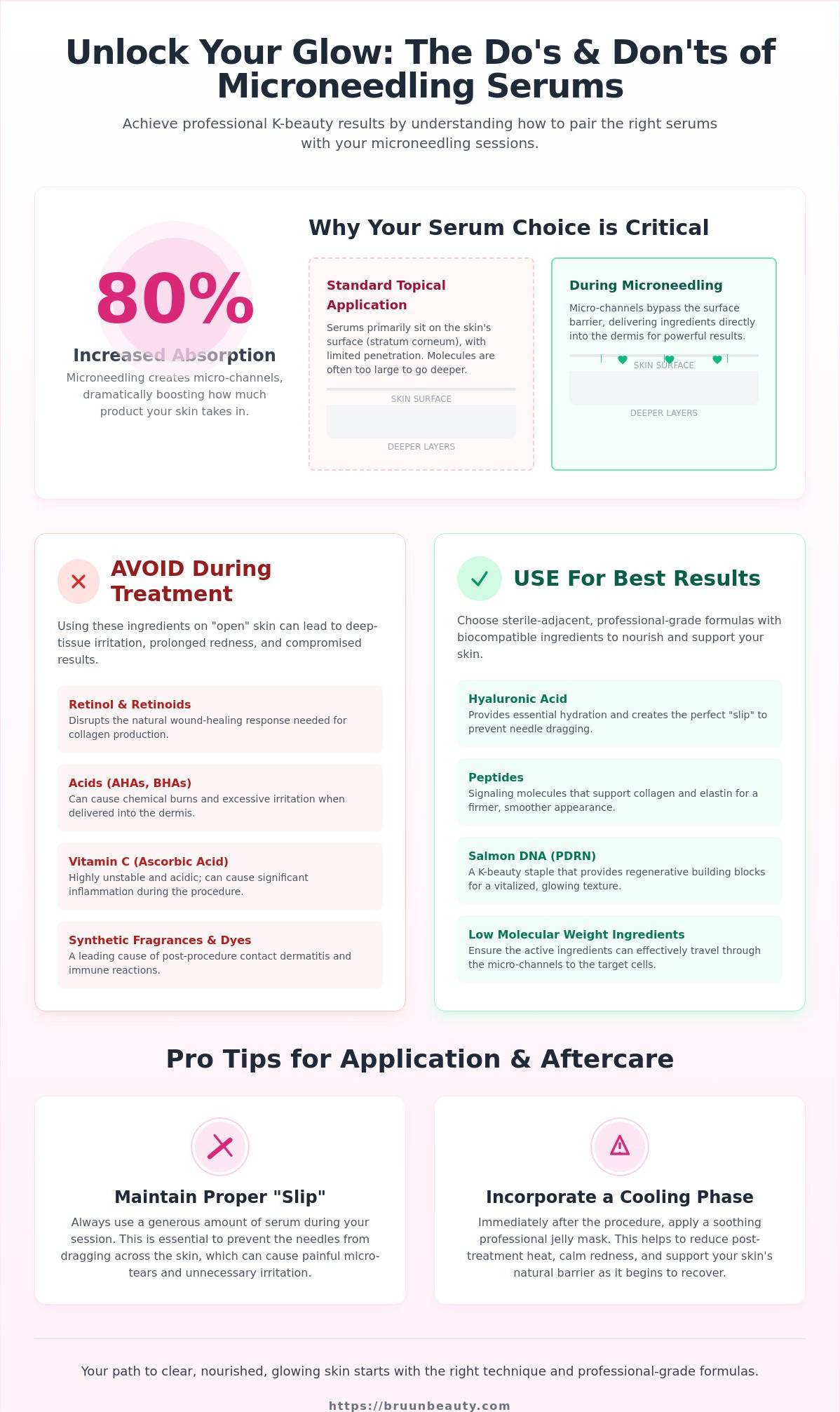
- Microneedling increases product absorption by up to 80%, making it vital to use professional-grade serums rather than products filled with preservatives.
- Avoid common microneedling serum mistakes by steering clear of harsh actives like Retinol or AHAs during your session to prevent deep-tissue irritation.
- Maintaining a proper "slip" with your serum is essential to prevent needles from dragging and causing micro-tears on your skin surface.
- Incorporate a cooling phase with soothing jelly masks to reduce post-procedure heat and support your skin’s natural barrier.
- Utilize regenerative ingredients like Salmon DNA (PDRN) to provide the specific nourishment your skin needs for a vitalized, glowing texture.
Understanding the "Channel" Theory: Why Serum Quality Matters
Think of your skin as a highly effective security system. Its primary job is to keep the outside world out. When you perform Collagen induction therapy, you're essentially creating a temporary "backdoor" into the deeper layers of your dermis. These tiny pathways, or micro-channels, increase your skin's absorption capabilities by up to 80% compared to just rubbing a product on the surface.
This massive boost in permeability is why your choice of product is so critical. One of the most common microneedling serum mistakes is assuming that a "good" daily serum is safe for needling. Daily serums are often formulated with large molecules designed to sit on top of the skin. During a needling session, you need ingredients with a low molecular weight that can actually navigate those new channels to reach the target cells.
The Science of Micro-Channel Delivery
Standard topical serums are built to penetrate only the very top layer of your skin, the stratum corneum. When you use a professional device, the needles bypass this barrier to reach the living dermis. If you use a drugstore serum during this process, you might be pushing heavy silicones or synthetic thickeners deep into your tissue where they don't belong. Your skin is in an "open" state, so "clean" beauty standards aren't just a trend; they're a safety requirement.
As your knowledgeable esthetician friend, I always tell clients that the serum is the "fuel" for the treatment. The needles create the opportunity, but the serum provides the building blocks for that clear, nourished glow. Using a low-quality formula is like putting low-grade fuel into a high-performance engine; you won't get the results you're looking for.
Sterility and Preservative Risks
When ingredients reach the deeper layers of the skin, your immune system reacts differently than it does on the surface. Many standard skincare products contain preservatives like phenoxyethanol or parabens. While these are safe for daily topical use, pushing them deep into the skin can lead to complications like granulomas or long-term inflammation. This is a major factor in why some people experience redness that lasts far too long.
A professional microneedling serum is specifically formulated to be "clean" and sterile-adjacent. These formulas prioritize high-purity actives like hyaluronic acid or peptides without the fluff. Avoiding these microneedling serum mistakes means you're only inviting beneficial, biocompatible ingredients into your skin's deeper layers. This ensures your recovery is quick and your results are professional-grade.
Ingredient Red Flags: Actives That Cause Irritation Instead of Rejuvenation
Your favorite "holy grail" serum might be a fantastic addition to your nightly routine, but it can quickly become a liability during a needling session. One of the most frequent microneedling serum mistakes is using high-activity ingredients when your skin barrier is intentionally bypassed. When those micro-channels are open, ingredients that usually provide a healthy glow can cause deep-seated irritation or even chemical burns.
Retinol and hydroxy acids (AHAs and BHAs) are the primary culprits. These ingredients work by accelerating cell turnover or exfoliating the surface, but during a procedure, they disrupt the natural wound response your body needs to produce collagen. You should wait at least 5 to 7 days before reintroducing these actives. Using them too soon can lead to prolonged redness and a compromised barrier that takes weeks to recover.
Synthetic fragrances and dyes are another major red flag. They are the leading cause of post-procedure contact dermatitis. While a scented serum feels luxurious on a normal day, pushing those artificial molecules into the dermis can trigger an immune response. For a safer experience, review the FDA information on microneedling devices to understand the importance of using biocompatible products. If you want advanced results without the risk, look into professional K-beauty alternatives like Salmon DNA (PDRN), which supports the skin without the harshness of traditional acids.
The Danger of High-Activity Acids
Acids like glycolic and salicylic acid are designed to dissolve the bonds between skin cells. If these enter the micro-channels, they can cause a stinging "acid burn" effect. Instead of these harsh options, stick to a "safe list" of soothing botanicals. Ingredients like Centella Asiatica or Panthenol provide the calm environment your skin needs to begin its rejuvenation process. You can find these gentle, effective formulas in our curated microneedling collection.
Molecular Weight and Hyaluronic Acid
Not all Hyaluronic Acid (HA) is created equal. High-molecular-weight HA has large molecules that often sit on the surface, which can "suffocate" micro-channels and prevent other actives from entering. To avoid common microneedling serum mistakes, choose a multi-molecular weight HA. This ensures hydration reaches different depths of the skin. Always check your labels for "fillers" like carbomer or heavy silicones, which add thickness to a serum but offer no nutritional value to your skin cells during the "open" phase of treatment.
Application Errors: The Critical Role of "Slip" and Proper Layering
One of the biggest microneedling serum mistakes is treating the product as a post-treatment step only. In reality, the serum acts as a vital mechanical lubricant. If you try to use your Dr. Pen device on dry skin, the needles can't glide. Instead, they catch and pull the skin laterally. This causes micro-tearing, which increases downtime and leads to unnecessary irritation.
To prevent this, you should use the "Double-Drip" method. Apply a generous layer of serum to provide "slip" before you needle, then apply a second layer immediately after your passes are complete. This ensures the micro-channels stay open and receive the nourishment they need while the skin is most receptive. Working in sections is the secret to a professional finish. If you apply serum to your entire face at once, it will dry out before you reach your last quadrant.
Apply your product only to the area you're currently working on, such as the forehead or one cheek. This keeps the surface slick and prevents the needle head from dragging. Following these steps helps you avoid the potential complications of microneedling serums, such as uneven results or granulomatous reactions caused by excessive trauma. Precision in application is just as important as the device you choose.
Mastering the Glide Technique
A professional-grade serum should feel slick, not sticky. If your serum dries within seconds, it's a red flag. You want a viscosity that stays wet long enough for two or three passes. Don't overdo it, though; if the serum is dripping down your neck, it's harder to see your progress. Find a balance where the device moves effortlessly across the skin without resistance. This ensures a uniform treatment across every inch of your face.
Avoiding Cross-Contamination
Maintaining a sterile environment is non-negotiable. Never touch the serum dropper directly to your skin or the needle head. This is a common error that introduces bacteria back into your product vial. Instead, dispense the required amount into a small, sterile glass dish. Use a clean brush or gloved finger to apply it to each section. Remember that single-use cartridges are only half the safety equation; the serum must remain uncontaminated to keep your skin healthy and glowing.
Post-Procedure Blunders: Aftercare Mistakes That Compromise Your Barrier
After you've finished your session, your skin is in a high-energy state of repair. One of the most overlooked microneedling serum mistakes is failing to transition from the "active" phase to the "cooling" phase. Your skin feels hot because of the micro-trauma, and leaving it in this inflamed state for too long can actually hinder your results. Cooling the skin quickly helps to settle the initial inflammatory response and kickstarts the recovery process.
Many people reach for heavy, oil-based ointments or petroleum-based products thinking they are protecting the skin. However, these thick occlusives can clog your newly created channels. This often results in "sweat pimples" or milia because the skin's heat is trapped underneath a heavy layer. Stick to water-based, professional formulas that allow your skin to breathe while it recovers. You want to support the barrier without suffocating it.
Sunscreen is non-negotiable. Your skin is incredibly vulnerable to UV damage after needling. Skipping SPF is the fastest way to turn a rejuvenation treatment into permanent hyperpigmentation. Always use a physical mineral sunscreen starting the day after your procedure to keep that new glow safe. Even short periods of sun exposure can cause irritation while your barrier is compromised.
The Magic of the Jelly Mask
Using soothing jelly masks is the secret weapon of professional estheticians. These masks create a vacuum seal over your face, which physically pushes your post-treatment serums deeper into the tissue. This occlusion ensures maximum absorption of hydrating ingredients like Hyaluronic Acid or Aloe. It's the most effective way to ensure your skin remains nourished after the needles have done their work.
Beyond product penetration, jelly masks provide immediate relief by lowering skin temperature. A high-quality mask can reduce surface heat by up to 10 degrees, instantly calming redness and reducing the "sunburn" sensation. This cooling effect is essential for a comfortable recovery and helps you achieve that coveted glass skin texture. It turns a clinical procedure into a spa-like experience that your skin will love.
The 24-Hour Rule
The first 24 hours are critical for your skin's safety. During this window, you must avoid makeup entirely. Applying foundation or powder into open micro-channels is one of the most common microneedling serum mistakes, as it often leads to infection and clogged pores. Your skin needs a clean environment to begin rebuilding its natural defenses. Give it the space it needs to recover without interference.
Keep your routine simple during this time. Cleanse your skin using only lukewarm water or a very gentle, non-foaming cleanser. Avoid hot showers, steam rooms, or heavy exercise that causes excessive sweating. Your goal is to keep the skin clean, calm, and hydrated until the micro-channels begin to close naturally. To ensure you have everything you need for a safe recovery, explore our professional microneedling serums and aftercare.
The BRÜUN Standard: Elevating Results with Professional-Grade Pairings
Avoiding common microneedling serum mistakes is just the first step toward achieving your skin goals. To truly transform your complexion, you need to provide the specific nutrients that support cellular regeneration. At BRÜUN, we focus on professional-grade pairings that bridge the gap between a basic session and the coveted K-beauty glass skin look. Your skin deserves high-purity actives that work in harmony with your body's natural processes.
Choosing the right ingredients is where you can really see a difference in your results. While peptides are excellent for supporting skin structure, many professionals are turning to growth factors and regenerative ampoules for more advanced needs. By selecting products formulated for deep-channel delivery, you ensure that your investment leads to a resilient, vitalized glow rather than just surface-level hydration.
Why PDRN is Trending in K-Beauty
Salmon DNA, also known as Polydeoxyribonucleotide (PDRN), has become the "secret weapon" for advanced skin support in the K-beauty world. PDRN is remarkably similar to human skin DNA, which allows it to integrate seamlessly into your skin's natural repair cycles. It provides the essential building blocks for vitalization without the risk of irritation often found in traditional anti-aging ingredients.
Our SD Control Salmon DNA Ampoule is specifically designed for those with tired or lackluster skin. This refreshing serum focuses on deep-layer nourishment and is a staple for those who want professional results at home. By utilizing PDRN, you avoid the microneedling serum mistakes of using generic, filler-heavy products that offer little nutritional value to your skin cells.
Building Your Ultimate Glow Kit
You can create a routine that rivals clinic results by pairing a high-quality device with professional ampoules. We recommend using a Dr. Pen M8 or A11 for their precision and ease of use. When you combine these devices with targeted serums, you create a powerful system that addresses your unique skin concerns with confidence and safety.
Trusting your skin to a US-based leader like BRÜUN ensures you receive quality-tested products with fast shipping from our Miami and Los Angeles locations. We are proud to be a trusted resource for licensed estheticians and spa owners who demand the best for their clients. Whether you are a professional or an advanced enthusiast, our 5-star reviewed inventory is here to help you maintain clear, nourished, and glowing skin every day.
Achieve Your Ultimate K-Beauty Glow Today
You now have the knowledge to transform your routine from a basic session into a professional-grade treatment. By prioritizing high-purity ingredients like PDRN and ensuring your device has the proper "slip" during the procedure, you protect your skin barrier while maximizing its regenerative potential. Avoiding these common microneedling serum mistakes ensures your journey to glass skin is safe, effective, and results-focused. Remember that the cooling phase with a soothing jelly mask is just as important as the needling itself for maintaining that healthy, vitalized texture.
At BRÜUN, we are proud to be a US-based leader shipping directly from Miami and Los Angeles. Our professional-grade K-beauty technology is trusted by licensed estheticians nationwide to deliver clear, nourished, and glowing skin. Ready to elevate your results? Shop the Professional Microneedling Collection at BRÜUN and discover the difference that high-quality formulas can make. Your most radiant complexion is just one session away, and we're here to support you every step of the way.
Frequently Asked Questions
Can I use Hyaluronic Acid with microneedling?
Yes, pure Hyaluronic Acid is the gold standard for providing "slip" and deep hydration during your session. It's a biocompatible molecule that your skin naturally recognizes, making it safe for deep-channel delivery. To avoid common microneedling serum mistakes, ensure your HA is free of synthetic fragrances, dyes, or heavy preservatives. Using a multi-molecular weight formula allows hydration to reach different depths, supporting that clear, nourished, glowing skin you're aiming for.
What happens if I use Vitamin C during my microneedling session?
Using Vitamin C, specifically L-ascorbic acid, during a session often leads to a stinging "acid burn" effect due to its low pH. When pushed into micro-channels, it can cause significant irritation or even long-term complications like granulomas. It's best to wait at least 48 to 72 hours before reintroducing Vitamin C. Stick to soothing, regenerative ingredients like Salmon DNA or peptides during the actual procedure to keep your skin safe and comfortable.
Is it a mistake to use a derma roller instead of a microneedling pen?
While derma rollers are accessible, they often cause more trauma because the needles enter and exit the skin at an angle, creating "track-mark" tearing. A professional microneedling pen uses vertical needle oscillation to create precise, clean channels. This minimizes downtime and provides a more controlled treatment. Using a pen also makes it easier to maintain the necessary "slip" with your serum, preventing common microneedling serum mistakes like surface dragging or micro-tearing.
How long should I wait to apply my regular skincare after microneedling?
You should wait at least 24 hours before applying basic, non-active skincare products to your face. During this initial window, your micro-channels are still closing, so you want to avoid anything with fragrances or complex chemicals. For high-activity ingredients like Retinol, AHAs, or BHAs, it's safer to wait 5 to 7 days. This allows your skin to complete its initial inflammatory response without interference, ensuring you get the best possible results from your session.
Why does my skin feel like sandpaper after microneedling?
That "sandpaper" texture is a completely normal part of the process called micro-crusting. As your skin regenerates, tiny points of old, dead skin cells rise to the surface before naturally shedding. This usually happens around day three or four post-treatment. It's vital that you don't pick or exfoliate these away. Instead, keep the area well-hydrated with a professional-grade serum or a soothing jelly mask to support the shedding process and protect your new glow.
Can I use a sheet mask instead of a jelly mask after treatment?
You can use a sheet mask, but it won't provide the same vacuum-seal effect as a professional jelly mask. Jelly masks are superior because they physically push serums deeper into the skin while lowering the surface temperature by up to 10 degrees. Many standard sheet masks also contain preservatives or fragrances that can irritate open micro-channels. For the best glass skin results, a cooling jelly mask is the preferred choice for immediate post-procedure relief and safety.
Serum Timing After Microneedling: Expert Recovery Tips
Dr. Pen Aftercare Guide: Healing Tips for Glowing Skin
Related Posts

Consistent Microneedling and the Long-Term Changes to Expect

Aftercare choices to lower infection risk at home after microneedling

How to Create a Relaxing At-Home Spa Day With Simple Rituals

Sunscreen Recommendations After Microneedling: How to Protect Healing Skin

Investing in my skin for the future: what deserves my budget

Post-microneedling skincare routine for masks, makeup, and recovery

Skin Peeling After Microneedling: What to Avoid and When to Resume Makeup
